<?xml version="1.0" encoding="UTF-8"?>
<rss version="2.0" xmlns:atom="http://www.w3.org/2005/Atom">
<channel>
<title> UC blogs Feed</title>
<link>http://ucanr.edu/News/index4.cfm?blogrss=2578&amp;utm_source=RSS&amp;utm_medium=RSS&amp;utm_campaign=RSS%2BFeed</link>
<description> UC blogs</description>
<language>en-us</language>
<copyright>UC ANR</copyright>
<docs>http://cyber.law.harvard.edu/rss/</docs>
<lastBuildDate>Sat, 25 May 2013 15:56:33 PST</lastBuildDate>
<pubDate>Sat, 25 May 2013 15:56:33 PST</pubDate>
<generator>UC ANR</generator>
<atom:link href="http://ucanr.edu/News/index4.cfm?blogrss=2578" rel="self" type="application/rss+xml" />
<item>
<title> Sierra forests need to burn more often</title>      
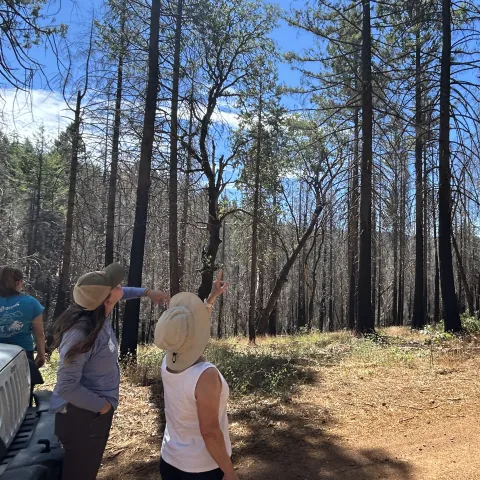
<description><![CDATA[<a href="http://ucanr.edu/blogs/blogcore/postdetail.cfm?postnum=10413&utm_source=RSS&utm_medium=RSS&utm_campaign=RSS%2BFeed"><img src="http://ucanr.edu/blogs/Green/blogfiles/16285small.jpg" align="left" style="border:0"></a>Many parts of the Sierra Nevada have not burned in more than 100 years, a significant departure from a natural fire cycle that would characterize a healthy forest, according to Susie Kocher, UC Cooperative Extension advisor in the Central Sierra office.
&amp;ldquo;The fire interval is completely out of whack compared to pre-settlement conditions,&amp;rdquo; Kocher said.
In a historical, natural and healthy fire regime, nearly half of Sierra forests would experience fire every 12 years and......<img id="trackingimg" src="http://www.google-analytics.com/__utm.gif?utmwv=4.6.5&utmcs=UTF-8&utmac=UA-27780401-1&utmccn=RSS%2BFeed&utmcsr=RSS&utmn=115017133&utmhn=ucanr.edu&utmdt=Sierra%20forests%20need%20to%20burn%20more%20often&utmp=%2FNews%2Findex4%2Ecfm" style="display:none; width:1px; height:1px; border:none;"><br clear="all">]]></description>
<pubDate>Thu, 23 May 2013 13:57:17 PST</pubDate>
<link>http://ucanr.edu/blogs/blogcore/postdetail.cfm?postnum=10413&amp;utm_source=RSS&amp;utm_medium=RSS&amp;utm_campaign=RSS%2BFeed</link>
<author> jewarnert@ucanr.edu(Jeannette Warnert)</author>
<guid isPermaLink="true">http://ucanr.edu/blogs/blogcore/postdetail.cfm?postnum=10413</guid>
</item>
<item>
<title> Bodega Marine Lab keeps watch on ocean temperatures</title>      
<description><![CDATA[<a href="http://ucanr.edu/blogs/blogcore/postdetail.cfm?postnum=10431&utm_source=RSS&utm_medium=RSS&utm_campaign=RSS%2BFeed"><img src="http://ucanr.edu/blogs/Green/blogfiles/16245small.jpg" align="left" style="border:0"></a>Ocean waters are warming, sea level is rising, seawater is becoming more acidic, and shoreline erosion is intensifying. The world&amp;rsquo;s oceans are reacting to increased carbon dioxide and other greenhouse gases in the earth&amp;rsquo;s atmosphere.
&amp;ldquo;The physical and chemical environment of the ocean is changing with the climate,&amp;rdquo; said John Largier of the UC Davis Bodega Marine Laboratory. &amp;ldquo;This affects ecosystems &amp;mdash; like tidal marshes and coral reefs that protect us from......<img id="trackingimg" src="http://www.google-analytics.com/__utm.gif?utmwv=4.6.5&utmcs=UTF-8&utmac=UA-27780401-1&utmccn=RSS%2BFeed&utmcsr=RSS&utmn=594540615&utmhn=ucanr.edu&utmdt=Bodega%20Marine%20Lab%20keeps%20watch%20on%20ocean%20temperatures&utmp=%2FNews%2Findex4%2Ecfm" style="display:none; width:1px; height:1px; border:none;"><br clear="all">]]></description>
<pubDate>Wed, 22 May 2013 13:51:48 PST</pubDate>
<link>http://ucanr.edu/blogs/blogcore/postdetail.cfm?postnum=10431&amp;utm_source=RSS&amp;utm_medium=RSS&amp;utm_campaign=RSS%2BFeed</link>
<author> afilmer@ucdavis.edu(Ann Filmer)</author>
<guid isPermaLink="true">http://ucanr.edu/blogs/blogcore/postdetail.cfm?postnum=10431</guid>
</item>
<item>
<title> Enjoy California sweet potatoes around the clock and calendar</title>      
<description><![CDATA[<a href="http://ucanr.edu/blogs/blogcore/postdetail.cfm?postnum=10398&utm_source=RSS&utm_medium=RSS&utm_campaign=RSS%2BFeed"><img src="http://ucanr.edu/blogs/food/blogfiles/16173small.jpg" align="left" style="border:0"></a>Sweet potatoes are perhaps most familiar in the U.S. smothered with melted marshmallows in a Thanksgiving casserole. But baked, boiled or raw, they can be a healthful part of California cuisine any time of year.
California is a significant producer of sweet potatoes. About 90 percent of the California crop &amp;ndash; 18,000 acres &amp;ndash; is grown in Merced County, on farms ranging from 5 acres up to several thousand acres. In 2011, the crop&amp;rsquo;s value statewide was $125 million.
However, you......<img id="trackingimg" src="http://www.google-analytics.com/__utm.gif?utmwv=4.6.5&utmcs=UTF-8&utmac=UA-27780401-1&utmccn=RSS%2BFeed&utmcsr=RSS&utmn=671372201&utmhn=ucanr.edu&utmdt=Enjoy%20California%20sweet%20potatoes%20around%20the%20clock%20and%20calendar&utmp=%2FNews%2Findex4%2Ecfm" style="display:none; width:1px; height:1px; border:none;"><br clear="all">]]></description>
<pubDate>Fri, 17 May 2013 08:29:39 PST</pubDate>
<link>http://ucanr.edu/blogs/blogcore/postdetail.cfm?postnum=10398&amp;utm_source=RSS&amp;utm_medium=RSS&amp;utm_campaign=RSS%2BFeed</link>
<author> jewarnert@ucanr.edu(Jeannette Warnert)</author>
<guid isPermaLink="true">http://ucanr.edu/blogs/blogcore/postdetail.cfm?postnum=10398</guid>
</item>
<item>
<title> SoilWeb reveals what&apos;s hidden underneath the ground&apos;s surface</title>      
<description><![CDATA[<a href="http://ucanr.edu/blogs/blogcore/postdetail.cfm?postnum=10395&utm_source=RSS&utm_medium=RSS&utm_campaign=RSS%2BFeed"><img src="http://ucanr.edu/blogs/Green/blogfiles/16169small.jpg" align="left" style="border:0"></a>Beneath your home, below lawns, under asphalt streets, farms and natural areas there is a complex blend of minerals and organic matter that varies widely in texture, color and structure. Producing food, maintaining landscapes and building structures all depend on this little understood, but critical outermost layer of the Earth&amp;rsquo;s crust - the soil.
Anyone can learn about the United States&amp;rsquo; diversity of soils using SoilWeb, a nationwide database of soil variability first developed in......<img id="trackingimg" src="http://www.google-analytics.com/__utm.gif?utmwv=4.6.5&utmcs=UTF-8&utmac=UA-27780401-1&utmccn=RSS%2BFeed&utmcsr=RSS&utmn=66307719&utmhn=ucanr.edu&utmdt=SoilWeb%20reveals%20what%27s%20hidden%20underneath%20the%20ground%27s%20surface&utmp=%2FNews%2Findex4%2Ecfm" style="display:none; width:1px; height:1px; border:none;"><br clear="all">]]></description>
<pubDate>Thu, 16 May 2013 08:29:16 PST</pubDate>
<link>http://ucanr.edu/blogs/blogcore/postdetail.cfm?postnum=10395&amp;utm_source=RSS&amp;utm_medium=RSS&amp;utm_campaign=RSS%2BFeed</link>
<author> jewarnert@ucanr.edu(Jeannette Warnert)</author>
<guid isPermaLink="true">http://ucanr.edu/blogs/blogcore/postdetail.cfm?postnum=10395</guid>
</item>
<item>
<title> Obesity researchers leave no molecule unturned</title>      
<description><![CDATA[<a href="http://ucanr.edu/blogs/blogcore/postdetail.cfm?postnum=10399&utm_source=RSS&utm_medium=RSS&utm_campaign=RSS%2BFeed"><img src="http://ucanr.edu/blogs/food/blogfiles/16176small.png" align="left" style="border:0"></a>The biennial Childhood Obesity Conference is taking place in Long Beach June 18-20. Book-ended by two world-class keynote speakers &amp;mdash; Michael Moss, the Pulitzer Prize-winning New York Times reporter and author of Salt Sugar Fat: How the Food Giants Hooked Us, and Marion Nestle, a New York University professor of food studies and public health, and author of Food Politics and What to Eat &amp;mdash; the event promises a no-holds-barred, systemic look at the problems of obesity in all their......<img id="trackingimg" src="http://www.google-analytics.com/__utm.gif?utmwv=4.6.5&utmcs=UTF-8&utmac=UA-27780401-1&utmccn=RSS%2BFeed&utmcsr=RSS&utmn=730991550&utmhn=ucanr.edu&utmdt=Obesity%20researchers%20leave%20no%20molecule%20unturned&utmp=%2FNews%2Findex4%2Ecfm" style="display:none; width:1px; height:1px; border:none;"><br clear="all">]]></description>
<pubDate>Wed, 15 May 2013 13:33:33 PST</pubDate>
<link>http://ucanr.edu/blogs/blogcore/postdetail.cfm?postnum=10399&amp;utm_source=RSS&amp;utm_medium=RSS&amp;utm_campaign=RSS%2BFeed</link>
<author> annguy@berkeley.edu(Ann Guy)</author>
<guid isPermaLink="true">http://ucanr.edu/blogs/blogcore/postdetail.cfm?postnum=10399</guid>
</item>
<item>
<title> Weather changes, global warming doesn&#8217;t</title>      
<description><![CDATA[<a href="http://ucanr.edu/blogs/blogcore/postdetail.cfm?postnum=10380&utm_source=RSS&utm_medium=RSS&utm_campaign=RSS%2BFeed"><img src="http://ucanr.edu/blogs/Green/blogfiles/16139small.jpg" align="left" style="border:0"></a>The first thing I had to learn as writing staff at the John Muir Institute for the Environment, UC Davis, was the difference between &quot;climate&quot; and &quot;weather.&quot;  I compare it to reading a stock chart, there are jagged peaks and valleys daily, but it takes stock performance over years to reveal an unmistakable trend. The small ticks are similar to weather but the trend over decades is closer to climate. Nearly every stock chart has a huge valley at the year 2008, this is thought to be a once in a......<img id="trackingimg" src="http://www.google-analytics.com/__utm.gif?utmwv=4.6.5&utmcs=UTF-8&utmac=UA-27780401-1&utmccn=RSS%2BFeed&utmcsr=RSS&utmn=581925858&utmhn=ucanr.edu&utmdt=Weather%20changes%2C%20global%20warming%20doesn%E2%80%99t&utmp=%2FNews%2Findex4%2Ecfm" style="display:none; width:1px; height:1px; border:none;"><br clear="all">]]></description>
<pubDate>Tue, 14 May 2013 09:40:27 PST</pubDate>
<link>http://ucanr.edu/blogs/blogcore/postdetail.cfm?postnum=10380&amp;utm_source=RSS&amp;utm_medium=RSS&amp;utm_campaign=RSS%2BFeed</link>
<author> sjklahorst@ucdavis.edu(Suanne Klahorst)</author>
<guid isPermaLink="true">http://ucanr.edu/blogs/blogcore/postdetail.cfm?postnum=10380</guid>
</item>
<item>
<title> California Naturalist Program grows a new constituency for nature</title>      
<description><![CDATA[<a href="http://ucanr.edu/blogs/blogcore/postdetail.cfm?postnum=10351&utm_source=RSS&utm_medium=RSS&utm_campaign=RSS%2BFeed"><img src="http://ucanr.edu/blogs/Green/blogfiles/16111small.jpg" align="left" style="border:0"></a>Have you heard of the UC ANR California Naturalist Program? This new UC ANR program fosters a diverse community of naturalists and promotes stewardship of California&apos;s natural resources through education and service. Designed to introduce Californians to the wonders of our unique ecology and engage volunteers in stewardship and study of California&amp;rsquo;s natural communities, California Naturalist provides hands-on instruction and exposure to real world environmental projects designed to......<img id="trackingimg" src="http://www.google-analytics.com/__utm.gif?utmwv=4.6.5&utmcs=UTF-8&utmac=UA-27780401-1&utmccn=RSS%2BFeed&utmcsr=RSS&utmn=208207456&utmhn=ucanr.edu&utmdt=California%20Naturalist%20Program%20grows%20a%20new%20constituency%20for%20nature&utmp=%2FNews%2Findex4%2Ecfm" style="display:none; width:1px; height:1px; border:none;"><br clear="all">]]></description>
<pubDate>Fri, 10 May 2013 08:10:01 PST</pubDate>
<link>http://ucanr.edu/blogs/blogcore/postdetail.cfm?postnum=10351&amp;utm_source=RSS&amp;utm_medium=RSS&amp;utm_campaign=RSS%2BFeed</link>
<author> bgamble@ucanr.edu(Brook Gamble)</author>
<guid isPermaLink="true">http://ucanr.edu/blogs/blogcore/postdetail.cfm?postnum=10351</guid>
</item>
<item>
<title> Votes needed for UC Davis teams in international food challenge</title>      
<description><![CDATA[<a href="http://ucanr.edu/blogs/blogcore/postdetail.cfm?postnum=10290&utm_source=RSS&utm_medium=RSS&utm_campaign=RSS%2BFeed"><img src="http://ucanr.edu/blogs/Green/blogfiles/16013small.png" align="left" style="border:0"></a>With the world population reaching 9 billion by 2050, creative solutions are needed for global food security. The 2013 Thought for Food Challenge has put the call out and two UC Davis teams have responded. One group, Team UC Davis, proposes a social networking game that spreads awareness through crowd sourcing and draws donations through virtual purchases.
&amp;ldquo;The team is using a game platform like Farmville, which they call Global Village,&amp;rdquo; said Patrick Brown, professor in the......<img id="trackingimg" src="http://www.google-analytics.com/__utm.gif?utmwv=4.6.5&utmcs=UTF-8&utmac=UA-27780401-1&utmccn=RSS%2BFeed&utmcsr=RSS&utmn=867279387&utmhn=ucanr.edu&utmdt=Votes%20needed%20for%20UC%20Davis%20teams%20in%20international%20food%20challenge&utmp=%2FNews%2Findex4%2Ecfm" style="display:none; width:1px; height:1px; border:none;"><br clear="all">]]></description>
<pubDate>Thu, 02 May 2013 10:27:22 PST</pubDate>
<link>http://ucanr.edu/blogs/blogcore/postdetail.cfm?postnum=10290&amp;utm_source=RSS&amp;utm_medium=RSS&amp;utm_campaign=RSS%2BFeed</link>
<author> gbhooker@ucdavis.edu(Bradley Hooker)</author>
<guid isPermaLink="true">http://ucanr.edu/blogs/blogcore/postdetail.cfm?postnum=10290</guid>
</item>
<item>
<title> Stay healthy all summer long</title>      
<description><![CDATA[<a href="http://ucanr.edu/blogs/blogcore/postdetail.cfm?postnum=9791&utm_source=RSS&utm_medium=RSS&utm_campaign=RSS%2BFeed"><img src="http://ucanr.edu/blogs/food/blogfiles/15098small.jpg" align="left" style="border:0"></a>It&amp;rsquo;s summertime, which means I am one happy camper. No really - it&amp;rsquo;s nice and warm, let&apos;s go camping! I find most people hate summer: the heat, the AC bill, the kids are out of school and they&amp;rsquo;re &amp;ldquo;sooooooooooo&amp;hellip; bored.&amp;rdquo; 
Well I&amp;rsquo;m a summer baby, and I&amp;rsquo;m here to help you survive the heat wave with healthy recipes and family cooking tips.
Summer time food:
Summer time is the best because of all the amazing fresh fruits and vegetables that are in......<img id="trackingimg" src="http://www.google-analytics.com/__utm.gif?utmwv=4.6.5&utmcs=UTF-8&utmac=UA-27780401-1&utmccn=RSS%2BFeed&utmcsr=RSS&utmn=731088624&utmhn=ucanr.edu&utmdt=Stay%20healthy%20all%20summer%20long&utmp=%2FNews%2Findex4%2Ecfm" style="display:none; width:1px; height:1px; border:none;"><br clear="all">]]></description>
<pubDate>Wed, 24 Apr 2013 09:09:19 PST</pubDate>
<link>http://ucanr.edu/blogs/blogcore/postdetail.cfm?postnum=9791&amp;utm_source=RSS&amp;utm_medium=RSS&amp;utm_campaign=RSS%2BFeed</link>
<author> smacnab@ucanr.edu(Shelby MacNab)</author>
<guid isPermaLink="true">http://ucanr.edu/blogs/blogcore/postdetail.cfm?postnum=9791</guid>
</item>
<item>
<title> Biofuel research may keep tobacco industry from going up in smoke</title>      
<description><![CDATA[<a href="http://ucanr.edu/blogs/blogcore/postdetail.cfm?postnum=9806&utm_source=RSS&utm_medium=RSS&utm_campaign=RSS%2BFeed"><img src="http://ucanr.edu/blogs/Green/blogfiles/15127small.png" align="left" style="border:0"></a>The troubled tobacco industry may be getting some good news for a change. UC scientists are engineering the tobacco plant to produce oils that, when extracted, can serve as drop-in biofuels to power airplanes, cars and other machines.
Research success would allow farmers who have been growing tobacco for generations to continue the tradition for a different purpose, while taking advantage of an infrastructure established to serve the diminishing cigarette, cigar and snuff markets.
Peggy G.......<img id="trackingimg" src="http://www.google-analytics.com/__utm.gif?utmwv=4.6.5&utmcs=UTF-8&utmac=UA-27780401-1&utmccn=RSS%2BFeed&utmcsr=RSS&utmn=760705028&utmhn=ucanr.edu&utmdt=Biofuel%20research%20may%20keep%20tobacco%20industry%20from%20going%20up%20in%20smoke&utmp=%2FNews%2Findex4%2Ecfm" style="display:none; width:1px; height:1px; border:none;"><br clear="all">]]></description>
<pubDate>Wed, 24 Apr 2013 08:20:48 PST</pubDate>
<link>http://ucanr.edu/blogs/blogcore/postdetail.cfm?postnum=9806&amp;utm_source=RSS&amp;utm_medium=RSS&amp;utm_campaign=RSS%2BFeed</link>
<author> jewarnert@ucanr.edu(Jeannette Warnert)</author>
<guid isPermaLink="true">http://ucanr.edu/blogs/blogcore/postdetail.cfm?postnum=9806</guid>
</item>
<item>
<title> Oak preservation education comes to the foothills</title>      
<description><![CDATA[<a href="http://ucanr.edu/blogs/blogcore/postdetail.cfm?postnum=9769&utm_source=RSS&utm_medium=RSS&utm_campaign=RSS%2BFeed"><img src="http://ucanr.edu/blogs/Green/blogfiles/15072small.jpg" align="left" style="border:0"></a>Oaks (Quercus ssp.) are one of the signature trees of California landscapes and are among the most favored by wildlife, according to the UC publication Wildlife among the Oaks.
In addition, several studies have found that open space and residential properties containing oak trees have higher property values than those areas without oak trees. Ecosystem services provided by oak forests and savannahs include recreational opportunities, shade and shelter, increased property values, aesthetic......<img id="trackingimg" src="http://www.google-analytics.com/__utm.gif?utmwv=4.6.5&utmcs=UTF-8&utmac=UA-27780401-1&utmccn=RSS%2BFeed&utmcsr=RSS&utmn=300852350&utmhn=ucanr.edu&utmdt=Oak%20preservation%20education%20comes%20to%20the%20foothills&utmp=%2FNews%2Findex4%2Ecfm" style="display:none; width:1px; height:1px; border:none;"><br clear="all">]]></description>
<pubDate>Thu, 18 Apr 2013 09:28:47 PST</pubDate>
<link>http://ucanr.edu/blogs/blogcore/postdetail.cfm?postnum=9769&amp;utm_source=RSS&amp;utm_medium=RSS&amp;utm_campaign=RSS%2BFeed</link>
<author> rmillercripps@ucanr.edu(Rebecca Miller-Cripps)</author>
<guid isPermaLink="true">http://ucanr.edu/blogs/blogcore/postdetail.cfm?postnum=9769</guid>
</item>
<item>
<title> UC ANR hosts Global Food Systems Forum</title>      
<description><![CDATA[<a href="http://ucanr.edu/blogs/blogcore/postdetail.cfm?postnum=9774&utm_source=RSS&utm_medium=RSS&utm_campaign=RSS%2BFeed"><img src="http://ucanr.edu/blogs/food/blogfiles/15055small.jpg" align="left" style="border:0"></a>Last week, UC ANR hosted a one-day Global Food Systems Forum. Providing 8 billion people with quality, affordable and accessible food is the defining economic, sociopolitical and ethical issue of our time. It is a global challenge. But it is also a challenge to California, one of the world&apos;s top agricultural producers. UC was proud to provide the opportunity for discussion around this vital topic.
The keynote was offered by the former president of Ireland, Mary Robinson. Robinson spoke......<img id="trackingimg" src="http://www.google-analytics.com/__utm.gif?utmwv=4.6.5&utmcs=UTF-8&utmac=UA-27780401-1&utmccn=RSS%2BFeed&utmcsr=RSS&utmn=403695112&utmhn=ucanr.edu&utmdt=UC%20ANR%20hosts%20Global%20Food%20Systems%20Forum&utmp=%2FNews%2Findex4%2Ecfm" style="display:none; width:1px; height:1px; border:none;"><br clear="all">]]></description>
<pubDate>Wed, 17 Apr 2013 11:04:06 PST</pubDate>
<link>http://ucanr.edu/blogs/blogcore/postdetail.cfm?postnum=9774&amp;utm_source=RSS&amp;utm_medium=RSS&amp;utm_campaign=RSS%2BFeed</link>
<author> rmhaydensmith@ucanr.edu(Rose Hayden-Smith)</author>
<guid isPermaLink="true">http://ucanr.edu/blogs/blogcore/postdetail.cfm?postnum=9774</guid>
</item>
<item>
<title> This Earth Day, UC pushes for healthier California forest lands</title>      
<description><![CDATA[<a href="http://ucanr.edu/blogs/blogcore/postdetail.cfm?postnum=9368&utm_source=RSS&utm_medium=RSS&utm_campaign=RSS%2BFeed"><img src="http://ucanr.edu/blogs/Green/blogfiles/14309small.png" align="left" style="border:0"></a>California forests aren&amp;rsquo;t natural anymore. Over time, human impacts such as logging and fire suppression have left forests more prone to diseases, insects and wildfires. UC Cooperative Extension received a competitive grant from Cal Fire to launch a forest management training program for private landowners to help protect California&amp;rsquo;s forests.
There are approximately 33 million acres of forest in California. Forty percent of those acres are owned by families, Native American......<img id="trackingimg" src="http://www.google-analytics.com/__utm.gif?utmwv=4.6.5&utmcs=UTF-8&utmac=UA-27780401-1&utmccn=RSS%2BFeed&utmcsr=RSS&utmn=544839905&utmhn=ucanr.edu&utmdt=This%20Earth%20Day%2C%20UC%20pushes%20for%20healthier%20California%20forest%20lands&utmp=%2FNews%2Findex4%2Ecfm" style="display:none; width:1px; height:1px; border:none;"><br clear="all">]]></description>
<pubDate>Tue, 16 Apr 2013 13:57:27 PST</pubDate>
<link>http://ucanr.edu/blogs/blogcore/postdetail.cfm?postnum=9368&amp;utm_source=RSS&amp;utm_medium=RSS&amp;utm_campaign=RSS%2BFeed</link>
<author> mpalin@ucanr.edu(Marissa Palin)</author>
<guid isPermaLink="true">http://ucanr.edu/blogs/blogcore/postdetail.cfm?postnum=9368</guid>
</item>
<item>
<title> Fire ecology - a &#8216;hot&#8217; career to attract students to science</title>      
<description><![CDATA[<a href="http://ucanr.edu/blogs/blogcore/postdetail.cfm?postnum=9685&utm_source=RSS&utm_medium=RSS&utm_campaign=RSS%2BFeed"><img src="http://ucanr.edu/blogs/Green/blogfiles/14933small.jpg" align="left" style="border:0"></a>Ask most youth what they think about wildfires in forests and they will usually respond with &quot;they kill trees and animals&quot; or &quot;it&amp;rsquo;s bad &amp;ndash; they burn down homes and put out lots of smoke.&quot; They are partially right.
Ask youth about considering a career studying the history of fire from a tree cookie, a slice of tree branch that shows the rings, or lake bed sedimentation. Or ask them what role wind plays in how a fire jumps from treetop to treetop or how wildfire can help open pine......<img id="trackingimg" src="http://www.google-analytics.com/__utm.gif?utmwv=4.6.5&utmcs=UTF-8&utmac=UA-27780401-1&utmccn=RSS%2BFeed&utmcsr=RSS&utmn=496474488&utmhn=ucanr.edu&utmdt=Fire%20ecology%20%2D%20a%20%E2%80%98hot%E2%80%99%20career%20to%20attract%20students%20to%20science&utmp=%2FNews%2Findex4%2Ecfm" style="display:none; width:1px; height:1px; border:none;"><br clear="all">]]></description>
<pubDate>Mon, 15 Apr 2013 10:27:51 PST</pubDate>
<link>http://ucanr.edu/blogs/blogcore/postdetail.cfm?postnum=9685&amp;utm_source=RSS&amp;utm_medium=RSS&amp;utm_campaign=RSS%2BFeed</link>
<author> kcingram@ucanr.edu(Kim Ingram)</author>
<guid isPermaLink="true">http://ucanr.edu/blogs/blogcore/postdetail.cfm?postnum=9685</guid>
</item>
<item>
<title> What&apos;s in your compost?</title>      
<description><![CDATA[<a href="http://ucanr.edu/blogs/blogcore/postdetail.cfm?postnum=9669&utm_source=RSS&utm_medium=RSS&utm_campaign=RSS%2BFeed"><img src="http://ucanr.edu/blogs/food/blogfiles/14882small.jpg" align="left" style="border:0"></a>For home gardeners, spring is a busy time of year and there&amp;rsquo;s never a tomato with more flavor than one grown to full ripeness on the vine. But there are also many safety precautions to follow to prevent contamination of fruits and vegetables with pathogens that cause serious food-borne illnesses. 
Michele Jay-Russell, a veterinarian and research microbiologist at the Western Institute for Food Safety and Security (WIFSS) and program manager of the Western Center for Food Safety (WCFS),......<img id="trackingimg" src="http://www.google-analytics.com/__utm.gif?utmwv=4.6.5&utmcs=UTF-8&utmac=UA-27780401-1&utmccn=RSS%2BFeed&utmcsr=RSS&utmn=827474030&utmhn=ucanr.edu&utmdt=What%27s%20in%20your%20compost%3F&utmp=%2FNews%2Findex4%2Ecfm" style="display:none; width:1px; height:1px; border:none;"><br clear="all">]]></description>
<pubDate>Mon, 08 Apr 2013 08:33:56 PST</pubDate>
<link>http://ucanr.edu/blogs/blogcore/postdetail.cfm?postnum=9669&amp;utm_source=RSS&amp;utm_medium=RSS&amp;utm_campaign=RSS%2BFeed</link>
<author> tjwood@ucdavis.edu(Trina Wood)</author>
<guid isPermaLink="true">http://ucanr.edu/blogs/blogcore/postdetail.cfm?postnum=9669</guid>
</item>
<item>
<title> Watching out for native worker bees</title>      
<description><![CDATA[<a href="http://ucanr.edu/blogs/blogcore/postdetail.cfm?postnum=9445&utm_source=RSS&utm_medium=RSS&utm_campaign=RSS%2BFeed"><img src="http://ucanr.edu/blogs/Green/blogfiles/14454small.jpg" align="left" style="border:0"></a>With warm weather and mostly dry skies, some California farmers are prepping their fields for spring planting. On many fields used to grow squash and pumpkins, native squash bees (Peponapis pruinosa), valuable pollinators for squash growers, are nesting in the soil, waiting for spring emergence.  With over ten thousand acres of squash and pumpkins grown in California in 2011, the success of pollination covers a lot of ground.
New studies are showing that native bees may be more productive......<img id="trackingimg" src="http://www.google-analytics.com/__utm.gif?utmwv=4.6.5&utmcs=UTF-8&utmac=UA-27780401-1&utmccn=RSS%2BFeed&utmcsr=RSS&utmn=794661379&utmhn=ucanr.edu&utmdt=Watching%20out%20for%20native%20worker%20bees&utmp=%2FNews%2Findex4%2Ecfm" style="display:none; width:1px; height:1px; border:none;"><br clear="all">]]></description>
<pubDate>Thu, 04 Apr 2013 08:47:22 PST</pubDate>
<link>http://ucanr.edu/blogs/blogcore/postdetail.cfm?postnum=9445&amp;utm_source=RSS&amp;utm_medium=RSS&amp;utm_campaign=RSS%2BFeed</link>
<author> abwhite@ucdavis.edu(Aubrey White)</author>
<guid isPermaLink="true">http://ucanr.edu/blogs/blogcore/postdetail.cfm?postnum=9445</guid>
</item>
<item>
<title> Twenty minutes of hail</title>      
<description><![CDATA[<a href="http://ucanr.edu/blogs/blogcore/postdetail.cfm?postnum=9673&utm_source=RSS&utm_medium=RSS&utm_campaign=RSS%2BFeed"><img src="http://ucanr.edu/blogs/food/blogfiles/14898small.jpg" align="left" style="border:0"></a>Twenty minutes of hail on Easter Sunday means no melons for July 4th at Pacific Star Garden&apos;s farmers&apos; market stall.
Hail comes sometimes, suddenly and randomly, in February or March or April. It can hit one farm but not the one down the road. This time the sudden hail hit Woodland farmers Robert and Debbie Ramming, owners of 40-acre Pacific Star Gardens, on March 31, almost as if Mother Nature couldn&apos;t wait for April Fool&apos;s day.
Mid-April, in most years, is a good time to visit strawberry......<img id="trackingimg" src="http://www.google-analytics.com/__utm.gif?utmwv=4.6.5&utmcs=UTF-8&utmac=UA-27780401-1&utmccn=RSS%2BFeed&utmcsr=RSS&utmn=318017579&utmhn=ucanr.edu&utmdt=Twenty%20minutes%20of%20hail&utmp=%2FNews%2Findex4%2Ecfm" style="display:none; width:1px; height:1px; border:none;"><br clear="all">]]></description>
<pubDate>Wed, 03 Apr 2013 08:39:51 PST</pubDate>
<link>http://ucanr.edu/blogs/blogcore/postdetail.cfm?postnum=9673&amp;utm_source=RSS&amp;utm_medium=RSS&amp;utm_campaign=RSS%2BFeed</link>
<author> paleff@ucdavis.edu(Penny Leff)</author>
<guid isPermaLink="true">http://ucanr.edu/blogs/blogcore/postdetail.cfm?postnum=9673</guid>
</item>
<item>
<title> Perils of illegal marijuana crops</title>      
<description><![CDATA[<a href="http://ucanr.edu/blogs/blogcore/postdetail.cfm?postnum=9618&utm_source=RSS&utm_medium=RSS&utm_campaign=RSS%2BFeed"><img src="http://ucanr.edu/blogs/Green/blogfiles/14765small.jpg" align="left" style="border:0"></a>Rodenticides used on illegal marijuana farms have already been shown to pose serious harm to the fisher&amp;mdash;a cat-sized carnivore found in forests across Canada and four regions in the U.S. (Previous news article.)
Mourad Gabriel, a doctoral candidate with the Veterinary Genetics Laboratory at UC Davis School of Veterinary Medicine, provides a more comprehensive look at the situation in the recent issue of The Wildlife Professional, put out by The Wildlife Society. (Article here.)
New......<img id="trackingimg" src="http://www.google-analytics.com/__utm.gif?utmwv=4.6.5&utmcs=UTF-8&utmac=UA-27780401-1&utmccn=RSS%2BFeed&utmcsr=RSS&utmn=699693314&utmhn=ucanr.edu&utmdt=Perils%20of%20illegal%20marijuana%20crops&utmp=%2FNews%2Findex4%2Ecfm" style="display:none; width:1px; height:1px; border:none;"><br clear="all">]]></description>
<pubDate>Tue, 02 Apr 2013 13:20:31 PST</pubDate>
<link>http://ucanr.edu/blogs/blogcore/postdetail.cfm?postnum=9618&amp;utm_source=RSS&amp;utm_medium=RSS&amp;utm_campaign=RSS%2BFeed</link>
<author> tjwood@ucdavis.edu(Trina Wood)</author>
<guid isPermaLink="true">http://ucanr.edu/blogs/blogcore/postdetail.cfm?postnum=9618</guid>
</item>
<item>
<title> Manage almond pests always</title>      
<description><![CDATA[<a href="http://ucanr.edu/blogs/blogcore/postdetail.cfm?postnum=9602&utm_source=RSS&utm_medium=RSS&utm_campaign=RSS%2BFeed"><img src="http://ucanr.edu/blogs/Green/blogfiles/14763small.jpg" align="left" style="border:0"></a>Spring is here, almonds are blooming beautifully and farmers have not a care in the world. Actually, even though no crop-damaging insects or diseases may be present at the moment, the UC Integrated Pest Management program advises farmers to manage pests year round.
Not sure what you should be doing? UC IPM has just published an online video outlining the year-round IPM program.
How to Manage Almond Pests Using the Year-Round IPM Program is a narrated how&amp;ndash;to guide for growers, PCAs, and......<img id="trackingimg" src="http://www.google-analytics.com/__utm.gif?utmwv=4.6.5&utmcs=UTF-8&utmac=UA-27780401-1&utmccn=RSS%2BFeed&utmcsr=RSS&utmn=911059927&utmhn=ucanr.edu&utmdt=Manage%20almond%20pests%20always&utmp=%2FNews%2Findex4%2Ecfm" style="display:none; width:1px; height:1px; border:none;"><br clear="all">]]></description>
<pubDate>Tue, 26 Mar 2013 10:10:10 PST</pubDate>
<link>http://ucanr.edu/blogs/blogcore/postdetail.cfm?postnum=9602&amp;utm_source=RSS&amp;utm_medium=RSS&amp;utm_campaign=RSS%2BFeed</link>
<author> jewarnert@ucanr.edu(Jeannette Warnert)</author>
<guid isPermaLink="true">http://ucanr.edu/blogs/blogcore/postdetail.cfm?postnum=9602</guid>
</item>
<item>
<title> Feeding billions in the face of climate change</title>      
<description><![CDATA[<a href="http://ucanr.edu/blogs/blogcore/postdetail.cfm?postnum=9557&utm_source=RSS&utm_medium=RSS&utm_campaign=RSS%2BFeed"><img src="http://ucanr.edu/blogs/Green/blogfiles/14650small.jpg" align="left" style="border:0"></a>As drought dries the landscape and rising global temperatures make for decreasing crop yields, farmers are faced with the question of how to feed billions of people in a way that both reduces global greenhouse gas emissions and adapts to the realities of climate change.
Scientists and policymakers from around the world will gather today through Friday, March 20-22, at the University of California, Davis, to grapple with the threats of climate change for global agriculture and recommend......<img id="trackingimg" src="http://www.google-analytics.com/__utm.gif?utmwv=4.6.5&utmcs=UTF-8&utmac=UA-27780401-1&utmccn=RSS%2BFeed&utmcsr=RSS&utmn=87710577&utmhn=ucanr.edu&utmdt=Feeding%20billions%20in%20the%20face%20of%20climate%20change&utmp=%2FNews%2Findex4%2Ecfm" style="display:none; width:1px; height:1px; border:none;"><br clear="all">]]></description>
<pubDate>Wed, 20 Mar 2013 06:45:43 PST</pubDate>
<link>http://ucanr.edu/blogs/blogcore/postdetail.cfm?postnum=9557&amp;utm_source=RSS&amp;utm_medium=RSS&amp;utm_campaign=RSS%2BFeed</link>
<author> kekerlin@ucdavis.edu(Katherine Kerlin)</author>
<guid isPermaLink="true">http://ucanr.edu/blogs/blogcore/postdetail.cfm?postnum=9557</guid>
</item>
<item>
<title> Wild bees get boost from diverse, organic crops</title>      
<description><![CDATA[<a href="http://ucanr.edu/blogs/blogcore/postdetail.cfm?postnum=9496&utm_source=RSS&utm_medium=RSS&utm_campaign=RSS%2BFeed"><img src="http://ucanr.edu/blogs/Green/blogfiles/14532small.jpg" align="left" style="border:0"></a>Fields with diversified, organic crops get more buzz from wild bees, concludes a synthesis of 39 studies on 23 crops around the world published March 11 in the journal Ecology Letters.
The study found that wild bees were more abundant in diversified farming systems. Unlike large-scale monoculture agriculture, which typically relies upon pesticides and synthetic fertilizers, diversified farming systems promote ecological interactions that lead to sustainable, productive agriculture. Such......<img id="trackingimg" src="http://www.google-analytics.com/__utm.gif?utmwv=4.6.5&utmcs=UTF-8&utmac=UA-27780401-1&utmccn=RSS%2BFeed&utmcsr=RSS&utmn=105668672&utmhn=ucanr.edu&utmdt=Wild%20bees%20get%20boost%20from%20diverse%2C%20organic%20crops&utmp=%2FNews%2Findex4%2Ecfm" style="display:none; width:1px; height:1px; border:none;"><br clear="all">]]></description>
<pubDate>Wed, 20 Mar 2013 06:45:05 PST</pubDate>
<link>http://ucanr.edu/blogs/blogcore/postdetail.cfm?postnum=9496&amp;utm_source=RSS&amp;utm_medium=RSS&amp;utm_campaign=RSS%2BFeed</link>
<author> annguy@berkeley.edu(Ann Guy)</author>
<guid isPermaLink="true">http://ucanr.edu/blogs/blogcore/postdetail.cfm?postnum=9496</guid>
</item>
<item>
<title> Honey, I hardly know you!</title>      
<description><![CDATA[<a href="http://ucanr.edu/blogs/blogcore/postdetail.cfm?postnum=9497&utm_source=RSS&utm_medium=RSS&utm_campaign=RSS%2BFeed"><img src="http://ucanr.edu/blogs/food/blogfiles/14533small.jpg" align="left" style="border:0"></a>&amp;ldquo;My jar of honey went bad so I threw it away.&amp;rdquo;
How many times have you heard that?
It did not go &amp;ldquo;bad&amp;rdquo; but it did granulate, as honeys do. Granulation is the formation of sugar (glucose) crystals. Reheat the honey and it&amp;rsquo;s good to go &amp;mdash; and eat.
&amp;ldquo;Most honeys granulate during storage after extended periods of time in containers,&amp;rdquo; says honey bee specialist/bee wrangler/six-decade beekeeper Norman Gary, emeritus professor in the Department of......<img id="trackingimg" src="http://www.google-analytics.com/__utm.gif?utmwv=4.6.5&utmcs=UTF-8&utmac=UA-27780401-1&utmccn=RSS%2BFeed&utmcsr=RSS&utmn=199649061&utmhn=ucanr.edu&utmdt=Honey%2C%20I%20hardly%20know%20you%21&utmp=%2FNews%2Findex4%2Ecfm" style="display:none; width:1px; height:1px; border:none;"><br clear="all">]]></description>
<pubDate>Wed, 13 Mar 2013 08:21:41 PST</pubDate>
<link>http://ucanr.edu/blogs/blogcore/postdetail.cfm?postnum=9497&amp;utm_source=RSS&amp;utm_medium=RSS&amp;utm_campaign=RSS%2BFeed</link>
<author> kegarvey@ucdavis.edu(Kathy Garvey)</author>
<guid isPermaLink="true">http://ucanr.edu/blogs/blogcore/postdetail.cfm?postnum=9497</guid>
</item>
<item>
<title> Breeding a better carrot</title>      
<description><![CDATA[<a href="http://ucanr.edu/blogs/blogcore/postdetail.cfm?postnum=9484&utm_source=RSS&utm_medium=RSS&utm_campaign=RSS%2BFeed"><img src="http://ucanr.edu/blogs/food/blogfiles/14515small.jpg" align="left" style="border:0"></a>Whether farmers are growing carrots destined to be baby-sized for school lunches, cut into small pieces in frozen pot pie or the classic length sold with their green feathery tops intact, they rely on a collaborative breeding program that has been in the works at UC&amp;rsquo;s Desert Research and Extension Center near El Centro for nearly 50 years.
The scientists working in USDA&amp;rsquo;s carrot breeding program, embedded at the University of Wisconsin, Madison, realized long ago that the Southern......<img id="trackingimg" src="http://www.google-analytics.com/__utm.gif?utmwv=4.6.5&utmcs=UTF-8&utmac=UA-27780401-1&utmccn=RSS%2BFeed&utmcsr=RSS&utmn=975377068&utmhn=ucanr.edu&utmdt=Breeding%20a%20better%20carrot&utmp=%2FNews%2Findex4%2Ecfm" style="display:none; width:1px; height:1px; border:none;"><br clear="all">]]></description>
<pubDate>Tue, 12 Mar 2013 06:48:03 PST</pubDate>
<link>http://ucanr.edu/blogs/blogcore/postdetail.cfm?postnum=9484&amp;utm_source=RSS&amp;utm_medium=RSS&amp;utm_campaign=RSS%2BFeed</link>
<author> jewarnert@ucanr.edu(Jeannette Warnert)</author>
<guid isPermaLink="true">http://ucanr.edu/blogs/blogcore/postdetail.cfm?postnum=9484</guid>
</item>
<item>
<title> Movie star helps raise awareness about threats to California oaks</title>      
<description><![CDATA[<a href="http://ucanr.edu/blogs/blogcore/postdetail.cfm?postnum=9449&utm_source=RSS&utm_medium=RSS&utm_campaign=RSS%2BFeed"><img src="http://ucanr.edu/blogs/Green/blogfiles/14463small.jpg" align="left" style="border:0"></a>When actress Ren&amp;eacute; Russo appeared in a video (posted below) about &amp;ldquo;New Oak Threats,&amp;rdquo; she wasn&amp;rsquo;t acting. The veteran of big-budget thrillers like Lethal Weapon 3 and 4 and the Thomas Crown Affair expressed her personal convictions when she called for Californians to become educated and observant guardians of California oaks.
&amp;ldquo;I love our beautiful oak trees,&amp;rdquo; Russo said. &amp;ldquo;But there&amp;rsquo;s a new pest in town, and we could potentially lose every tree that......<img id="trackingimg" src="http://www.google-analytics.com/__utm.gif?utmwv=4.6.5&utmcs=UTF-8&utmac=UA-27780401-1&utmccn=RSS%2BFeed&utmcsr=RSS&utmn=328031891&utmhn=ucanr.edu&utmdt=Movie%20star%20helps%20raise%20awareness%20about%20threats%20to%20California%20oaks&utmp=%2FNews%2Findex4%2Ecfm" style="display:none; width:1px; height:1px; border:none;"><br clear="all">]]></description>
<pubDate>Mon, 11 Mar 2013 07:11:52 PST</pubDate>
<link>http://ucanr.edu/blogs/blogcore/postdetail.cfm?postnum=9449&amp;utm_source=RSS&amp;utm_medium=RSS&amp;utm_campaign=RSS%2BFeed</link>
<author> jewarnert@ucanr.edu(Jeannette Warnert)</author>
<guid isPermaLink="true">http://ucanr.edu/blogs/blogcore/postdetail.cfm?postnum=9449</guid>
</item>
<item>
<title> A little love goes a long way</title>      
<description><![CDATA[<a href="http://ucanr.edu/blogs/blogcore/postdetail.cfm?postnum=9435&utm_source=RSS&utm_medium=RSS&utm_campaign=RSS%2BFeed"><img src="http://ucanr.edu/blogs/Green/blogfiles/14432small.jpg" align="left" style="border:0"></a>A little love goes a long way, especially when it comes to saving resources, saving lives and teaching youths responsibility. 
And a Solano County 4-H project is doing just that &amp;mdash; with orphan kittens.
Twenty-one 4-H&amp;rsquo;ers, all from Dixon, Vacaville, Rio Vista, Vallejo, Elmira or Fairfield, participate in the Solano County 4-H Orphan Kitten Program, doing their part to care for the orphan kittens that arrive at the Solano County Animal Care and Control Facility, Fairfield.
The......<img id="trackingimg" src="http://www.google-analytics.com/__utm.gif?utmwv=4.6.5&utmcs=UTF-8&utmac=UA-27780401-1&utmccn=RSS%2BFeed&utmcsr=RSS&utmn=810080745&utmhn=ucanr.edu&utmdt=A%20little%20love%20goes%20a%20long%20way&utmp=%2FNews%2Findex4%2Ecfm" style="display:none; width:1px; height:1px; border:none;"><br clear="all">]]></description>
<pubDate>Wed, 06 Mar 2013 09:04:31 PST</pubDate>
<link>http://ucanr.edu/blogs/blogcore/postdetail.cfm?postnum=9435&amp;utm_source=RSS&amp;utm_medium=RSS&amp;utm_campaign=RSS%2BFeed</link>
<author> kegarvey@ucdavis.edu(Kathy Garvey)</author>
<guid isPermaLink="true">http://ucanr.edu/blogs/blogcore/postdetail.cfm?postnum=9435</guid>
</item>
<item>
<title> Why growing fruits and vegetables matters</title>      
<description><![CDATA[<a href="http://ucanr.edu/blogs/blogcore/postdetail.cfm?postnum=9424&utm_source=RSS&utm_medium=RSS&utm_campaign=RSS%2BFeed"><img src="http://ucanr.edu/blogs/food/blogfiles/14418small.jpg" align="left" style="border:0"></a>From broccoli to watermelon, California farmers grow more than 400 agricultural commodities. In 2011, California was the primary producer of almonds, artichokes, dates, figs, raisins, kiwi, olives, cling peaches, pistachios, dried plums, pomegranates and walnuts&amp;mdash; accounting for nearly 100 percent of each of these crops grown in the United States.
When Americans think of &amp;ldquo;agriculture,&amp;rdquo; California may not be the first state to come to mind. But the Golden State &amp;mdash; just......<img id="trackingimg" src="http://www.google-analytics.com/__utm.gif?utmwv=4.6.5&utmcs=UTF-8&utmac=UA-27780401-1&utmccn=RSS%2BFeed&utmcsr=RSS&utmn=360127313&utmhn=ucanr.edu&utmdt=Why%20growing%20fruits%20and%20vegetables%20matters&utmp=%2FNews%2Findex4%2Ecfm" style="display:none; width:1px; height:1px; border:none;"><br clear="all">]]></description>
<pubDate>Tue, 05 Mar 2013 09:45:59 PST</pubDate>
<link>http://ucanr.edu/blogs/blogcore/postdetail.cfm?postnum=9424&amp;utm_source=RSS&amp;utm_medium=RSS&amp;utm_campaign=RSS%2BFeed</link>
<author> bldawson@ucdavis.edu(Brenda Dawson)</author>
<guid isPermaLink="true">http://ucanr.edu/blogs/blogcore/postdetail.cfm?postnum=9424</guid>
</item>
<item>
<title> How do we sustainably feed 8 billion people by 2025?</title>      
<description><![CDATA[<a href="http://ucanr.edu/blogs/blogcore/postdetail.cfm?postnum=9365&utm_source=RSS&utm_medium=RSS&utm_campaign=RSS%2BFeed"><img src="http://ucanr.edu/blogs/food/blogfiles/14294small.jpg" align="left" style="border:0"></a>Some of us spent our weekend in the garden or at the farmers market, obsessing over our fresh produce that will get us through the week. Some of us went to bed last night dreaming about a Frostie from Wendy&amp;rsquo;s and fries from McDonald&amp;rsquo;s. Still, others of us spent the weekend trying to make ends meet and scraping together barely enough food to feed our families. Bottom line &amp;ndash; food is something we all have in common. It&amp;rsquo;s a universal language. Whether we pride ourselves on......<img id="trackingimg" src="http://www.google-analytics.com/__utm.gif?utmwv=4.6.5&utmcs=UTF-8&utmac=UA-27780401-1&utmccn=RSS%2BFeed&utmcsr=RSS&utmn=942057212&utmhn=ucanr.edu&utmdt=How%20do%20we%20sustainably%20feed%208%20billion%20people%20by%202025%3F&utmp=%2FNews%2Findex4%2Ecfm" style="display:none; width:1px; height:1px; border:none;"><br clear="all">]]></description>
<pubDate>Thu, 28 Feb 2013 07:07:51 PST</pubDate>
<link>http://ucanr.edu/blogs/blogcore/postdetail.cfm?postnum=9365&amp;utm_source=RSS&amp;utm_medium=RSS&amp;utm_campaign=RSS%2BFeed</link>
<author> mpalin@ucanr.edu(Marissa Palin)</author>
<guid isPermaLink="true">http://ucanr.edu/blogs/blogcore/postdetail.cfm?postnum=9365</guid>
</item>
<item>
<title> Flood protection, agriculture, fish and wildlife coexist in the Yolo Bypass</title>      
<description><![CDATA[<a href="http://ucanr.edu/blogs/blogcore/postdetail.cfm?postnum=9373&utm_source=RSS&utm_medium=RSS&utm_campaign=RSS%2BFeed"><img src="http://ucanr.edu/blogs/Green/blogfiles/14341small.jpg" align="left" style="border:0"></a>At times during the winter and early spring it looks like a vast inland sea between Sacramento and Davis. This is the Yolo Bypass, which shunts Sacramento River floodwater around the state capital during high flows. You drive over the bypass on a three-mile-long elevated stretch of Interstate 80 known as &amp;ldquo;the Causeway&amp;rdquo; (the Blecher-Freeman Memorial Causeway). The bypass is also the site of a lot of innovative fish and wildlife work.
From late fall through winter you can see......<img id="trackingimg" src="http://www.google-analytics.com/__utm.gif?utmwv=4.6.5&utmcs=UTF-8&utmac=UA-27780401-1&utmccn=RSS%2BFeed&utmcsr=RSS&utmn=727636854&utmhn=ucanr.edu&utmdt=Flood%20protection%2C%20agriculture%2C%20fish%20and%20wildlife%20coexist%20in%20the%20Yolo%20Bypass&utmp=%2FNews%2Findex4%2Ecfm" style="display:none; width:1px; height:1px; border:none;"><br clear="all">]]></description>
<pubDate>Wed, 27 Feb 2013 07:13:54 PST</pubDate>
<link>http://ucanr.edu/blogs/blogcore/postdetail.cfm?postnum=9373&amp;utm_source=RSS&amp;utm_medium=RSS&amp;utm_campaign=RSS%2BFeed</link>
<author> jdstumbos@ucdavis.edu(John Stumbos)</author>
<guid isPermaLink="true">http://ucanr.edu/blogs/blogcore/postdetail.cfm?postnum=9373</guid>
</item>
<item>
<title> Watching your weight</title>      
<description><![CDATA[<a href="http://ucanr.edu/blogs/blogcore/postdetail.cfm?postnum=9375&utm_source=RSS&utm_medium=RSS&utm_campaign=RSS%2BFeed"><img src="http://ucanr.edu/blogs/food/blogfiles/14342small.jpg" align="left" style="border:0"></a>If you want to maintain a healthy weight, UC Cooperative Extension advisor Susan Algert has some sage tips: snack wisely; eat more fruits and vegetables; keep a food record and stay active.   Algert shared the latest dietary advice from the U.S. departments of Agriculture and Health and Human Services with UC Office of the President employees at a brown bag event Wednesday in Oakland co-hosted by UC Health and UC Agriculture and Natural Resources. (Listen to an audio recording of the event.)......<img id="trackingimg" src="http://www.google-analytics.com/__utm.gif?utmwv=4.6.5&utmcs=UTF-8&utmac=UA-27780401-1&utmccn=RSS%2BFeed&utmcsr=RSS&utmn=444397533&utmhn=ucanr.edu&utmdt=Watching%20your%20weight&utmp=%2FNews%2Findex4%2Ecfm" style="display:none; width:1px; height:1px; border:none;"><br clear="all">]]></description>
<pubDate>Tue, 26 Feb 2013 09:59:43 PST</pubDate>
<link>http://ucanr.edu/blogs/blogcore/postdetail.cfm?postnum=9375&amp;utm_source=RSS&amp;utm_medium=RSS&amp;utm_campaign=RSS%2BFeed</link>
<author> alec.rosenberg@ucop.edu(Alec Rosenberg)</author>
<guid isPermaLink="true">http://ucanr.edu/blogs/blogcore/postdetail.cfm?postnum=9375</guid>
</item>
<item>
<title> New information on IPM in rice available from UC</title>      
<description><![CDATA[<a href="http://ucanr.edu/blogs/blogcore/postdetail.cfm?postnum=9344&utm_source=RSS&utm_medium=RSS&utm_campaign=RSS%2BFeed"><img src="http://ucanr.edu/blogs/Green/blogfiles/14260small.jpg" align="left" style="border:0"></a>The third edition of Integrated Pest Management for Rice is now available. The publication&apos;s informative color photographs of pests and their damage, line drawings, tables, and figures are valuable aids in the diagnosis and treatment of common rice pests. 
New in this edition, readers will find information on:
Exotic pests in rice
Detecting, confirming and managing herbicide resistance
New diseases:  bakanae, rice blast and false smut
New weeds: red rice, rice cutgrass, waterstargrass......<img id="trackingimg" src="http://www.google-analytics.com/__utm.gif?utmwv=4.6.5&utmcs=UTF-8&utmac=UA-27780401-1&utmccn=RSS%2BFeed&utmcsr=RSS&utmn=552904699&utmhn=ucanr.edu&utmdt=New%20information%20on%20IPM%20in%20rice%20available%20from%20UC&utmp=%2FNews%2Findex4%2Ecfm" style="display:none; width:1px; height:1px; border:none;"><br clear="all">]]></description>
<pubDate>Wed, 20 Feb 2013 11:21:09 PST</pubDate>
<link>http://ucanr.edu/blogs/blogcore/postdetail.cfm?postnum=9344&amp;utm_source=RSS&amp;utm_medium=RSS&amp;utm_campaign=RSS%2BFeed</link>
<author> jewarnert@ucanr.edu(Jeannette Warnert)</author>
<guid isPermaLink="true">http://ucanr.edu/blogs/blogcore/postdetail.cfm?postnum=9344</guid>
</item>
<item>
<title> UCCE makes Southeast Asian vegetables easy to eat</title>      
<description><![CDATA[<a href="http://ucanr.edu/blogs/blogcore/postdetail.cfm?postnum=9237&utm_source=RSS&utm_medium=RSS&utm_campaign=RSS%2BFeed"><img src="http://ucanr.edu/blogs/food/blogfiles/14118small.jpg" align="left" style="border:0"></a>Most Americans gravitate toward the familiar in supermarket produce aisles. But some creative shopping unveils a tremendous diversity of edible vegetables that can turn an ordinary menu into a much more interesting cuisine.
At certain roadside stands, at farmers markets that cater to diverse clientele and in small Asian supermarkets, adventurous Californians can buy vegetables like bitter melon, Chinese long beans, opo and luffa. Finding them is the first step, knowing how to prepare them is......<img id="trackingimg" src="http://www.google-analytics.com/__utm.gif?utmwv=4.6.5&utmcs=UTF-8&utmac=UA-27780401-1&utmccn=RSS%2BFeed&utmcsr=RSS&utmn=526967942&utmhn=ucanr.edu&utmdt=UCCE%20makes%20Southeast%20Asian%20vegetables%20easy%20to%20eat&utmp=%2FNews%2Findex4%2Ecfm" style="display:none; width:1px; height:1px; border:none;"><br clear="all">]]></description>
<pubDate>Wed, 13 Feb 2013 06:42:04 PST</pubDate>
<link>http://ucanr.edu/blogs/blogcore/postdetail.cfm?postnum=9237&amp;utm_source=RSS&amp;utm_medium=RSS&amp;utm_campaign=RSS%2BFeed</link>
<author> jewarnert@ucanr.edu(Jeannette Warnert)</author>
<guid isPermaLink="true">http://ucanr.edu/blogs/blogcore/postdetail.cfm?postnum=9237</guid>
</item>
<item>
<title> &#8216;Sheeping off&#8217; alfalfa fields adds value for sheep producers and growers</title>      
<description><![CDATA[<a href="http://ucanr.edu/blogs/blogcore/postdetail.cfm?postnum=9249&utm_source=RSS&utm_medium=RSS&utm_campaign=RSS%2BFeed"><img src="http://ucanr.edu/blogs/Green/blogfiles/14137small.jpg" align="left" style="border:0"></a>In touring the back roads of California&amp;rsquo;s great Central Valley during wintertime, you may be surprised to come upon hundreds of sheep grazing alfalfa fields. The sheep are penned in by electric fences and graze the fields to near bare soil. Look closely and you may also see some Great Pyrenees dogs, used to guard the livestock from coyotes and other predators. The dogs blend in well with the sheep and it&amp;rsquo;s often fun to try to spot them in the mob.
You may wonder about this practice......<img id="trackingimg" src="http://www.google-analytics.com/__utm.gif?utmwv=4.6.5&utmcs=UTF-8&utmac=UA-27780401-1&utmccn=RSS%2BFeed&utmcsr=RSS&utmn=431926499&utmhn=ucanr.edu&utmdt=%E2%80%98Sheeping%20off%E2%80%99%20alfalfa%20fields%20adds%20value%20for%20sheep%20producers%20and%20growers&utmp=%2FNews%2Findex4%2Ecfm" style="display:none; width:1px; height:1px; border:none;"><br clear="all">]]></description>
<pubDate>Tue, 12 Feb 2013 06:13:32 PST</pubDate>
<link>http://ucanr.edu/blogs/blogcore/postdetail.cfm?postnum=9249&amp;utm_source=RSS&amp;utm_medium=RSS&amp;utm_campaign=RSS%2BFeed</link>
<author> rflong@ucanr.edu(Rachael Long)</author>
<guid isPermaLink="true">http://ucanr.edu/blogs/blogcore/postdetail.cfm?postnum=9249</guid>
</item>
<item>
<title> UC IPM introduces new year-round IPM programs</title>      
<description><![CDATA[<a href="http://ucanr.edu/blogs/blogcore/postdetail.cfm?postnum=9238&utm_source=RSS&utm_medium=RSS&utm_campaign=RSS%2BFeed"><img src="http://ucanr.edu/blogs/Green/blogfiles/14132small.jpg" align="left" style="border:0"></a>Got pests and want to use integrated pest management? Use a year-round IPM program developed by the UC Statewide IPM Program. If you&amp;rsquo;re not familiar with what a year-round IPM program is, think of it as a checklist for the agricultural pest management activities you should be doing throughout the season. You can take the new video tour &quot;Using Year-Round IPM Programs&quot; to explore the benefits and uses of IPM in field, orchard and vineyard crops. If you are managing pests in cole crops or......<img id="trackingimg" src="http://www.google-analytics.com/__utm.gif?utmwv=4.6.5&utmcs=UTF-8&utmac=UA-27780401-1&utmccn=RSS%2BFeed&utmcsr=RSS&utmn=471549276&utmhn=ucanr.edu&utmdt=UC%20IPM%20introduces%20new%20year%2Dround%20IPM%20programs&utmp=%2FNews%2Findex4%2Ecfm" style="display:none; width:1px; height:1px; border:none;"><br clear="all">]]></description>
<pubDate>Fri, 08 Feb 2013 09:10:49 PST</pubDate>
<link>http://ucanr.edu/blogs/blogcore/postdetail.cfm?postnum=9238&amp;utm_source=RSS&amp;utm_medium=RSS&amp;utm_campaign=RSS%2BFeed</link>
<author> jewarnert@ucanr.edu(Jeannette Warnert)</author>
<guid isPermaLink="true">http://ucanr.edu/blogs/blogcore/postdetail.cfm?postnum=9238</guid>
</item>
<item>
<title> Don&#8217;t flush those fish!</title>      
<description><![CDATA[<a href="http://ucanr.edu/blogs/blogcore/postdetail.cfm?postnum=9221&utm_source=RSS&utm_medium=RSS&utm_campaign=RSS%2BFeed"><img src="http://ucanr.edu/blogs/Green/blogfiles/14084small.jpg" align="left" style="border:0"></a>Releasing aquarium fish into local waterways &amp;mdash; or down the toilet &amp;mdash; can damage aquatic ecosystems in a number of ways. The fish themselves can become an invasive species, they can disrupt habitats for other fish and aquatic species, and they may introduce secondary problems such as harmful pathogens or other aquarium species (seaweed, snails) into the waterways.
At least 13 of the 102 aquarium species that are imported into California have been introduced into California marine......<img id="trackingimg" src="http://www.google-analytics.com/__utm.gif?utmwv=4.6.5&utmcs=UTF-8&utmac=UA-27780401-1&utmccn=RSS%2BFeed&utmcsr=RSS&utmn=344442553&utmhn=ucanr.edu&utmdt=Don%E2%80%99t%20flush%20those%20fish%21&utmp=%2FNews%2Findex4%2Ecfm" style="display:none; width:1px; height:1px; border:none;"><br clear="all">]]></description>
<pubDate>Wed, 06 Feb 2013 09:07:23 PST</pubDate>
<link>http://ucanr.edu/blogs/blogcore/postdetail.cfm?postnum=9221&amp;utm_source=RSS&amp;utm_medium=RSS&amp;utm_campaign=RSS%2BFeed</link>
<author> afilmer@ucdavis.edu(Ann Filmer)</author>
<guid isPermaLink="true">http://ucanr.edu/blogs/blogcore/postdetail.cfm?postnum=9221</guid>
</item>
<item>
<title> Videos explore the future of farming</title>      
<description><![CDATA[<a href="http://ucanr.edu/blogs/blogcore/postdetail.cfm?postnum=9189&utm_source=RSS&utm_medium=RSS&utm_campaign=RSS%2BFeed"><img src="http://ucanr.edu/blogs/food/blogfiles/14032small.jpg" align="left" style="border:0"></a>Pop quiz: About 7 billion people live on earth today, and that number is expected to hit 9 billion by 2050. That&amp;rsquo;s a lot of mouths to feed. What&amp;rsquo;s the best way to reform our global food production to meet the rising demand?
Invest in technology, plant breeding, soil science and seed genetics to make our finite farm land more productive.
Increase sustainability, so farm land can remain productive in the future.
Encourage more people to get into farming. 
Help farmers manage......<img id="trackingimg" src="http://www.google-analytics.com/__utm.gif?utmwv=4.6.5&utmcs=UTF-8&utmac=UA-27780401-1&utmccn=RSS%2BFeed&utmcsr=RSS&utmn=216100520&utmhn=ucanr.edu&utmdt=Videos%20explore%20the%20future%20of%20farming&utmp=%2FNews%2Findex4%2Ecfm" style="display:none; width:1px; height:1px; border:none;"><br clear="all">]]></description>
<pubDate>Tue, 05 Feb 2013 08:57:21 PST</pubDate>
<link>http://ucanr.edu/blogs/blogcore/postdetail.cfm?postnum=9189&amp;utm_source=RSS&amp;utm_medium=RSS&amp;utm_campaign=RSS%2BFeed</link>
<author> denelson@ucdavis.edu(Diane Nelson)</author>
<guid isPermaLink="true">http://ucanr.edu/blogs/blogcore/postdetail.cfm?postnum=9189</guid>
</item>
<item>
<title> Super ways to eat healthy on game day</title>      
<description><![CDATA[<a href="http://ucanr.edu/blogs/blogcore/postdetail.cfm?postnum=9182&utm_source=RSS&utm_medium=RSS&utm_campaign=RSS%2BFeed"><img src="http://ucanr.edu/blogs/food/blogfiles/14026small.jpg" align="left" style="border:0"></a>Super Bowl Sunday is one of the biggest eating days of the year &amp;mdash; right up there with Thanksgiving.
Enjoy the party without over indulging. Here&apos;s how:
Pre-game warm-up: Eat a healthy breakfast and lunch or snack before you head to the party. Skipping meals to &amp;ldquo;save up&amp;rdquo; your calories for the big event backfires when you over eat because you are so hungry.
Think like a winner: Focus on the game and enjoying your friends, rather than on the food.
Have a game plan: Take a......<img id="trackingimg" src="http://www.google-analytics.com/__utm.gif?utmwv=4.6.5&utmcs=UTF-8&utmac=UA-27780401-1&utmccn=RSS%2BFeed&utmcsr=RSS&utmn=198509970&utmhn=ucanr.edu&utmdt=Super%20ways%20to%20eat%20healthy%20on%20game%20day&utmp=%2FNews%2Findex4%2Ecfm" style="display:none; width:1px; height:1px; border:none;"><br clear="all">]]></description>
<pubDate>Fri, 01 Feb 2013 09:21:55 PST</pubDate>
<link>http://ucanr.edu/blogs/blogcore/postdetail.cfm?postnum=9182&amp;utm_source=RSS&amp;utm_medium=RSS&amp;utm_campaign=RSS%2BFeed</link>
<author> jewarnert@ucanr.edu(Jeannette Warnert)</author>
<guid isPermaLink="true">http://ucanr.edu/blogs/blogcore/postdetail.cfm?postnum=9182</guid>
</item>
<item>
<title> Unseen dangers are lurking in your couch</title>      
<description><![CDATA[<a href="http://ucanr.edu/blogs/blogcore/postdetail.cfm?postnum=9162&utm_source=RSS&utm_medium=RSS&utm_campaign=RSS%2BFeed"><img src="http://ucanr.edu/blogs/Green/blogfiles/13997small.jpg" align="left" style="border:0"></a>Dan Morain&amp;rsquo;s opinion piece on California Technical Bulletin 117 in the Sacramento Bee last Sunday has most of the facts we need to learn about our toxic couches. Drafted in the 1970s to mandate the fire protection for household furnishings, the bulletin was intended to save lives. That was in a na&amp;iuml;ve era, before methods could measure fire retardants in women and children or correlate their accumulation over years in our bodies to lack of attention, poor motor skills and low IQ in our......<img id="trackingimg" src="http://www.google-analytics.com/__utm.gif?utmwv=4.6.5&utmcs=UTF-8&utmac=UA-27780401-1&utmccn=RSS%2BFeed&utmcsr=RSS&utmn=293357163&utmhn=ucanr.edu&utmdt=Unseen%20dangers%20are%20lurking%20in%20your%20couch&utmp=%2FNews%2Findex4%2Ecfm" style="display:none; width:1px; height:1px; border:none;"><br clear="all">]]></description>
<pubDate>Wed, 30 Jan 2013 08:44:50 PST</pubDate>
<link>http://ucanr.edu/blogs/blogcore/postdetail.cfm?postnum=9162&amp;utm_source=RSS&amp;utm_medium=RSS&amp;utm_campaign=RSS%2BFeed</link>
<author> sjklahorst@ucdavis.edu(Suanne Klahorst)</author>
<guid isPermaLink="true">http://ucanr.edu/blogs/blogcore/postdetail.cfm?postnum=9162</guid>
</item>
<item>
<title> Eating out &#8230; again? The nutrition of food prepared away from home</title>      
<description><![CDATA[<a href="http://ucanr.edu/blogs/blogcore/postdetail.cfm?postnum=9144&utm_source=RSS&utm_medium=RSS&utm_campaign=RSS%2BFeed"><img src="http://ucanr.edu/blogs/food/blogfiles/13964small.jpg" align="left" style="border:0"></a>Food prepared at home is slowly getting healthier, but food prepared away from home is not, according to a new study by the USDA Economic Research Service.
Food prepared away from home accounts for 32 percent of Americans&amp;rsquo; caloric intake and 41 percent of food expenditures. (Food prepared away from home includes restaurants, fast-food establishments, and take-out or delivery meals.)
Americans increased their away-from-home share of calories from 18 percent to 32 percent in the last......<img id="trackingimg" src="http://www.google-analytics.com/__utm.gif?utmwv=4.6.5&utmcs=UTF-8&utmac=UA-27780401-1&utmccn=RSS%2BFeed&utmcsr=RSS&utmn=896665965&utmhn=ucanr.edu&utmdt=Eating%20out%20%E2%80%A6%20again%3F%20The%20nutrition%20of%20food%20prepared%20away%20from%20home&utmp=%2FNews%2Findex4%2Ecfm" style="display:none; width:1px; height:1px; border:none;"><br clear="all">]]></description>
<pubDate>Tue, 29 Jan 2013 09:03:13 PST</pubDate>
<link>http://ucanr.edu/blogs/blogcore/postdetail.cfm?postnum=9144&amp;utm_source=RSS&amp;utm_medium=RSS&amp;utm_campaign=RSS%2BFeed</link>
<author> afilmer@ucdavis.edu(Ann Filmer)</author>
<guid isPermaLink="true">http://ucanr.edu/blogs/blogcore/postdetail.cfm?postnum=9144</guid>
</item>
<item>
<title> Glassy-winged sharpshooter a continuing threat to grape industry</title>      
<description><![CDATA[<a href="http://ucanr.edu/blogs/blogcore/postdetail.cfm?postnum=9039&utm_source=RSS&utm_medium=RSS&utm_campaign=RSS%2BFeed"><img src="http://ucanr.edu/blogs/Green/blogfiles/13921small.jpg" align="left" style="border:0"></a>Anaheim boasted a thriving wine industry in the late 1800s, before an unnamed affliction killed 40,000 acres of the grapevines and put 50 wineries out of business. The problem was later found to have been Pierce&amp;rsquo;s disease of grapevines. Would Anaheim be wine country today if it weren&amp;rsquo;t for Pierce&amp;rsquo;s disease? Probably not, but the sad fate of this Southern California wine industry underscores the importance of controlling the disease and the insects that spread it in......<img id="trackingimg" src="http://www.google-analytics.com/__utm.gif?utmwv=4.6.5&utmcs=UTF-8&utmac=UA-27780401-1&utmccn=RSS%2BFeed&utmcsr=RSS&utmn=779525781&utmhn=ucanr.edu&utmdt=Glassy%2Dwinged%20sharpshooter%20a%20continuing%20threat%20to%20grape%20industry&utmp=%2FNews%2Findex4%2Ecfm" style="display:none; width:1px; height:1px; border:none;"><br clear="all">]]></description>
<pubDate>Wed, 23 Jan 2013 08:53:23 PST</pubDate>
<link>http://ucanr.edu/blogs/blogcore/postdetail.cfm?postnum=9039&amp;utm_source=RSS&amp;utm_medium=RSS&amp;utm_campaign=RSS%2BFeed</link>
<author> jewarnert@ucanr.edu(Jeannette Warnert)</author>
<guid isPermaLink="true">http://ucanr.edu/blogs/blogcore/postdetail.cfm?postnum=9039</guid>
</item>
<item>
<title> Master Gardeners recycle Styrofoam</title>      
<description><![CDATA[<a href="http://ucanr.edu/blogs/blogcore/postdetail.cfm?postnum=9045&utm_source=RSS&utm_medium=RSS&utm_campaign=RSS%2BFeed"><img src="http://ucanr.edu/blogs/Green/blogfiles/13793small.jpg" align="left" style="border:0"></a>Styrofoam &amp;mdash; referring generically to #6 expanded polystyrene foam &amp;mdash; is a disposal headache. Extremely bulky, yet lightweight, it takes up space in the waste stream (and in landfills), but its removal doesn&amp;rsquo;t add much value to what is known as &amp;ldquo;diversion numbers.&amp;rdquo;   
In 1989, California Assembly Bill 939, known as the Integrated Waste Management Act, mandated reduction (or diversion) in waste disposal: jurisdictions were required to meet a 50 percent diversion goal......<img id="trackingimg" src="http://www.google-analytics.com/__utm.gif?utmwv=4.6.5&utmcs=UTF-8&utmac=UA-27780401-1&utmccn=RSS%2BFeed&utmcsr=RSS&utmn=26757245&utmhn=ucanr.edu&utmdt=Master%20Gardeners%20recycle%20Styrofoam&utmp=%2FNews%2Findex4%2Ecfm" style="display:none; width:1px; height:1px; border:none;"><br clear="all">]]></description>
<pubDate>Wed, 16 Jan 2013 06:59:28 PST</pubDate>
<link>http://ucanr.edu/blogs/blogcore/postdetail.cfm?postnum=9045&amp;utm_source=RSS&amp;utm_medium=RSS&amp;utm_campaign=RSS%2BFeed</link>
<author> rmillercripps@ucanr.edu(Rebecca Miller-Cripps)</author>
<guid isPermaLink="true">http://ucanr.edu/blogs/blogcore/postdetail.cfm?postnum=9045</guid>
</item>
<item>
<title> Beyond manifesto: How to change the food system</title>      
<description><![CDATA[<a href="http://ucanr.edu/blogs/blogcore/postdetail.cfm?postnum=9021&utm_source=RSS&utm_medium=RSS&utm_campaign=RSS%2BFeed"><img src="http://ucanr.edu/blogs/food/blogfiles/13750small.jpg" align="left" style="border:0"></a>Mark Bittman, cookbook author and New York Times food writer, used the occasion of New Year&amp;rsquo;s Day to throw down the gauntlet for real and permanent change to the U.S. agricultural system. &amp;ldquo;We must figure out a way to un-invent this food system,&amp;rdquo; he says in a Times opinion column. He likens the scale of the task to tectonic cultural strides like abolition, civil rights, and the women&amp;rsquo;s vote.
As to how we go about achieving this goal, Bittman speaks in broad terms. He......<img id="trackingimg" src="http://www.google-analytics.com/__utm.gif?utmwv=4.6.5&utmcs=UTF-8&utmac=UA-27780401-1&utmccn=RSS%2BFeed&utmcsr=RSS&utmn=446116713&utmhn=ucanr.edu&utmdt=Beyond%20manifesto%3A%20How%20to%20change%20the%20food%20system&utmp=%2FNews%2Findex4%2Ecfm" style="display:none; width:1px; height:1px; border:none;"><br clear="all">]]></description>
<pubDate>Tue, 08 Jan 2013 08:24:14 PST</pubDate>
<link>http://ucanr.edu/blogs/blogcore/postdetail.cfm?postnum=9021&amp;utm_source=RSS&amp;utm_medium=RSS&amp;utm_campaign=RSS%2BFeed</link>
<author> annguy@berkeley.edu(Ann Guy)</author>
<guid isPermaLink="true">http://ucanr.edu/blogs/blogcore/postdetail.cfm?postnum=9021</guid>
</item>
<item>
<title> Evidence of rodenticide poisoning of wildlife found in the Sierra</title>      
<description><![CDATA[<a href="http://ucanr.edu/blogs/blogcore/postdetail.cfm?postnum=8922&utm_source=RSS&utm_medium=RSS&utm_campaign=RSS%2BFeed"><img src="http://ucanr.edu/blogs/Green/blogfiles/13589small.jpg" align="left" style="border:0"></a>There is a new predator in the forest these days. It has arisen quietly over the years. Any wildlife feeling hungry when they come upon it in the Sierra is vulnerable. This predator is amazingly small for the scope of its damage; it can&amp;rsquo;t run fast or climb high.
This new predator is rodenticide in pellet form, used in violation of all safe-use regulations in our national forests by large-scale marijuana growers. Rodenticides are being used to protect young and tasty marijuana seedlings......<img id="trackingimg" src="http://www.google-analytics.com/__utm.gif?utmwv=4.6.5&utmcs=UTF-8&utmac=UA-27780401-1&utmccn=RSS%2BFeed&utmcsr=RSS&utmn=134471369&utmhn=ucanr.edu&utmdt=Evidence%20of%20rodenticide%20poisoning%20of%20wildlife%20found%20in%20the%20Sierra&utmp=%2FNews%2Findex4%2Ecfm" style="display:none; width:1px; height:1px; border:none;"><br clear="all">]]></description>
<pubDate>Tue, 18 Dec 2012 10:11:14 PST</pubDate>
<link>http://ucanr.edu/blogs/blogcore/postdetail.cfm?postnum=8922&amp;utm_source=RSS&amp;utm_medium=RSS&amp;utm_campaign=RSS%2BFeed</link>
<author> jewarnert@ucanr.edu(Jeannette Warnert)</author>
<guid isPermaLink="true">http://ucanr.edu/blogs/blogcore/postdetail.cfm?postnum=8922</guid>
</item>
<item>
<title> Invasive meltdown</title>      
<description><![CDATA[<a href="http://ucanr.edu/blogs/blogcore/postdetail.cfm?postnum=8891&utm_source=RSS&utm_medium=RSS&utm_campaign=RSS%2BFeed"><img src="http://ucanr.edu/blogs/Green/blogfiles/13552small.jpg" align="left" style="border:0"></a>Ants can be a huge nuisance in and outside our homes, particularly if you have food lying around. But now, it turns out, they&amp;rsquo;re unwelcome, too, on citrus trees.  
A year ago, UC Riverside entomologists released Tamarixia, a parasitoid wasp and natural enemy of the Asian citrus psyllid (ACP) imported from Pakistan, into a biocontrol grove in Riverside, Calif. Tamarixia can serve as an excellent biocontrol agent against ACP, a citrus pest first detected in 2008 in Southern California......<img id="trackingimg" src="http://www.google-analytics.com/__utm.gif?utmwv=4.6.5&utmcs=UTF-8&utmac=UA-27780401-1&utmccn=RSS%2BFeed&utmcsr=RSS&utmn=116538922&utmhn=ucanr.edu&utmdt=Invasive%20meltdown&utmp=%2FNews%2Findex4%2Ecfm" style="display:none; width:1px; height:1px; border:none;"><br clear="all">]]></description>
<pubDate>Thu, 13 Dec 2012 08:33:01 PST</pubDate>
<link>http://ucanr.edu/blogs/blogcore/postdetail.cfm?postnum=8891&amp;utm_source=RSS&amp;utm_medium=RSS&amp;utm_campaign=RSS%2BFeed</link>
<author> jewarnert@ucanr.edu(Jeannette Warnert)</author>
<guid isPermaLink="true">http://ucanr.edu/blogs/blogcore/postdetail.cfm?postnum=8891</guid>
</item>
<item>
<title> &apos;Tis the season to balance food with physical activity</title>      
<description><![CDATA[<a href="http://ucanr.edu/blogs/blogcore/postdetail.cfm?postnum=8855&utm_source=RSS&utm_medium=RSS&utm_campaign=RSS%2BFeed"><img src="http://ucanr.edu/blogs/food/blogfiles/13504small.jpg" align="left" style="border:0"></a>For years the news and media have released reports that the holidays mean weight gain and ever-widening waistlines. All the hype leaves me asking: how many holidays between Thanksgiving and New Year&amp;rsquo;s do we actually have?
Ok, so take out your calendar and circle the holidays and potential &amp;ldquo;food-related&amp;rdquo; events you might attend. We have Thanksgiving Day, Hanukkah, Christmas Day, Kwanzaa, New Year&amp;rsquo;s Eve, and a Saturday or two of holiday parties to attend. When we look at......<img id="trackingimg" src="http://www.google-analytics.com/__utm.gif?utmwv=4.6.5&utmcs=UTF-8&utmac=UA-27780401-1&utmccn=RSS%2BFeed&utmcsr=RSS&utmn=406451574&utmhn=ucanr.edu&utmdt=%27Tis%20the%20season%20to%20balance%20food%20with%20physical%20activity&utmp=%2FNews%2Findex4%2Ecfm" style="display:none; width:1px; height:1px; border:none;"><br clear="all">]]></description>
<pubDate>Wed, 12 Dec 2012 09:44:27 PST</pubDate>
<link>http://ucanr.edu/blogs/blogcore/postdetail.cfm?postnum=8855&amp;utm_source=RSS&amp;utm_medium=RSS&amp;utm_campaign=RSS%2BFeed</link>
<author> smacnab@ucanr.edu(Shelby MacNab)</author>
<guid isPermaLink="true">http://ucanr.edu/blogs/blogcore/postdetail.cfm?postnum=8855</guid>
</item>
<item>
<title> No need to be concerned about eating rice and rice products</title>      
<description><![CDATA[<a href="http://ucanr.edu/blogs/blogcore/postdetail.cfm?postnum=8856&utm_source=RSS&utm_medium=RSS&utm_campaign=RSS%2BFeed"><img src="http://ucanr.edu/blogs/food/blogfiles/13506small.jpg" align="left" style="border:0"></a>A UC Cooperative Extension specialist says there isn&amp;rsquo;t enough scientific evidence to warrant consumers making changes to their diets nor to their children&amp;rsquo;s diets based on recent media reports about levels of arsenic in rice. The issue arose from an analysis by Consumer Reports of white and brown rice from around the world and rice products like rice cereal, rice milk and rice pasta.
&amp;ldquo;In virtually every (rice) product we tested, we found measurable amounts of total......<img id="trackingimg" src="http://www.google-analytics.com/__utm.gif?utmwv=4.6.5&utmcs=UTF-8&utmac=UA-27780401-1&utmccn=RSS%2BFeed&utmcsr=RSS&utmn=696660743&utmhn=ucanr.edu&utmdt=No%20need%20to%20be%20concerned%20about%20eating%20rice%20and%20rice%20products&utmp=%2FNews%2Findex4%2Ecfm" style="display:none; width:1px; height:1px; border:none;"><br clear="all">]]></description>
<pubDate>Fri, 07 Dec 2012 10:06:51 PST</pubDate>
<link>http://ucanr.edu/blogs/blogcore/postdetail.cfm?postnum=8856&amp;utm_source=RSS&amp;utm_medium=RSS&amp;utm_campaign=RSS%2BFeed</link>
<author> jewarnert@ucanr.edu(Jeannette Warnert)</author>
<guid isPermaLink="true">http://ucanr.edu/blogs/blogcore/postdetail.cfm?postnum=8856</guid>
</item>
<item>
<title> Scientists seek solutions to Salton Sea woes</title>      
<description><![CDATA[<a href="http://ucanr.edu/blogs/blogcore/postdetail.cfm?postnum=8843&utm_source=RSS&utm_medium=RSS&utm_campaign=RSS%2BFeed"><img src="http://ucanr.edu/blogs/Green/blogfiles/13479small.jpg" align="left" style="border:0"></a>The rotten-egg stink that invaded Southern California in September was blamed by scientists on an unfortunate combination of a large fish die-off in the Salton Sea, a storm churning the fetid lower levels of the sea and unusual gusts from the southeast blowing the odors toward Los Angeles, according to the Los Angeles Times. 
That was just latest episode in a series of environmental woes for the lake that formed 150 miles southeast of Los Angeles in 1905 when the Colorado River flooded the......<img id="trackingimg" src="http://www.google-analytics.com/__utm.gif?utmwv=4.6.5&utmcs=UTF-8&utmac=UA-27780401-1&utmccn=RSS%2BFeed&utmcsr=RSS&utmn=690613210&utmhn=ucanr.edu&utmdt=Scientists%20seek%20solutions%20to%20Salton%20Sea%20woes&utmp=%2FNews%2Findex4%2Ecfm" style="display:none; width:1px; height:1px; border:none;"><br clear="all">]]></description>
<pubDate>Wed, 05 Dec 2012 11:15:36 PST</pubDate>
<link>http://ucanr.edu/blogs/blogcore/postdetail.cfm?postnum=8843&amp;utm_source=RSS&amp;utm_medium=RSS&amp;utm_campaign=RSS%2BFeed</link>
<author> pam.kanrice@ucanr.edu(Pamela Kan-Rice)</author>
<guid isPermaLink="true">http://ucanr.edu/blogs/blogcore/postdetail.cfm?postnum=8843</guid>
</item>
<item>
<title> Giving healthy holidays and a happy New Year</title>      
<description><![CDATA[<a href="http://ucanr.edu/blogs/blogcore/postdetail.cfm?postnum=8829&utm_source=RSS&utm_medium=RSS&utm_campaign=RSS%2BFeed"><img src="http://ucanr.edu/blogs/food/blogfiles/13459small.jpg" align="left" style="border:0"></a>The warmth and joy of the holidays often stirs the giving spirit, boosting donations to food banks. All contributions are welcome, of course, but food donors can add extra value to their gifts by making careful choices when scouring the pantry or grocery store for food contributions, say UC Cooperative Extension nutrition educators.
UCCE&amp;rsquo;s nutrition education program, known as UC CalFresh, teaches good-sense eating on a budget to low-income families throughout California. The......<img id="trackingimg" src="http://www.google-analytics.com/__utm.gif?utmwv=4.6.5&utmcs=UTF-8&utmac=UA-27780401-1&utmccn=RSS%2BFeed&utmcsr=RSS&utmn=815935210&utmhn=ucanr.edu&utmdt=Giving%20healthy%20holidays%20and%20a%20happy%20New%20Year&utmp=%2FNews%2Findex4%2Ecfm" style="display:none; width:1px; height:1px; border:none;"><br clear="all">]]></description>
<pubDate>Tue, 04 Dec 2012 08:32:49 PST</pubDate>
<link>http://ucanr.edu/blogs/blogcore/postdetail.cfm?postnum=8829&amp;utm_source=RSS&amp;utm_medium=RSS&amp;utm_campaign=RSS%2BFeed</link>
<author> jewarnert@ucanr.edu(Jeannette Warnert)</author>
<guid isPermaLink="true">http://ucanr.edu/blogs/blogcore/postdetail.cfm?postnum=8829</guid>
</item>
<item>
<title> Russell Ranch digs deep</title>      
<description><![CDATA[<a href="http://ucanr.edu/blogs/blogcore/postdetail.cfm?postnum=8783&utm_source=RSS&utm_medium=RSS&utm_campaign=RSS%2BFeed"><img src="http://ucanr.edu/blogs/Green/blogfiles/13428small.jpg" align="left" style="border:0"></a>Approximately every ten years, the research team at the Russell Ranch Sustainable Agriculture Facility at UC Davis gets the chance to dig deep into their research material to help answer questions about the long-term sustainability of agricultural systems. 
With a steel probe attached to the back of a tractor, the team digs three meters deep to take soil samples at 432 different points around the 72-acre field. The initiative takes the team nearly a month to complete, and the information in......<img id="trackingimg" src="http://www.google-analytics.com/__utm.gif?utmwv=4.6.5&utmcs=UTF-8&utmac=UA-27780401-1&utmccn=RSS%2BFeed&utmcsr=RSS&utmn=390039627&utmhn=ucanr.edu&utmdt=Russell%20Ranch%20digs%20deep&utmp=%2FNews%2Findex4%2Ecfm" style="display:none; width:1px; height:1px; border:none;"><br clear="all">]]></description>
<pubDate>Fri, 30 Nov 2012 08:28:57 PST</pubDate>
<link>http://ucanr.edu/blogs/blogcore/postdetail.cfm?postnum=8783&amp;utm_source=RSS&amp;utm_medium=RSS&amp;utm_campaign=RSS%2BFeed</link>
<author> abwhite@ucdavis.edu(Aubrey White)</author>
<guid isPermaLink="true">http://ucanr.edu/blogs/blogcore/postdetail.cfm?postnum=8783</guid>
</item>
<item>
<title> Can less water grow better berries?</title>      
<description><![CDATA[<a href="http://ucanr.edu/blogs/blogcore/postdetail.cfm?postnum=8810&utm_source=RSS&utm_medium=RSS&utm_campaign=RSS%2BFeed"><img src="http://ucanr.edu/blogs/food/blogfiles/13418small.jpg" align="left" style="border:0"></a>It might be pouring rain today, but soon enough California will be dry again. As demand for water for a growing urban population and for environmental restoration increases, farmers throughout the state are working to grow crops using as little water as possible, and UC is working with them.
&quot;Water supplies are being constrained. Farmers are facing reduced access to water,&quot; said Shermain Hardesty, a UC Cooperative Extension specialist in the Department of Agricultural and Resource Economics at......<img id="trackingimg" src="http://www.google-analytics.com/__utm.gif?utmwv=4.6.5&utmcs=UTF-8&utmac=UA-27780401-1&utmccn=RSS%2BFeed&utmcsr=RSS&utmn=26846973&utmhn=ucanr.edu&utmdt=Can%20less%20water%20grow%20better%20berries%3F&utmp=%2FNews%2Findex4%2Ecfm" style="display:none; width:1px; height:1px; border:none;"><br clear="all">]]></description>
<pubDate>Thu, 29 Nov 2012 11:01:54 PST</pubDate>
<link>http://ucanr.edu/blogs/blogcore/postdetail.cfm?postnum=8810&amp;utm_source=RSS&amp;utm_medium=RSS&amp;utm_campaign=RSS%2BFeed</link>
<author> paleff@ucdavis.edu(Penny Leff)</author>
<guid isPermaLink="true">http://ucanr.edu/blogs/blogcore/postdetail.cfm?postnum=8810</guid>
</item>
<item>
<title> Drought hastened collapse of Maya civilization</title>      
<description><![CDATA[<a href="http://ucanr.edu/blogs/blogcore/postdetail.cfm?postnum=8784&utm_source=RSS&utm_medium=RSS&utm_campaign=RSS%2BFeed"><img src="http://ucanr.edu/blogs/Green/blogfiles/13388small.jpg" align="left" style="border:0"></a>Decades of extreme weather crippled, and ultimately decimated, first the political culture and later the human population of the ancient Maya, according to a study by an interdisciplinary team of researchers that includes two University of California, Davis, scientists.    
The collapse of the Maya is one of the world&amp;rsquo;s most enduring mysteries.
Now, for the first time, researchers have combined a precise climatic record of the Maya environment with a precise record of Maya political......<img id="trackingimg" src="http://www.google-analytics.com/__utm.gif?utmwv=4.6.5&utmcs=UTF-8&utmac=UA-27780401-1&utmccn=RSS%2BFeed&utmcsr=RSS&utmn=502877920&utmhn=ucanr.edu&utmdt=Drought%20hastened%20collapse%20of%20Maya%20civilization&utmp=%2FNews%2Findex4%2Ecfm" style="display:none; width:1px; height:1px; border:none;"><br clear="all">]]></description>
<pubDate>Wed, 28 Nov 2012 08:55:11 PST</pubDate>
<link>http://ucanr.edu/blogs/blogcore/postdetail.cfm?postnum=8784&amp;utm_source=RSS&amp;utm_medium=RSS&amp;utm_campaign=RSS%2BFeed</link>
<author> kekerlin@ucdavis.edu(Katherine Kerlin)</author>
<guid isPermaLink="true">http://ucanr.edu/blogs/blogcore/postdetail.cfm?postnum=8784</guid>
</item>
<item>
<title> Stretching food dollars to reduce hunger</title>      
<description><![CDATA[<a href="http://ucanr.edu/blogs/blogcore/postdetail.cfm?postnum=8793&utm_source=RSS&utm_medium=RSS&utm_campaign=RSS%2BFeed"><img src="http://ucanr.edu/blogs/food/blogfiles/13392small.jpg" align="left" style="border:0"></a>As we pushed ourselves away from the Thanksgiving table last week, my family, friends and I gave a collective groan from overeating. We are fortunate to have plenty to eat. In 2009, an estimated 3.8 million California adults went hungry because they could not afford to put sufficient food on the table, according to a policy brief by the UCLA Center for Health Policy Research. That&amp;rsquo;s up from 2.5 million Californians who went hungry in 2001.
To supplement their food supply, Californians......<img id="trackingimg" src="http://www.google-analytics.com/__utm.gif?utmwv=4.6.5&utmcs=UTF-8&utmac=UA-27780401-1&utmccn=RSS%2BFeed&utmcsr=RSS&utmn=62428504&utmhn=ucanr.edu&utmdt=Stretching%20food%20dollars%20to%20reduce%20hunger&utmp=%2FNews%2Findex4%2Ecfm" style="display:none; width:1px; height:1px; border:none;"><br clear="all">]]></description>
<pubDate>Tue, 27 Nov 2012 10:20:48 PST</pubDate>
<link>http://ucanr.edu/blogs/blogcore/postdetail.cfm?postnum=8793&amp;utm_source=RSS&amp;utm_medium=RSS&amp;utm_campaign=RSS%2BFeed</link>
<author> pam.kanrice@ucanr.edu(Pamela Kan-Rice)</author>
<guid isPermaLink="true">http://ucanr.edu/blogs/blogcore/postdetail.cfm?postnum=8793</guid>
</item>
<item>
<title> The new grid</title>      
<description><![CDATA[<a href="http://ucanr.edu/blogs/blogcore/postdetail.cfm?postnum=8760&utm_source=RSS&utm_medium=RSS&utm_campaign=RSS%2BFeed"><img src="http://ucanr.edu/blogs/Green/blogfiles/13340small.jpg" align="left" style="border:0"></a>Take a look at the nearest light switch: is it up or down? The answer means more than you think. When you flip a switch &amp;mdash; or run a washing machine, or plug in a space heater &amp;mdash; you&amp;rsquo;re creating demand. And on a vast, interconnected electrical grid like California&amp;rsquo;s, supply must always meet demand. Otherwise, it&amp;rsquo;s lights out.
For more than a century we&amp;rsquo;ve taken the balancing act between supply and demand for granted, and for the most part, it&amp;rsquo;s worked. To......<img id="trackingimg" src="http://www.google-analytics.com/__utm.gif?utmwv=4.6.5&utmcs=UTF-8&utmac=UA-27780401-1&utmccn=RSS%2BFeed&utmcsr=RSS&utmn=135360942&utmhn=ucanr.edu&utmdt=The%20new%20grid&utmp=%2FNews%2Findex4%2Ecfm" style="display:none; width:1px; height:1px; border:none;"><br clear="all">]]></description>
<pubDate>Mon, 26 Nov 2012 08:26:11 PST</pubDate>
<link>http://ucanr.edu/blogs/blogcore/postdetail.cfm?postnum=8760&amp;utm_source=RSS&amp;utm_medium=RSS&amp;utm_campaign=RSS%2BFeed</link>
<author> annguy@berkeley.edu(Ann Guy)</author>
<guid isPermaLink="true">http://ucanr.edu/blogs/blogcore/postdetail.cfm?postnum=8760</guid>
</item>
<item>
<title> Persimmons and hoshi gaki - An alternative to persimmon cookies</title>      
<description><![CDATA[<a href="http://ucanr.edu/blogs/blogcore/postdetail.cfm?postnum=8755&utm_source=RSS&utm_medium=RSS&utm_campaign=RSS%2BFeed"><img src="http://ucanr.edu/blogs/food/blogfiles/13330small.jpg" align="left" style="border:0"></a>I have to admit that I am not a big fan of the flavor of persimmons with one exception &amp;hellip; dried. Dried persimmons have a more intense flavor and make a wonderful, healthy snack. I have dried the Fuyu persimmons by just cutting the fruit horizontally into about &amp;frac14;-inch thick slices and then putting them in the food dryer. It is a very easy method to preserve the fruit. They are tasty little treats but they can be a bit leathery and brittle. 
This year I tried a different method of......<img id="trackingimg" src="http://www.google-analytics.com/__utm.gif?utmwv=4.6.5&utmcs=UTF-8&utmac=UA-27780401-1&utmccn=RSS%2BFeed&utmcsr=RSS&utmn=444611343&utmhn=ucanr.edu&utmdt=Persimmons%20and%20hoshi%20gaki%20%2D%20An%20alternative%20to%20persimmon%20cookies&utmp=%2FNews%2Findex4%2Ecfm" style="display:none; width:1px; height:1px; border:none;"><br clear="all">]]></description>
<pubDate>Tue, 20 Nov 2012 11:20:49 PST</pubDate>
<link>http://ucanr.edu/blogs/blogcore/postdetail.cfm?postnum=8755&amp;utm_source=RSS&amp;utm_medium=RSS&amp;utm_campaign=RSS%2BFeed</link>
<author> pgeisel@ucanr.edu(Pamela Geisel)</author>
<guid isPermaLink="true">http://ucanr.edu/blogs/blogcore/postdetail.cfm?postnum=8755</guid>
</item>
<item>
<title> Nominate a leader in sustainable farming</title>      
<description><![CDATA[The Agricultural Sustainability Institute at UC Davis is calling for nominations for the 2013 Eric Bradford and Charlie Rominger Agricultural Sustainability Leadership Award.
The award recognizes and honors individuals who have exhibited the leadership, work ethic and integrity epitomized by the late Eric Bradford, a livestock geneticist who gave 50 years of service to UC Davis, and the late Charlie Rominger, a fifth-generation Yolo County farmer and land preservationist.
Nominations are...<img id="trackingimg" src="http://www.google-analytics.com/__utm.gif?utmwv=4.6.5&utmcs=UTF-8&utmac=UA-27780401-1&utmccn=RSS%2BFeed&utmcsr=RSS&utmn=208961793&utmhn=ucanr.edu&utmdt=Nominate%20a%20leader%20in%20sustainable%20farming&utmp=%2FNews%2Findex4%2Ecfm" style="display:none; width:1px; height:1px; border:none;">]]></description>
<pubDate>Sun, 18 Nov 2012 10:12:08 PST</pubDate>
<link>http://ucanr.edu/blogs/blogcore/postdetail.cfm?postnum=8737&amp;utm_source=RSS&amp;utm_medium=RSS&amp;utm_campaign=RSS%2BFeed</link>
<author> ehightower@ucdavis.edu(Eve Hightower)</author>
<guid isPermaLink="true">http://ucanr.edu/blogs/blogcore/postdetail.cfm?postnum=8737</guid>
</item>
<item>
<title> A postharvest program in sub-Saharan Africa promises long term benefits</title>      
<description><![CDATA[<a href="http://ucanr.edu/blogs/blogcore/postdetail.cfm?postnum=8728&utm_source=RSS&utm_medium=RSS&utm_campaign=RSS%2BFeed"><img src="http://ucanr.edu/blogs/food/blogfiles/13295small.jpg" align="left" style="border:0"></a>In sub-Saharan Africa, postharvest losses of horticultural crops range from 30 percent to an astonishing 80 percent. Ongoing problems with food quality, safety and nutritional value are well documented. A number of past projects have identified appropriate actions, including implementing improvements in produce handling, training for regional agricultural leaders, capacity building, and small-scale infrastructure development, but these recommendations had not ever been integrated into local......<img id="trackingimg" src="http://www.google-analytics.com/__utm.gif?utmwv=4.6.5&utmcs=UTF-8&utmac=UA-27780401-1&utmccn=RSS%2BFeed&utmcsr=RSS&utmn=423544695&utmhn=ucanr.edu&utmdt=A%20postharvest%20program%20in%20sub%2DSaharan%20Africa%20promises%20long%20term%20benefits&utmp=%2FNews%2Findex4%2Ecfm" style="display:none; width:1px; height:1px; border:none;"><br clear="all">]]></description>
<pubDate>Thu, 15 Nov 2012 08:54:41 PST</pubDate>
<link>http://ucanr.edu/blogs/blogcore/postdetail.cfm?postnum=8728&amp;utm_source=RSS&amp;utm_medium=RSS&amp;utm_campaign=RSS%2BFeed</link>
<author> postharvest@ucdavis.edu(Mary Reed)</author>
<guid isPermaLink="true">http://ucanr.edu/blogs/blogcore/postdetail.cfm?postnum=8728</guid>
</item>
<item>
<title> About those honey bees...</title>      
<description><![CDATA[<a href="http://ucanr.edu/blogs/blogcore/postdetail.cfm?postnum=8713&utm_source=RSS&utm_medium=RSS&utm_campaign=RSS%2BFeed"><img src="http://ucanr.edu/blogs/Green/blogfiles/13274small.jpg" align="left" style="border:0"></a>Colony collapse disorder (CCD) has certainly increased public awareness about bees &amp;mdash; but also public misinformation about bees in general.
CCD, the mysterious phenomenon characterized by adult bees abandoning the hive, leaving behind the queen bee, immature brood and stored food, surfaced in the winter of 2006. Scientists believe CCD is caused by multiple factors: diseases, viruses, pesticides, pests, malnutrition and stress.
Meanwhile, misinformation about bees continues to surface.......<img id="trackingimg" src="http://www.google-analytics.com/__utm.gif?utmwv=4.6.5&utmcs=UTF-8&utmac=UA-27780401-1&utmccn=RSS%2BFeed&utmcsr=RSS&utmn=914369996&utmhn=ucanr.edu&utmdt=About%20those%20honey%20bees%2E%2E%2E&utmp=%2FNews%2Findex4%2Ecfm" style="display:none; width:1px; height:1px; border:none;"><br clear="all">]]></description>
<pubDate>Wed, 14 Nov 2012 08:42:09 PST</pubDate>
<link>http://ucanr.edu/blogs/blogcore/postdetail.cfm?postnum=8713&amp;utm_source=RSS&amp;utm_medium=RSS&amp;utm_campaign=RSS%2BFeed</link>
<author> kegarvey@ucdavis.edu(Kathy Garvey)</author>
<guid isPermaLink="true">http://ucanr.edu/blogs/blogcore/postdetail.cfm?postnum=8713</guid>
</item>
<item>
<title> Pomegranates, figs and honey!</title>      
<description><![CDATA[<a href="http://ucanr.edu/blogs/blogcore/postdetail.cfm?postnum=8710&utm_source=RSS&utm_medium=RSS&utm_campaign=RSS%2BFeed"><img src="http://ucanr.edu/blogs/food/blogfiles/13265small.jpg" align="left" style="border:0"></a>California produces more figs and pomegranates than any other state in the nation; in fact, our state is the sole producer of 99 percent or more of the U.S.-grown pomegranates and figs, according to the California state office of USDA&apos;s National Agricultural Statistics Service.  
And honey? The Golden State ranks second in honey production, eclipsed only by North Dakota.
So why not combine all of them into a dessert? And add some walnuts and goat cheese for good measure--and good......<img id="trackingimg" src="http://www.google-analytics.com/__utm.gif?utmwv=4.6.5&utmcs=UTF-8&utmac=UA-27780401-1&utmccn=RSS%2BFeed&utmcsr=RSS&utmn=666173616&utmhn=ucanr.edu&utmdt=Pomegranates%2C%20figs%20and%20honey%21&utmp=%2FNews%2Findex4%2Ecfm" style="display:none; width:1px; height:1px; border:none;"><br clear="all">]]></description>
<pubDate>Tue, 13 Nov 2012 08:35:53 PST</pubDate>
<link>http://ucanr.edu/blogs/blogcore/postdetail.cfm?postnum=8710&amp;utm_source=RSS&amp;utm_medium=RSS&amp;utm_campaign=RSS%2BFeed</link>
<author> kegarvey@ucdavis.edu(Kathy Garvey)</author>
<guid isPermaLink="true">http://ucanr.edu/blogs/blogcore/postdetail.cfm?postnum=8710</guid>
</item>
<item>
<title> Feijoa - You can eat that?</title>      
<description><![CDATA[<a href="http://ucanr.edu/blogs/blogcore/postdetail.cfm?postnum=8678&utm_source=RSS&utm_medium=RSS&utm_campaign=RSS%2BFeed"><img src="http://ucanr.edu/blogs/food/blogfiles/13228small.jpg" align="left" style="border:0"></a>I first tasted a feijoa (fay-zho-uh, or pineapple guava) as a student here at UC Davis many years ago. A friend showed me her secret trees (south side of Wellman in Davis &amp;mdash; tons on the ground right now!), and I was hooked. I didn&amp;rsquo;t think much of it at the time, other than thinking this is one of the best things I have ever eaten in my life. It tastes better than candy, and ripens right around Halloween - sweet!  I had never seen or heard of a feijoa. You likely haven&amp;rsquo;t either,......<img id="trackingimg" src="http://www.google-analytics.com/__utm.gif?utmwv=4.6.5&utmcs=UTF-8&utmac=UA-27780401-1&utmccn=RSS%2BFeed&utmcsr=RSS&utmn=161226659&utmhn=ucanr.edu&utmdt=Feijoa%20%2D%20You%20can%20eat%20that%3F&utmp=%2FNews%2Findex4%2Ecfm" style="display:none; width:1px; height:1px; border:none;"><br clear="all">]]></description>
<pubDate>Thu, 08 Nov 2012 08:08:39 PST</pubDate>
<link>http://ucanr.edu/blogs/blogcore/postdetail.cfm?postnum=8678&amp;utm_source=RSS&amp;utm_medium=RSS&amp;utm_campaign=RSS%2BFeed</link>
<author> pwdevine@ucdavis.edu(Pam Devine)</author>
<guid isPermaLink="true">http://ucanr.edu/blogs/blogcore/postdetail.cfm?postnum=8678</guid>
</item>
<item>
<title> UC Davis scientist to lead UN effort to study livestock&#8217;s environmental impact</title>      
<description><![CDATA[<a href="http://ucanr.edu/blogs/blogcore/postdetail.cfm?postnum=8657&utm_source=RSS&utm_medium=RSS&utm_campaign=RSS%2BFeed"><img src="http://ucanr.edu/blogs/Green/blogfiles/13200small.jpg" align="left" style="border:0"></a>In the aftermath of Hurricane Sandy, climate change and global greenhouse emissions are a hot topic these days. Dozens of UC Davis scientists study many facets of the causes and consequences of global warming.
One of them is Frank Mitloehner, UC Cooperative Extension specialist and professor in the Department of Animal Science at UC Davis. Mitloehner has studied the role of the livestock industry in contributing to greenhouse gas emissions. Mitloehner was recently selected to chair a United......<img id="trackingimg" src="http://www.google-analytics.com/__utm.gif?utmwv=4.6.5&utmcs=UTF-8&utmac=UA-27780401-1&utmccn=RSS%2BFeed&utmcsr=RSS&utmn=610892975&utmhn=ucanr.edu&utmdt=UC%20Davis%20scientist%20to%20lead%20UN%20effort%20to%20study%20livestock%E2%80%99s%20environmental%20impact&utmp=%2FNews%2Findex4%2Ecfm" style="display:none; width:1px; height:1px; border:none;"><br clear="all">]]></description>
<pubDate>Wed, 07 Nov 2012 11:03:37 PST</pubDate>
<link>http://ucanr.edu/blogs/blogcore/postdetail.cfm?postnum=8657&amp;utm_source=RSS&amp;utm_medium=RSS&amp;utm_campaign=RSS%2BFeed</link>
<author> jdstumbos@ucdavis.edu(John Stumbos)</author>
<guid isPermaLink="true">http://ucanr.edu/blogs/blogcore/postdetail.cfm?postnum=8657</guid>
</item>
<item>
<title> New reason to give thanks for the sweet potato</title>      
<description><![CDATA[<a href="http://ucanr.edu/blogs/blogcore/postdetail.cfm?postnum=8206&utm_source=RSS&utm_medium=RSS&utm_campaign=RSS%2BFeed"><img src="http://ucanr.edu/blogs/food/blogfiles/12481small.jpg" align="left" style="border:0"></a>What if you could significantly improve the nutritional quality of your diet, just by switching one of the vegetables you eat every day?
In parts of Africa, some people are doing just that by switching from yellow or white sweet potatoes to orange-fleshed varieties.
In many African countries, sweet potatoes are a common staple&amp;mdash;though not the orange-fleshed varieties I&amp;rsquo;m used to finding on the Thanksgiving table.
That orange color signifies the potato&amp;rsquo;s beta-carotene......<img id="trackingimg" src="http://www.google-analytics.com/__utm.gif?utmwv=4.6.5&utmcs=UTF-8&utmac=UA-27780401-1&utmccn=RSS%2BFeed&utmcsr=RSS&utmn=838248181&utmhn=ucanr.edu&utmdt=New%20reason%20to%20give%20thanks%20for%20the%20sweet%20potato&utmp=%2FNews%2Findex4%2Ecfm" style="display:none; width:1px; height:1px; border:none;"><br clear="all">]]></description>
<pubDate>Tue, 06 Nov 2012 09:20:59 PST</pubDate>
<link>http://ucanr.edu/blogs/blogcore/postdetail.cfm?postnum=8206&amp;utm_source=RSS&amp;utm_medium=RSS&amp;utm_campaign=RSS%2BFeed</link>
<author> bldawson@ucdavis.edu(Brenda Dawson)</author>
<guid isPermaLink="true">http://ucanr.edu/blogs/blogcore/postdetail.cfm?postnum=8206</guid>
</item>
<item>
<title> Earning your antioxidants</title>      
<description><![CDATA[<a href="http://ucanr.edu/blogs/blogcore/postdetail.cfm?postnum=8636&utm_source=RSS&utm_medium=RSS&utm_campaign=RSS%2BFeed"><img src="http://ucanr.edu/blogs/food/blogfiles/13181small.jpg" align="left" style="border:0"></a>The pomegranate has moved from a fruit once used primarily as a holiday table decoration to a sought after health food. Rich in antioxidants with a tangy flavor and a deep jewel like color, there&apos;s a lot to love about the pomegranate. Except, getting to the fruit. Extracting the edible arils is tricky enough; but take the next step of juicing and you&apos;ll quickly realize why commercially prepared pomegranate juice carries a dear price tag.
We have two pomegranate trees in our yard, and this year......<img id="trackingimg" src="http://www.google-analytics.com/__utm.gif?utmwv=4.6.5&utmcs=UTF-8&utmac=UA-27780401-1&utmccn=RSS%2BFeed&utmcsr=RSS&utmn=976675879&utmhn=ucanr.edu&utmdt=Earning%20your%20antioxidants&utmp=%2FNews%2Findex4%2Ecfm" style="display:none; width:1px; height:1px; border:none;"><br clear="all">]]></description>
<pubDate>Thu, 01 Nov 2012 12:17:22 PST</pubDate>
<link>http://ucanr.edu/blogs/blogcore/postdetail.cfm?postnum=8636&amp;utm_source=RSS&amp;utm_medium=RSS&amp;utm_campaign=RSS%2BFeed</link>
<author> cckintigh@ucanr.edu(Cynthia Kintigh)</author>
<guid isPermaLink="true">http://ucanr.edu/blogs/blogcore/postdetail.cfm?postnum=8636</guid>
</item>
<item>
<title> Hedgerows enhance bird abundance and diversity on farms</title>      
<description><![CDATA[<a href="http://ucanr.edu/blogs/blogcore/postdetail.cfm?postnum=8614&utm_source=RSS&utm_medium=RSS&utm_campaign=RSS%2BFeed"><img src="http://ucanr.edu/blogs/Green/blogfiles/13148small.jpg" align="left" style="border:0"></a>California&amp;rsquo;s Central Valley is home to a rich diversity and solid abundance of birds. Many are year-round residents, while others are migrants that winter in our valley or travel to destinations further south. Currently more than 400 species of birds call the Central Valley their home; these include raptors, songbirds, ducks, geese, shorebirds, hummingbirds, and others. (Download a checklist of Central Valley birds here.)
All birds depend on habitat for food, shelter and nesting sites.......<img id="trackingimg" src="http://www.google-analytics.com/__utm.gif?utmwv=4.6.5&utmcs=UTF-8&utmac=UA-27780401-1&utmccn=RSS%2BFeed&utmcsr=RSS&utmn=966515099&utmhn=ucanr.edu&utmdt=Hedgerows%20enhance%20bird%20abundance%20and%20diversity%20on%20farms&utmp=%2FNews%2Findex4%2Ecfm" style="display:none; width:1px; height:1px; border:none;"><br clear="all">]]></description>
<pubDate>Wed, 31 Oct 2012 07:57:26 PST</pubDate>
<link>http://ucanr.edu/blogs/blogcore/postdetail.cfm?postnum=8614&amp;utm_source=RSS&amp;utm_medium=RSS&amp;utm_campaign=RSS%2BFeed</link>
<author> rflong@ucanr.edu(Rachael Long)</author>
<guid isPermaLink="true">http://ucanr.edu/blogs/blogcore/postdetail.cfm?postnum=8614</guid>
</item>
<item>
<title> Putting agriculture back in the county fair experience</title>      
<description><![CDATA[<a href="http://ucanr.edu/blogs/blogcore/postdetail.cfm?postnum=8456&utm_source=RSS&utm_medium=RSS&utm_campaign=RSS%2BFeed"><img src="http://ucanr.edu/blogs/food/blogfiles/12918small.jpg" align="left" style="border:0"></a>Fairs in California have come a long way from their agricultural roots. Originally created as a showplace for recently harvested crops and livestock raised by youth, fairs now are focused on entertainment, shopping and just about anything deep-fried or on a stick.
UC Cooperative Extension and the Fairs and Expositions branch of the California Department of Food and Agriculture teamed up this summer to host meetings at seven county fairs to see how to bring back the quaint agricultural flavor......<img id="trackingimg" src="http://www.google-analytics.com/__utm.gif?utmwv=4.6.5&utmcs=UTF-8&utmac=UA-27780401-1&utmccn=RSS%2BFeed&utmcsr=RSS&utmn=525537375&utmhn=ucanr.edu&utmdt=Putting%20agriculture%20back%20in%20the%20county%20fair%20experience&utmp=%2FNews%2Findex4%2Ecfm" style="display:none; width:1px; height:1px; border:none;"><br clear="all">]]></description>
<pubDate>Tue, 30 Oct 2012 08:15:19 PST</pubDate>
<link>http://ucanr.edu/blogs/blogcore/postdetail.cfm?postnum=8456&amp;utm_source=RSS&amp;utm_medium=RSS&amp;utm_campaign=RSS%2BFeed</link>
<author> jewarnert@ucanr.edu(Jeannette Warnert)</author>
<guid isPermaLink="true">http://ucanr.edu/blogs/blogcore/postdetail.cfm?postnum=8456</guid>
</item>
<item>
<title> Zebra mussels and quagga mussels threaten California water systems</title>      
<description><![CDATA[<a href="http://ucanr.edu/blogs/blogcore/postdetail.cfm?postnum=8566&utm_source=RSS&utm_medium=RSS&utm_campaign=RSS%2BFeed"><img src="http://ucanr.edu/blogs/Green/blogfiles/13090small.jpg" align="left" style="border:0"></a>Some of California&amp;rsquo;s many introduced species &amp;mdash; plants, animals, insects, and aquatic organisms &amp;mdash; have marked impacts on ecological systems.
Invasive aquatic organisms can impact fish, shorebirds, marsh plants, and other wetland species, and alter functions of lakes, watersheds, floodplains, and coastal ecosystems.
Estuarine ecologist Ted Grosholz, a UC Davis professor and Cooperative Extension specialist in the Department of Environmental Science and Policy, is an expert on......<img id="trackingimg" src="http://www.google-analytics.com/__utm.gif?utmwv=4.6.5&utmcs=UTF-8&utmac=UA-27780401-1&utmccn=RSS%2BFeed&utmcsr=RSS&utmn=710434854&utmhn=ucanr.edu&utmdt=Zebra%20mussels%20and%20quagga%20mussels%20threaten%20California%20water%20systems&utmp=%2FNews%2Findex4%2Ecfm" style="display:none; width:1px; height:1px; border:none;"><br clear="all">]]></description>
<pubDate>Wed, 24 Oct 2012 11:17:37 PST</pubDate>
<link>http://ucanr.edu/blogs/blogcore/postdetail.cfm?postnum=8566&amp;utm_source=RSS&amp;utm_medium=RSS&amp;utm_campaign=RSS%2BFeed</link>
<author> afilmer@ucdavis.edu(Ann Filmer)</author>
<guid isPermaLink="true">http://ucanr.edu/blogs/blogcore/postdetail.cfm?postnum=8566</guid>
</item>
<item>
<title> How to design your landscape and eat it, too</title>      
<description><![CDATA[<a href="http://ucanr.edu/blogs/blogcore/postdetail.cfm?postnum=8572&utm_source=RSS&utm_medium=RSS&utm_campaign=RSS%2BFeed"><img src="http://ucanr.edu/blogs/food/blogfiles/13097small.png" align="left" style="border:0"></a>Edible landscapes are growing like zucchini in the sun as more people recognize the health and economic benefits of designing their yards with pretty plants that taste good, too.
&amp;ldquo;Sales of fruits and vegetables have remained strong, even during this recession when sales of other plants have lagged,&amp;rdquo; said Ron Hoffman, owner of Morris Nursery in Riverbank,Calif., echoing the sentiments of many in the state&amp;rsquo;s nursery industry. &amp;ldquo;People enjoy growing their own produce and......<img id="trackingimg" src="http://www.google-analytics.com/__utm.gif?utmwv=4.6.5&utmcs=UTF-8&utmac=UA-27780401-1&utmccn=RSS%2BFeed&utmcsr=RSS&utmn=995481687&utmhn=ucanr.edu&utmdt=How%20to%20design%20your%20landscape%20and%20eat%20it%2C%20too&utmp=%2FNews%2Findex4%2Ecfm" style="display:none; width:1px; height:1px; border:none;"><br clear="all">]]></description>
<pubDate>Tue, 23 Oct 2012 13:46:00 PST</pubDate>
<link>http://ucanr.edu/blogs/blogcore/postdetail.cfm?postnum=8572&amp;utm_source=RSS&amp;utm_medium=RSS&amp;utm_campaign=RSS%2BFeed</link>
<author> denelson@ucdavis.edu(Diane Nelson)</author>
<guid isPermaLink="true">http://ucanr.edu/blogs/blogcore/postdetail.cfm?postnum=8572</guid>
</item>
<item>
<title> Farewell corks? Screw caps may outshine corks in wine quality</title>      
<description><![CDATA[<a href="http://ucanr.edu/blogs/blogcore/postdetail.cfm?postnum=8563&utm_source=RSS&utm_medium=RSS&utm_campaign=RSS%2BFeed"><img src="http://ucanr.edu/blogs/food/blogfiles/13087small.jpg" align="left" style="border:0"></a>While many of us cherish the mystique of popping a wine cork, screw caps are becoming more commonplace in the wine industry. Half a century ago, screw caps were associated with cheap rotgut wine, but now they have replaced corks in many premium wines and at many of the world&amp;rsquo;s best wineries.
Wine bottles are sealed primarily in three ways &amp;mdash; natural corks, synthetic corks or screw caps. All have their advantages and disadvantages, and most certainly their proponents and opponents.......<img id="trackingimg" src="http://www.google-analytics.com/__utm.gif?utmwv=4.6.5&utmcs=UTF-8&utmac=UA-27780401-1&utmccn=RSS%2BFeed&utmcsr=RSS&utmn=945465344&utmhn=ucanr.edu&utmdt=Farewell%20corks%3F%20Screw%20caps%20may%20outshine%20corks%20in%20wine%20quality&utmp=%2FNews%2Findex4%2Ecfm" style="display:none; width:1px; height:1px; border:none;"><br clear="all">]]></description>
<pubDate>Tue, 23 Oct 2012 09:16:50 PST</pubDate>
<link>http://ucanr.edu/blogs/blogcore/postdetail.cfm?postnum=8563&amp;utm_source=RSS&amp;utm_medium=RSS&amp;utm_campaign=RSS%2BFeed</link>
<author> afilmer@ucdavis.edu(Ann Filmer)</author>
<guid isPermaLink="true">http://ucanr.edu/blogs/blogcore/postdetail.cfm?postnum=8563</guid>
</item>
<item>
<title> Take action to help improve red fox conservation efforts</title>      
<description><![CDATA[<a href="http://ucanr.edu/blogs/blogcore/postdetail.cfm?postnum=8498&utm_source=RSS&utm_medium=RSS&utm_campaign=RSS%2BFeed"><img src="http://ucanr.edu/blogs/Green/blogfiles/12987small.jpg" align="left" style="border:0"></a>The red fox (Vulpes vulpes) is one of the most widely distributed terrestrial mammals in the world. California is home to red foxes of both native and non-native ancestry. Red foxes in the Sacramento Valley were long thought to be non-native. However, in 2005 genetic analyses performed in the UC Davis School of Veterinary Medicine&amp;rsquo;s, Veterinary Genetics Laboratory revealed these foxes to be native to the region and potentially in decline.
The estimated population size of Sacramento......<img id="trackingimg" src="http://www.google-analytics.com/__utm.gif?utmwv=4.6.5&utmcs=UTF-8&utmac=UA-27780401-1&utmccn=RSS%2BFeed&utmcsr=RSS&utmn=769262318&utmhn=ucanr.edu&utmdt=Take%20action%20to%20help%20improve%20red%20fox%20conservation%20efforts&utmp=%2FNews%2Findex4%2Ecfm" style="display:none; width:1px; height:1px; border:none;"><br clear="all">]]></description>
<pubDate>Fri, 19 Oct 2012 08:27:49 PST</pubDate>
<link>http://ucanr.edu/blogs/blogcore/postdetail.cfm?postnum=8498&amp;utm_source=RSS&amp;utm_medium=RSS&amp;utm_campaign=RSS%2BFeed</link>
<author> Amy Brasch</author>
<guid isPermaLink="true">http://ucanr.edu/blogs/blogcore/postdetail.cfm?postnum=8498</guid>
</item>
<item>
<title> Leave no food behind</title>      
<description><![CDATA[<a href="http://ucanr.edu/blogs/blogcore/postdetail.cfm?postnum=8530&utm_source=RSS&utm_medium=RSS&utm_campaign=RSS%2BFeed"><img src="http://ucanr.edu/blogs/food/blogfiles/13045small.jpg" align="left" style="border:0"></a>Everyone was dusty, tired and ready to relax. Pizza dinner had just ended on the third night of outdoor education in the Santa Cruz Mountains, but it wasn&amp;rsquo;t quite time to go.  A counselor brought out a bucket containing all of the food leftovers from the plates of the sixth graders, their teachers, naturalists and parent chaperones. It was empty. The crowd cheered: The group had met its goal of zero waste.   The camp made me think about how much food we throw away on a regular basis.......<img id="trackingimg" src="http://www.google-analytics.com/__utm.gif?utmwv=4.6.5&utmcs=UTF-8&utmac=UA-27780401-1&utmccn=RSS%2BFeed&utmcsr=RSS&utmn=486489853&utmhn=ucanr.edu&utmdt=Leave%20no%20food%20behind&utmp=%2FNews%2Findex4%2Ecfm" style="display:none; width:1px; height:1px; border:none;"><br clear="all">]]></description>
<pubDate>Wed, 17 Oct 2012 10:35:19 PST</pubDate>
<link>http://ucanr.edu/blogs/blogcore/postdetail.cfm?postnum=8530&amp;utm_source=RSS&amp;utm_medium=RSS&amp;utm_campaign=RSS%2BFeed</link>
<author> alec.rosenberg@ucop.edu(Alec Rosenberg)</author>
<guid isPermaLink="true">http://ucanr.edu/blogs/blogcore/postdetail.cfm?postnum=8530</guid>
</item>
<item>
<title> Climate is indeed an angry beast</title>      
<description><![CDATA[<a href="http://ucanr.edu/blogs/blogcore/postdetail.cfm?postnum=8529&utm_source=RSS&utm_medium=RSS&utm_campaign=RSS%2BFeed"><img src="http://ucanr.edu/blogs/Green/blogfiles/13036small.jpg" align="left" style="border:0"></a>Global warming promises to be among the most immense challenges to human adaptation in history, as big as social media. But the climate topic has been overshadowed in recent years by the recession. Just as the Dow Jones can&amp;rsquo;t be described by the fluctuations of a single decade, climate science is not defined by periods less than centuries.
These thoughts were shared at a breakfast Oct. 16 at UC Davis hosted by Capital Public Radio. The speaker: Ben Santer, MacArthur Fellow (1998),......<img id="trackingimg" src="http://www.google-analytics.com/__utm.gif?utmwv=4.6.5&utmcs=UTF-8&utmac=UA-27780401-1&utmccn=RSS%2BFeed&utmcsr=RSS&utmn=647557417&utmhn=ucanr.edu&utmdt=Climate%20is%20indeed%20an%20angry%20beast&utmp=%2FNews%2Findex4%2Ecfm" style="display:none; width:1px; height:1px; border:none;"><br clear="all">]]></description>
<pubDate>Wed, 17 Oct 2012 09:30:55 PST</pubDate>
<link>http://ucanr.edu/blogs/blogcore/postdetail.cfm?postnum=8529&amp;utm_source=RSS&amp;utm_medium=RSS&amp;utm_campaign=RSS%2BFeed</link>
<author> sjklahorst@ucdavis.edu(Suanne Klahorst)</author>
<guid isPermaLink="true">http://ucanr.edu/blogs/blogcore/postdetail.cfm?postnum=8529</guid>
</item>
<item>
<title> Corn smut for dinner tonight...yum!</title>      
<description><![CDATA[<a href="http://ucanr.edu/blogs/blogcore/postdetail.cfm?postnum=8506&utm_source=RSS&utm_medium=RSS&utm_campaign=RSS%2BFeed"><img src="http://ucanr.edu/blogs/food/blogfiles/13003small.jpg" align="left" style="border:0"></a>I often look at foods and wonder, &amp;ldquo;Who&amp;rsquo;s idea was it to eat this?&amp;rdquo; Some foods just don&amp;rsquo;t look like they should be food, including huitlacoche.
Huitlacoche is corn smut &amp;mdash; a fungus that often infects sweet corn during times of drought. It enters the plant through the ovaries, and replaces the corn kernels with large tumor-like spores that look like really ugly mushrooms. Farmers in the U.S. have spent millions of dollars trying to eradicate the infection. The UC......<img id="trackingimg" src="http://www.google-analytics.com/__utm.gif?utmwv=4.6.5&utmcs=UTF-8&utmac=UA-27780401-1&utmccn=RSS%2BFeed&utmcsr=RSS&utmn=801272778&utmhn=ucanr.edu&utmdt=Corn%20smut%20for%20dinner%20tonight%2E%2E%2Eyum%21&utmp=%2FNews%2Findex4%2Ecfm" style="display:none; width:1px; height:1px; border:none;"><br clear="all">]]></description>
<pubDate>Tue, 16 Oct 2012 13:15:19 PST</pubDate>
<link>http://ucanr.edu/blogs/blogcore/postdetail.cfm?postnum=8506&amp;utm_source=RSS&amp;utm_medium=RSS&amp;utm_campaign=RSS%2BFeed</link>
<author> mpalin@ucanr.edu(Marissa Palin)</author>
<guid isPermaLink="true">http://ucanr.edu/blogs/blogcore/postdetail.cfm?postnum=8506</guid>
</item>
<item>
<title> Captivating capsicums: Igniting interest in plant breeding</title>      
<description><![CDATA[<a href="http://ucanr.edu/blogs/blogcore/postdetail.cfm?postnum=8487&utm_source=RSS&utm_medium=RSS&utm_campaign=RSS%2BFeed"><img src="http://ucanr.edu/blogs/food/blogfiles/12967small.jpg" align="left" style="border:0"></a>Peppers in an array of colors, shapes, sizes and flavors grown at the UC Davis Student Farm are igniting interest in plant breeding and the astonishing botanical diversity of the Capsicum genus, to which all peppers belong.
&amp;ldquo;Fifty-two varieties is a wonderful candyland for me, but it&amp;rsquo;s just a few of the many varieties in the world,&amp;rdquo; said graduate student Ildi Carlisle-Cummins, who works on a partnership project between the Student Farm and researcher Allen Van Deynze.
Funded......<img id="trackingimg" src="http://www.google-analytics.com/__utm.gif?utmwv=4.6.5&utmcs=UTF-8&utmac=UA-27780401-1&utmccn=RSS%2BFeed&utmcsr=RSS&utmn=331845217&utmhn=ucanr.edu&utmdt=Captivating%20capsicums%3A%20Igniting%20interest%20in%20plant%20breeding&utmp=%2FNews%2Findex4%2Ecfm" style="display:none; width:1px; height:1px; border:none;"><br clear="all">]]></description>
<pubDate>Thu, 11 Oct 2012 09:29:38 PST</pubDate>
<link>http://ucanr.edu/blogs/blogcore/postdetail.cfm?postnum=8487&amp;utm_source=RSS&amp;utm_medium=RSS&amp;utm_campaign=RSS%2BFeed</link>
<author> ehightower@ucdavis.edu(Eve Hightower)</author>
<guid isPermaLink="true">http://ucanr.edu/blogs/blogcore/postdetail.cfm?postnum=8487</guid>
</item>
<item>
<title> UC Davis voted America&#8217;s &#8220;coolest&#8221; school</title>      
<description><![CDATA[<a href="http://ucanr.edu/blogs/blogcore/postdetail.cfm?postnum=8461&utm_source=RSS&utm_medium=RSS&utm_campaign=RSS%2BFeed"><img src="http://ucanr.edu/blogs/Green/blogfiles/12956small.jpg" align="left" style="border:0"></a>After just experiencing my first Davis summer, I find it hard to describe anything in Davis as cool. But according to Sierra Magazine, UC Davis is just that. So much so, that the school was recently named the #1 Coolest School in the nation. Granted, they weren&amp;rsquo;t talking about the weather. Instead, they were referring to UC Davis&amp;rsquo; environmental stewardship.
With all that UC Davis does to create and promote environmentally friendly programs and facilities, it&amp;rsquo;s no wonder the......<img id="trackingimg" src="http://www.google-analytics.com/__utm.gif?utmwv=4.6.5&utmcs=UTF-8&utmac=UA-27780401-1&utmccn=RSS%2BFeed&utmcsr=RSS&utmn=793333025&utmhn=ucanr.edu&utmdt=UC%20Davis%20voted%20America%E2%80%99s%20%E2%80%9Ccoolest%E2%80%9D%20school&utmp=%2FNews%2Findex4%2Ecfm" style="display:none; width:1px; height:1px; border:none;"><br clear="all">]]></description>
<pubDate>Wed, 10 Oct 2012 08:51:46 PST</pubDate>
<link>http://ucanr.edu/blogs/blogcore/postdetail.cfm?postnum=8461&amp;utm_source=RSS&amp;utm_medium=RSS&amp;utm_campaign=RSS%2BFeed</link>
<author> mpalin@ucanr.edu(Marissa Palin)</author>
<guid isPermaLink="true">http://ucanr.edu/blogs/blogcore/postdetail.cfm?postnum=8461</guid>
</item>
<item>
<title> Yelp ratings give restaurants a boost</title>      
<description><![CDATA[<a href="http://ucanr.edu/blogs/blogcore/postdetail.cfm?postnum=8457&utm_source=RSS&utm_medium=RSS&utm_campaign=RSS%2BFeed"><img src="http://ucanr.edu/blogs/food/blogfiles/12916small.jpg" align="left" style="border:0"></a>Every wonder whether those crowd-sourced reviews online actually make a difference in a business&amp;rsquo;s bottom line? For restaurants, the answer is an unequivocal yes, according to a new study by UC Berkeley economists. Researchers analyzed restaurant ratings on Yelp.com and found that, on a scale of 1 to 5 stars, a half-star rating increase translates into a 19 percent greater likelihood that an eatery&amp;rsquo;s seats will be full during peak dining times.
&amp;ldquo;This is the first study to......<img id="trackingimg" src="http://www.google-analytics.com/__utm.gif?utmwv=4.6.5&utmcs=UTF-8&utmac=UA-27780401-1&utmccn=RSS%2BFeed&utmcsr=RSS&utmn=373803272&utmhn=ucanr.edu&utmdt=Yelp%20ratings%20give%20restaurants%20a%20boost&utmp=%2FNews%2Findex4%2Ecfm" style="display:none; width:1px; height:1px; border:none;"><br clear="all">]]></description>
<pubDate>Tue, 09 Oct 2012 08:14:47 PST</pubDate>
<link>http://ucanr.edu/blogs/blogcore/postdetail.cfm?postnum=8457&amp;utm_source=RSS&amp;utm_medium=RSS&amp;utm_campaign=RSS%2BFeed</link>
<author> annguy@berkeley.edu(Ann Guy)</author>
<guid isPermaLink="true">http://ucanr.edu/blogs/blogcore/postdetail.cfm?postnum=8457</guid>
</item>
<item>
<title> Volunteer educators help spread UC nutrition knowledge</title>      
<description><![CDATA[<a href="http://ucanr.edu/blogs/blogcore/postdetail.cfm?postnum=8410&utm_source=RSS&utm_medium=RSS&utm_campaign=RSS%2BFeed"><img src="http://ucanr.edu/blogs/food/blogfiles/12842small.jpg" align="left" style="border:0"></a>Betsy Knapp, a former social worker, always knew that she loved helping people. But the experience of becoming a UC CalFresh Master Education Extender revealed her passion for nutrition education.
The Master Education Extender Team (MEET) was designed to recruit volunteers in the community and train them to extend UC CalFresh family-centered nutrition education in the community. 
MEET is growing rapidly. Just nine months old, MEET has six active extenders who have delivered nutrition......<img id="trackingimg" src="http://www.google-analytics.com/__utm.gif?utmwv=4.6.5&utmcs=UTF-8&utmac=UA-27780401-1&utmccn=RSS%2BFeed&utmcsr=RSS&utmn=89603834&utmhn=ucanr.edu&utmdt=Volunteer%20educators%20help%20spread%20UC%20nutrition%20knowledge&utmp=%2FNews%2Findex4%2Ecfm" style="display:none; width:1px; height:1px; border:none;"><br clear="all">]]></description>
<pubDate>Fri, 05 Oct 2012 08:19:59 PST</pubDate>
<link>http://ucanr.edu/blogs/blogcore/postdetail.cfm?postnum=8410&amp;utm_source=RSS&amp;utm_medium=RSS&amp;utm_campaign=RSS%2BFeed</link>
<author> smacnab@ucanr.edu(Shelby MacNab)</author>
<guid isPermaLink="true">http://ucanr.edu/blogs/blogcore/postdetail.cfm?postnum=8410</guid>
</item>
<item>
<title> Insects, like restaurant customers, shape their wild plant menu</title>      
<description><![CDATA[<a href="http://ucanr.edu/blogs/blogcore/postdetail.cfm?postnum=8428&utm_source=RSS&utm_medium=RSS&utm_campaign=RSS%2BFeed"><img src="http://ucanr.edu/blogs/food/blogfiles/12866small.jpg" align="left" style="border:0"></a>Restaurant patrons with their varied food preferences play a huge role in determining which food items are included on the menu.  Now an international team of researchers, including a UC Davis plant scientist, is finding that plant-eating insects do much the same in the natural world, maintaining and shaping the genetic variation of their host plants in a geographic area.
The plant-grazing bugs accomplish this by forcing the plants to create diverse natural defenses to avoid being eaten, which......<img id="trackingimg" src="http://www.google-analytics.com/__utm.gif?utmwv=4.6.5&utmcs=UTF-8&utmac=UA-27780401-1&utmccn=RSS%2BFeed&utmcsr=RSS&utmn=349020364&utmhn=ucanr.edu&utmdt=Insects%2C%20like%20restaurant%20customers%2C%20shape%20their%20wild%20plant%20menu&utmp=%2FNews%2Findex4%2Ecfm" style="display:none; width:1px; height:1px; border:none;"><br clear="all">]]></description>
<pubDate>Fri, 05 Oct 2012 08:16:06 PST</pubDate>
<link>http://ucanr.edu/blogs/blogcore/postdetail.cfm?postnum=8428&amp;utm_source=RSS&amp;utm_medium=RSS&amp;utm_campaign=RSS%2BFeed</link>
<author> pjbailey@ucdavis.edu(Pat Bailey)</author>
<guid isPermaLink="true">http://ucanr.edu/blogs/blogcore/postdetail.cfm?postnum=8428</guid>
</item>
<item>
<title> Infusing nutrition education into an LA County vegetable garden initiative</title>      
<description><![CDATA[<a href="http://ucanr.edu/blogs/blogcore/postdetail.cfm?postnum=8414&utm_source=RSS&utm_medium=RSS&utm_campaign=RSS%2BFeed"><img src="http://ucanr.edu/blogs/food/blogfiles/12849small.jpg" align="left" style="border:0"></a>Two weeks ago, my colleague wrote about LA County Cooperative Extension&amp;rsquo;s popular &amp;ldquo;Grow LA Victory Garden&amp;rdquo; initiative &amp;ndash; Resources for beginning vegetable gardeners develop from LA initiative. This exciting initiative has achieved great success in LA County over the past two years by teaching more than 1,100 beginner gardeners how to grow their own vegetables at home through Master Gardener-led classes.     
These classes impart an array of useful skills onto beginner......<img id="trackingimg" src="http://www.google-analytics.com/__utm.gif?utmwv=4.6.5&utmcs=UTF-8&utmac=UA-27780401-1&utmccn=RSS%2BFeed&utmcsr=RSS&utmn=840288087&utmhn=ucanr.edu&utmdt=Infusing%20nutrition%20education%20into%20an%20LA%20County%20vegetable%20garden%20initiative&utmp=%2FNews%2Findex4%2Ecfm" style="display:none; width:1px; height:1px; border:none;"><br clear="all">]]></description>
<pubDate>Tue, 02 Oct 2012 10:29:29 PST</pubDate>
<link>http://ucanr.edu/blogs/blogcore/postdetail.cfm?postnum=8414&amp;utm_source=RSS&amp;utm_medium=RSS&amp;utm_campaign=RSS%2BFeed</link>
<author> Brenda Roche Wolford</author>
<guid isPermaLink="true">http://ucanr.edu/blogs/blogcore/postdetail.cfm?postnum=8414</guid>
</item>
<item>
<title> California&apos;s honeypot, from cradle to grave</title>      
<description><![CDATA[<a href="http://ucanr.edu/blogs/blogcore/postdetail.cfm?postnum=7835&utm_source=RSS&utm_medium=RSS&utm_campaign=RSS%2BFeed"><img src="http://ucanr.edu/blogs/Green/blogfiles/12830small.jpg" align="left" style="border:0"></a>September is national honey month, a time when pollination season has largely ended and many commercial beehives are harvested for their honey. Now for the first time, beekeepers have a new tool to track just how much energy their efforts take, and the amount of greenhouse gases those efforts emit. With growing consumer interest in the carbon foot prints of products and cap-and-trade legislation under AB32, emissions-tracking is becoming increasingly important for agricultural producers -......<img id="trackingimg" src="http://www.google-analytics.com/__utm.gif?utmwv=4.6.5&utmcs=UTF-8&utmac=UA-27780401-1&utmccn=RSS%2BFeed&utmcsr=RSS&utmn=500896967&utmhn=ucanr.edu&utmdt=California%27s%20honeypot%2C%20from%20cradle%20to%20grave&utmp=%2FNews%2Findex4%2Ecfm" style="display:none; width:1px; height:1px; border:none;"><br clear="all">]]></description>
<pubDate>Fri, 28 Sep 2012 08:48:34 PST</pubDate>
<link>http://ucanr.edu/blogs/blogcore/postdetail.cfm?postnum=7835&amp;utm_source=RSS&amp;utm_medium=RSS&amp;utm_campaign=RSS%2BFeed</link>
<author> abwhite@ucdavis.edu(Aubrey White)</author>
<guid isPermaLink="true">http://ucanr.edu/blogs/blogcore/postdetail.cfm?postnum=7835</guid>
</item>
<item>
<title> Potato chips: going, going &#8230; not gone!</title>      
<description><![CDATA[<a href="http://ucanr.edu/blogs/blogcore/postdetail.cfm?postnum=8380&utm_source=RSS&utm_medium=RSS&utm_campaign=RSS%2BFeed"><img src="http://ucanr.edu/blogs/food/blogfiles/12786small.jpg" align="left" style="border:0"></a>It&amp;rsquo;s easy to finish half a bag of chips, or more, while being spread out on a couch, watching TV, the remote near and handy. So robotic can such chip consumption be that it&amp;rsquo;s easy, too, not to glance at the chip parade traveling resolutely from bag to mouth.  But glance we must, for had it not been for the work of a research team, those healthy potato chips for most of us today would be out of reach and pricey, crunched into a crisp footnote in potato history.
The research team,......<img id="trackingimg" src="http://www.google-analytics.com/__utm.gif?utmwv=4.6.5&utmcs=UTF-8&utmac=UA-27780401-1&utmccn=RSS%2BFeed&utmcsr=RSS&utmn=789375322&utmhn=ucanr.edu&utmdt=Potato%20chips%3A%20going%2C%20going%20%E2%80%A6%20not%20gone%21&utmp=%2FNews%2Findex4%2Ecfm" style="display:none; width:1px; height:1px; border:none;"><br clear="all">]]></description>
<pubDate>Thu, 27 Sep 2012 08:37:20 PST</pubDate>
<link>http://ucanr.edu/blogs/blogcore/postdetail.cfm?postnum=8380&amp;utm_source=RSS&amp;utm_medium=RSS&amp;utm_campaign=RSS%2BFeed</link>
<author> iqbal@ucr.edu(Iqbal Pittalwala)</author>
<guid isPermaLink="true">http://ucanr.edu/blogs/blogcore/postdetail.cfm?postnum=8380</guid>
</item>
<item>
<title> Web-based tools&apos; contribution to public participation and natural resource management</title>      
<description><![CDATA[<a href="http://ucanr.edu/blogs/blogcore/postdetail.cfm?postnum=8362&utm_source=RSS&utm_medium=RSS&utm_campaign=RSS%2BFeed"><img src="http://ucanr.edu/blogs/Green/blogfiles/12804small.jpg" align="left" style="border:0"></a>Because management projects in contentious natural resource contexts often involve finding reasonable compromise or shared understandings between participants, the success (or failure) of such management is partly about communicating information. Techniques for public participation continue to evolve in order to facilitate a more comprehensive flow of information to, from, and between diverse audiences.
The Internet is part of this evolution: web-based tools provide information exchange......<img id="trackingimg" src="http://www.google-analytics.com/__utm.gif?utmwv=4.6.5&utmcs=UTF-8&utmac=UA-27780401-1&utmccn=RSS%2BFeed&utmcsr=RSS&utmn=666637951&utmhn=ucanr.edu&utmdt=Web%2Dbased%20tools%27%20contribution%20to%20public%20participation%20and%20natural%20resource%20management&utmp=%2FNews%2Findex4%2Ecfm" style="display:none; width:1px; height:1px; border:none;"><br clear="all">]]></description>
<pubDate>Wed, 26 Sep 2012 08:21:13 PST</pubDate>
<link>http://ucanr.edu/blogs/blogcore/postdetail.cfm?postnum=8362&amp;utm_source=RSS&amp;utm_medium=RSS&amp;utm_campaign=RSS%2BFeed</link>
<author> kcingram@ucanr.edu(Kim Ingram)</author>
<guid isPermaLink="true">http://ucanr.edu/blogs/blogcore/postdetail.cfm?postnum=8362</guid>
</item>
<item>
<title> Healthy classrooms</title>      
<description><![CDATA[<a href="http://ucanr.edu/blogs/blogcore/postdetail.cfm?postnum=8368&utm_source=RSS&utm_medium=RSS&utm_campaign=RSS%2BFeed"><img src="http://ucanr.edu/blogs/food/blogfiles/12763small.jpg" align="left" style="border:0"></a>Remember when you were a kid and it was Tommy&amp;rsquo;s birthday and his mom brought those delicious cupcakes with the mounds of frosting to school? Picture with me all that syrupy sweet frosting in dazzling colors piled to the sky on top of a fluffy cupcake. While we are visualizing cupcakes, let&amp;rsquo;s do some cupcake math. If a teacher celebrates 30 students&amp;rsquo; birthdays during the year, or about one per week in a nine-month school year, in addition to holidays like Halloween, Christmas,......<img id="trackingimg" src="http://www.google-analytics.com/__utm.gif?utmwv=4.6.5&utmcs=UTF-8&utmac=UA-27780401-1&utmccn=RSS%2BFeed&utmcsr=RSS&utmn=840492181&utmhn=ucanr.edu&utmdt=Healthy%20classrooms&utmp=%2FNews%2Findex4%2Ecfm" style="display:none; width:1px; height:1px; border:none;"><br clear="all">]]></description>
<pubDate>Tue, 25 Sep 2012 09:03:31 PST</pubDate>
<link>http://ucanr.edu/blogs/blogcore/postdetail.cfm?postnum=8368&amp;utm_source=RSS&amp;utm_medium=RSS&amp;utm_campaign=RSS%2BFeed</link>
<author> smacnab@ucanr.edu(Shelby MacNab)</author>
<guid isPermaLink="true">http://ucanr.edu/blogs/blogcore/postdetail.cfm?postnum=8368</guid>
</item>
<item>
<title> Growing more than veggies in California school gardens</title>      
<description><![CDATA[<a href="http://ucanr.edu/blogs/blogcore/postdetail.cfm?postnum=8354&utm_source=RSS&utm_medium=RSS&utm_campaign=RSS%2BFeed"><img src="http://ucanr.edu/blogs/Green/blogfiles/12724small.jpg" align="left" style="border:0"></a>Lately, I&amp;rsquo;ve seen the familiar signs of back-to-school. The school bus noisily pulls away from my neighbor&amp;rsquo;s house before the sun has fully risen. The neighborhood kids are inside a bit earlier in the evening (probably to finish that pesky homework), and I see throngs of students walk down the street with heavy backpacks slung low over their shoulders. But there are a few new signs in my neighborhood that school is back in session; kids with dirty jeans, mud stained at the knees......<img id="trackingimg" src="http://www.google-analytics.com/__utm.gif?utmwv=4.6.5&utmcs=UTF-8&utmac=UA-27780401-1&utmccn=RSS%2BFeed&utmcsr=RSS&utmn=735157986&utmhn=ucanr.edu&utmdt=Growing%20more%20than%20veggies%20in%20California%20school%20gardens&utmp=%2FNews%2Findex4%2Ecfm" style="display:none; width:1px; height:1px; border:none;"><br clear="all">]]></description>
<pubDate>Wed, 19 Sep 2012 08:03:13 PST</pubDate>
<link>http://ucanr.edu/blogs/blogcore/postdetail.cfm?postnum=8354&amp;utm_source=RSS&amp;utm_medium=RSS&amp;utm_campaign=RSS%2BFeed</link>
<author> abwhite@ucdavis.edu(Aubrey White)</author>
<guid isPermaLink="true">http://ucanr.edu/blogs/blogcore/postdetail.cfm?postnum=8354</guid>
</item>
<item>
<title> Resources for beginning vegetable gardeners develop from LA initiative</title>      
<description><![CDATA[<a href="http://ucanr.edu/blogs/blogcore/postdetail.cfm?postnum=8342&utm_source=RSS&utm_medium=RSS&utm_campaign=RSS%2BFeed"><img src="http://ucanr.edu/blogs/food/blogfiles/12707small.jpg" align="left" style="border:0"></a>Home vegetable gardening has always been popular in Los Angeles County. At the UC Cooperative Extension office in Los Angeles, we have a long history of teaching people how to garden through our Common Ground Garden Program. We began to get even more inquiries than usual from beginning gardeners starting three or four years ago. As it turned out, this was part of a larger trend. A national survey showed a 19 percent increase in edible gardening in U.S. households in just one year, between 2008......<img id="trackingimg" src="http://www.google-analytics.com/__utm.gif?utmwv=4.6.5&utmcs=UTF-8&utmac=UA-27780401-1&utmccn=RSS%2BFeed&utmcsr=RSS&utmn=388369845&utmhn=ucanr.edu&utmdt=Resources%20for%20beginning%20vegetable%20gardeners%20develop%20from%20LA%20initiative&utmp=%2FNews%2Findex4%2Ecfm" style="display:none; width:1px; height:1px; border:none;"><br clear="all">]]></description>
<pubDate>Tue, 18 Sep 2012 08:29:11 PST</pubDate>
<link>http://ucanr.edu/blogs/blogcore/postdetail.cfm?postnum=8342&amp;utm_source=RSS&amp;utm_medium=RSS&amp;utm_campaign=RSS%2BFeed</link>
<author> ramabie@ucanr.edu(Rachel Surls)</author>
<guid isPermaLink="true">http://ucanr.edu/blogs/blogcore/postdetail.cfm?postnum=8342</guid>
</item>
<item>
<title> Turn off your computer, put down your hoe</title>      
<description><![CDATA[<a href="http://ucanr.edu/blogs/blogcore/postdetail.cfm?postnum=8305&utm_source=RSS&utm_medium=RSS&utm_campaign=RSS%2BFeed"><img src="http://ucanr.edu/blogs/food/blogfiles/12680small.jpg" align="left" style="border:0"></a>Feel that chill in the morning air? Autumn&apos;s here, school&apos;s starting, and soon we&apos;ll be bustling about, wearing sweaters, cleaning rain gutters and raking leaves. But first, according to many traditions, it&apos;s time to take a break and celebrate the harvest with local farmers.
Many cultures throughout the Northern Hemisphere have long traditions of harvest festivals held around the time of the main harvest in autumn. Most harvest festivals feature feasting, music, romance, dancing and freedom......<img id="trackingimg" src="http://www.google-analytics.com/__utm.gif?utmwv=4.6.5&utmcs=UTF-8&utmac=UA-27780401-1&utmccn=RSS%2BFeed&utmcsr=RSS&utmn=443592829&utmhn=ucanr.edu&utmdt=Turn%20off%20your%20computer%2C%20put%20down%20your%20hoe&utmp=%2FNews%2Findex4%2Ecfm" style="display:none; width:1px; height:1px; border:none;"><br clear="all">]]></description>
<pubDate>Fri, 14 Sep 2012 08:39:46 PST</pubDate>
<link>http://ucanr.edu/blogs/blogcore/postdetail.cfm?postnum=8305&amp;utm_source=RSS&amp;utm_medium=RSS&amp;utm_campaign=RSS%2BFeed</link>
<author> paleff@ucdavis.edu(Penny Leff)</author>
<guid isPermaLink="true">http://ucanr.edu/blogs/blogcore/postdetail.cfm?postnum=8305</guid>
</item>
<item>
<title> You can have a green landscape while conserving water</title>      
<description><![CDATA[<a href="http://ucanr.edu/blogs/blogcore/postdetail.cfm?postnum=8310&utm_source=RSS&utm_medium=RSS&utm_campaign=RSS%2BFeed"><img src="http://ucanr.edu/blogs/Green/blogfiles/12651small.jpg" align="left" style="border:0"></a>As competition for water increases, the green, green grass of home has become a guilty pleasure. Over half of the water used by residents flows outside the house for gardens and landscape plants. To curb water use, an ordinance that took effect in 2010 mandates water conservation on urban landscapes. UC scientists are studying ways to make it easier to be green &amp;ndash; conserving water but still enjoying green plants around the yard.
Turfgrass and landscape professionals will gather tomorrow,......<img id="trackingimg" src="http://www.google-analytics.com/__utm.gif?utmwv=4.6.5&utmcs=UTF-8&utmac=UA-27780401-1&utmccn=RSS%2BFeed&utmcsr=RSS&utmn=753614604&utmhn=ucanr.edu&utmdt=You%20can%20have%20a%20green%20landscape%20while%20conserving%20water&utmp=%2FNews%2Findex4%2Ecfm" style="display:none; width:1px; height:1px; border:none;"><br clear="all">]]></description>
<pubDate>Wed, 12 Sep 2012 10:13:14 PST</pubDate>
<link>http://ucanr.edu/blogs/blogcore/postdetail.cfm?postnum=8310&amp;utm_source=RSS&amp;utm_medium=RSS&amp;utm_campaign=RSS%2BFeed</link>
<author> pam.kanrice@ucanr.edu(Pamela Kan-Rice)</author>
<guid isPermaLink="true">http://ucanr.edu/blogs/blogcore/postdetail.cfm?postnum=8310</guid>
</item>
<item>
<title> Grad students head abroad to work with farmers</title>      
<description><![CDATA[<a href="http://ucanr.edu/blogs/blogcore/postdetail.cfm?postnum=8191&utm_source=RSS&utm_medium=RSS&utm_campaign=RSS%2BFeed"><img src="http://ucanr.edu/blogs/food/blogfiles/12638small.jpg" align="left" style="border:0"></a>You&amp;rsquo;ve probably heard it millions of times in your lifetime, but it bears repeating: Not everyone has enough, good food to eat.
To that end, the Horticulture Collaborative Research Support Program at UC Davis builds global partnerships for fruit and vegetable research to improve livelihoods in developing countries.
Starting in September, those partnerships will include 14 graduate students from UC Davis, Cornell University, North Carolina State University and University of Hawaii at......<img id="trackingimg" src="http://www.google-analytics.com/__utm.gif?utmwv=4.6.5&utmcs=UTF-8&utmac=UA-27780401-1&utmccn=RSS%2BFeed&utmcsr=RSS&utmn=945135677&utmhn=ucanr.edu&utmdt=Grad%20students%20head%20abroad%20to%20work%20with%20farmers&utmp=%2FNews%2Findex4%2Ecfm" style="display:none; width:1px; height:1px; border:none;"><br clear="all">]]></description>
<pubDate>Tue, 11 Sep 2012 08:36:25 PST</pubDate>
<link>http://ucanr.edu/blogs/blogcore/postdetail.cfm?postnum=8191&amp;utm_source=RSS&amp;utm_medium=RSS&amp;utm_campaign=RSS%2BFeed</link>
<author> bldawson@ucdavis.edu(Brenda Dawson)</author>
<guid isPermaLink="true">http://ucanr.edu/blogs/blogcore/postdetail.cfm?postnum=8191</guid>
</item>
<item>
<title> UC healthcare supports healthier menus and zero waste</title>      
<description><![CDATA[<a href="http://ucanr.edu/blogs/blogcore/postdetail.cfm?postnum=8261&utm_source=RSS&utm_medium=RSS&utm_campaign=RSS%2BFeed"><img src="http://ucanr.edu/blogs/food/blogfiles/12560small.jpg" align="left" style="border:0"></a>Can I introduce the unappetizing topic of hospital food? Hospitals are notorious for not practicing what they preach in their own food service operations. Their food vendors provided fruits and vegetables that were overcooked, over-sugared, over-salted and ready-to-eat. By &amp;ldquo;leaving the cooking to them,&amp;rdquo; vendors made cafeterias more profitable by eliminating labor-intensive, freshly prepared meals. Kitchens replaced skilled cooks with untrained staff who rarely needed paring knives......<img id="trackingimg" src="http://www.google-analytics.com/__utm.gif?utmwv=4.6.5&utmcs=UTF-8&utmac=UA-27780401-1&utmccn=RSS%2BFeed&utmcsr=RSS&utmn=418166515&utmhn=ucanr.edu&utmdt=UC%20healthcare%20supports%20healthier%20menus%20and%20zero%20waste&utmp=%2FNews%2Findex4%2Ecfm" style="display:none; width:1px; height:1px; border:none;"><br clear="all">]]></description>
<pubDate>Wed, 05 Sep 2012 08:45:34 PST</pubDate>
<link>http://ucanr.edu/blogs/blogcore/postdetail.cfm?postnum=8261&amp;utm_source=RSS&amp;utm_medium=RSS&amp;utm_campaign=RSS%2BFeed</link>
<author> sjklahorst@ucdavis.edu(Suanne Klahorst)</author>
<guid isPermaLink="true">http://ucanr.edu/blogs/blogcore/postdetail.cfm?postnum=8261</guid>
</item>
<item>
<title> It&apos;s just a waste, II</title>      
<description><![CDATA[<a href="http://ucanr.edu/blogs/blogcore/postdetail.cfm?postnum=8243&utm_source=RSS&utm_medium=RSS&utm_campaign=RSS%2BFeed"><img src="http://ucanr.edu/blogs/food/blogfiles/12535small.jpg" align="left" style="border:0"></a>A year ago, a co-worker wrote a post on this blog entitled &amp;ldquo;It&amp;rsquo;s just a waste.&amp;rdquo;  The sad facts of food waste are something we pay attention to since we work for the UC Postharvest Technology Center. A key component of our Center&amp;rsquo;s mission is to &amp;ldquo;reduce postharvest losses.&amp;rdquo; This topic also hits close to home on a personal level since I have always struggled with using up produce before it spoils. I go shopping about once a week, and tend to purchase just a bit......<img id="trackingimg" src="http://www.google-analytics.com/__utm.gif?utmwv=4.6.5&utmcs=UTF-8&utmac=UA-27780401-1&utmccn=RSS%2BFeed&utmcsr=RSS&utmn=179417850&utmhn=ucanr.edu&utmdt=It%27s%20just%20a%20waste%2C%20II&utmp=%2FNews%2Findex4%2Ecfm" style="display:none; width:1px; height:1px; border:none;"><br clear="all">]]></description>
<pubDate>Thu, 30 Aug 2012 07:57:55 PST</pubDate>
<link>http://ucanr.edu/blogs/blogcore/postdetail.cfm?postnum=8243&amp;utm_source=RSS&amp;utm_medium=RSS&amp;utm_campaign=RSS%2BFeed</link>
<author> postharvest@ucdavis.edu(Mary Reed)</author>
<guid isPermaLink="true">http://ucanr.edu/blogs/blogcore/postdetail.cfm?postnum=8243</guid>
</item>
<item>
<title> Climate change fuels western wildfires</title>      
<description><![CDATA[<a href="http://ucanr.edu/blogs/blogcore/postdetail.cfm?postnum=8225&utm_source=RSS&utm_medium=RSS&utm_campaign=RSS%2BFeed"><img src="http://ucanr.edu/blogs/Green/blogfiles/12532small.jpg" align="left" style="border:0"></a>From California&amp;rsquo;s Ponderosa fire to Colorado&amp;rsquo;s record-breaking Waldo Canyon fire and other blazes burning across the West, the summer of 2012 -- like many recent summers -- has been marked by a long, intense wildfire season. It has claimed thousands of acres, hundreds of homes, and in some cases, lives.
Malcolm North, professor in the Department of Forest Ecology at UC Davis and U.S. Forest Service research scientist, studies the effects of fire on Sierra Nevada coniferous forests.......<img id="trackingimg" src="http://www.google-analytics.com/__utm.gif?utmwv=4.6.5&utmcs=UTF-8&utmac=UA-27780401-1&utmccn=RSS%2BFeed&utmcsr=RSS&utmn=759460700&utmhn=ucanr.edu&utmdt=Climate%20change%20fuels%20western%20wildfires&utmp=%2FNews%2Findex4%2Ecfm" style="display:none; width:1px; height:1px; border:none;"><br clear="all">]]></description>
<pubDate>Wed, 29 Aug 2012 08:30:01 PST</pubDate>
<link>http://ucanr.edu/blogs/blogcore/postdetail.cfm?postnum=8225&amp;utm_source=RSS&amp;utm_medium=RSS&amp;utm_campaign=RSS%2BFeed</link>
<author> kekerlin@ucdavis.edu(Katherine Kerlin)</author>
<guid isPermaLink="true">http://ucanr.edu/blogs/blogcore/postdetail.cfm?postnum=8225</guid>
</item>
<item>
<title> Cherish the Gravenstein</title>      
<description><![CDATA[<a href="http://ucanr.edu/blogs/blogcore/postdetail.cfm?postnum=8218&utm_source=RSS&utm_medium=RSS&utm_campaign=RSS%2BFeed"><img src="http://ucanr.edu/blogs/food/blogfiles/12498small.jpg" align="left" style="border:0"></a>If an apple a day keeps the doctor away, what does a Gravenstein apple pie do?
It causes a stampede to the dining room table, that&apos;s what it does. Expect to see chairs overturning, plates flying and forks spinning.
That&apos;s because Gravensteins make the best  pies. As any apple pie aficionado will tell you: the best pies are the &quot;G&quot; pies: Gravenstein (first) and Granny Smith (second).
The Gravenstein apple reigned as the preferred apple on our family farm in western Washington. We found the......<img id="trackingimg" src="http://www.google-analytics.com/__utm.gif?utmwv=4.6.5&utmcs=UTF-8&utmac=UA-27780401-1&utmccn=RSS%2BFeed&utmcsr=RSS&utmn=754069998&utmhn=ucanr.edu&utmdt=Cherish%20the%20Gravenstein&utmp=%2FNews%2Findex4%2Ecfm" style="display:none; width:1px; height:1px; border:none;"><br clear="all">]]></description>
<pubDate>Tue, 28 Aug 2012 08:25:56 PST</pubDate>
<link>http://ucanr.edu/blogs/blogcore/postdetail.cfm?postnum=8218&amp;utm_source=RSS&amp;utm_medium=RSS&amp;utm_campaign=RSS%2BFeed</link>
<author> kegarvey@ucdavis.edu(Kathy Garvey)</author>
<guid isPermaLink="true">http://ucanr.edu/blogs/blogcore/postdetail.cfm?postnum=8218</guid>
</item>
<item>
<title> Postharvest technology is something of a mystery</title>      
<description><![CDATA[<a href="http://ucanr.edu/blogs/blogcore/postdetail.cfm?postnum=8198&utm_source=RSS&utm_medium=RSS&utm_campaign=RSS%2BFeed"><img src="http://ucanr.edu/blogs/food/blogfiles/12473small.jpg" align="left" style="border:0"></a>Postharvest technology. Hmmm. What does that even mean to you?  Like most people, you&amp;rsquo;ve probably never thought about it, but it actually affects you every day. At least whenever you eat fruits and vegetables, and let&amp;rsquo;s face it, we all need to be eating more fruits and vegetables. 
Working at the Postharvest Technology Center, I often think about how to spread our mission of how to reduce postharvest losses and improve the quality, safety and marketability of fresh horticultural......<img id="trackingimg" src="http://www.google-analytics.com/__utm.gif?utmwv=4.6.5&utmcs=UTF-8&utmac=UA-27780401-1&utmccn=RSS%2BFeed&utmcsr=RSS&utmn=299623120&utmhn=ucanr.edu&utmdt=Postharvest%20technology%20is%20something%20of%20a%20mystery&utmp=%2FNews%2Findex4%2Ecfm" style="display:none; width:1px; height:1px; border:none;"><br clear="all">]]></description>
<pubDate>Tue, 28 Aug 2012 11:08:11 PST</pubDate>
<link>http://ucanr.edu/blogs/blogcore/postdetail.cfm?postnum=8198&amp;utm_source=RSS&amp;utm_medium=RSS&amp;utm_campaign=RSS%2BFeed</link>
<author> pwdevine@ucdavis.edu(Pam Devine)</author>
<guid isPermaLink="true">http://ucanr.edu/blogs/blogcore/postdetail.cfm?postnum=8198</guid>
</item>
<item>
<title> Afghanistan has an EPA?</title>      
<description><![CDATA[<a href="http://ucanr.edu/blogs/blogcore/postdetail.cfm?postnum=8188&utm_source=RSS&utm_medium=RSS&utm_campaign=RSS%2BFeed"><img src="http://ucanr.edu/blogs/Green/blogfiles/12447small.jpg" align="left" style="border:0"></a>It had been 40 days since he applied for his visa, and Abdul Wali Modaqiq, the deputy director general of Afghanistan&amp;rsquo;s National Environmental Protection Agency, had not heard a peep from the U.S. embassy in Kabul. The Beahrs Environmental Leadership Program (ELP) at UC Berkeley was starting in just days but, despite having a diplomatic passport and a government-sanctioned mission to attend the program, he and his Asia Foundation sponsors didn&amp;rsquo;t know if they were stuck in a......<img id="trackingimg" src="http://www.google-analytics.com/__utm.gif?utmwv=4.6.5&utmcs=UTF-8&utmac=UA-27780401-1&utmccn=RSS%2BFeed&utmcsr=RSS&utmn=362006764&utmhn=ucanr.edu&utmdt=Afghanistan%20has%20an%20EPA%3F&utmp=%2FNews%2Findex4%2Ecfm" style="display:none; width:1px; height:1px; border:none;"><br clear="all">]]></description>
<pubDate>Wed, 22 Aug 2012 08:26:12 PST</pubDate>
<link>http://ucanr.edu/blogs/blogcore/postdetail.cfm?postnum=8188&amp;utm_source=RSS&amp;utm_medium=RSS&amp;utm_campaign=RSS%2BFeed</link>
<author> annguy@berkeley.edu(Ann Guy)</author>
<guid isPermaLink="true">http://ucanr.edu/blogs/blogcore/postdetail.cfm?postnum=8188</guid>
</item>
<item>
<title> Forest lands may benefit from active restoration after wildfire</title>      
<description><![CDATA[<a href="http://ucanr.edu/blogs/blogcore/postdetail.cfm?postnum=8172&utm_source=RSS&utm_medium=RSS&utm_campaign=RSS%2BFeed"><img src="http://ucanr.edu/blogs/Green/blogfiles/12416small.jpg" align="left" style="border:0"></a>In the many forested areas where wildfires are currently burning, the question will soon arise: What should be done after the fire goes out? That depends on the severity of the burn and land owner goals.
For high severity burns where very few or no live trees remain to provide seed for the next generation, forest recovery can take a very long time. Typically forest landowners want to restore their lands to a forested condition as quickly as possible. In that case, an active approach can help......<img id="trackingimg" src="http://www.google-analytics.com/__utm.gif?utmwv=4.6.5&utmcs=UTF-8&utmac=UA-27780401-1&utmccn=RSS%2BFeed&utmcsr=RSS&utmn=376920927&utmhn=ucanr.edu&utmdt=Forest%20lands%20may%20benefit%20from%20active%20restoration%20after%20wildfire&utmp=%2FNews%2Findex4%2Ecfm" style="display:none; width:1px; height:1px; border:none;"><br clear="all">]]></description>
<pubDate>Tue, 21 Aug 2012 08:50:06 PST</pubDate>
<link>http://ucanr.edu/blogs/blogcore/postdetail.cfm?postnum=8172&amp;utm_source=RSS&amp;utm_medium=RSS&amp;utm_campaign=RSS%2BFeed</link>
<author> sdkocher@ucanr.edu(Susie Kocher)</author>
<guid isPermaLink="true">http://ucanr.edu/blogs/blogcore/postdetail.cfm?postnum=8172</guid>
</item>
<item>
<title> Recent cases of hantavirus a reminder to be mindful of deer mice</title>      
<description><![CDATA[<a href="http://ucanr.edu/blogs/blogcore/postdetail.cfm?postnum=8175&utm_source=RSS&utm_medium=RSS&utm_campaign=RSS%2BFeed"><img src="http://ucanr.edu/blogs/Green/blogfiles/12418small.jpg" align="left" style="border:0"></a>Two people in California were recently diagnosed with hantavirus infection, and one has died. Both of them spent time at Curry Village in Yosemite National Park, according to the California Department of Public Health. These new cases of hantavirus are a reminder to be aware of the threat and to take precautions to prevent infection.
Hantavirus is a very rare but very serious disease. About one-third of cases identified in California are fatal, CDPH reports. Since hantavirus was first......<img id="trackingimg" src="http://www.google-analytics.com/__utm.gif?utmwv=4.6.5&utmcs=UTF-8&utmac=UA-27780401-1&utmccn=RSS%2BFeed&utmcsr=RSS&utmn=976069035&utmhn=ucanr.edu&utmdt=Recent%20cases%20of%20hantavirus%20a%20reminder%20to%20be%20mindful%20of%20deer%20mice&utmp=%2FNews%2Findex4%2Ecfm" style="display:none; width:1px; height:1px; border:none;"><br clear="all">]]></description>
<pubDate>Fri, 17 Aug 2012 12:43:20 PST</pubDate>
<link>http://ucanr.edu/blogs/blogcore/postdetail.cfm?postnum=8175&amp;utm_source=RSS&amp;utm_medium=RSS&amp;utm_campaign=RSS%2BFeed</link>
<author> jewarnert@ucanr.edu(Jeannette Warnert)</author>
<guid isPermaLink="true">http://ucanr.edu/blogs/blogcore/postdetail.cfm?postnum=8175</guid>
</item>
<item>
<title> Have you seen a Polyphagous shot hole borer lately?</title>      
<description><![CDATA[<a href="http://ucanr.edu/blogs/blogcore/postdetail.cfm?postnum=8170&utm_source=RSS&utm_medium=RSS&utm_campaign=RSS%2BFeed"><img src="http://ucanr.edu/blogs/Green/blogfiles/12412small.jpg" align="left" style="border:0"></a>The &amp;ldquo;Invasive Ambrosia Beetle Public Meeting&amp;rdquo; that took place on Aug. 14 in Riverside, Calif., turned the spotlight on a beetle named &amp;ldquo;Polyphagous shot hole borer.&amp;rdquo;  The PSHB has spread in Los Angeles and Orange counties. Both the beetle and a fungus it spreads were found on several backyard avocado trees in residential neighborhoods in these counties earlier this year. The beetle is responsible for the death of box elder trees in Long Beach in 2010. The box elder is one......<img id="trackingimg" src="http://www.google-analytics.com/__utm.gif?utmwv=4.6.5&utmcs=UTF-8&utmac=UA-27780401-1&utmccn=RSS%2BFeed&utmcsr=RSS&utmn=693154542&utmhn=ucanr.edu&utmdt=Have%20you%20seen%20a%20Polyphagous%20shot%20hole%20borer%20lately%3F&utmp=%2FNews%2Findex4%2Ecfm" style="display:none; width:1px; height:1px; border:none;"><br clear="all">]]></description>
<pubDate>Fri, 17 Aug 2012 10:37:02 PST</pubDate>
<link>http://ucanr.edu/blogs/blogcore/postdetail.cfm?postnum=8170&amp;utm_source=RSS&amp;utm_medium=RSS&amp;utm_campaign=RSS%2BFeed</link>
<author> jewarnert@ucanr.edu(Jeannette Warnert)</author>
<guid isPermaLink="true">http://ucanr.edu/blogs/blogcore/postdetail.cfm?postnum=8170</guid>
</item>
<item>
<title> Comb honey: no compromising</title>      
<description><![CDATA[<a href="http://ucanr.edu/blogs/blogcore/postdetail.cfm?postnum=8142&utm_source=RSS&utm_medium=RSS&utm_campaign=RSS%2BFeed"><img src="http://ucanr.edu/blogs/Green/blogfiles/12374small.jpg" align="left" style="border:0"></a>It&apos;s like going back to nature, but it&apos;s always been there.
Honey bee expert Norman Gary, emeritus professor in the Department of Entomology at UC Davis, says that honey is at its best &quot;when it is sealed in the comb.&quot;
&quot;It&apos;s packaged in the original, natural container that preserves its flavor and goodness until consumed,&quot; he said. &quot;Some of these qualities are compromised during the harvesting process.&quot;
In his book, Honey Bee Hobbyist, the Care and Keeping of Bees, Gary writes that, &quot;When......<img id="trackingimg" src="http://www.google-analytics.com/__utm.gif?utmwv=4.6.5&utmcs=UTF-8&utmac=UA-27780401-1&utmccn=RSS%2BFeed&utmcsr=RSS&utmn=396751943&utmhn=ucanr.edu&utmdt=Comb%20honey%3A%20no%20compromising&utmp=%2FNews%2Findex4%2Ecfm" style="display:none; width:1px; height:1px; border:none;"><br clear="all">]]></description>
<pubDate>Wed, 15 Aug 2012 11:07:26 PST</pubDate>
<link>http://ucanr.edu/blogs/blogcore/postdetail.cfm?postnum=8142&amp;utm_source=RSS&amp;utm_medium=RSS&amp;utm_campaign=RSS%2BFeed</link>
<author> kegarvey@ucdavis.edu(Kathy Garvey)</author>
<guid isPermaLink="true">http://ucanr.edu/blogs/blogcore/postdetail.cfm?postnum=8142</guid>
</item>
<item>
<title> Food safety for the backyard garden</title>      
<description><![CDATA[<a href="http://ucanr.edu/blogs/blogcore/postdetail.cfm?postnum=8129&utm_source=RSS&utm_medium=RSS&utm_campaign=RSS%2BFeed"><img src="http://ucanr.edu/blogs/food/blogfiles/12358small.jpg" align="left" style="border:0"></a>We&apos;re used to hearing news about food safety issues in the commercial food supply; from spinach to cantaloupes, consumers keep a watchful eye to make sure that the food they bring home from the market is safe for their families. But how much thought do you give to the safety of the fruits and vegetables from your backyard?
Many home gardeners assume that just because the food came from their own backyard it is safe. But that&apos;s not always the case.
The free UC ANR publication Food Safety in......<img id="trackingimg" src="http://www.google-analytics.com/__utm.gif?utmwv=4.6.5&utmcs=UTF-8&utmac=UA-27780401-1&utmccn=RSS%2BFeed&utmcsr=RSS&utmn=553856355&utmhn=ucanr.edu&utmdt=Food%20safety%20for%20the%20backyard%20garden&utmp=%2FNews%2Findex4%2Ecfm" style="display:none; width:1px; height:1px; border:none;"><br clear="all">]]></description>
<pubDate>Tue, 14 Aug 2012 10:39:41 PST</pubDate>
<link>http://ucanr.edu/blogs/blogcore/postdetail.cfm?postnum=8129&amp;utm_source=RSS&amp;utm_medium=RSS&amp;utm_campaign=RSS%2BFeed</link>
<author> cckintigh@ucanr.edu(Cynthia Kintigh)</author>
<guid isPermaLink="true">http://ucanr.edu/blogs/blogcore/postdetail.cfm?postnum=8129</guid>
</item>
<item>
<title> In the backyard orchard, pluot reigns supreme</title>      
<description><![CDATA[<a href="http://ucanr.edu/blogs/blogcore/postdetail.cfm?postnum=8105&utm_source=RSS&utm_medium=RSS&utm_campaign=RSS%2BFeed"><img src="http://ucanr.edu/blogs/food/blogfiles/12312small.jpg" align="left" style="border:0"></a>When it comes to planting stone fruit at home, pluots are the way to go, says Chuck Ingels, UC Cooperative Extension advisor in Sacramento County. Cherries are delicious, but with a new maggot pest, are hard to grow. Peaches and nectarines are susceptible to leaf curl disease, which is challenging to manage because the most effective products have been removed from store shelves. Apples and pears can suffer from fire blight and coddling moths worms.
&amp;ldquo;I think plums and pluots are the best......<img id="trackingimg" src="http://www.google-analytics.com/__utm.gif?utmwv=4.6.5&utmcs=UTF-8&utmac=UA-27780401-1&utmccn=RSS%2BFeed&utmcsr=RSS&utmn=598792236&utmhn=ucanr.edu&utmdt=In%20the%20backyard%20orchard%2C%20pluot%20reigns%20supreme&utmp=%2FNews%2Findex4%2Ecfm" style="display:none; width:1px; height:1px; border:none;"><br clear="all">]]></description>
<pubDate>Thu, 09 Aug 2012 08:00:23 PST</pubDate>
<link>http://ucanr.edu/blogs/blogcore/postdetail.cfm?postnum=8105&amp;utm_source=RSS&amp;utm_medium=RSS&amp;utm_campaign=RSS%2BFeed</link>
<author> jewarnert@ucanr.edu(Jeannette Warnert)</author>
<guid isPermaLink="true">http://ucanr.edu/blogs/blogcore/postdetail.cfm?postnum=8105</guid>
</item>
<item>
<title> Beetle threat to California&apos;s oak and avocado trees</title>      
<description><![CDATA[<a href="http://ucanr.edu/blogs/blogcore/postdetail.cfm?postnum=8095&utm_source=RSS&utm_medium=RSS&utm_campaign=RSS%2BFeed"><img src="http://ucanr.edu/blogs/Green/blogfiles/12303small.jpg" align="left" style="border:0"></a>The Polyphagous shot hole borer is a beetle that attacks oak and avocado trees, causing branch dieback and eventually death. The beetle bores into the trees and spreads a fungus that, in turn, attacks the vascular tissue of the tree and disrupts water and nutrient flow. The beetle also attacks coast live oak, box elders and other trees.
Both the fungus and the beetle were discovered on several backyard avocado trees in residential neighborhoods and a commercial avocado grove in Los Angeles......<img id="trackingimg" src="http://www.google-analytics.com/__utm.gif?utmwv=4.6.5&utmcs=UTF-8&utmac=UA-27780401-1&utmccn=RSS%2BFeed&utmcsr=RSS&utmn=287309112&utmhn=ucanr.edu&utmdt=Beetle%20threat%20to%20California%27s%20oak%20and%20avocado%20trees&utmp=%2FNews%2Findex4%2Ecfm" style="display:none; width:1px; height:1px; border:none;"><br clear="all">]]></description>
<pubDate>Wed, 08 Aug 2012 08:17:27 PST</pubDate>
<link>http://ucanr.edu/blogs/blogcore/postdetail.cfm?postnum=8095&amp;utm_source=RSS&amp;utm_medium=RSS&amp;utm_campaign=RSS%2BFeed</link>
<author> iqbal@ucr.edu(Iqbal Pittalwala)</author>
<guid isPermaLink="true">http://ucanr.edu/blogs/blogcore/postdetail.cfm?postnum=8095</guid>
</item>
<item>
<title> Discovery could deliver vintage flavor to a tomato near you</title>      
<description><![CDATA[<a href="http://ucanr.edu/blogs/blogcore/postdetail.cfm?postnum=8086&utm_source=RSS&utm_medium=RSS&utm_campaign=RSS%2BFeed"><img src="http://ucanr.edu/blogs/food/blogfiles/12292small.jpg" align="left" style="border:0"></a>People often complain about grocery store tomatoes, saying they&amp;rsquo;re too hard and don&amp;rsquo;t have the flavor we remember from the days of old. And we thought we knew why - because the millions of tons of tomatoes harvested in the United States and beyond have to be picked before they&amp;rsquo;re fully ripe and juicy in order to survive being shipped long distances. What&amp;rsquo;s more, many shoppers store their tomatoes in the fridge, which destroys both their flavor and texture.
But guess......<img id="trackingimg" src="http://www.google-analytics.com/__utm.gif?utmwv=4.6.5&utmcs=UTF-8&utmac=UA-27780401-1&utmccn=RSS%2BFeed&utmcsr=RSS&utmn=600453051&utmhn=ucanr.edu&utmdt=Discovery%20could%20deliver%20vintage%20flavor%20to%20a%20tomato%20near%20you&utmp=%2FNews%2Findex4%2Ecfm" style="display:none; width:1px; height:1px; border:none;"><br clear="all">]]></description>
<pubDate>Tue, 07 Aug 2012 08:13:30 PST</pubDate>
<link>http://ucanr.edu/blogs/blogcore/postdetail.cfm?postnum=8086&amp;utm_source=RSS&amp;utm_medium=RSS&amp;utm_campaign=RSS%2BFeed</link>
<author> denelson@ucdavis.edu(Diane Nelson)</author>
<guid isPermaLink="true">http://ucanr.edu/blogs/blogcore/postdetail.cfm?postnum=8086</guid>
</item>
<item>
<title> Chicken salad recall put the spotlight on mysterious food pathogen, Listeria monocytogenes</title>      
<description><![CDATA[<a href="http://ucanr.edu/blogs/blogcore/postdetail.cfm?postnum=8064&utm_source=RSS&utm_medium=RSS&utm_campaign=RSS%2BFeed"><img src="http://ucanr.edu/blogs/food/blogfiles/12254small.jpg" align="left" style="border:0"></a>The news this past week that nearly three tons of Trader Joe&amp;rsquo;s prepared barbeque chicken salad were recalled due to possible contamination by Listeria moncytogenes had me wondering anew about this mysterious foodborne pathogen. And today, seven tons of Garden Fresh prepared salads were also recalled.
I&amp;rsquo;ve spent precious minutes worrying about E. coli (ubiquitous, especially in poop) and Salmonella (the reason we must take care with raw eggs), but why doesn&amp;rsquo;t Listeria......<img id="trackingimg" src="http://www.google-analytics.com/__utm.gif?utmwv=4.6.5&utmcs=UTF-8&utmac=UA-27780401-1&utmccn=RSS%2BFeed&utmcsr=RSS&utmn=370895899&utmhn=ucanr.edu&utmdt=Chicken%20salad%20recall%20put%20the%20spotlight%20on%20mysterious%20food%20pathogen%2C%20Listeria%20monocytogenes&utmp=%2FNews%2Findex4%2Ecfm" style="display:none; width:1px; height:1px; border:none;"><br clear="all">]]></description>
<pubDate>Mon, 06 Aug 2012 10:39:23 PST</pubDate>
<link>http://ucanr.edu/blogs/blogcore/postdetail.cfm?postnum=8064&amp;utm_source=RSS&amp;utm_medium=RSS&amp;utm_campaign=RSS%2BFeed</link>
<author> Janet Byron</author>
<guid isPermaLink="true">http://ucanr.edu/blogs/blogcore/postdetail.cfm?postnum=8064</guid>
</item>
</channel>
</rss>