Archive Nut, Prune and Olive Programs

Newsletters

 Newsletter Articles:

May 2025Archived
Field picture submitted by Elizabeth Fichtner

 Links

Publications

Primary Image
This female carpenter bee ("Josie the Carpenter?") robs nectar from sage. Check out the huge compound eyes. (Photo by Kathy Keatley Garvey)

Not Joe the Plumber

October 16, 2008
By Kathy Keatley Garvey
Plumbers, especially a plumber named "Joe," are hogging the news a lot lately. But what about the carpenters? What about the carpenter bees? The carpenter bee, a black bee larger than a bumble bee, burrows into dead trees, logs and your unpainted or unvarnished fence posts or deck.
View Article
Primary Image
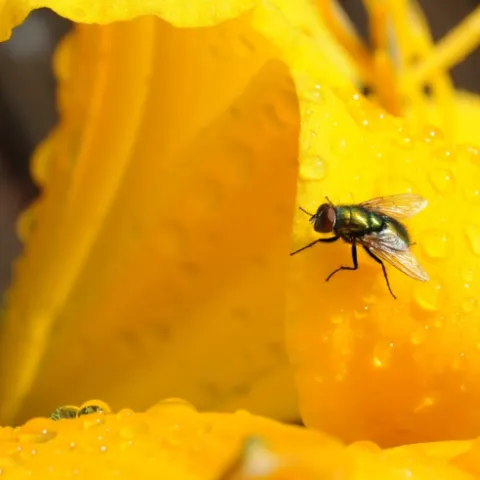
A green bottle fly lands on a daylily after the rain. (Photo by Kathy Keatley Garvey)

Make My Day!

October 15, 2008
By Kathy Keatley Garvey
"Go ahead, make my day." So said actor Clint Eastwood, as the character Harry Callahan, in the 1983 movie, Sudden Impact, after a robber grabbed a hostage. "Dirty Harry" was known for blowing away the bad guys. Clashes and confrontations often ended with blow flies on bad guys.
View Article
Primary Image
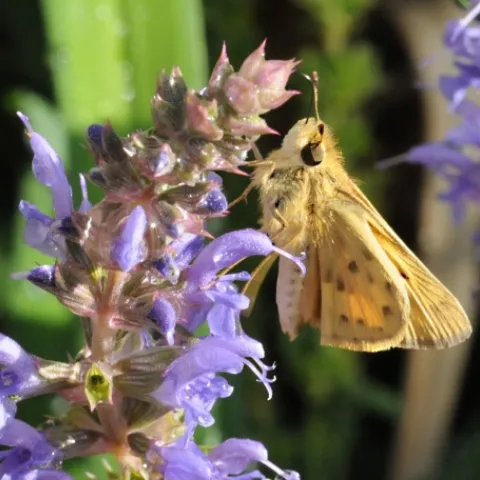
A male Fiery Skipper (Hylephila phyleus) nectars a purple sage. (Photo by Kathy Keatley Garvey)
Bug Squad: Article

Our Halloween Butterfly

October 14, 2008
By Kathy Keatley Garvey
Well, it's not really a Halloween butterfly, but it is orange. The Fiery Skipper (Hylephila phyleus) visits us more than the politicians do at Election Time. Last Sunday we spotted four Skippers in our backyard. Only two politicians skipped to our front door.
View Article
Primary Image
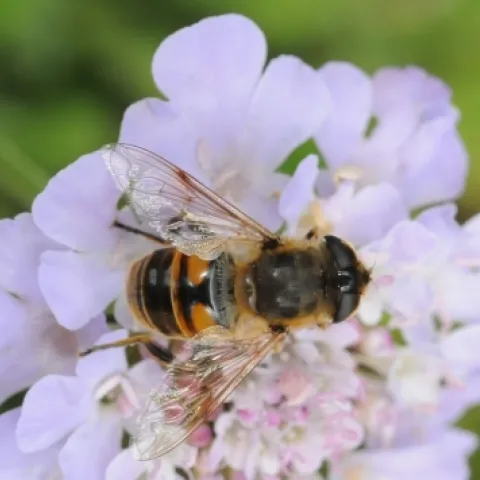
This drone fly, a female, is an Eristalis tenax from the Syrphidae family. It's sometimes called the "H Fly" for the pattern on its abdomen. (Photo by Kathy Keatley Garvey)
Bug Squad: Article

You're No Honey Bee!

October 13, 2008
By Kathy Keatley Garvey
Remember the 1998 U.S. vice presidential debate when Sen. Lloyd Bentsen told Sen Dan Quayle: "I knew Jack Kennedy, and you're no Jack Kennedy!" Well, in the insect world, there's a fly that looks a lot like a honey bee, but it's no honey bee.
View Article
Primary Image
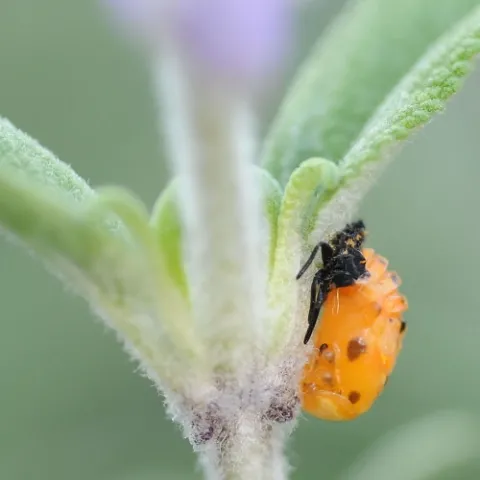
An immature ladybug on sage. (Photo by Kathy Keatley Garvey)
Bug Squad: Article

Luck Be a Lady

October 10, 2008
By Kathy Keatley Garvey
Ladybugs love our Russian sage. Ladybugs, aka ladybird beetles, eat aphids, which are pests in the garden. The ladybugs are welcome. The aphids are not. Belonging to the family Coccinellidae, ladybugs look resplendent in their bright red or orange wing covers, dotted with spots.
View Article
Primary Image
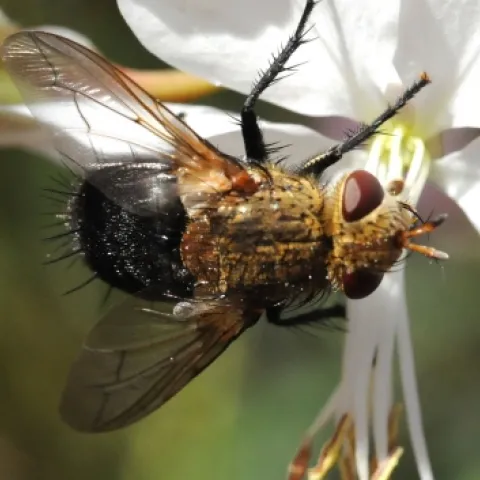
The parasitic tachinid fly feeds on nectar in the Storer Gardens, UC Davis Arboretum. (Photo by Kathy Keatley Garvey)
Bug Squad: Article

Pity the Poor Caterpillar

October 9, 2008
By Kathy Keatley Garvey
Pity the poor caterpillar. Here you are, minding your own business, and this tachinid fly comes along and lays eggs in your head. Good day for the tachinid fly. Bad day for the caterpillar.
View Article
Primary Image
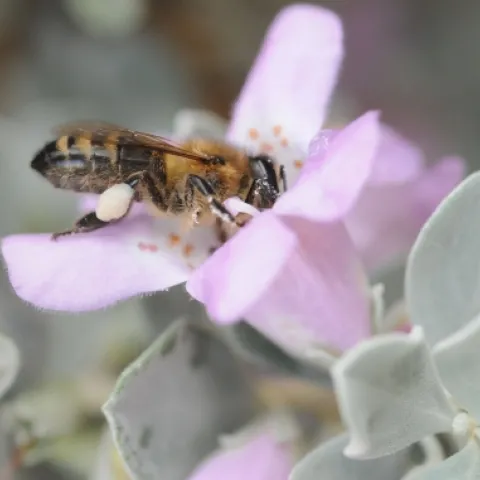
A pollen-packed honey bee dips her head in cenizo in the Storer Gardens, UC Davis Arboretum.(Photo by Kathy Keatley Garvey)
Bug Squad: Article

Cenizo!

October 8, 2008
By Kathy Keatley Garvey
If you've ever visited the Storer Gardens, UC Davis Aboretum, you've probably noticed the honey bees enjoying the cenizo(Leucophyllum frutescens), an evergreen shrub with silvery foliage and bell-shaped pinkish-lavender flowers.
View Article
Primary Image
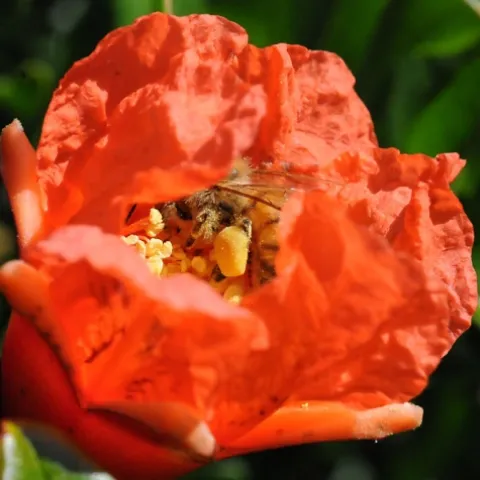
A pollen-packed honey bee curls up in a pomegranate blossom. (Photo by Kathy Keatley Garvey)
Bug Squad: Article

Queen of the Crops

October 7, 2008
By Kathy Keatley Garvey
We often hear of "cream of the crop," but the honey bee is the "queen of the crops." Honey bees are crucial to Californias $32 billion agriculture industry.
View Article
Primary Image
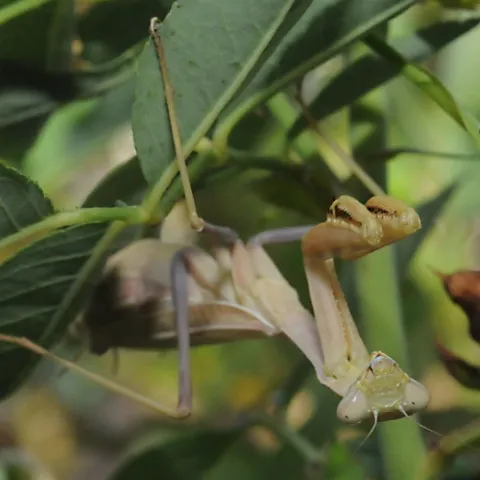
The praying mantis, camouflaged, lies in wait. Hmmm, is that camera edible?(Photo by Kathy Keatley Garvey)
Bug Squad: Article

What's for Dinner?

October 6, 2008
By Kathy Keatley Garvey
The praying mantis isn't at all concerned about culinary choices. It doesn't worry about who's coming to dinner, only that dinner will come. This aggressive, predatory insect will eat just about anything it can get its claws on, entomologists agree.
View Article
Primary Image
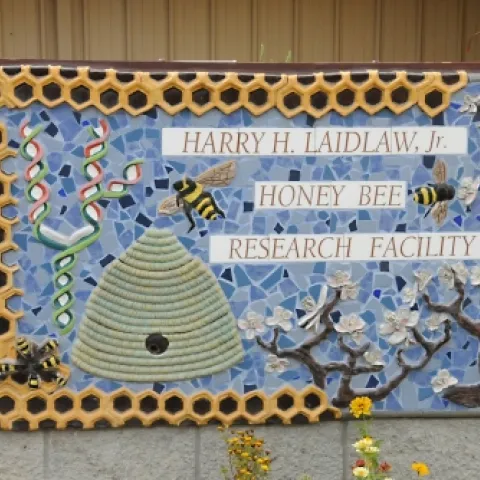
See the ceramic hive on this sign at the Harry H. Laidlaw Jr. Honey Bee Research Facility? The black hole leads to a real hive, located in back of the sign. (Photo by Kathy Keatley Garvey)
Bug Squad: Article

The Secret's Out

October 3, 2008
By Kathy Keatley Garvey
The secret's out. Or, rather, the secret's in. Inside. A number of years ago, UC Davis entomologist Diane Ullman created a ceramic sign outside the Harry H. Laidlaw Jr. Honey Bee Research Facility, located on Bee Biology Road, west of the UC Davis campus.
View Article