
Light Brown Apple Moth has Many Hosts
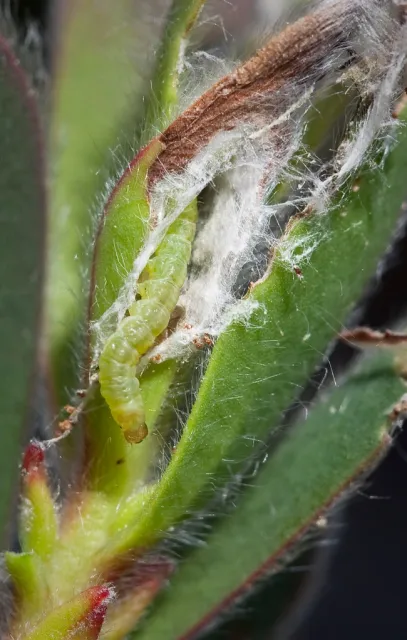
Soon after LBAM was discovered in Alameda County in 2007, officials started recording the nursery and fruit crops it was detected on. A 2008 CDFA list included 152 species. Many of these were new hosts, not recognized or recorded earlier. Clearly, LBAM was taking advantage of the California flora and nursery crops smorgasbord.
In a scientific review article on the host range of Light Brown Apple Moth (LBAM) in 2011, the authors summarized that there are “At least 545 plant species in 363 genera from 121 families that have been reported as hosts.” Further they stated that “Light brown apple moth is one of the most polyphagous insects known.” (See Attached files at the bottom of page.)
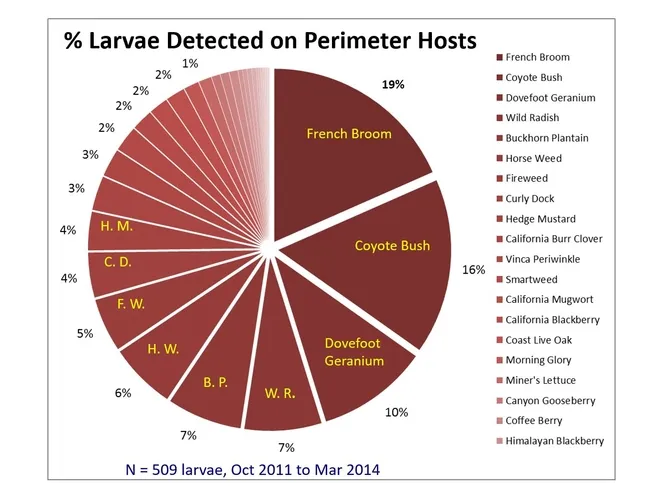
Although we knew something about common hosts within nurseries, we did not know a lot about the hosts that often surrounded these nurseries. We surveyed the native hosts and weeds that surrounded these sites for more than 2 years, and found that there were many common native hosts and weeds that LBAM could colonize ( See figure above).
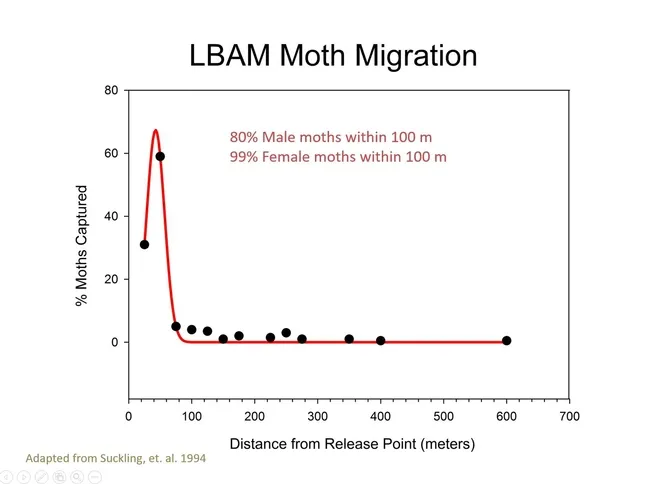
This has important implications since these closely associated hosts could be launching pads for the migration of moths into nursery or fruit crops. LBAM adults have been shown to migrate at least 100 meters from their original sources. (See figure above.)
It is important to scout and perhaps control weeds that are outside the nursery and crop perimeters to minimize impact on LBAM migration into production areas.