
Know your weed seedlings: Field bindweed (Convolvulus arvensis)
Field bindweed (Convolvulus arvensis) is a perennial vine native to the Mediterranean region of Europe and Northern Africa that has become naturalized throughout much of the world. The species can reproduce vegetatively (through the spread of rhizomes) and via seed production. Field bindweed seedlings can be distinguished from emerging perennial vines by the presence of two square- to kidney-shaped cotyledons. Leaves are arrow-shaped and alternate along the developing stem. The true leaves of seedlings resemble those on mature vines (just being smaller in size to start). Within six weeks of emergence, the seedlings have developed a taproot and a significant number of lateral roots. For more information about field bindweed, please see UC IPM's web-page: http://ipm.ucanr.edu/PMG/WEEDS/field_bindweed.html. A PDF file of the images in this blog post is included at the end of this article, following the pictures.
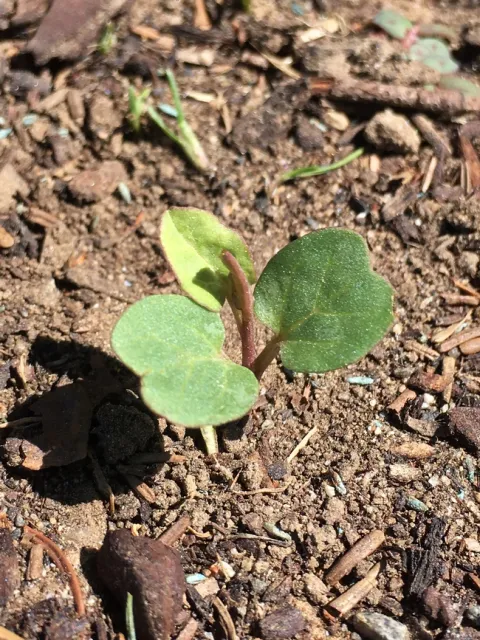
Figure 1. The cotyledons of field bindweed are mostly square- to kidney-shaped.
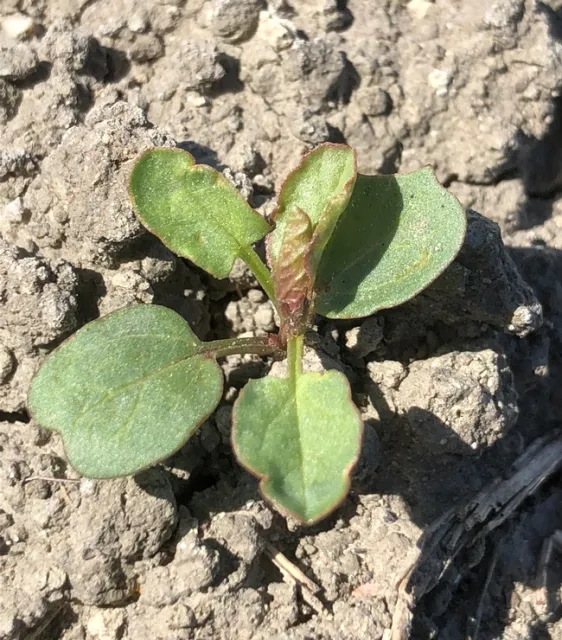
Figure 2. Young field bindweed leaves resemble those of adult plants in that they are both arrow-shaped.
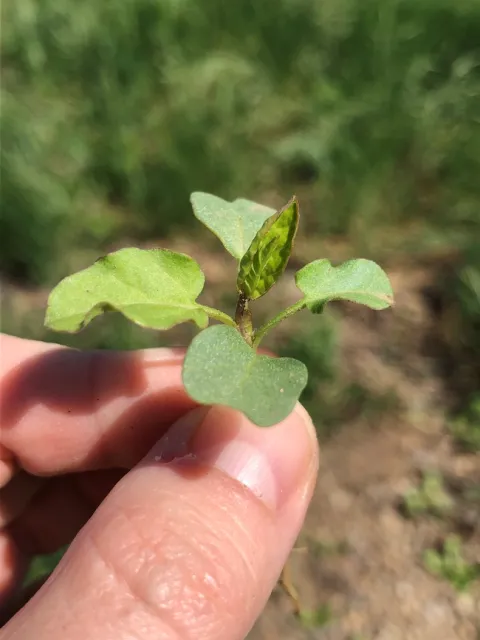
Figure 3. Field bindweed seedling.
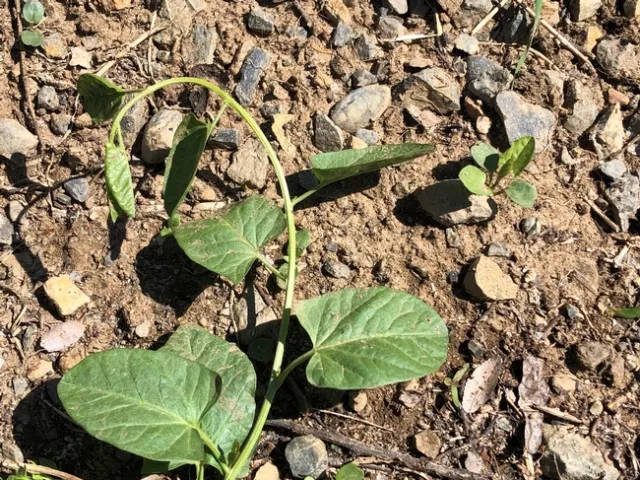
Figure 4. Perennial bindweed vine on the left as compared to a newly emerging seedling on the right (note the presence of box-shaped cotyledons on the seedling).