
TLD Staging
Editor’s Note:
The devastating fires in Southern California have affected many of our neighbors down south. So many of us have family and friends touched by this tragedy. Missy Gable, Director of the UC Master Gardener Program, recently sent out an email with the link to ANR Disaster/Emergency resources, including planning for emergencies (https://safety.ucanr.edu/Programs/emergency/EmrgResources/). Now is a good time to review your safety plans. We share Missy’s message, “Our thoughts are with our friends and colleagues dealing with the overwhelming loss of homes and property damage.”
Marilyn Saarni, Co-Lead of the Firewise Gardening Project and Rescape-certified in Sustainable Firescaping, writes a must-read article on evacuation preparation. “I want to push people to think ‘Save Lives’ first and then evacuation—evacuation—evacuation.” She also offers the first steps to building a firewise garden, provides resources on home hardening, and shares a CalFire site where you can get a customized wildfire preparedness checklist. If you only read one article in this newsletter, let it be this one.
David George interviews May Coleman, who is not only a very accomplished UC Master Gardener (over 1500 hours in 2024) but also someone who has a fascinating life, including graduating from the San Francisco Cordon Bleu, where she learned her mad cake-making skills. She also has her Master’s in Clinical Psychology. She is also deeply passionate about volunteering with underserved communities.
Liz Rottger writes a poignant and sometimes funny essay reflecting on the 2024 CoCoMG holiday party. For example, do any of us recognize UC Master Gardeners if they’re not in their garden clothes? She describes the camaraderie and the sumptuous feast on “medieval-style long tables laden with a banquet of delicious dishes and desserts...” Susan Domanico and Cynthia Casey, Hospitality Co-Leads, managed over 30 volunteers that evening. Susan writes, “We had one of the largest turnouts in years, 174 attendees." She shared her thanks to all those who volunteered their time for a memorable event.”
Susan Domanico and Pam Austin recently visited two school gardens in West County—Fairmont Elementary and Mira Vista Elementary—to deliver cool-season vegetable starts. She describes how the gardens at both schools are hubs of activities for the students during recess and lunch.
We’ve also included an article on the new leadership structure for the Webinar Team within the Speakers Bureau. And the Help Desk has submitted a client question about a mystery pest invasion. Find out how they solved the problem. Finally, Mary Jo Corby has announced the dates for the Great Tomato Plant Sale for all three parts of the county, and they could use some help sale day.
But first, we start with Laura Brainin-Rodriguez’s highlights from the UC Master Gardener Volunteer Recognition Potluck held on December 9, 2024.
Simone Adair, Editor
The Latest Dirt - Jan 2025
A Fresh Take on Leadership: Webinar Training in Action
The Speakers Bureau Webinar Team is embracing a new leadership structure. Instead of relying on a single program lead, all webinar coordinators are stepping up to share responsibilities. The team recently held an engaging and productive training session to prepare for their roles.
Under the guidance of Andrea Salzman, Hedwig Van Den Broeck, Holly Sauer, and Monika Witte, the team planned the 2025 webinar lineup while also focusing on volunteer recruitment and training. Each Webinar Coordinator selected their preferred programs to oversee, ensuring alignment with their interests and expertise.
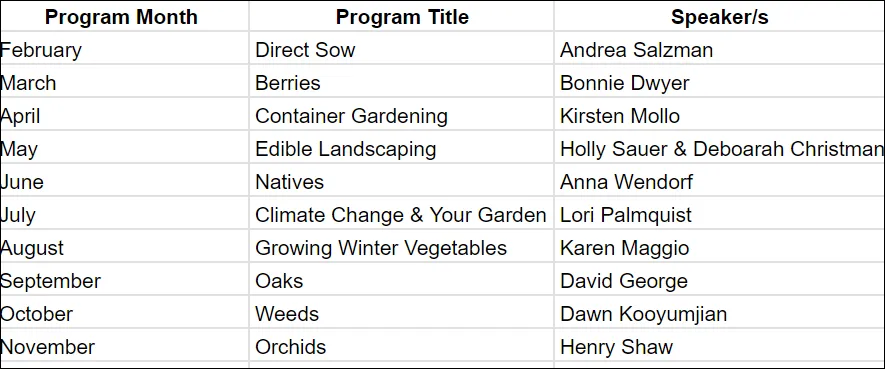
The training session was packed with valuable insights and collaborative discussions. Here's a snapshot of what was covered:
Highlights from the Webinar Training Session:
- Overview of Speakers Bureau Roles and Partnerships (including the Contra Costa County Library collaboration).
- Navigating the Box File Sharing Site.
- Style Guide and Templates for Presentations and Handouts.
- Step-by-step walkthroughs of webinar processes, including vetted and new talks.
- Marketing strategies for webinars.
- Dry runs and day-of logistics for library-hosted webinars.
- Monthly meetings and reporting guidelines.
- Group discussions on leadership questions and team meeting frequency.
Next Steps: The Webinar Team is diving into their new roles with hands-on mentorship and actionable tasks. For February and March Webinars Coordinators will collaborate with mentors (Andrea for February and Tery for March) to refine their processes. Each Webinar Coordinator is crafting a checklist tailored to upcoming programs, and they will reconvene in a week to share insights and make adjustments. They will also contact their 2025 speakers, providing essential information such as folder links, timelines, and templates for presentations and handouts. For new webinars, Coordinators encourage speakers to start preparing materials and schedule vetting sessions.
This collaborative approach ensures everyone is well-supported as they step into their leadership roles, creating a solid foundation for a successful 2025 webinar series.
If you are passionate about public speaking or want to contribute to the Speakers Bureau, contact Andrea Salzman at andreasalzman@hotmail.com. We would love to have you on board!
Growing Green Minds: The Magic of School Gardens in West County
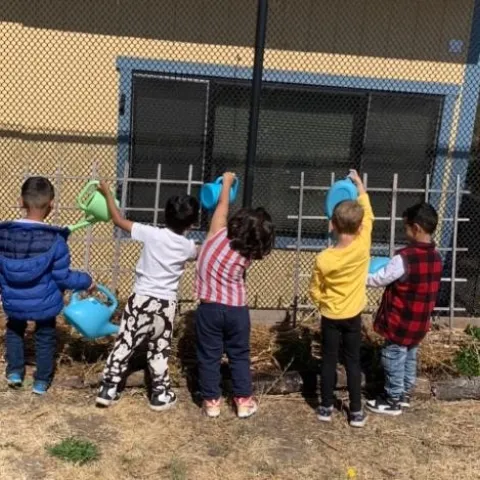
Article & Photos By Susan Domanico
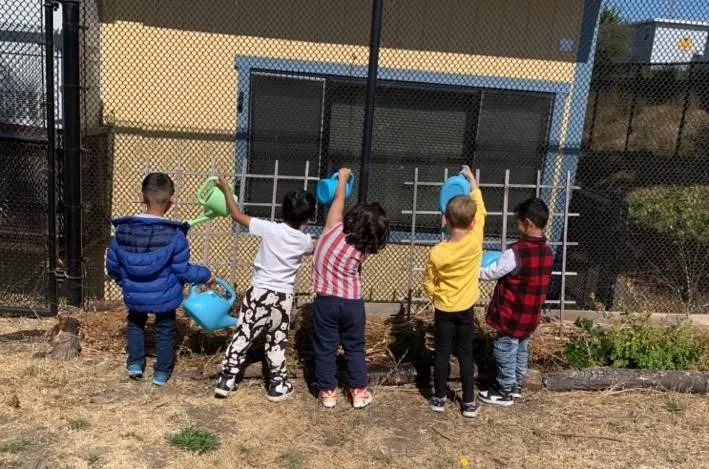
I’m excited to collaborate with these schools throughout the year. Here’s a link to a folder with pictures from our visit: Photo Folder.
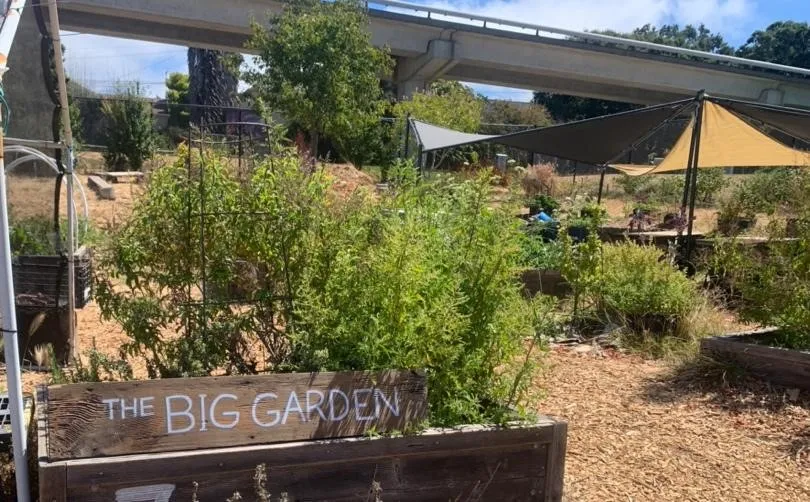
Consider supporting School Gardens and join us! The School Gardens Team welcomes more UC Master Gardeners to help support the gardens throughout Contra Costa County. We’re active in West, Central, and East Counties, providing expertise on irrigation, soil testing, and garden design.
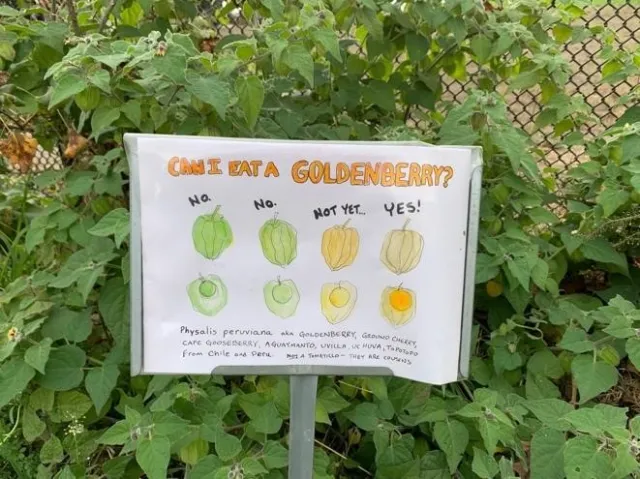
Your involvement can make a difference, whether it’s troubleshooting garden challenges or inspiring the next generation of green thumbs. Let’s work together to cultivate school gardens and inspire young minds throughout our community.
Help Desk Solves Mystery of Client’s Pest Invasion
By Robin Harper
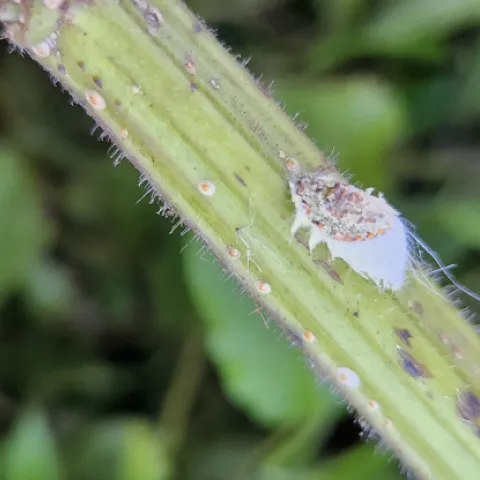
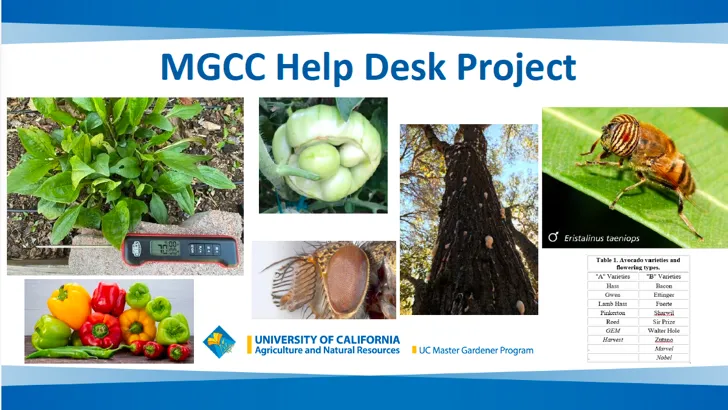
Recently, a client sent this question to the Help Desk, “I was pruning my Salvia bush last week and came upon these pests. I have scoured the IPM site and my pest management books and cannot find what this is or how to treat it. The bush is at least eight years old and has done very well in the past years.”
“Thank you for contacting the UC Master Gardener Help Desk with your question about insects on your salvia and for sending a photo. Photos always make it easier to identify a problem,” Robin Harper replied.
Natural predators usually manage the Cottony cushion scale, including the Vedalia beetle (a type of ladybug) and a tiny parasitic fly called Cryptochaetum. These natural predators can be the only management you need unless they are disrupted by the ants protecting their honeydew source. You can take a two-pronged approach and protect the natural predators by controlling the ants, along with using a horticultural oil to smother the juveniles. Avoid using broad-spectrum insecticides, which are very harmful to natural predators.
Details of the lifecycle and how to manage the insects on your salvia are provided on the UC IPM website at https://ipm.ucanr.edu/PMG/PESTNOTES/pn7410.html. Note that this article gives information on recognizing if the two key natural predators are present on your plant. You can also read up on controlling ants in your garden at http://ipm.ucanr.edu/PMG/PESTNOTES/pn7411.html and more about Vedalia beetles at https://ipm.ucanr.edu/natural-enemies/vedalia/.
Meditation on UC Master Gardener Holiday Recognition Dinner
Article By Liz Rottger
Photos by Simone Adair
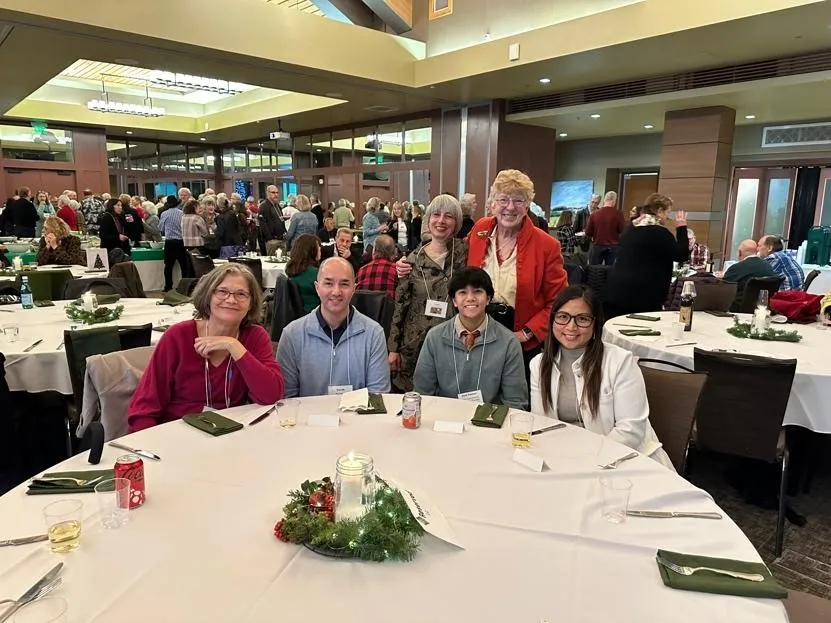
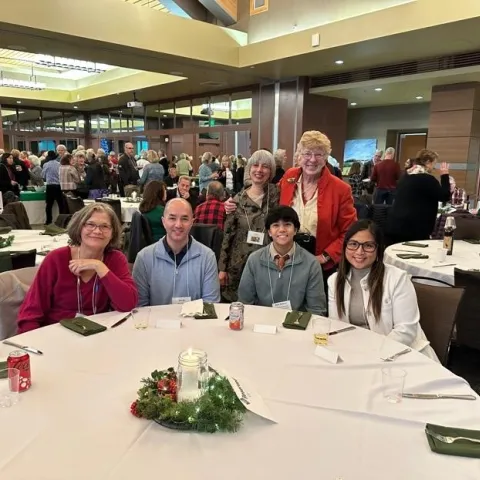
But as I reflect on this past year’s dinner, I am reminded that change is a part of life—and, thankfully, so is joy. I much prefer saying “I’m getting older” rather than “I’m old.” My vision and hearing are no longer as sharp as they once were. Sometimes, when someone across the table, particularly in a large, noisy room, cracks a joke, I don’t quite catch the punchline, but I can see everyone is laughing. I laugh, too. Or someone points out an old friend across the room, but I can’t quite make out who it is.
There are other reasons why people are almost unrecognizable. The UC Master Gardener Holiday Recognition Dinner is always an elegant affair. Everyone is so beautiful. It’s always a surprise to see everyone so dressed up, their usual shabby garden attire swapped out for suits and ties and carefully chosen outfits. But it’s a bit disorienting. A woman comes up and gives me a big hug. I must know her, but her hair is carefully coiffed, she is nicely made-up, and she has a shimmering top with a sparkling necklace. Who is she anyway? Gratefully, Terri Takusagawa and her crew made very large name tags for all of us to wear. (Thank you, Terri! Perhaps you understand my problems?) In any case, the moment of panic is gracefully resolved. Still, the transformation is striking. It highlights something profound about UC Master Gardeners—it is by its very nature very egalitarian: people digging in the earth together, united by a shared purpose.
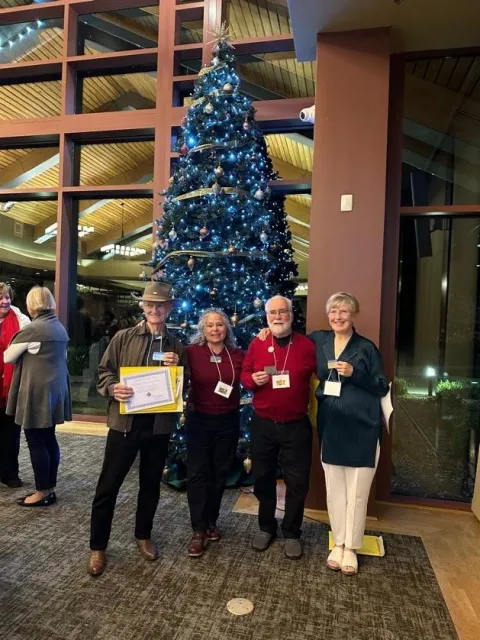
In the end, none of this really mattered. The camaraderie in the room at the Holiday Recognition Dinner made it clear that we were all part of something bigger than any one person or place. I was thrilled to share my dinner table with my fellow West County UC Master Gardeners and our guest, Matt Dwinel, a remarkable young Eagle Scout who built a garden shed for the Water Conservation Garden.
The evening was truly a feast for the senses. The medieval-style, long tables were laden with a banquet of delicious dishes and desserts, evoking the spirit of abundance we find in our gardens. The hand-crafted wreaths—the labor of love of Cynthia Casey, Hospitality Co-Lead with Susan Domanico, Ruth Perelstein and Reba Siero—lit with tiny fairy lights brought a festive warmth to the space. It felt as if every detail, from the libations to the laughter, had been tended with care.
Never doubt…!
Laura Brainin-Rodriguez, ELT 2023-2025
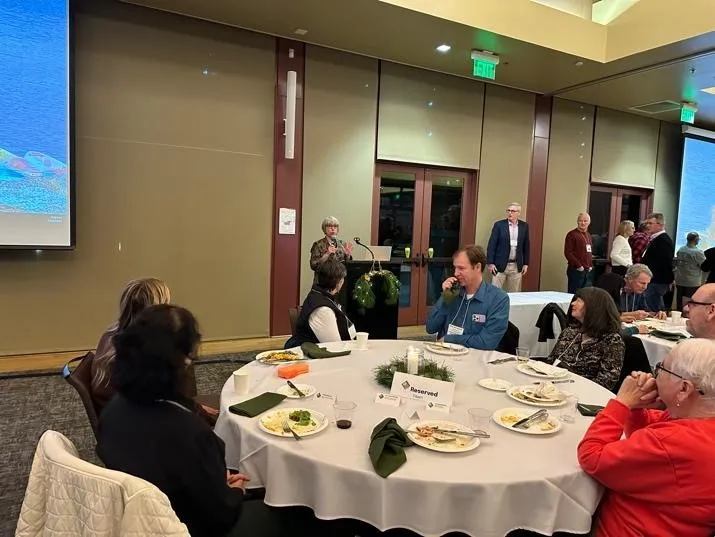
Our UC Master Gardeners exemplify one of my favorite quotes from Margaret Mead, “Never doubt that a small group of thoughtful, committed individuals can change the world. In fact, it is the only thing that ever has.”
This year’s event, centered on the theme “Seeding Change to Grow Together,” celebrated the outstanding contributions of the UC Master Gardener Volunteers of Contra Costa and allowed us to reflect on our amazing community of dedicated, inspiring, and creative UC Master Gardeners.
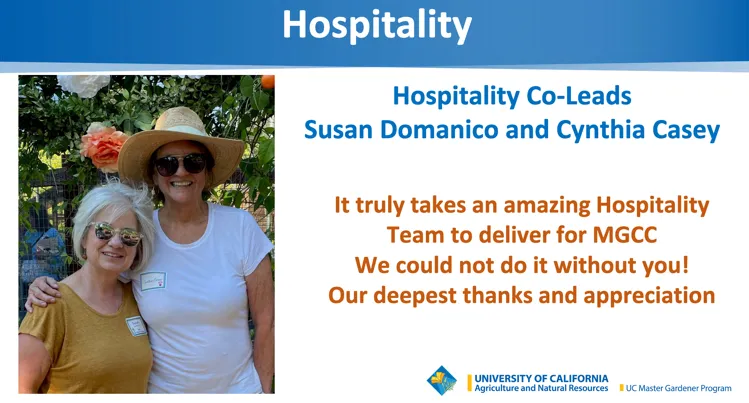
Our Hospitality Committee and the Volunteer Support Project coordinated everything, from name badges, place cards for Special Guests, decorations, appetizers, beverages, and libation stations, followed by tables laden with main dishes, salads, sides, and desserts prepared by our skilled and creative UC Master Gardeners. Kudos to Cynthia Casey and Susan Domanico, Hospitality co-chairs, and their team, with guidance from Virginia Saifer and Muriel Wilson, for all their hard work. We extend our heartfelt appreciation to the Hospitality Team. A list of team members can be found at the end of this article.
Terri Takusagawa provided name tags and worked with Reception volunteers to welcome and register attendees. Henry Shaw, our Badge Manager, compiled the information on volunteer hours, identified people who had reached a recognition milestone, submitted the orders for new pins and badges, printed certificates and letters of appreciation for Gold and Platinum badge recipients, and arranged for mailing these items to UC Master Gardeners who were unable to join us on December 9, 2024. Diana Garcia-Colmenarez, our Program’s Administrative Assistant, placed the orders and handled the mailing at the Post Office.
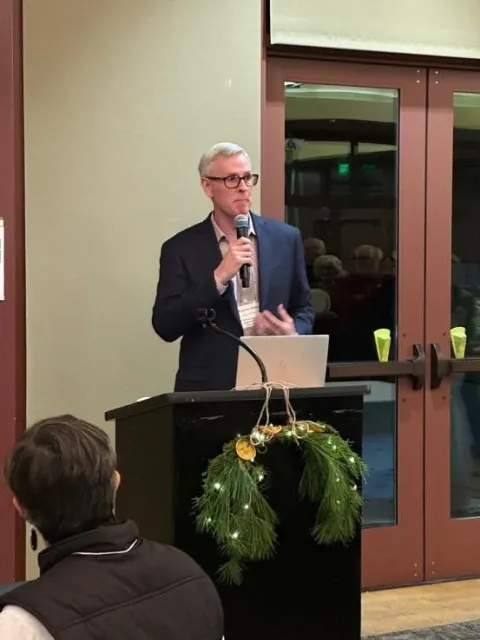
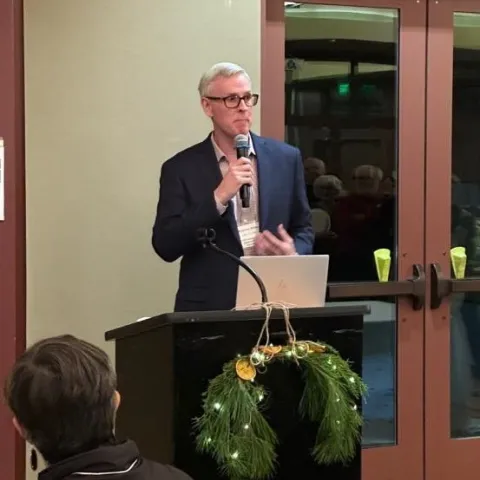
The Executive Leadership Team planned and delivered the Program, while I had the pleasure of drafting the Milestones PowerPoint. Our goal was to foster conviviality, conversation, and connection among our UC Master Gardeners and their families, who also play a vital role in supporting our Program. Together, we celebrate the time and effort our UC Master Gardeners dedicate to the Program, UC Cooperative Extension and Community Partners.
We were honored to be joined by Andrew Miller, the Area Director for UCCE in Alameda and Contra Costa County, and UCCE staff we work with directly, including Santos Lopez, the EFNEP Nutrition Education Advisor; Eli Figueroa, the CalFresh Healthy Living Program Director; Sheree Nuxoll, the Office Manager; and Diana Garcia Colmenarez, the CoCoMG Administrative Assistant extraordinaire!
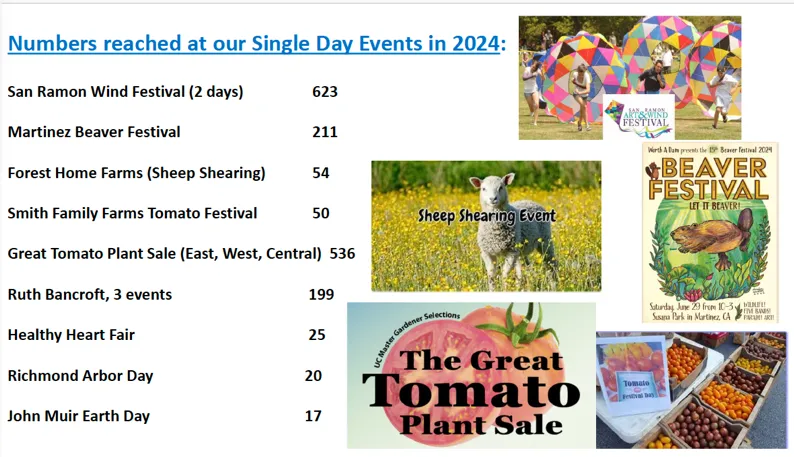
The UC Master Gardener Program of Contra Costa serves our community in various ways: where they shop (Farmers Markets and Great Tomato Plant Sale), gain gardening education (Our Garden, Great Tomato Plant Sale, Speakers Bureau webinars, Library talks, and our newsletters, blogs, and YouTube channel) and enjoy recreation (Events and Fairs).
I hope you’ll take the time to learn about and reflect on the difference we’ve made in the lives of so many as we promote the mission of the UC Master Gardener Program.
Below is information about our 19 projects and a summary of their accomplishments this year, listed alphabetically by project name.
Ask a Master Gardener — AAMG – Leads Bill Miller, Greg Doyle, and Laura Brainin-Rodriguez. They table at 12 Farmers Markets every month between March and October and 28 times at Our Garden in Walnut Creek, for a total of 134 public events reaching more than 7,100 people — 28% of CoCoMG participated in AAMG!
Communications — Lead — Lori Palmquist. This amazing group of volunteers brings the public the CoCoMG blog, News to Grow By newsletter, Constant Contact 3-blasts, the UC Master Gardener website, and the YouTube Channel with 61 videos to date with tens of thousands of views, in addition to Facebook, Instagram and Nextdoor. It also brings our UC Master Gardeners The Latest Dirt newsletter, Constant Contact e-blasts, CoCoMG Hub on our website, Video production and the Jobs! Jobs! Jobs! Newsletter.
Firewise Gardening Project — Leads — Marilyn Saarni and Steve Dazinger. This project develops demonstration gardens to promote firewise gardening practices to save lives and properties. Their focus includes wildfire preparedness, sustainable gardening, water-wise practices, pruning to mitigate risk, benefit ecosystems and support plant health.
General Equipment and Materials — GEM — Leads — May Coleman and Stanley Goldman. This group supports and supplies all projects with the necessary equipment to succeed. They deliver materials, repair equipment, manage computer laptops for presentations, purchase new equipment, coordinate material loans, and provide technical support.
Growing Gardeners — Lead — Ann Ramirez. This project team provides four-week vegetable gardening classes. In 2024, they offered four sessions, which enrolled 228 students. The students learned how to build and maintain healthy soil, the benefits of mulch and cover crops, composting, garden pest management, irrigation basics, when and how to water, when to plant, crop rotation and where to find accurate, evidence-based gardening information.
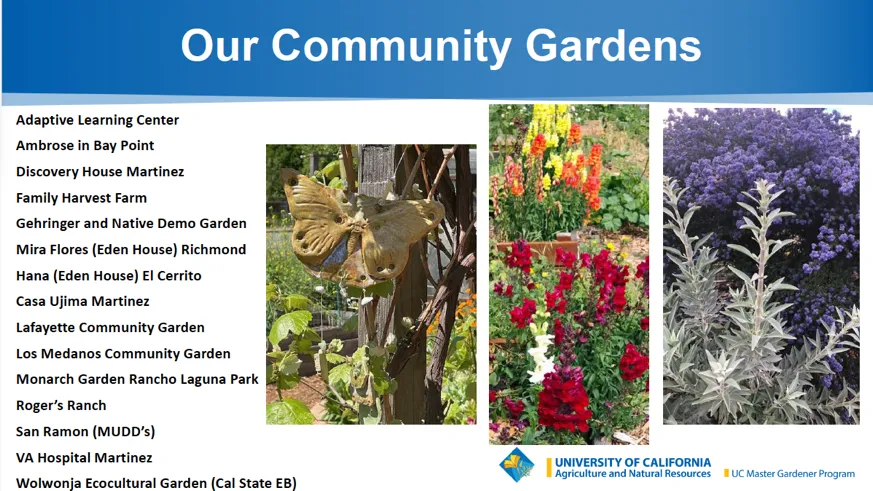
Jardineros — Leads — May Coleman, Laura Brainin-Rodriguez, and Anne Sutherland (emeritus). This project works with Latino and other underserved communities, partnering with community-based organizations to promote and support home gardening. They provide these services in schools, First Five California sites, community events, and health care and recovery settings. They also support other UC Master Gardener projects with Spanish language and culture consultation.
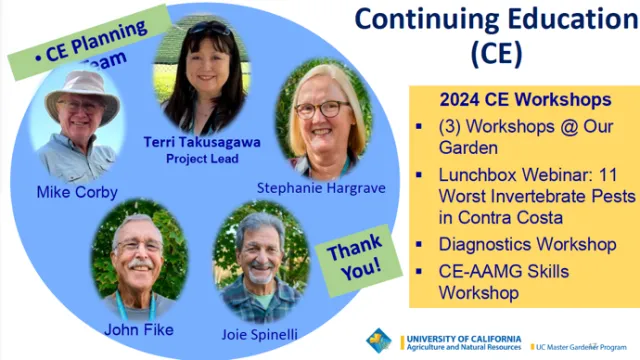
New Volunteer Training — Leads — Dorothy Abeyta and John Fike. This team develops and delivers the New Volunteer Training curriculum. They integrate skills practices to ensure that new UC Master Gardener graduates feel equipped to participate in our projects.
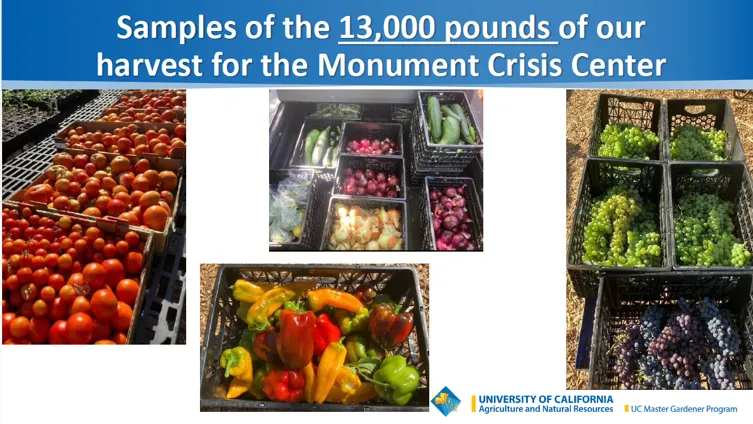
Plant Sales — Lead — Mary Jo Corby. This incredible team of 145 volunteers (50% of CoCoMGs) organized the planting, potting up and selling of edible plants to the public in Central, East and West Contra Costa County. In 2024, they raised $116,000 to support all our projects. They donated thousands of plants to over 20 community organizations, six community gardens, 15 School Gardens, seven Jardineros service locations and three CoCoMG demonstration garden sites.
Recruitment Team—Lead—Janette Drew. This team of 37 volunteers provided four in-person UC Master Gardener information sessions and evaluated the applications to become a UC Master Gardener. This year, 250 community members registered to attend the sessions; 40 people applied to the Program, and 31 were accepted into the 2025 class. They support the pipeline that helps UC Master Gardeners grow and thrive.
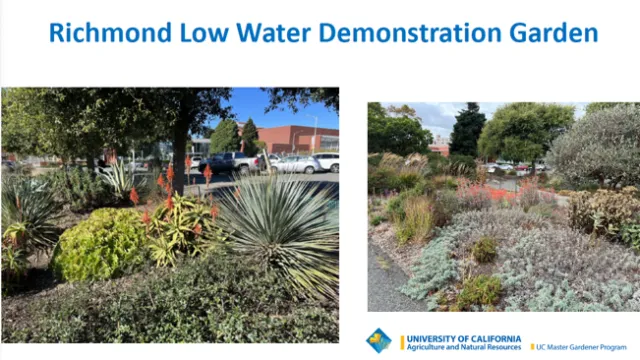
Rivertown Garden in East County — Leads — Lisa Bramblet and Mark Thomason. This team plants and maintains edible plant beds, native plants, pollinator plants, and habitats, and it works with many community partners to promote sustainable and water-wise gardening.
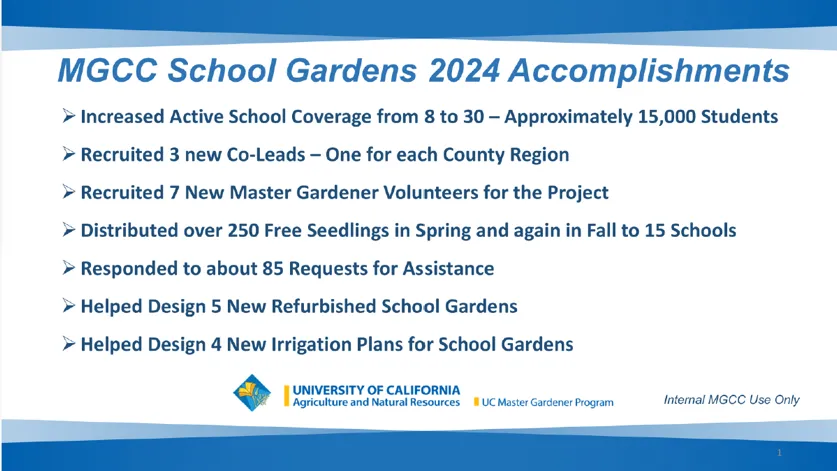
Speakers Bureau — Leads — Gail Burt (Webinars 2022-mid 2024), Hedwig Van Den Broeck (while not a lead, she stepped up to supervise and report on all in-person and per-request talks), and Sierra Higgins (Per-request talks). This team provided 10 webinars in 2024 with 2691 attendees and more than 2669 online views. They also offered 29 in-person talks at Our Garden in Walnut Creek and 52 per-request talks.
Volunteer Support — Leads — Jon Dwyer and Virginia Saifer. This team manages annual reappointments, tracks volunteer milestone hours and orders and organizes pins, badges, and certificates. They also conduct exit interviews and honorary UC Master Gardener vetting. They’re also the Nominating Committee for Executive Committee officers, Recruitment, Skills and Interest Survey, Volunteer Management System (VMS) Administrators and the essential Hospitality Team that made our Recognition Dinner a success.
Water Conservation Garden— Leads — Liz Rottger and Liv Imset. This West County demonstration garden focuses on water-saving solutions for the home garden. It shows how to grow traditional vegetables using only rainwater and how to regenerate soil and native landscapes. The garden volunteers also pot and maintain the edible plants for the West County Great Tomato Plant Sale.
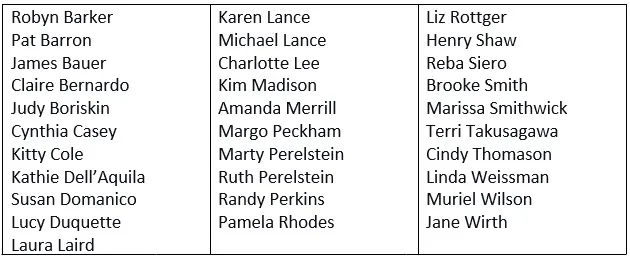
Here are the Hospitality Team members who participated in the December 9, 2024, Recognition event planning and/or execution:
Thank you for taking the time to learn about and honor the incredible volunteers!
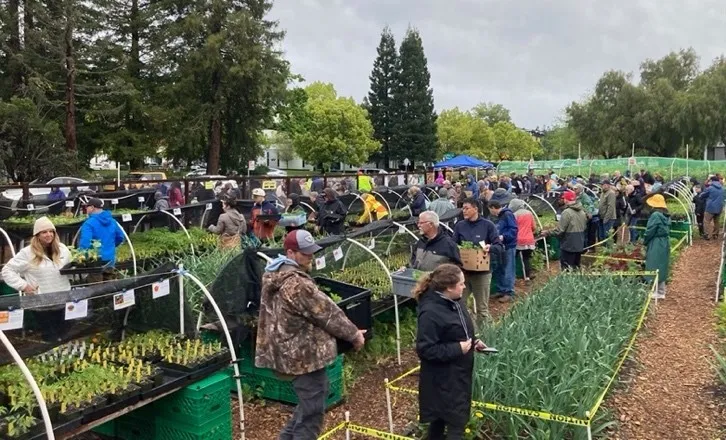
GTPS Dates Finalized – Help Needed
By Mary Jo Corby
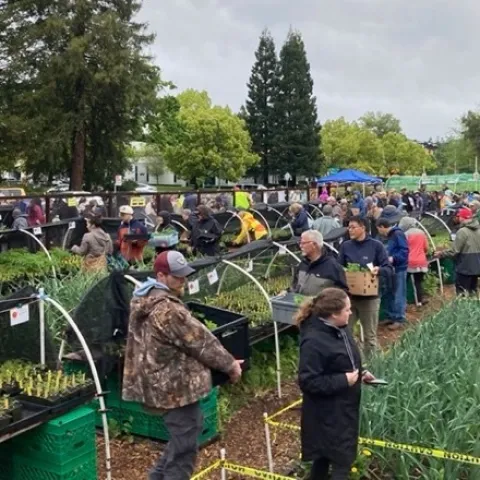
Hello UC Master Gardeners. The Great Tomato Plant Sale is in full organizational swing.
As a reminder, the dates of all the sales for Contra Costa County are:
- CoCoMG Pre-sale: Friday, April 4, 10am to 1pm at Our Garden, Walnut Creek
- Central: Sat-Sun, April 5 & 6, 10am to 3pm, location Our Garden, Walnut Creek; also the following 2 Wednesdays, April 9 & 16 from 9am to 2pm.
- East: Sat, April 12, 10am to 3pm, location Rivertown (Contra Costa Event Park 1201 West 10th St., Antioch)
- West: Sat, April 19, 10am to 3pm, location Richmond Public Library
Please note the date change for the West County GTPS sale/event due to construction starting at the Richmond Library. The NEW DATE is Saturday, April 19th, 10am to 3pm; location is Richmond Public Library. We know this is Easter weekend, but we hope MANY of you are still available to help work this sale!
ALL sales need your help, whether it's set up, sales, cashiering, line monitor, close down, please join the fun if you can! Remember... it takes a village to run the sale.
The Los Angeles Wildfire Can Happen Here. What Can You Do?
By Marilyn Saarni, Co-Lead of the Firewise Gardening Project and Rescape-certified in Sustainable Firescaping
The massive devastation and scope of the Los Angeles fires have touched all of us Californians. Many of us have friends or family members who have lost homes, faced evacuation or are unsure when they can return. The threat continues as the Santa Ana winds return, leaving communities on edge. Tragically, lives have been lost—many of them seniors or individuals with disabilities who were unable to evacuate on their own.
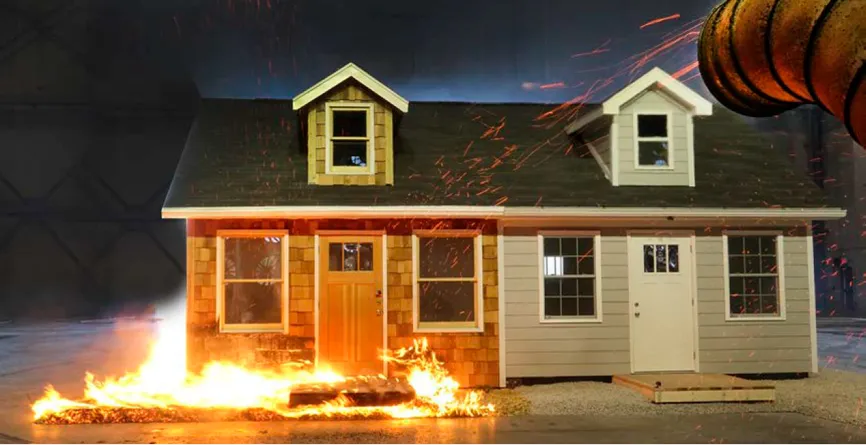
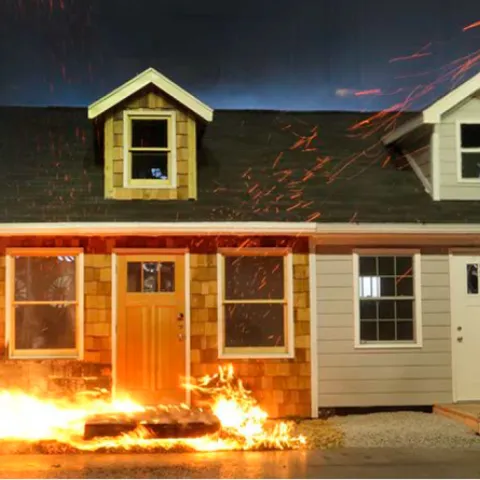
Defensible Zone 0 (0–5-foot noncombustible zone around the structure) increases the chances of a home’s survival from an ember attack. From Suburban Wildfire Adaptation Road Maps: A Path To Coexisting with Wildfires, 2020, © The Insurance Institute for Business & Home Safety.
Long-time Bay Area residents know that many of our neighborhoods face similar conditions. Our own turbulent Diablo winds blow out of the Great Basin and are most prevalent September through November. Climate change is intensifying both the Diablo and Santa Ana winds and extending their seasons. Earlier this month, the National Weather System warned of a Diablo wind event, with projected wind speeds of 60MPH and strong gusts. Fortunately, our early rainy season has kept relative humidity high, lessening the risk of a destructive wildfire. By contrast, Santa Ana winds have a winter season—and Los Angeles is enduring an extended drought, with no significant rainfall since February 2024.
Dried-out chaparral and grasslands were primed to ignite. Then the winds blasted the embers into residential neighborhoods—even into areas previously considered safe from such overwhelming wildfire conditions. As has happened in other catastrophic wildfires, firefighting resources—though they pre-staged firefighters and equipment, quickly mobilized to fight hot spots, and received swift support from outside agencies—could not match the scale of these fires. Infrastructure also failed, with water pressure collapsing. While people are quick to cast blame these fires were beyond anything seen before.
Investigations into the origin of the fires are ongoing while search and rescue teams continue recovering victims. Animal recovery teams are locating pets, livestock and wildlife that survived the fires but suffered injuries, taking them to emergency veterinary-staffed recovery centers. Insurance teams are also reaching out to clients to provide assistance. I encourage donations to leading groups, such as the Red Cross LA, LA Fire Department Foundation, Pasadena Humane Society, and World Central Kitchen. Research responsible charities assisting survivors and firefighters in Los Angeles at https://www.charitynavigator.org/losangelesfires.
What actions can we take to protect ourselves and our neighbors during a similar event? In our region, we face additional challenges: not only could the Diablo winds create overwhelming wildfire conditions, but we can also suffer from post-earthquake wildfires, when firefighting resources will be scarce.

From the UCANR Fire Network Evacuation Preparation site. Copyright UC Regents, courtesy of UC ANR.
FIRST: Prioritize lives. Every household should prepare and leave early when receiving evacuation warnings to avoid being trapped. Once you receive an evacuation alert or see fire approaching your home, evacuate immediately. Evacuation warnings are recommendations; evacuation alerts are mandatory and mean “leave now.”
Follow police evacuation guidance and get out of the way of emergency responders as you leave your area. For those evacuating hilly areas, watch this Firesafe Marin YouTube video on how to drive safely during a wildfire (one of the best videos on wildfire evacuation).
If you haven’t already, prepare a go-bag now. Peruse this sample list of what you may want to put into it, but customize it to fit your needs. It’s a good idea to personalize your list and review it annually. January is a good month for this task. Include long-sleeved shirts and heavy-duty long pants, preferably 100% cotton. Avoid polyester and other synthetic materials, as they can melt quickly. Embers can burn through them, reaching your skin quickly. Include boots or sturdy heavy-soled shoes and flame-resistant gloves, such as leather (again, no synthetics). If you have critical medications that need to be refrigerated, have a small, easy-to-carry ice box on hand, and stock it with ice on Red Flag Warning days to toss in your meds and walk out the door.
If your car is large enough, consider keeping certain supplies in it at all times during wildfire season—a first aid kit, emergency water and food supplies, a manual can opener, fire extinguisher, and a solar lantern (many models can also recharge your cell phone). As for go-bags themselves, backpacks are generally recommended—but if you’re unable to carry a backpack, devote a wheeled carry-on bag to be your “go-bag.” Keep your gas tank or battery charge ¾ full during wildfire season, and park vehicles front end out for quick and safe exits.
Remember your pets and livestock, too. Pre-planning is essential, especially for large livestock. To learn more, consult the resources at The Halter Project, a charity devoted to Animal Disaster Preparedness (they offer cool checklists!).
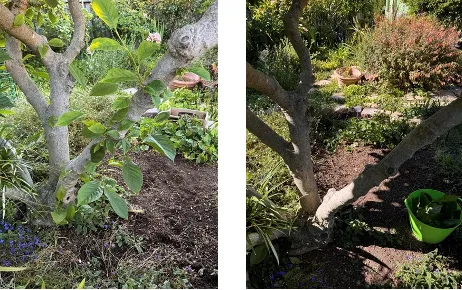
THIRD: Prepare your homes to be wildfire-resistant. This is where your gardening practices play a significant role. This is an excellent time of the year to implement your Zone 0 defensible zone. Remove all flammables and vegetation in the zone 0-5 feet wide around the entire perimeter of your house, deck, and outdoor structures such as sheds and greenhouses. While bare mineral earth (bare soil) is not flammable, for easier maintenance and firefighter access, it’s helpful to fill with hardscape-nonflammable materials such as pavers, rock, and gravel that is at least 3” thick. The latest research shows that the most vulnerable areas are under windows, near external doors, and at the external corners, where wind gusts tend to whip up embers. While Zone 0 guidance is 0-5 feet, research shows that 7 feet clearance from vegetation is better at corners.
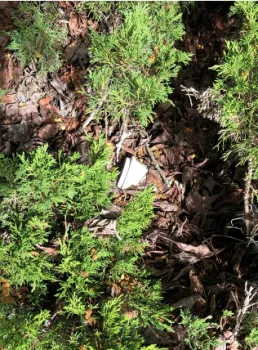
Preserve sightlines along your driveway—especially where it meets the road. Keep plantings no higher than 4 feet so you can see people, downed trees and other hazards, emergency responders, etc. Consider creating an emergency evacuation exit through the back of your property and possibly negotiating with your neighbor to build a gate into your back fence.
No tree canopies should hang over your house or other structures. Trim your trees to keep a year-round clearance of at least 5 feet from roof lines—10 feet for big trees is wiser, as they can sway dangerously in 60-80 MPH winds. Limbing up and thinning the canopies of big trees, especially if they’re not clustered (clustering protects trees from being smashed up by high winds), can help by letting gusting winds with embers flow through while also ensuring that the tree maintains a strong structure. This doesn’t apply to young trees. Lower limbs are important to build trunk strength in young trees and should not be removed until those trees are at least 10+ feet tall. These maintenance actions depend on the specific tree species; it’s always best to consult a certified arborist before making drastic changes. Never remove more than a third of a tree’s canopy at one time.
Do you need to remove risky, flammable trees and shrubs? This is a tough decision many gardeners face, especially those with older landscapes. Plants that once were popular may now be recognized as high risk that regular maintenance cannot mitigate. Others are far enough from flammable structures that you can manage flammability through proper maintenance to reduce flammability. However, some plants present too much risk to you, your neighbors, and your community. This may be due to their location, the spread of their heavy littering (pine needles spread over long distances and accumulate in gutters, eaves, and roof crannies), or their risky trait of explosive spread of embers (plants like juniper, thuja or arborvitae, rosemary, Italian cypress, unmaintained palms, and bamboo).
I’m not covering home hardening here. But your home is the most flammable object in the landscape, not trees! Up to 90% of homes are lost due to ember penetration. Firewise landscaping is only part of what you must do to prepare for wildfire. You’ll have to invest in home hardening as well. Resources are available on Firesafe Marin’s website, while Living with Fire (University of Nevada) offers videos and workshops (including for building professionals).
Excellent resources:
UCANR’s newly launched Fire Network web resources: https://ucanr.edu/sites/fire/
CalFire customized Wildfire Preparedness Plans https://plan.readyforwildfire.org/en/survey
Valachovic, Quarles and Swain (2021) Reducing the Vulnerability of Building to Wildfire: Vegetation and Landscaping Guidance (UCANR Publication 8695, July 2021), https://anrcatalog.ucanr.edu/pdf/8695.pdf
Douglas Kent (2019, 2nd edition): Firescaping: Protecting Your Home with a Fire-Resistant Landscape
News to Grow By Firescaping Series:
Understanding Defensible Space Zone 0 (spring 2024 issue)
Understanding Defensible Space Zone 1 (summer 2024 issue)
Understanding Defensible Space Zone 2 (fall 2024 issue)
Connecting with Underserved Communities
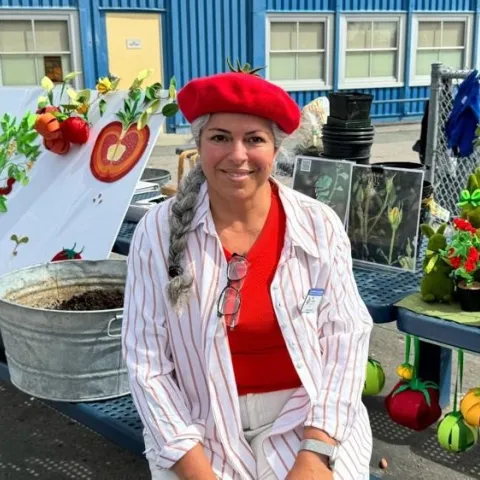
An Interview with May Coleman
by David George

Can you first tell us about your background leading up to your certification?
“Yes, I was born into a diplomatic family in Brazil. We moved frequently, so I was exposed at an early age to many different cultures and people worldwide. I deeply appreciated the strengths of different cultures and customs and how their communities get along. My BA and Master’s degrees in clinical psychology were from the University of Brasilia. After moving to San Francisco, I also earned a degree in molecular gastronomy from the Le Cordon Bleu school before it closed. This education allowed me to cater special nutrition to people with special dietary needs, such as those suffering from severe food allergies, celiac disease, thyroid issues, cancer, and others.”
As I understand it, you are still providing special nutrition recipes and meals.
“Yes, but I also love to garden, so I applied to become a UC Master Gardener volunteer and was certified last March. I volunteered over 1,500 hours to the program this past year, some with the Richmond Dry and Conservation Gardens, some staffing Ask A Master Gardener booths, Growing Gardeners, the Great Tomato Plant Sale, and this year’s New Volunteer Training and Help Desk coverage. But most of my efforts have gone into Community Gardens, General Equipment and Materials (GEM), which I now co-lead, and the new Jardineros project, which I also co-lead.”
That’s a lot! Tell us more about the new Jardineros project.
Do you have examples of these new goals in action?
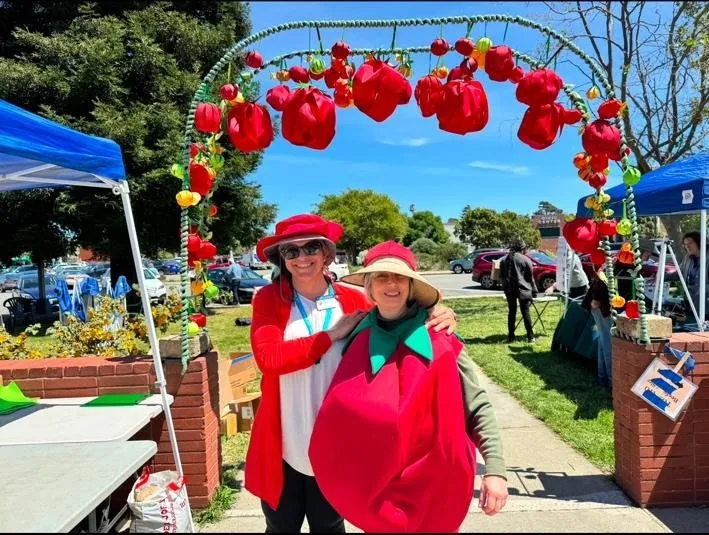
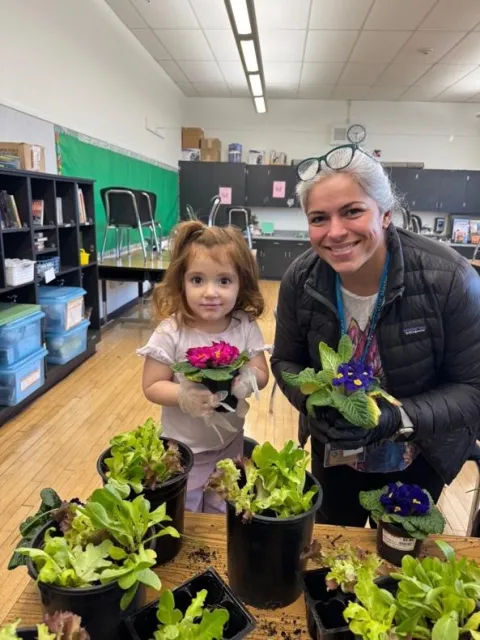
“I have an interesting story of how these connections with the communities work. I was staffing an AAMG booth last spring when a cute kid named Miguel approached our bug display. He was fascinated by the plastic figures. I engaged him in a conversation in Spanish, and eventually, he said, ‘Maybe I will be a Master Gardener someday.’ I replied that he might even grow up to be a doctor who studies bugs – you know, an entomologist. He said, ‘Yeah, I know!’ (she laughs) While we were talking, I noticed a family member listening nearby. It turns out that it was Miguel’s aunt, an educator working in several Hispanic schools in Contra Costa. She invited me to speak at several of those schools, sometimes in front of hundreds of students. She said the presentations were inspiring and demonstrated how the students can find belonging in the broader community when they grow up. We are fortunate to live in a bubble of diversity in the Bay Area. But it will be tough for these communities over the coming years. Any help we can provide will be worth it.”
That’s truly an inspiring account of how UC Master Gardeners can make a difference in underserved communities. What have been some roadblocks you’ve encountered so far?
“For Jardineros and GEM, there have been budget and documentation issues. These projects are designed to work hand-in-hand with the other projects, so coordination and communication are key. Jardineros needed the development of a structure that would handle multiple planned events at once. Formal education in 2024 was delivered at the Pueblos del Sol Addiction Treatment Center, which needed 25-35 hours of preparation and delivery continuously for some weeks. However, smaller sessions were also delivered, and working with the Contra Costa nutrition program took time. In Growing Gardeners, a mini book on how to start a garden needs to be written and expanded. Fortunately, these efforts have been staffed by some incredible CoCoMG volunteers, such as Karen Maggio, Anne Sutherland, Darlene DeRose, Laura Brainin-Rodriguez, and many others in the program, with awesome support from Dawn Kooyumjian and Diana Garcia-Colmenarez.
What advice would you like to share with new UC Master Gardeners like yourself?

Thanks, May, for your insight into underserved communities and how to connect with them, your selfless volunteering, and your great ideas. 2025 will present many more opportunities for us all.