
GWSS Photos
These pictures (except where otherwise noted) are by Phil A. Phillips, Area IPM Specialist Emeritus Ventura County and may be downloaded for your own use.
|

|

|
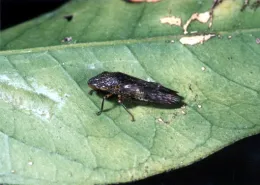
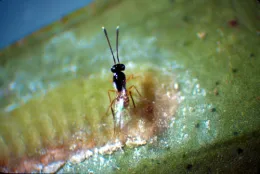
| Adult Glassy-winged Sharpshooter, Homalodisca coagulata, and Egg Mass (left). Photo by Jack Kelly Clark*. | Glassy-winged Sharpshooter Parasitoid, Gonatocerus Ashmeadi. Exit Holes in Sharpshooter Egg Mass. Photo by Jack Kelly Clark*. | Egg Mass of Glassy-winged Sharpshooter (~12x). Photo by Jack Kelly Clark*. |
|

|
|
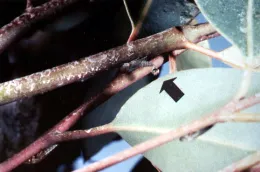
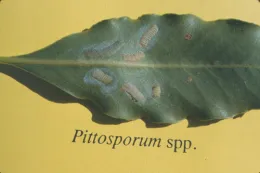
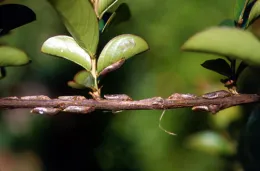
| Large drops of watery excretion are produced by each insect every couple of minutes during feeding. | Large numbers of GWSS gather on host plant stems to feed. | Multiple egg masses on Pittosporum leaf from April egg laying period. |
|
|
|
|
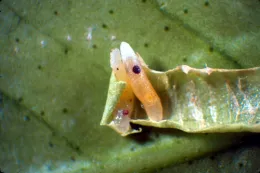
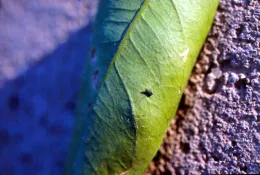
| Egg mass ready to hatch. NOTE: eye spots of embroyos within egg. | Nymph nearly fully developed within the egg mass covering which has been torn off the leaf surface and turned upside-down for viewing |
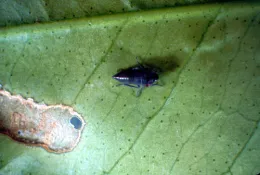
1st stage (instar) nymph, 3-4 hours old. |
|
|
|
| 1st instar nymph. |
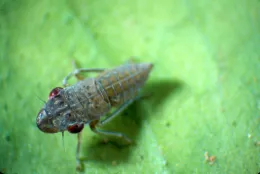
2nd instar nymph. |
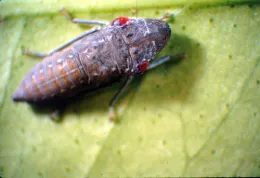
3rd instar nymph. |

|

|
|
| 3rd instar nymph next to egg mass. |
Two Gonatacerus ashmead: parasitoids attacking and laying their eggs into a fresh gwss egg mass. |
G. ashmeadi ovipositing into a gwss egg mass. Note gwss excrement debris collected on the tips of the antennae of the parasite as she tapped her antennae over the egg mass while identifying it as a host for her eggs. |
|

|

|
| GWSS adults feeding on crepemyrtle stem during the spring. |
4th instar GWSS nymph ready to molt. |
Freshly emerged adult GWSS from last nymphal molt - note red veins in wings and light color of exoskeltin before hardening to its normal dark color. |
|

|
|
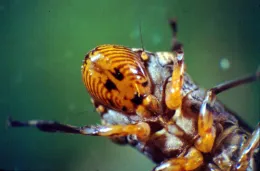
| GWSS bulbous feeding pump and piercing stylet mouth parts. |
Colorful underside of GWSS adult. |
*Jack Kelly Clark, Principal Photographer, University of California, Davis