
IJ Archive
UC Marin Master Gardener Articles in the Marin Independent Journal
UC Marin Master Gardeners have contributed to the Marin Independent Journal's "Ask a Master Gardener" column every Saturday since 1999. We have a team of dedicated writers who have covered nearly every aspect of gardening for Marin County over the years. Search our archives below by category of interest, or use the search box to locate stories by year, month or specific subject.


Marin IJ Archive
UC Marin Master Gardener Articles in the Marin Independent Journal
UC Marin Master Gardeners have contributed to the Marin Independent Journal's "Ask a Master Gardener" column every Saturday since 1999. We have a team of dedicated writers who have covered nearly every aspect of gardening for Marin County over the years. Search our archives below by category of interest, or use the search box to locate stories by year, month or specific subject.
> BACK TO ASK US
Beyond the honeybee: pollinators for plants and people
Although we’re in the middle of winter, soon we’ll witness the unveiling of springtime and all her joyous colors: brilliant orange poppies, deep purple iris, and vivid yellow tidy tips. And after that beguiling display, we can look forward to summer’s velvety sages and rugged buckwheats.
Ever wondered how these flowers keep showing up year after year? There’s no garden center in the wild. No mail order catalog. No Johnny Appleseed.
The answer? It varies, depending on whether they’re annuals or perennials, but behind it all is a tireless army of pollinators: hummingbirds, bees, butterflies, beetles, wasps, flies, bats, and more.
The work these tireless creatures perform is critical. Pollination accounts for 80% of the world’s flowering plants, including most of our food crops. Without pollination, the environment around us would collapse, and we humans would cease as a species because we rely on plants for food and oxygen.
But don’t worry! The system has been working for at least 130 million years.
Pollination: how it works
Virtually every seed-bearing and cone-bearing plant requires pollination. Pollen, that yellow dust that makes you sneeze, bears a plant’s male sex cells. When a bee or other pollinator transfers that pollen from the male parts of a flower to the female parts of the same or another flower in the same species, pollination occurs – that is, fertile seeds are produced.
When pollination occurs within the same flower, it’s called self-pollination. When it occurs between different flowers, it’s called cross-pollination. Cross-pollination is preferable because it produces more genetic diversity, which in turn makes a species more likely to survive by adapting to its changing surroundings.
Pollination between two completely different species does not produce viable seeds because the genetic material is incompatible. In other words, a poppy and a pine tree aren’t going to cross-pollinate. However, pollination between two closely related species can sometimes produce a hybrid offspring that contains traits from both parents. For instance, a habanero and jalapeño pepper might cross to create a fiery hybrid. Or your daughter might have your nose and your spouse’s eyes. You know how it works.
Meet the pollinators
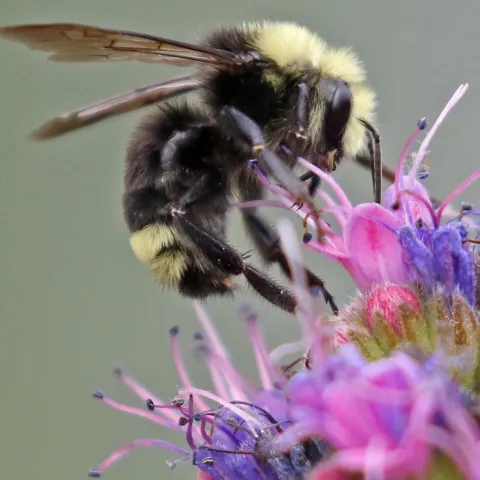
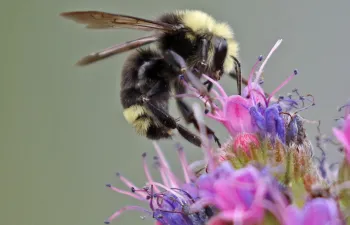
The first pollinator that probably comes to mind is the honeybee, the pervasive European insect introduced to California in 1853. Honeybees pollinate many California crops and are actually classified as domesticated livestock like sheep and goats. Although honeybees are helpful on the farm, they aren’t necessarily good for the environment. Why? Because they’ve roamed far beyond the farm, which affects our native bees. California has 1,600 native bee species, and honeybees can transmit diseases and often out-compete them for food. In addition, native bees are better pollinators and they also pollinate the native plants that are critical to our biodiversity.
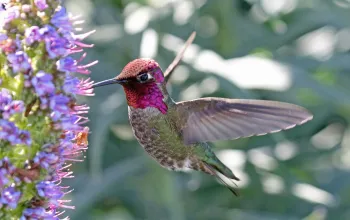
Hummingbirds, on the other hand, are always welcome pollinators. These beloved birds gather pollen on their beaks and foreheads while sipping nectar, and they have the added benefit of being able to hover over flowers for easy access. Hummingbirds appreciate tubular flowers that are red or orange.
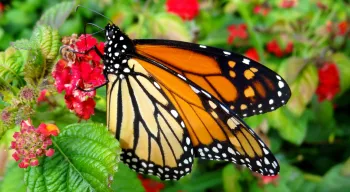
Butterflies are lovely pollinators, but they aren’t as efficient as bees at moving pollen. They pick up a bit of pollen on their long, spindly legs as they flutter from flower to flower. They have good vision but a weak sense of smell. Butterflies appreciate flowers in clusters, which provide landing pads.
They may not be as alluring as butterflies, but flies, gnats, and even mosquitos are also worthy pollinators. Like chocolate? You can thank a small midge fly, the sole pollinator of the cocoa plant.
Beetles were among the first insects that visited flowers and they remain important pollinators for ancient species like magnolias. They eat their way through plant parts and prefer flowers that are white or greenish, sweet-smelling, and bowl-shaped.
Bats, the only flying mammals, pollinate over 300 species of fruit, including bananas and mangoes. They also pollinate agave, which is used for tequila. Margarita, anyone?
By Marie Narlock, January 24, 2026
Healthy houseplants to brighten your winter days
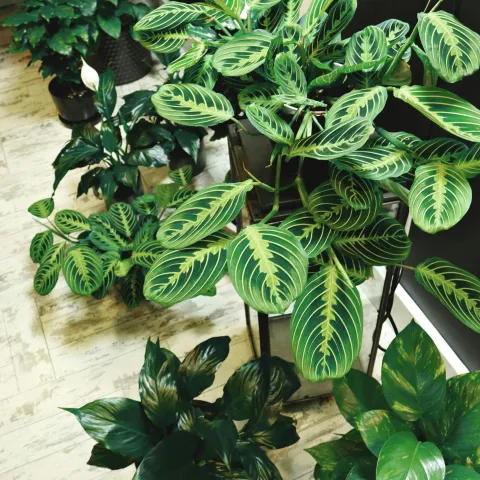
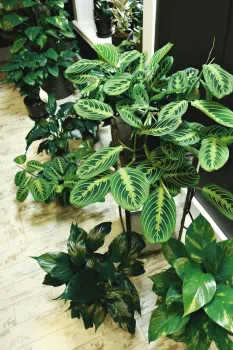
Once the holiday lights are packed away and the cold gray days of winter fill our skyline, it’s time to brighten up the house with indoor plants!
Who doesn’t love a variety of living plants in various colors, textures, and sizes, standing upright or spilling over the sides of a decorative container, strategically placed in the family home? In addition to providing a stylish design element, living plants help purify the air that you breathe by removing carbon dioxide and replacing it with life-giving oxygen.
Let’s start with the basics: plants need good growing medium, light, water, and nutrients. Sounds easy, right?
Plant selection: Do you envision a single plant in a pot or multiple plants in a large container? Where would you like it to sit – near a north-facing window or in the middle of a large room with windows, but no direct sunlight? Mentally envisioning your container will help in the selection of plants that will thrive in your location. Learn more about some popular houseplants and their cultural needs at https://plantmaster.com/presents/plants.php?id=5fb0a1e282d01.
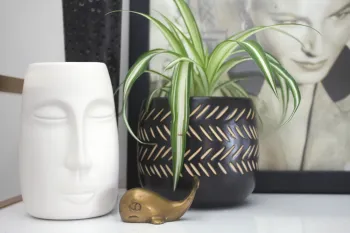
Containers: Your container is very important to the life of your plant AND your furniture. All plants need moisture, some more than others, but they almost universally dislike wet feet. Your container needs to allow for drainage but also protect the surface where it sits. A cache pot (a pot with no drainage holes) is ideal for holding a pot with drainage. Remove the pot with drainage to water, then reinsert it into the attractive cache pot. Occasionally, give the cache pot a good cleaning to discourage mold, mildew, or mineral deposits. Containers with saucers also work well; just be sure to empty the saucer.
Soil: Proper soil is essential for a healthy plant. Houseplants prefer a light, airy medium – definitely not garden soil. Purchasing a packaged soil specifically labeled for houseplants is the easiest way to start. If you prefer to make your own soil, here are a few recipes to try: https://hgic.clemson.edu/factsheet/indoor-plants-soil-mixes/.
Nutrition: Get your houseplant off to a good start with a quality planting mix. Refresh the soil periodically, then feed the soil, not the plant, monthly, with a dilute balanced fertilizer. Do not fertilize in the winter when plants are not in a growth phase.
Houseplant problems: Most problems stem from over or underwatering, insufficient lighting, or lack of care. Your plants are members of your household; routinely keep them clean, check for insects, and provide adequate nourishment and hydration.
Pests: The best long-term approach to managing pests is weekly monitoring. Regular check-ups can help prevent massive infestations.
The first line of defense involves careful examination of a plant before bringing it indoors. Study the plant, inspect the leaves, and consider isolating a new plant for a few weeks to ensure pests do not emerge.
Common houseplant pests, including aphids, mealybugs, mites, and thrips, can be managed by washing the plant thoroughly with water, removing and disposing of heavily infested parts, and considering applying insecticidal soap or horticultural oil. Always carefully follow the directions for using pesticides. Mealybugs can sometimes be controlled with isopropyl alcohol applied directly with a cotton swab. Scale will need to be scraped off the plant before following the washing regime. Gnats are often caused by overwatering and poor drainage. Treat this infection by allowing the plant to dry out and removing decaying plant material.
Sometimes the infestations will be so problematic that the best remedy is to discard the plant and start over.
Pets: Fluffy and Spot may be as attracted to your houseplants as you are. Unfortunately, tasting is a way pets get to know plants. Many common houseplants are mildly toxic to deadly to our furry family. Fortunately, the ASPCA provides an exhaustive online database of plants known to be toxic to cats and dogs, and those that are non-toxic and excellent options for keeping your pets safe. Study it here: https://www.aspca.org/pet-care/aspca-poison-control/toxic-and-non-toxic-plants.
Have fun brightening your home with some engaging ornamentals this winter!
By Jane Scurich, January 17, 2026
The transplanted gardener: how new feet find new roots in Marin
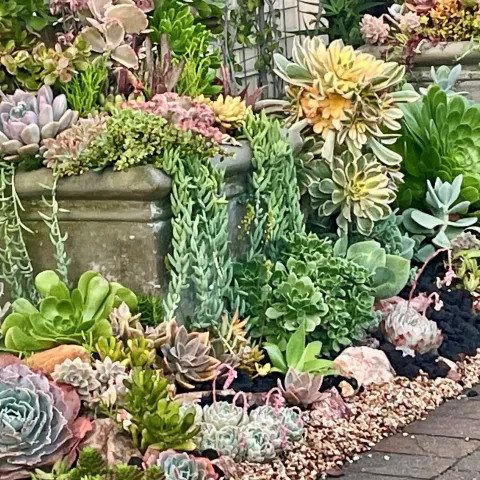
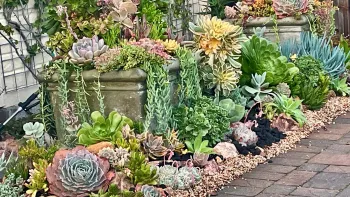
“New feet within my garden go…” is the first line of Emily Dickinson’s iconic poem “My Garden,” which conveys a sense of wonder to those stepping into new ground and to those observing those steps. Whether relocating from the Midwest with its four strong seasons, the steamy South, the sunbaked Southwest, or from across an ocean, Marin is certain to inspire wonderment in the newly transplanted gardener. Marin’s famously inviting Mediterranean climate is shared by less than 2 percent of the world’s land mass. This county rests on a spectacular landscape that begins at sea level and winds along miles of ocean coast as it climbs more than 2,500 feet and peaks at the summit of Mt. Tamalpais. Within just 828 square miles of water and land, new gardeners will find cool, verdant redwood groves often shrouded with fog, windswept coastal bluffs, sunbaked inland valleys, and energetic coastal shorelines. It is no wonder that Marin’s gardens reflect tremendous variability.
New gardeners will quickly determine that Marin lies within the familiar USDA Plant Hardiness Zones 9b/10a. This is helpful, but gardeners new to the West Coast will also learn that Marin’s three Sunset Zones more precisely tune their gardens to local climate variations that will determine what thrives. This uniquely complex topography presents a myriad of gardening possibilities. There are over 1,000 species of plants native to Marin and many thousands of other California natives that can be grown here, along with a seemingly endless list of succulents, ferns, flowers, trees, fruits, and vegetables. They’ll be pleasantly surprised finding containers of young redwood trees at the same local nurseries selling tiny pots of minuscule sedums! A huge selection of plants and planting decisions awaits every new gardener. Wonderment indeed! Faced with so many plant and gardening variables, the gardener new to Marin can easily wilt, showing their own symptoms of transplant shock.
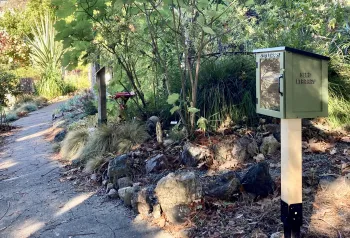
Fortunately, there is help nearby. Marin is also home to many welcoming gardeners and a wealth of “new feet” friendly gardens. To help alleviate transplant shock, a stroll through the beautiful collection of UC Marin Master Gardener Gardens at the Falkirk Cultural Center in San Rafael can be truly therapeutic. Found in Sunset Zone 15, these gardens are inspiring and educational. A recently added seed library at Falkirk allows all visitors to share and participate in local gardening activities. Can there be a better way to welcome the new Marin gardener than with locally collected seeds? Within Sunset Zone 16, the Marin Art and Garden Center in Ross, encompasses eleven acres of gracefully landscaped spaces that offer thoughtful gardening insight. Sunset Zone 17 features Harvey’s Garden in Tiburon, where the bayside setting provides a picturesque backdrop to a beautifully assembled collection of plants from Mediterranean climates worldwide.
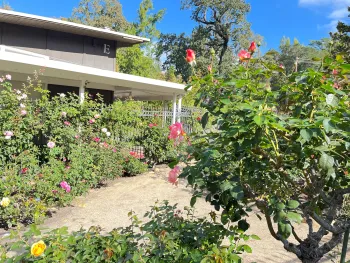
After all that walking, the new Marin gardener seeking relevant, impartial, and scientifically verified gardening information is forgiven for putting their feet up and encouraged to log into the UC Marin Master Gardener website,https://ucanr.edu/site/uc-marin-master-gardeners. This comprehensive and well-organized and designed website will undoubtedly become a favorite gardening tool. Offering links to an astonishing array of science-based and earth-friendly information, it’s tailored specifically for the Marin home gardener. Best of all, it’s very readable! The links will take the curious gardener to extensively researched plant lists, garden calendars, and dozens of fascinating projects and programs.
From the website, interested Marin gardeners can even invite new feet into their gardens for a free, nonjudgmental site assessment from experts in the UC Marin Master Gardener Garden Walk program, in partnership with the Marin Municipal Water District, with advice on improving irrigation practices. These garden walkers are well-versed in microclimate site assessment, irrigation and water conservation and earth-friendly garden plants and practices. And they are happy to help!
As we welcome the new year, we also warmly welcome all newly transplanted gardeners into the fabulous garden that is Marin County.
By Terry Amerson, January 3, 2026
Fabulous air plants!
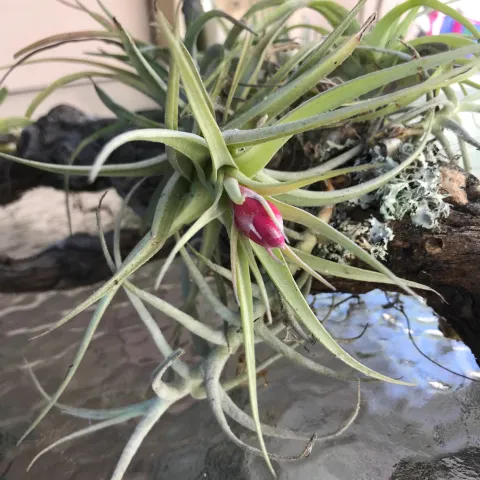
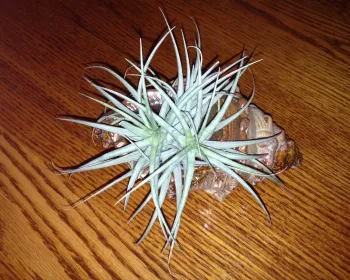
Have you noticed some curly, spikey, gray-green alien-like plants resting in a shell, hanging from a ceiling, perched on windowsills, clustered on coffee tables…no soil or water in sight?
Meet tillandsias, also known as air plants, a wondrous family of plants that literally thrive on air! They are low-maintenance, quirky, and fun for your home or patio. And…they’re non-toxic to your furry family members!
Tillandsias, members of the Bromeliad family, grow naturally in South and Central America and parts of the southern United States. More than 660 species grow on trees, rocks, and cliffs, anchored by their wire-like roots. One of the best-known tillandsias is Spanish moss that drapes from trees in the southwest US - and is neither moss nor from Spain.
Thin green leaf varieties grow in areas with more rain, and thick gray leaf varieties in areas more subject to drought. All water and nutrients are absorbed through the leaves.
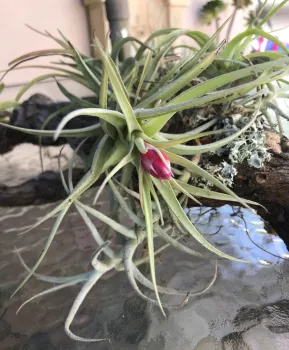
These easy-to-grow plants have three basic needs: bright light, good air circulation, and water.
Light requirements: Bright, indirect light, fluorescent office lighting, or a frost-protected shaded patio is best. An east window is ideal. Air plants thrive in outdoor environments with early morning or late afternoon sun. If you enjoy having your air plants indoors, consider rotating them periodically with plants in outdoor locations to encourage color and flowering.
Ventilation: Tillandsias thrive on fresh moving air. Locate them in well-ventilated areas. The air movement helps plants dry between waterings and avoid over-watering diseases.
Water: Tillandsias need water, but do not like to stay wet. Various watering methods will keep your plants healthy. What has worked for me and kept my collection thriving for years is soaking for an hour, once a week, in room temperature water. Shake off excess water, turn upside down to drain, and air dry before returning to your chosen location. Alternatively, spray each plant heavily, underneath as well as on top, and allow to air dry. In extremely warm or dry conditions or if leaf edges begin to curl in, an overnight soak will help rehydrate.
Fertilizer: Although not necessary, fertilizer can increase the growth and vigor of your plants and their blooms. Search for a fertilizer specifically formulated for tillandsias to be absorbed directly into the plant via the leaves, and use a dilute solution once a month.
Flowering: Air plants provide stunning leaves, and blooms add to their appeal. Appropriate lighting is essential for flowering. Not too much, not too little, just right bright light, but no direct sun. Experiment with various locations in your home or outside. Once you are rewarded with blooms, be careful not to allow the bloom to soak or be sprayed – keep the flower dry.
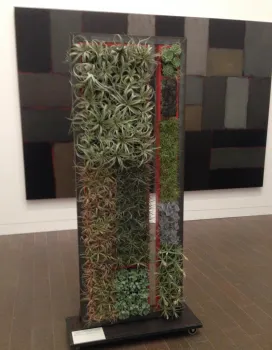
Mounting and other display ideas: Here’s where the fun starts! How and where do you want to display your plants? A single air plant, sitting primly on your office desk, can make a statement and spark a lively conversation. Creating a mounted arrangement of a variety of tillandsias on driftwood or grapewood branches can be spectacular and unique! Whatever media you choose for mounting your plants, make sure it doesn’t have holes that trap water. Ocean driftwood should be soaked in fresh water for several days before use as accumulated salts could burn the plant’s leaves.
Hot glue and a variety of non-toxic, waterproof liquid glues can be used to secure your plant to the chosen media. It’s best to avoid superglue. Use a small amount of glue on the bottom of the plant, avoiding the area where the roots form.
Where to shop for your new favorite plant: Many local garden centers and gift shops carry a variety of air plants. For a larger selection, search online for tillandsias. The array of sizes, shapes, and colors is staggering. You might want to plan a budget before you start shopping – it’s easy to get carried away by these engaging creations!
By Jane Scurich, December 27, 2025
Latin is for gardeners and scholars and the Catholic Church
In case you’re wondering, the Swedish biologist and physician Carl Linnaeus was the one who came up with our current way of naming plants and animals. About 300 years ago, he organized what’s called binomial nomenclature, the use of two Latin or Greek names: Genus (the main identifier used in nursery labeling, always capitalized) and species (individuals within the genus, always lower case). The Genus and species are often italicized and follow the main general identifiers: kingdom, phylum, subphylum, class, order, and family, which don’t show up on the nursery label. Back in the dark ages of my biology and botany classes, there was a mnemonic device to remember them, but much has changed in the last 50 years.
Latin was already the language of science, which meant that scientists all over the world could communicate with each other, and still can. Because Latin is considered a dead language, it’s not evolving like English and other languages, so it’s perfect for naming plants. But there’s nothing static about this system because names are constantly changing as research reveals information about where a plant actually should reside in the grander scheme.
Species names often describe characteristics such as smell: foetidis, foetidissima, nauseosus, odoratus, fragrans, fragrantissima, citrodorus, pungens, inodorus, and can be deciphered pretty easily. Others denote color: rugosa, rubra, sanguinea, igneus, atrorubens, alba, violacea, atropurpurea, viridis, virens, azurea, aurea, leucantha, niger. Some are descriptive: bellus, ferris, major, robustus, simplex, vulgare. Some give a clue to where the plant originated: borealis, australis, orientalis, occidentalis, centralis, sinensis. japonica, italicus, persicus. Still others tell us about growth habit: pendulus, tortuosus, patens, horizontalis, erectus.
Many of us know a lot of plants by their common names, which can be confusing but sometimes definitive. Take the commonly named California fuchsia, also known as hummingbird trumpet, hummingbird-flower, wild fuchsia, firechalice. If that wasn’t confusing enough, its scientific name is now Epilobium canum, formerly Zauschneria californica. Some old-timers still call it Zauschneria, though the youngster at the nursery recently wasn’t familiar with that name…
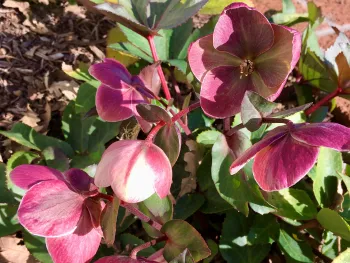
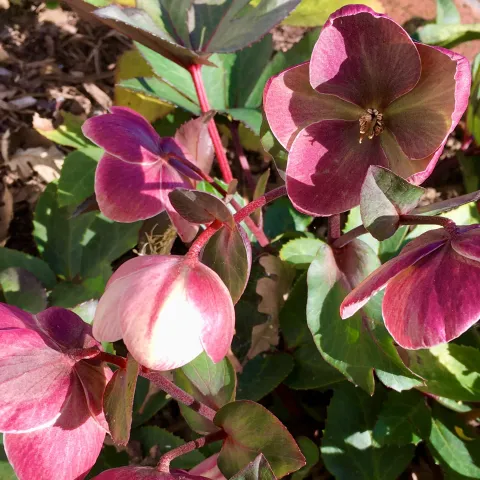
Another example would be Helleborus, commonly called hellebores, Lenten rose, Christmas rose, winter rose, and oriental hellebore. The names refer to the late winter into early spring bloom cycle. This genus has about 20 species, but there are subspecies, hybrids and cultivars that have been developed over many years, which means there are likely dozens, maybe hundreds. of different ones out there. When you see a species name such as H. x hybridus, it means that two species were hybridized, but there could be dozens of offspring, including some named for the breeder, such as Ballard’s Group. The Sunset Western Garden Book has explanations of some.
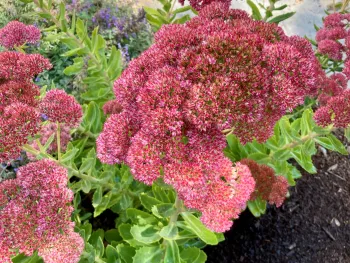
Another Genus and species that have changed is that some Sedums are now considered distinct enough to merit their own Genus. What used to be called Sedum ‘autumn joy’ now has the new, not so easy to pronounce name Hylotelephium with the cultivar name ‘Herbstfreude' in single quotes. Rosemary used to be classified as Rosmarinus, but DNA testing revealed that it’s more closely aligned with the sage family, Salvia, so it’s now named Salvia rosmarinus. Sometimes, re-naming of plants doesn’t take. Pineapple guava, Feijoa sellowiana, was renamed Acca sellowiana when botanists noticed the two were similar, but 2019 DNA analysis revealed that they weren’t so similar after all, so now it’s gone back to its original name! I’m sure there are many more names that have changed in recent years and research will continue to push these changes.
The bottom line is that if you want to be sure you’re getting a specific plant, it’s good to know the Latin name and make sure the nursery tag verifies that information. Plant nerds all around the world may speak hundreds of languages, but we’re all on the same page when it comes to plants.
By Diane Lynch, December 20, 2025
Adapt your garden to a changing climate
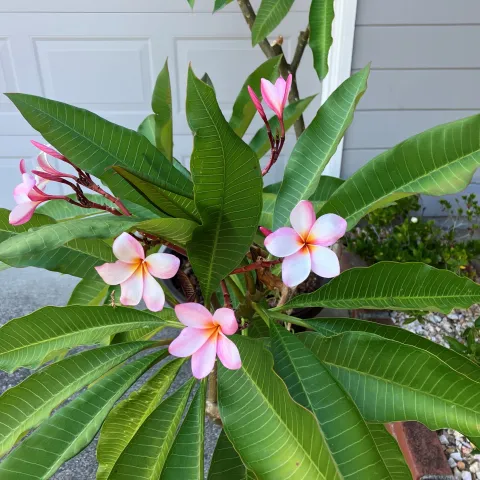
Climate change refers to long-term alterations in our average weather patterns, causing droughts to last longer, stronger storms to increase flooding, and fires that burn hotter with smoke reducing the air quality. Sea levels will rise, and coastal areas will experience erosion. Human activities have increased greenhouse gas levels in Earth’s atmosphere primarily by fossil fuel burning. Greenhouse gases trap heat, causing Earth’s surface to warm and change our weather.
There’s adaptation and there’s mitigation of climate change, and the right plants can contribute to both. Plants help mitigate the effects of climate change in air and water by removing pollutants and sequestering carbon keeping it out of the atmosphere. Happily, gardeners can contribute to climate change solutions by adopting some new practices with water, soil, and plant management.
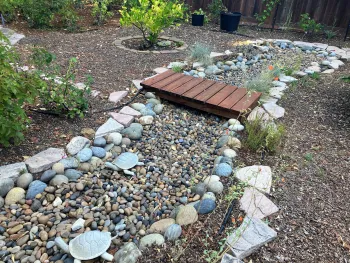
With warmer temperatures, all plants will need more water and conservation is one way to adapt to climate change. Drip irrigation with timers will give plants the water they need without waste. Mulch helps retain moisture, and water barrels to catch roof rain supply additional water.
Some actions we can take start with the soil. Healthy soil holds carbon, retains water, and protects roots from extreme weather. Carbon is good for our soil but not good for the atmosphere. Large plants like trees store carbon from the air into the ground. Adding compost or growing cover crops builds fertile soil, retains moisture, and buries carbon. To help with erosion during the rainy season, cover the ground with low-growing plants. Swales, berms, creek beds, and rain gardens help with erosion and drain water away from the home.
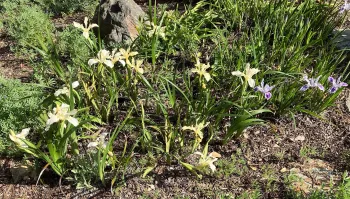
Choose native, climate-appropriate plants to survive the dry season with little water while having the capability to handle the wet winters. Invite our beneficial creatures by growing plants for our pollinators, the bees, butterflies, and birds. California Lilac, Lupines, Ribes, and California Fuchsia provide nectar and pollen as does Coyote Brush, a good choice for coastal areas.
Planting dates for a food garden may need adjusting as the climate warms and climate zones shift. Select varieties that ripen quickly and are drought and heat-tolerant. Rotate food crops to prevent soil depletion and plant herbs interspersed with flowering plants to attract pollinators and beneficial insects. Plant perennial edibles like artichokes, asparagus, rhubarb, tree collards, and berries. Fruit and nut trees, once established, require less water because of their deep root systems, but they may not have enough frost days. Growing tropical plants may be possible in sunny, warmer areas of Marin.
Remove invasive plants and, to be fire-safe, remove the three most hazardous plants in Marin: Junipers with oily needles and tight structure, Italian Cypress known as a “Roman Candle” and Bamboo for the dead leaves at its base.
To minimize the risk of embers starting a fire, clear the first five feet from the house of all plant material. From 5 to 30 feet have low-growing plants that are well-irrigated and grouped into islands separated by non-combustible material such as rocks, pavers, or gravel.
Keystone plants are excellent choices if you have the space beyond the 5 to 30 ft. zone. Oaks and Willows are important sources of habitat and food for local wildlife. Toyon supplies red berries in the winter for birds.
All plants can burn, but the right plant in the right place with the right maintenance is good gardening. Space plants far apart and remove dead or dried biomass. Trim branches closest to the ground. Prune plants to have both vertical and horizontal spacing. Increasing the space can limit or stop a fire. Prune trees to prevent hanging over the house or touching other vegetation. Clear combustible materials under decks.
As climate change alters the environment, watch for new pests and invasive plants as you adapt to and mitigate the damage. You are part of the solution to climate change problems.
By Sara O’Keefe, December 13, 2025
Using pesticides may hurt more than bugs
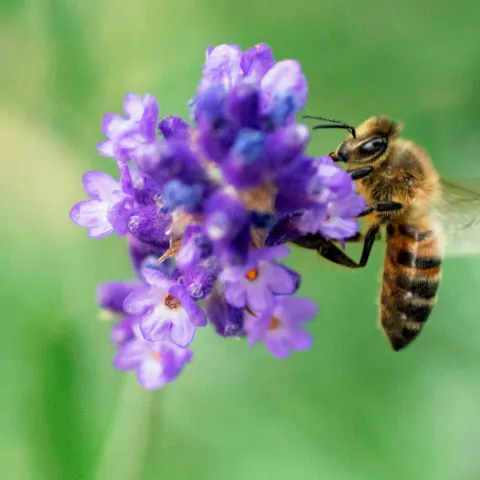

“There’s no good bug but a dead bug” or so the makers of pest control products have claimed. For just about every home and garden pest, there’s likely a product available to control or eliminate it. You probably use them regularly without hesitation – bleach, vinegar, and dishwashing soap are common household items that can be effective pesticides when used appropriately. But that’s often the key – to understand the pesticide you’re using, the proper way to use it, and any impact it may have beyond the pest you’re trying to control, so that you don’t unintentionally impact life in the soil, a wide array of beneficial living things, and even water quality when using it.
A pesticide is any material (natural, organic, or synthetic) used to control, prevent, kill, suppress, or repel pests. There are many types, each focused on the group of pests they are designed to control. Common ones include insecticides (insects), fungicides (fungi that cause diseases), rodenticides (mice, rats, and other rodents), and herbicides (weeds and other unwanted plants).
Pesticides are generally mixtures of one or more active ingredients (the component that kills or controls the target pest) and other ingredients that may make the product more effective or convenient to use. Commercially available pesticides all have some level of toxicity (a measure of how poisonous a material is) as defined by the Environmental Protection Agency. That information and much more are clearly stated on the product label, a legal document required for every pesticide registered in the United States. Other vital information includes active ingredients, where it can be used, targeted pests, and potential hazards to people, animals, or the environment.
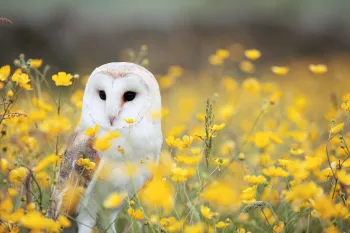
Pesticides work in different ways. Narrow-spectrum/selective products kill only a few closely related organisms, while broad-spectrum/non-selective ones kill a range of pests along with non-target organisms. Contact pesticides kill when it touches the external surface of the organism, while a systemic material is absorbed and circulates throughout the organism after entering the mouth in animals or the roots or leaves in plants. Pre-emergent herbicides inhibit most all seeds from sprouting, while post-emergent herbicides are applied after weeds are visible.
Depending on their physical and chemical properties and how they’re applied, pesticides may become airborne, get into soil, enter bodies of water, or be taken up by plants and animals. Other factors that may affect the unintended consequences of pesticide use are the material’s toxicity, how quickly it breaks down, environmental conditions, how well it dissolves in water, and how likely it is to become airborne.
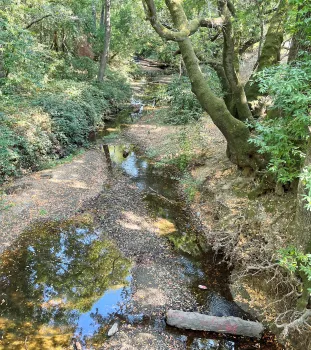
Consider these examples of some undesirable impacts:
- Systemic pesticides circulate through a plant and can end up in pollen, nectar, and fruit, which in turn may be ingested by beneficial insects, pollinators, and even people.
- Three-in-one products are a mixture of fertilizer, insecticide, and fungicide; they circulate toxic materials through the entire plant continuously, even if no pests are present, and can disrupt local habitat and the microbial balance of bacteria and fungi in the soil.
- Raptors may kill their offspring by feeding them a rat or mouse that has consumed a rodenticide but not yet died from it.
- Weed and feed products for lawns contain herbicide and fertilizer that may be ingested by a child playing with a toy on the lawn, then putting it in their mouth.
- An aerosol application of an herbicide may drift to non-target plants, damaging or killing their tissue.
- Rinsing out pesticide containers or applicators in the garden may result in the product being absorbed into the soil or running off into storm drains.
If you decide to use a pesticide, select one that is effective against the pest you are aiming to control, and that poses the least risks to human health and the environment. And ALWAYS read the product label before buying and follow the instructions – it will help you achieve maximum benefits from the product with minimum risk.
By Nanette Londeree, December 6, 2025
Biodiversity in the house
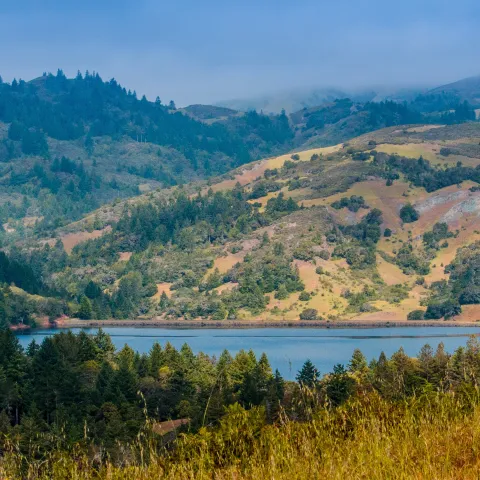
Imagine walking deep into a cool, damp, shady redwood forest. Inhale the scent, sink into the duff, touch verdant ferns, pluck tangy huckleberries, marvel at the spectacular vine maples and iris spread out around you.
Now, imagine you’re still walking among those redwoods, but this time the plants that naturally grow in the understory have been replaced by exotic plants that appreciate the same shady, wet conditions – hydrangea, hellebores, impatiens. It’s a colorful menagerie, a veritable Alice in Wonderland garden. On the one hand, it’s nice to see an eye-popping landscape. But on the other hand, it feels off.
What’s wrong with this picture? And more importantly, why does it matter?
Jarring as this image is, it’s nothing compared to the environmental repercussions were it to happen. Why? Because California’s diverse plant communities, such as its redwood forests, are essential to our state’s incredibly high biodiversity – that is, all the living things that coexist within an ecosystem, whether that’s a plant community, a regional landscape, a state, or even the entire globe.
What is an ecosystem?
Let’s bring that down to planet Earth for a minute. An ecosystem is like a house filled with living things, only instead of humans its inhabitants are plants, animals, and microorganisms. And like us humans, these living things need air, water, sunlight, and soil to survive. (Yes, we need soil. Remember where your food comes from?) When everyone gets along, life is good. Environmentally speaking, nutrients and energy flow uninterrupted. Everyone thrives.
But when you start messing with these interconnected relationships, problems arise. It's like asking your daughter to move out of your house so your crazy Uncle Joe can move in.
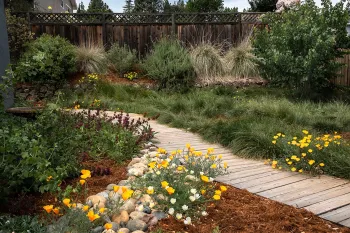
Removing plants from an ecosystem disrupts habitats and the associated essential food webs, which means a decline in wildlife – everything from bees to bucks to underground microorganisms. It also leads to soil erosion, decreased water quality, and vulnerability to invasive species, which increases the risk of fire. That altered redwood forest? Suddenly, it has fewer owls, it’s sliding downhill, and it’s covered in broom.
Best to keep our environmental households in order by allowing the native plants that co-evolved with the other living creatures to coexist in harmony.
The benefits of biodiversity
The result of healthy ecosystems is healthy biodiversity, which provides critical benefits for the environment and for people, including our health and well-being. The plants in our ecosystems help clean our air and water, pollinate our food crops, provide compounds for medicines, and even help reduce our stress levels.
Environmentally speaking, biodiversity is the strongest natural defense against climate change. Biodiverse ecosystems also help protect against natural disasters like floods and storms. From an economic and social perspective, biodiverse environments support industries and livelihoods and help us form connections with the land.
California: a biodiversity hotspot
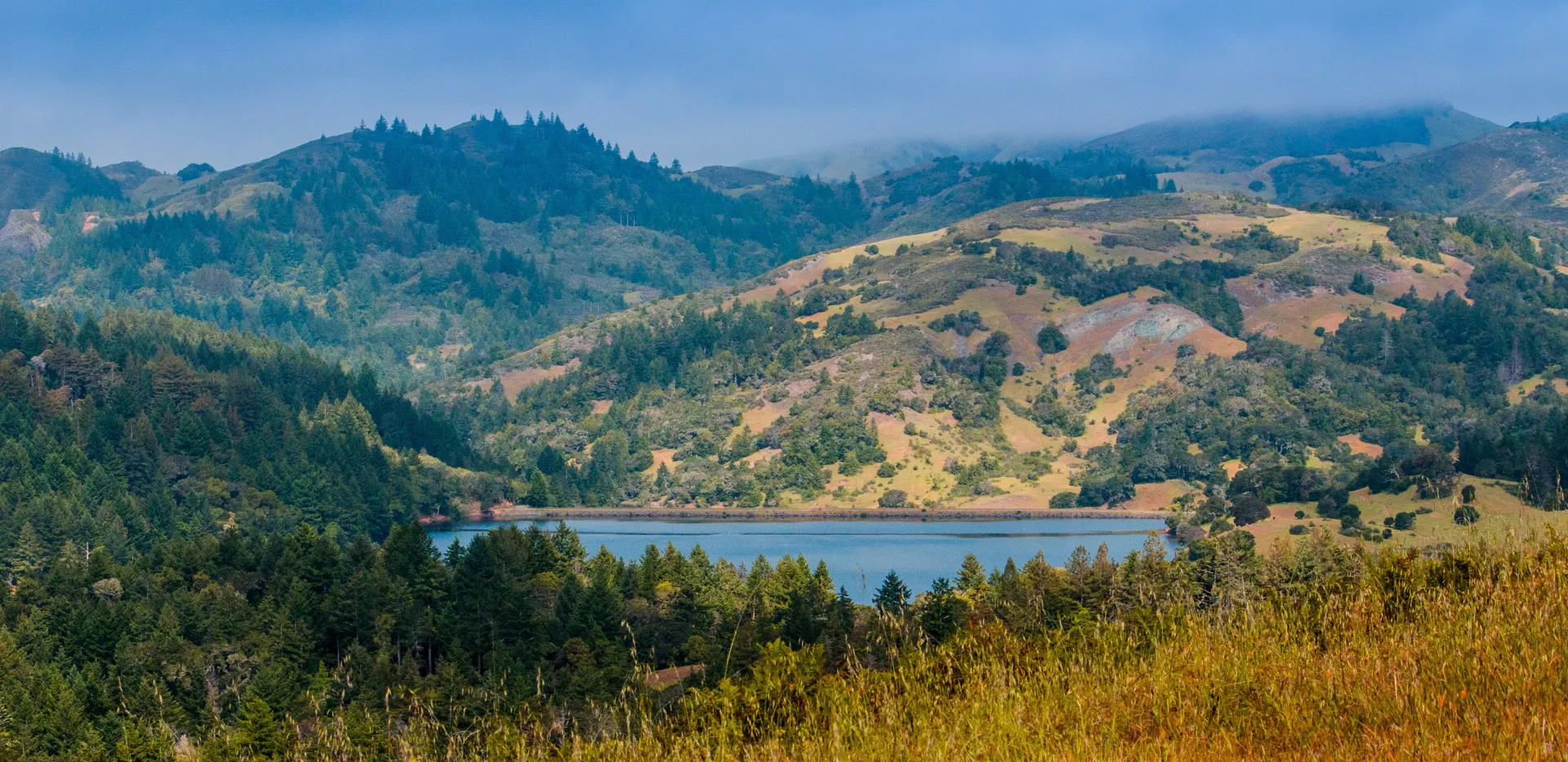
Our state is the most biodiverse in the US – by far – with 6,500 native plants.
Forty percent are endemic, meaning they don’t grow anywhere else on Earth. More than a third are considered rare or endangered.
California’s biodiversity is exceptional because of its size plus its varied geography, climate, and geologic history. We’ve got it all: the highest and lowest points in the contiguous US (only 80 miles apart!), mountain ranges, deserts, coastline, rainforests, a salt plain, arroyos, grassland, floodplains, varied habitats and soils, the list goes on. We have some of the largest bodies of water west of the Mississippi, including Lake Tahoe.
California is one of the world’s 36 biodiversity “hotspots” because of our significant number of endemic species and because many are under serious threat, mostly from habitat loss, invasive species, and climate change.
To combat this decline, California has created the 30x30 initiative, with the goal of protecting 30% of California’s land and coastal waters by 2030. You can also help by growing native plants and avoiding invasive species like ivy and pampas grass.
By Marie Narlock, November 29, 2025
Some native shrubs to consider

The value of natives is indisputable: most need less water after established, they co-evolved with local fauna, they attract pollinators and birds, they’re beautiful and easy to care for. What more does any garden or gardener need?
Myrica californica, or Pacific wax myrtle, can grow up to tree size but will happily do heavy-duty work as a hedge. It’s aromatic and the fruit attracts many birds including flickers and warblers. It will grow in sun or shade and is drought-tolerant, though some summer water may be nice, depending on your location, but especially as it gets established. If it grows too large, you can cut it way down to restart it.
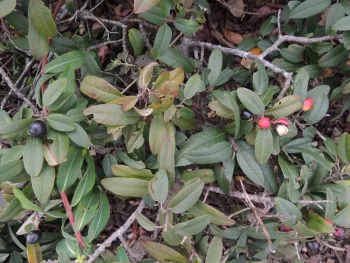
Rhamnus californica, or Coffeeberry, is widespread in coastal California but also happy inland, and tolerates both sun, where it will grow into a dense mounding bush, and shade, which will result in a more sprawling plant. Tiny spring flowers attract beneficial insects and pollinators. The berries start out limey green, ripen to red, and then turn almost black. Birds and small mammals feast on them.

Toyon (Heteromeles arbutifolia), is one of the best habitat plants for any garden. It provides berries for birds and other critters, has a tidy aspect, and grows to about 6 to 10 feet, but can be pruned to stay whatever size you like. A good place to see Toyon and Coffeeberry is Blackie’s Pasture in Tiburon, where they grow between the parking lot and Tiburon Boulevard.
Sambucus mexicana, western or blue elderberry, is a large bush or small tree if limbed up. It’s a great spring pollinator, with large white cluster flowers. The fruit appeals to birds (grosbeaks, nuthatches, orioles, tanagers, flickers…) along with humans in jams, pies, and wine. It’s native to the entire west coast; if you have space, this is a great plant to have. It’ll benefit from summer water inland but can get by on very little near the coast.

One of my favorite natives is Carpenteria californica, a rare plant native to the foothills of the Sierras, commonly called bush anemone. Blooms late spring to early summer…the white flowers have a bushy crown of brilliant yellow stamens… beautiful. After bloom, you can prune them back hard to tame upward growth. They can grow to 12’ but usually top out at about 5’-6’. They have a period after bloom when some of the lower leaves will die back, so planting something smaller (hummingbird magnet Zauschneria?) in front can cover that stage up if it might be bothersome.
There are many native Salvias or sages. Hummingbird sage, Salvia spathacea, with its deep red whorled blooms, is gorgeous. It spreads slowly by rhizomes, so you can plant some and let them mature into a colorful hedge. You could even make a multicolored hedge by mixing in some Salvia clevelandii which has similar whorled flowers in a range of purples. Salvia apiana, or white sage, has a slightly rangy quality unless pruned back to new buds, but its striking silvery, almost white foliage is worth the effort.
There are more native stalwarts such as Ceonothus and Manzanita (Arctostaphylos spp.) not covered here, varieties of which can be used as shrubs. They come in dozens of named cultivars ranging from groundcovers to trees, so there’s something for everyone in these two genuses. The Sunset Western Garden Book has a list of cultivars.
If you have a swath of land that’s currently wild, consider planting a native hedgerow that can take care of itself after a couple of years of irrigation. Check out The California Wildlife Habitat Garden by Nancy Bauer for ideas.
Now is the best time to plant as we approach what we hope will be a bountiful winter of rains to get plants established. The California Native Plant Society is a good source of information and inspiration on this amazing world of plants.
By Diane Lynch, November 22, 2025
Hosting butterflies
The delicate gossamer-winged butterfly gives color and grace to your garden. Besides being beauties, they are good pollinators in our gardens and in the wild. Groups of butterflies are called kaleidoscopes, flutter, or swarm. The purpose of a butterfly’s life is to find a mate and a host plant for the next generation’s eggs. Consider including host plants in your garden for everyone’s benefit.
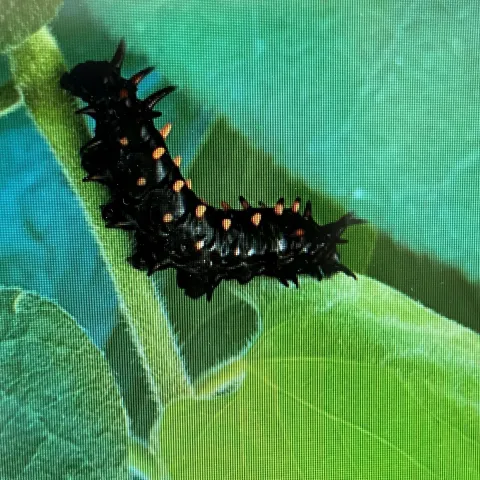
Butterflies survive primarily on plant nectar. As they drink, the plant’s pollen collects on their bodies, then transfers to the next plant, and they become pollinators. Butterflies go through metamorphosis, beginning with laying eggs on host plants, like milkweed, that will provide food for the emerging tiny caterpillars. If your milkweed has chewed leaves, it’s a good sign that you have caterpillars. At full size, the caterpillar will form a pupa or chrysalis, the mummy-like stage that will become an adult butterfly. When caterpillars are ready to form their chrysalis, they may leave the host plant to evade predators.
Many butterflies live only one or two weeks, but the Western Monarch lives for 2 to 6 weeks in summer. The last generation lives long enough to migrate south and return in spring. The California Tortoise-shell and Mourning Cloak overwinter as adults and survive for several months.
There has been a 22% decline in American butterflies in the last 20 years due to habitat loss, climate change, and pesticide use. Their decline is concerning because the butterfly is an indicator of ecosystem health. We need to help them recover by growing plants that nurture them.
Native butterflies have coevolved with native plants for many years and depend on each other for survival. Butterflies are attracted to large swaths of the same plant. Some good nectar plants are buddleias, verbenas, and lantana because they bloom for long periods of time, and asters, sunflowers, and daisies that offer a landing pad in late summer and fall.
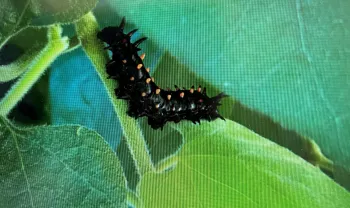
Some trees that host Swallowtail butterflies are cottonwood, willow, ash, and sycamore for the Western Tiger Swallowtail. The herbs dill, parsley, and fennel host the Anise Swallowtail, and the California Pipevine hosts the Pipevine Swallowtail. Oaks are favored by the California Sister, Golden Hairstreak, and the Mournful Duskywing.
Skippers are a type of smaller butterfly known for their darting flight and pollinating abilities. Host plants are grasses and legumes such as black locust.
The Cabbage, Checkered, and Spring Whites butterflies host plants are in the mustard family and nasturtiums. The Red Admiral is the most widespread butterfly in California and host plants are nettles: baby’s tears, hops, and pellitories.
Passionvine is the host plant for the Gulf Fritillary. The Painted Lady’s host plants are thistles, pearly everlasting, and fiddleneck. The Common Buckeye’s host plants are snapdragon, mimulus, penstemon, and plaintain.
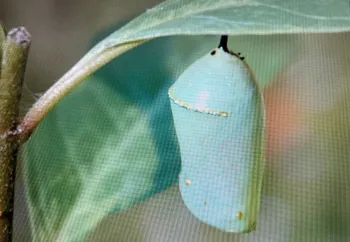
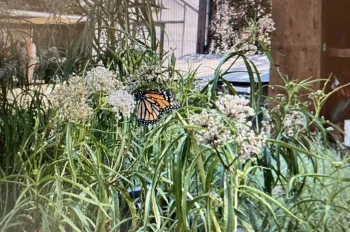
Two butterflies seen in Marin are migrants. The Painted Lady’s migration is from Southern California. The Monarch, a larger butterfly with a wingspan of 3.3-4 inches, migrates to the California coast in winter to shelter in blue gum eucalyptus, Monterey Pine, and Monterey Cypress. The Monarch lays her eggs on milkweeds, Asclepias. Preferred are Narrow-leaf milkweed, A. fascicularis, and Showy milkweed, A. speciosa. Poisons derived from milkweed make the showy orange and black Monarch and her caterpillar unpalatable for birds.
Some butterflies migrate even longer distances. Scientists have evidence of a Painted Lady butterfly crossing the Atlantic Ocean from French Guiana to West Africa with no nectar for 5 to 8 days. Evidence included pollen DNA from shrubs in French Guiana, DNA from the butterfly and wind data showing a tail wind. Those delicate-looking wings are stronger than anyone knew.
You can support butterflies by doing these things: Garden with natives and nectar plants, offer host plants, don’t use herbicides or pesticides, replace your lawn with natives, leave the leaves in flower beds and under trees for winter habitat, and remove invasive plants.
By Sara O’Keefe, November 15, 2025