
IJ Archive
UC Marin Master Gardener Articles in the Marin Independent Journal
UC Marin Master Gardeners have contributed to the Marin Independent Journal's "Ask a Master Gardener" column every Saturday since 1999. We have a team of dedicated writers who have covered nearly every aspect of gardening for Marin County over the years. Search our archives below by category of interest, or use the search box to locate stories by year, month or specific subject.


Marin IJ Archive
UC Marin Master Gardener Articles in the Marin Independent Journal
UC Marin Master Gardeners have contributed to the Marin Independent Journal's "Ask a Master Gardener" column every Saturday since 1999. We have a team of dedicated writers who have covered nearly every aspect of gardening for Marin County over the years. Search our archives below by category of interest, or use the search box to locate stories by year, month or specific subject.
> BACK TO ASK US
Slugs & snails
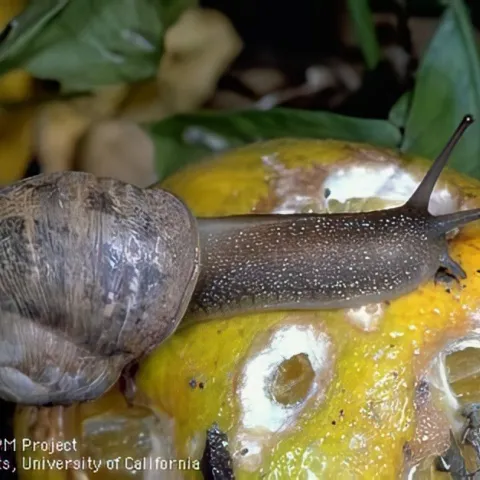
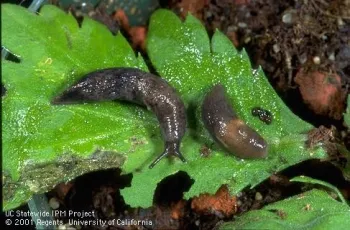
During the spring and fall, when Marin County gets rain, slugs and snails are a constant presence in my West Marin garden. Much to my chagrin, according to the University of California’s Integrated Pest Management (IPM) program, snails and slugs are among the most destructive pests found in gardens in California. The brown garden snail, Cornu aspersum, which most Marin gardeners recognize, is the most common snail to cause problems in Bay Area gardens.
Slugs and snails are soft-bodied, land-dwelling mollusks that glide along on a muscular foot, secreting mucus as they progress, creating their signature slime trail. They enjoy the moist environment of the garden, particularly after rain.
Only 5% of slugs are above ground - most hibernate in the cool and moist environment of topsoil. They often attach themselves to tree trunks, fences, or walls. Adults are active at night and on cloudy/foggy days but return to their hiding places on sunny days. In areas with mild winters, such as coastal Marin, slugs and snails can be active most of the year.
Both slugs and snails feed on a variety of living plants and decaying plant matter. Their rasping mouthparts cause damage to leaves, flowers, fruits, and other succulent plant parts which appear as irregularly shaped holes with smooth edges. Their favorite menu includes basil, lettuce, strawberries, cabbage, daffodils, hosta, dahlia, delphinium, lobelia, campanula, broccoli, primrose, lilies, and tuberous begonias.
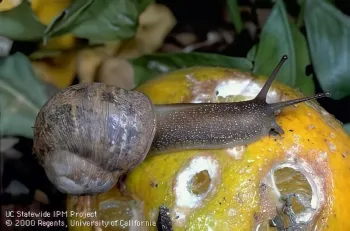
As adult brown garden snails lay an average of 80 pearly white eggs six times a year, it is beneficial to initiate a multi-step management plan. Begin by trying to eliminate as many hiding places as possible, such as under boards, stones, and foliage, in debris, weedy areas around tree trunks, on leafy branches growing close to the ground, and in dense ground covers, like ivy. Ornamental woody plants and grasses serve as hiding places during the day. Twice a week during early spring and fall, wear gloves to hand pick snails and slugs, disposing of them in a bucket of soapy water.
In the evening, set out homemade traps, such as inverted flowerpots, inverted cabbage leaves, or orange or grapefruit rinds filled with a slug bait, like beer or a mixture of boiling water, honey, and yeast. Check the traps daily and dispose of the collected pests every morning until the numbers drop, then check weekly. You can also set and bait deep containers with the rim at ground level. Do not use salt to destroy snails and slugs as it can increase soil salinity.
Erecting barriers is a third step in your management program. Tests show that slugs may receive an electric shock when they crawl over copper if the copper strip or mesh is wide enough to create an effective barrier - wide enough that they are unable to raise their bodies over it. Lime, ashes, or diatomaceous earth slow slugs down but do not kill them. If the edges are buried, window screen material can be used as row covers to protect seedlings.
Choose plants that are less attractive to snails, e.g., plants with highly scented foliage (lavender, rosemary, sage) and other commonly grown plants - ferns, cyclamen, hydrangea, nasturtium, lantana, candytuft, foxglove, nandina, sedum.
Water your garden near sunrise - avoid watering in the evening when slugs and snails come out to feast.
Switching from sprinklers to drip irrigation reduces humidity and moist surfaces which makes the habitat less favorable to these pests. Ensure proper drainage to prevent water accumulation.
If you use materials such as pine bark mulch or wood pellets as mulch to deter slugs and design your garden to include resistant pests, the damage from these pests will be minimal. If chemical control is used as a last resort, choose an iron phosphate bait - e.g., Sluggo which is safe to use around pets, wildlife, and children. Avoid products containing metaldehyde as they are poisonous to cats and dogs.
By Martha Proctor, November 8, 2025
Native alternatives to common garden plants

We’ve all heard that native plants are the best for supporting local wildlife. But what about those non-native garden classics, like lilacs and irises? Well, you’re in luck: for every non-native plant, you’re sure to find one among California’s approximately 8,000 native plant species that has similar traits such as color, scent, and form.
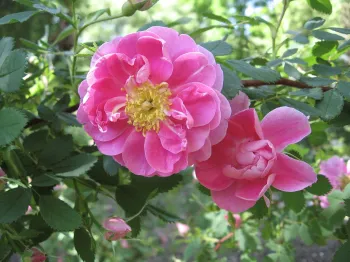
While many cottage garden classics are irreplaceably iconic, a perfectly beautiful cottage garden can be made by swapping them for similar California natives. Some common cottage plants are already native to California, such as Yarrow (Achillea Millefolium), which comes in a range of colors including white, yellow, pink, red, and orange. Mock Orange (Philadelphus lewisii), famed for its lovely scent, is also native. For a similar form and coloring to lilacs, consider our native Ceanothus species, which are commonly called California Lilac for their resemblance to the non-native ornamental. While far more thorny than non-native garden roses, our native California Wildrose, Rosa californica, provides the same charming scent as cultivated roses; for a bloom more similar to garden roses, try the fuller-flowered variety ‘Plena.’ The pale purple blooms of California Aster (Symphyotrichum chilense) would make a wonderful replacement for non-native asters. And Baby Blue Eyes (Nemophila menziesii) or Western Houndstongue (Adelinia grandis) would make lovely alternatives to forget-me-nots (Myosotis latifolia), which are invasive in California. So many species of Salvia are native to California that they could be worthy of their own article! If you’re a stickler for color scheme, you’ll be happy to learn that California Poppies (Escholzia californica) come not only in orange, but in purple, red, pink, yellow, and white cultivars, such as the pastel ‘Thai Silk’ series. All the plants listed above can be grown in full sun with very little water once established (1-2x per month), except for Mock Orange and California Wildrose, which prefer watering 3x per month, and Western Houndstongue, which prefers full or partial shade.
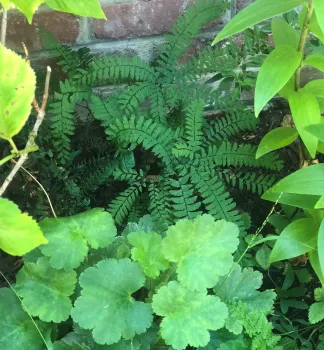
If you enjoy the peacefulness of a classic shade garden, look no further than our array of shade-loving California natives. No shade garden is complete without ferns, and California is home to over 70 species, such as the delicate Five Finger Fern (Adiantum aleuticum), the lacy Lady Fern (Athyrum filix-femina), Western Sword Fern (Polystichum munitum), and the dramatic Giant Chain Fern (Woodwardia fimbriata). Lovers of columbine will be happy to discover our native Western Columbine (Aquilegia formosa), and iris lovers will be happy to discover our native Douglas Iris (Iris douglasiana), both of which thrive in shade. Additionally, multiple species of Heuchera, a shade plant beloved around the world, are native to California: try Heuchera micrantha or Heuchera maxima for attractive leaves year-round and spires of dainty flowers in late spring.
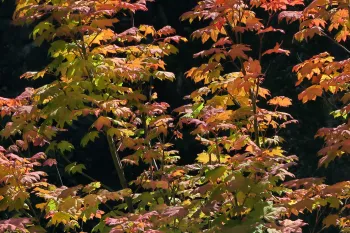
Turning our attention to trees and shrubs, there are a number of natives that are sure to please! Pacific dogwood (Cornus nuttallii) provides a similar look to saucer magnolias, and the white flower clusters of Pacific Ninebark (Physocarpus capitatus) remind me of white Hydrangeas. Two species of Rhododendron native to California are widely available in nurseries; Western Azalea (Rhododendron occidentale) and Pacific Rhododendron (Rhododendron macrophyllum) are sure to endear themselves to any fan of their Asiatic counterparts. Our native Vine Maple tree (Acer circinatum), which prefers moist shade, is a wonderful alternative to Japanese Maples. California Honeysuckle (Lonicera hispidula), which thrives in part shade and with low water, can be grown as a vine or shrub and would make a stunning alternative to non-native honeysuckles. Additionally, there are a number of native grasses for lovers of ornamental grasses to choose from, such as Foothill Sedge (Carex tumulicola), California Meadow Sedge (Carex pansa), Mendocino Reed Grass (Calamagrostis foliosa), and California Fescue (Festuca californica).
With the wide range of California native plants available, there’s a native that suits any look or need in the garden. So get out there and plant some California natives: your local ecosystem is sure to thank you for it!
By Emily Daane, November 1, 2025
Chop drop and roll: natural ways to increase nitrogen in your garden

Here’s a riddle for you: What is the most abundant element in our atmosphere and critical to plant growth, but often lacking in our soil? The answer: nitrogen.
You may have heard that nitrogen is a powerhouse element in gardening. It’s a key component of chlorophyll, the pigment that keeps plants green and enables them to turn sunlight into food. It also promotes leafy green growth and boosts plant productivity. There’s a lot to love about this invisible element quietly working below the surface.
In fact, you’re more likely to notice the tell-tale signs of a lack of nitrogen in your garden: pale green or yellowing in the plant’s older leaves, stunted growth, reduced flowering, low fruit and vegetable yields, or dull, patchy lawns. Nitrogen deficiencies are quite common, often the result of water runoff during heavy winter rains, soil erosion or crop harvesting that pulls nitrogen from the soil.
For those of us seeking lush gardens, bountiful harvests, and vibrant color, nitrogen is a key element to promote plant health. Garden store shelves are full of fertilizers that add nitrogen to your soil through inorganic matter (read: minerals and synthetic chemicals). But there are also plenty of ways to add nitrogen to your garden naturally, increase your garden’s abundance, and promote earth friendly gardening to boot.

Compost
When plants are living, they sequester nitrogen for their own photosynthesis, but when they begin to decompose, the stored nitrogen is converted into a form that can feed our plants. Compost has been used for centuries to return nitrogen, increase beneficial microbes, and add organic matter to the soil. Adding 1-3 inches of compost to your garden before letting it go fallow for the winter can help replenish nutrients and improve soil structure, so that next year’s plants thrive.
Cover crops
If you’ve seen winter fields full of clover, fava beans, vetch, or alfalfa, you’ve probably spotted “nitrogen‑fixing” legumes at work. These plants boost soil fertility through a form of plant-based alchemy – partnering with beneficial bacteria on their roots to turn nitrogen gas from the air into a plant‑friendly form stored in their leaves and stems. Cutting these legumes down in spring and letting them decompose releases that nitrogen into the soil for the next crop, reducing the need for synthetic fertilizers and improving soil health.
Get that nitrogen fix
If you want to give your garden a natural nitrogen boost this winter, try an annual cover crop or a perennial nitrogen‑fixing shrub.
Clover (Trifolium repens) is a low‑growing groundcover with white blooms that bees love; simply turn it over with a shovel a few weeks before planting, allowing it to decompose and feed the soil. Be mindful that clover spreads readily–so only place it where you’ll be happy for volunteer nitrogen cover crops for seasons to come!
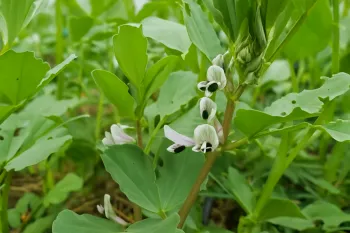
For another option, Fava beans (Vicia faba) add nitrogen and produce broad leaves and abundant flowers in late winter. Standard fava bean blooms are black and white, but some garden centers carry them in vibrant colors for winter interest. When about half of the plants are blooming, cut off the stalk, leaving the roots to decompose in place. Then chop the leaves, stems and flowers into small pieces and allow them to decompose in the bed. You can add a mulch or compost topsoil to make it more visually appealing.
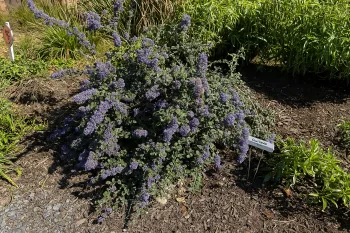
If you’re looking for a perennial, California lilac (Ceanothus), is a native evergreen shrub that is available in many forms at local nurseries. Ceanothus displays clouds of gorgeous blue or white flowers that attract native pollinators and improve the soil around their roots year after year.
As we enter the rainy season, now is the perfect time to plant nitrogen fixers, spread compost generously, and pause to enjoy the wonder of plants that draw elements from the sky and turn them into the nutrients that sustain our soil, nurture our flowers, and fill our tables.
By Anna Hartley-Simon, October 25, 2025
Phenology: Reading nature’s seasonal calendar

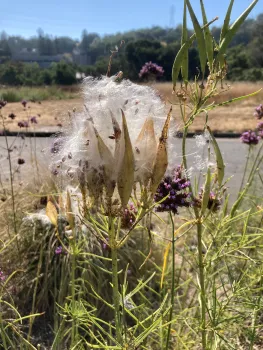
Phenology is the study of seasonal changes in plants and animals from year to year—such as when flowers bloom, birds nest, or insects emerge. Derived from the Greek word phaino, meaning “to show” or “to appear,” phenology helps us observe and understand how the natural world responds to climate and environmental changes over time.
Gardeners, farmers, naturalists, and scientists have long relied on phenology to guide decision-making. Indigenous communities and early agricultural societies based their planting and harvesting cycles on the appearance of specific plants and the migration of animals.
Phenology is all about timing. For gardeners and farmers, seasonal changes signal the best times to plant, prune, fertilize, and harvest. Shifts in temperature—warmer or cooler—can move these events weeks earlier or later on the calendar. Phenology also plays a critical role in pest and disease management. By tracking seasonal patterns, gardeners can better time interventions such as applying beneficial nematodes or setting pheromone traps for wasps.
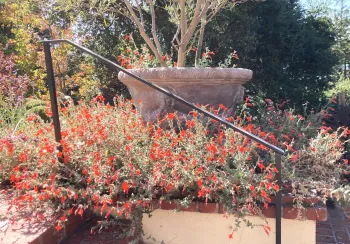
These seasonal patterns are especially vital for pollinators. When the timing is right, pollinators arrive just as the plants they rely on for nectar and pollen are blooming. But when that timing is off, the results can be harmful. For example, if native bees emerge before their host plants bloom, their survival is at risk. Similarly, if native milkweed doesn’t go dormant in time to prompt monarch butterflies to migrate to overwintering sites, the monarchs may be endangered.
Applying Phenology in the Garden:
In California’s Mediterranean climate, fall is the ideal time to plant native plants, trees, and shrubs. Cooler temperatures reduce transplant shock, and plants benefit from the end-of-autumn storms and the full winter rainy season. This allows roots to grow deeply before summer droughts arrive, making plants more resilient and drought-tolerant.
When you see the signs of fall:
- Adjust irrigation to conserve water: Reduce watering as the days shorten, temperatures cool and rain returns.
- Collect and divide: Fall is a great time to collect seeds and divide perennials you’d like to propagate or relocate.
- Leave the leaves: Avoid blowing, shredding, or raking fallen leaves. They provide habitat for beneficial insects that feed birds and pollinate your garden. Leaves also suppress weeds, add mulch, and enrich the soil. Leave acorns under oaks for birds and squirrels.
- Plant annual wildflowers: After the first rains, plant California poppies (Eschscholzia californica). These wildflowers are monitored by the California Phenology Project at Golden Gate National Recreation Area.
- Sow cover crops: In vegetable beds, sow fava beans, peas, mustard, vetch, or a mix of cover crop seeds. These plants enrich the soil for the next growing season. Water them until consistent rainfall begins.
- Plant bare-root trees and shrubs: These soil-free plants are economical and establish strong root systems when planted in the fall. Soak roots before planting and dig wide holes to accommodate healthy growth.
- Add spring bulbs: Plant bulbs point side up, and root side down about three times as deep as their width Do not amend the soil. Choose a variety for staggered blooming and vibrant spring color. There are several California natives like Calochortus luteus (Mariposa lily) and Dichelostemma congestum ookow/Snake Lily that bloom in the spring and require no summer water.
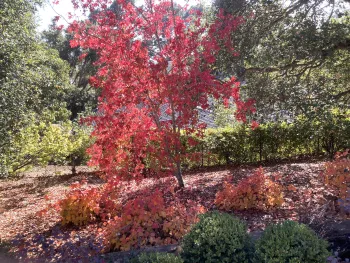
Phenology reconnects us with the rhythms of the earth and how they are changing. By observing signals in your garden gardenly like the bloom of a certain flower- you can make more informed gardening decisions for an Earth-Friendly Garden.
A wealth of data is available through the USA National Phenology Network, which invites volunteers to submit seasonal observations of local plants and animals. In California, citizen scientists can also contribute to the California Phenology Project and I Naturalist, (a part of the California Academy of Sciences), helping to build vital ecological knowledge and support climate research across the globe.
By Alice Cason, October 18, 2025
Year-round native plant color
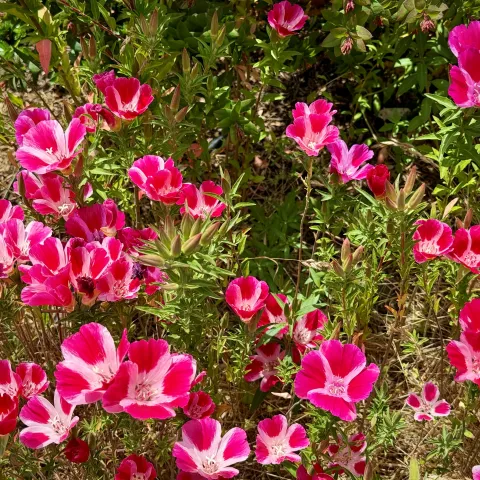
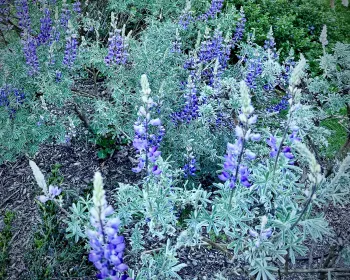
Native plants are often known for grand springtime displays followed by dismal summer and fall foliage. But that isn’t true for all native plants. A little research, careful planning, and conscientious planting can have your garden blooming with colorful, flowering, summer dry, winter wet native plants all through the year.
Even though some native plants might not look great in fall, it’s the best time to take home these climate attuned plants. You can settle them into the ground before the winter rains, which they expect, and they’ll put down roots before the summer dry season begins. Having said that, you should water these newbies regularly for the first year or two – until they’re well established. Use a water tester to know when and how much to water – probably once or twice a week the first year. When they’ve doubled in size, it’s likely they’re established enough to cut back on watering. Keep testing to be sure. There’s an adage some native plant growers use to describe how quickly these plants grow during their first three years: Sleep, creep, leap.
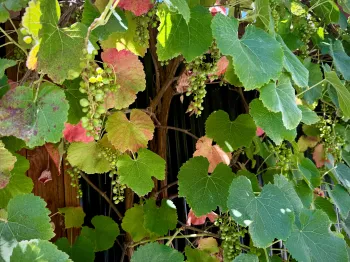
So, which native plants to buy? Here are some favorites:
Fall: Red leaves; pink, purple, red/orange, white flowers. Vitis ‘Roger’s Red’ (Roger’s Red Grape) is a fast-growing deciduous vine whose leaves turn a stunning red in the fall. Low-growing Epilobium canum (California Fuchsia) begins flashing red-orange flowers on gray-green foliage in summer and continues through fall. Corethrogyne filaginifolia (California Sandasters) carry their pink, purple, or white flowers from summer into winter.
Winter: Red berries; white, pink, or yellow flowers. In winter, white or pink flowers cover Arctostaphylos (Manzanita) species, whether ground cover, shrub, or tree; and pollinators welcome the food source. Heteromeles arbutifolia (Toyon), a tall shrub/tree, produces red berries around Christmas and adapts well to non-native gardens. Ribes species (Currants and Gooseberries), which range from low and medium-sized shrubs to tree sizes, produce cascades of small pink or yellow flowers loved by hummingbirds.

Spring: Blue, white, pink, lilac, lavender, yellow flowers. The intense blue-flowered Ceanothus (California Lilac) are springtime stars. Like Manzanita, various species can be ground covers, shrubs, or grow very tall. Some bloom in late winter; others flower well into summer. In spring, our California native Clematis displays large white flowers and native Heucheras wave delicate pink/white flowers. By contrast, Verbena lilacina ‘De La Mina’ and Erigeron glaucus (Seaside Daisies) have lavender flowers. Lupinus (Lupine) and Iris douglasiana (Douglas Iris) have lavender, white, or yellow flowers. Lupines’ foliage can be silvery or green, and they can be small or tall.
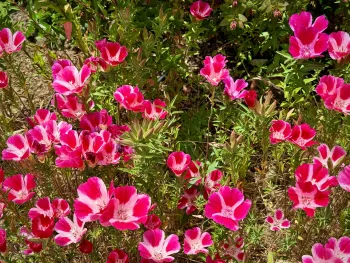
Summer: Red, lavender, blue, yellow, pink, white flowers. Consider Eriogonum (Buckwheat) with white, pink, yellow, or red flowers; Clarkia amoena’s (Farewell to Spring) hot pink flowers; and Achillea millefolium’s (Yarrow) white flowers. Of these, Buckwheat comes in the largest range of sizes – from ground cover to giant shrub. Clarkia is a tall annual flower that re-seeds. Two other reliable favorites for summer flowers are native Penstemons (red, lavender, or blue Beardtongues) and Salvia (Sages with red, lavender, blue, or white flowers.) Choose from hundreds of Penstemon and Sage species for specific color and sun requirements.
You can successfully blend native plants into a non-native garden if you pay attention to water and sun requirements. You could create islands of very low water or low water plants, mix native plants with low-water Mediterranean plants, or organize your drip irrigation system to give some plants more water than others, being very careful that the native plants don’t get too much water.
To research plants, find descriptions and requirements, and see color photos, use the California Native Plant Society website: calscape.org. Or, take a few minutes to watch a short video filmed by UC Marin Master Gardeners in a local native plant garden that includes many of the above-mentioned plants. The video is on YouTube: Color Your Garden with CA Native Plants - All Year Round!
Happy Gardening!
By Barbara Robertson, October 4, 2025
Propagation by cutting
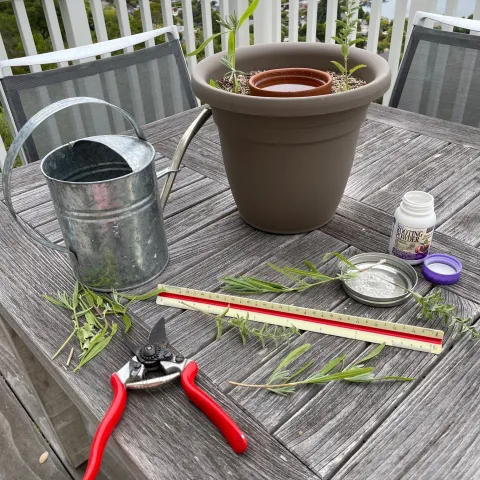
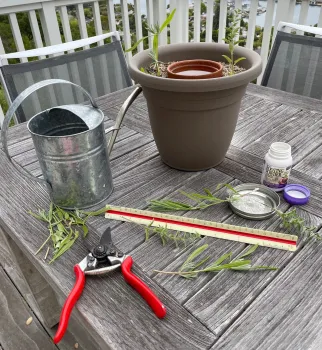
Vegetative reproduction from stems, roots and leaves is common to all plants and results in an identical plant from which the cutting came; it’s a clone. As gardeners, we propagate cuttings for many reasons including it may be easier and quicker than growing a new plant from seed, the parent plant may produce little or no seed, a plant’s seeds will not be true to the parent plant, and of course, because it can save money. There is another reason, perhaps the best. Taking a cutting is something shared from the garden with a friend or family member. Sharing plants is just plain fun because a bit of your garden ends up in a friend’s garden or vice versa and this exchange forevermore generates a shared bond.
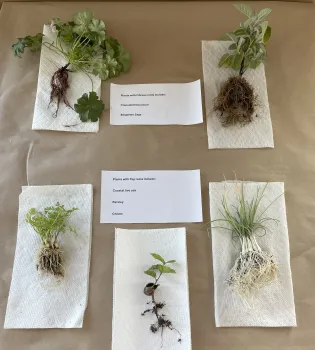
Understanding a plant’s roots, shoots, and growth habits increases the likelihood of success with vegetative reproduction. A plant’s shoot system consists of the plant’s branches, stems and leaves; in effect these are plant parts above the ground. A plant’s root system consists of the underground parts that anchor the plant in soil, absorb water and minerals, and store excess food for the plant. Root systems are either fibrous like grasses or tap roots with enlarged and elongated roots like oaks. Some plants use a combination of both root systems. While roots probe soil for water and minerals, the shoot system of a plant grows above ground growing leaves which intercept or capture light to manufacture food for the plant; photosynthesis. To maximize capturing light, leaves form and grow in one of three patterns, alternate, opposite or whorled in a ring around the stem. Gardeners know that to make plants fill out, stem tips must be pruned. This action suppresses the growth at the tip of the plant and stimulates the buds at the base of the plant to form branches. Stem tips contain auxin, the plant hormone that encourages stem growth and root growth. The cuttings of some plants may not contain enough auxin and thus benefit from being treated with a rooting compound of synthetic auxin.
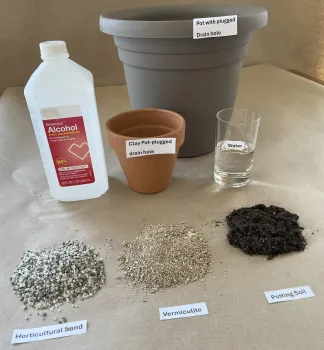
Many woody and herbaceous plants have been propagated by asexual propagation for many years. Familiar examples include the Peace rose and the Bradford pear. To take a cutting for the purpose of propagation, first assess several factors to increase success. Begin by selecting a plant that is healthy and make a stem-tip cutting 4 to 6 inches long from this season’s growth with sharp, clean clippers dipped in alcohol. Cut just below a node; this is the point on the stem from which shoots, leaves and flowers would emerge. Softwood cuttings can be taken from deciduous or evergreen species in the spring and root in 2 to 5 weeks. Broadleaf evergreen species like photinia, holly, camellias, pittosporum are ready for cutting mid- summer to late summer as their growth flush is completed. Rooting should take about 4 to 6 weeks. Hardwood cuttings from deciduous plants should be taken after leaves have dropped. From the stem’s cutting, remove the lower 2 inches of leaves, dip the cutting into a rooting hormone and place the cutting into the rooting medium mix made of equal parts of vermiculite, potting soil and horticultural sand purchased at a nursery. To keep the rooting medium moist, fill a small, clay pot with water and insert into the larger pot and cover with plastic or glass to prevent the rooting mix from drying out. Place in indirect light and maintain a temperature of 65 degrees to 75 degrees. When roots develop and are several inches long, give a tug and you should feel some resistance. Gradually remove the coverings of plastic or glass and pot up the new plant in potting soil. Acclimate to outdoor conditions slowly and plant next spring in the garden.
By Anne-Marie Walker, October 4, 2025
Pot it up!
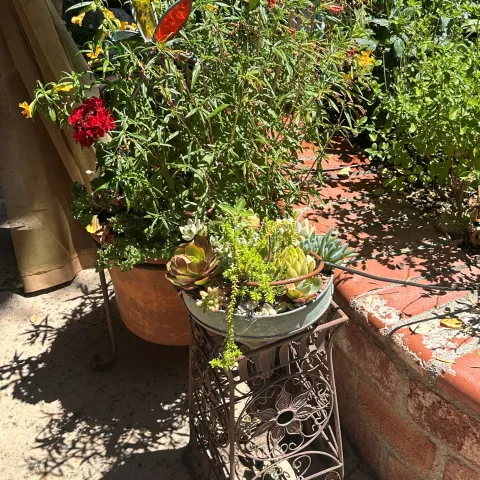
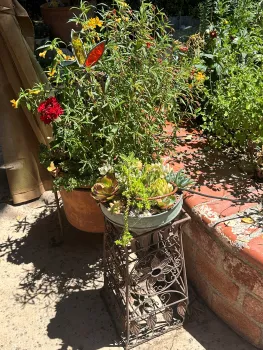
My garden is not very big, but I am an avid planter. How do I expand my gardening horizon? Pots! Pots let me plant in places where I can’t plant in the ground and provide visual interest to the garden. With a few containers, you can garden literally anywhere. If you are a renter, your pots are portable.
Where to start?
- Pick your spot. Decide where you want to place your container. Will it be in the sun, shade or a mix? This will determine your plant choices.
- Pick the right pot. The container needs to provide good drainage to prevent root rot. The size of the container needs to accommodate the mature plants (or multiple plants) and allow for root growth. Generally, a 10”-12” pot can hold 3-4 plants, a 14”-16” pot can hold 5-7 plants and a 16”-20” plant can hold 6-9 plants depending upon the size of the mature plants. Consider the weight of the planted pot if you will be needing to move it or put it on a stand with wheels.
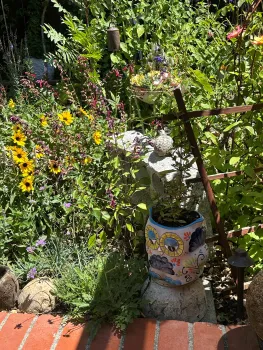
A vintage washbasin and a whimsical ceramic pot provide dimension to the small planting bed. Photo: Dot Zanotti Ingels The material of your pot is important. Terracotta dries out more quickly but may be the look your going for. Glazed pots come in so many choices for design options. They breathe like terracotta but give you so many more options. Plastic pots retain more moisture and are lighter weight. Put holes in just about anything and it becomes a perfect pot. Vintage items can be repurposed for a fun choice. Anything you can drill drainage holes in can be an amazing and unique-to-you pot.
- Prepare the container by covering the hole with a coffee filter or mesh to keep the soil from washing out. If you are using a pot that was previously planted, make sure to give it a good clean first by removing any old debris and washing the pot with warm, soapy water and a brush. If you are concerned about disinfection, you can soak the pot in a 50% vinegar solution or a 10% solution of household bleach and water for thirty minutes. Rinse pots thoroughly and allow to dry completely before reusing.
- What you use to fill the pot is very important. Potting mix is a specialized growing medium for containers, while potting soil is a broader term for materials used to amend or replenish garden soil. Potting mix does not actually contain any soil. Instead, it is a blend of materials like peat moss, perlite, vermiculite, and coconut coir, providing good drainage and air circulation for happy roots. There are specialized soils for succulents and orchids. Not all potting soils are created equal, so do your homework. You can mix your own as well.
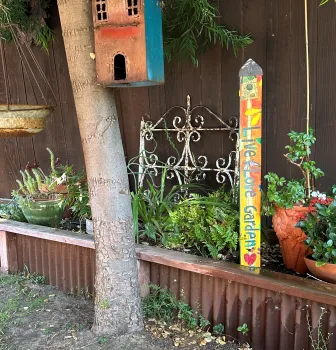
Now for the fun part. Fill your pot about 2/3 full of your mix and lay out your plants. Gently remove the plant from the nursery pot and gently loosen the root ball. Fill in around the new plants and lightly press on the mix to eliminate any air pockets. When you are happy with your results, water your new pot to help settle the soil. If needed, add more soil so that all the roots are covered but the soil level stays a couple inches below the rim of the pot. Keep checking in with your container to see when you need to water again. If the first inch or so is dry to the touch, give it a drink. A good way to make sure it is being given enough water is to check that some is running out of the drainage hole. If you are putting your plant in a saucer, make sure to keep it emptied. Plant roots do not like to sit in water and can rot. For easier maintenance, run irrigation from your garden system to your pots if possible.
Make it fun. You can easily change plants so go for it!
By Dot Zanotti Ingels, September 27, 2025
Spiders are good for garden pest control
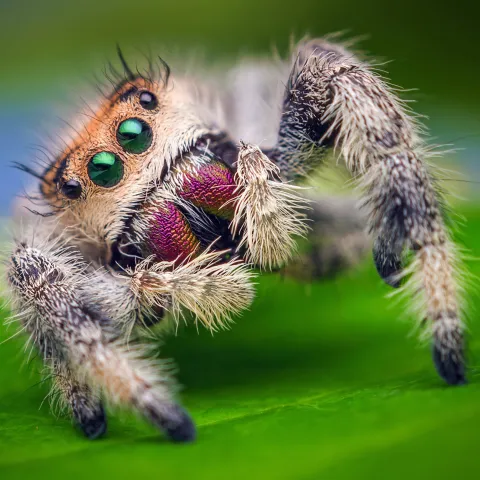
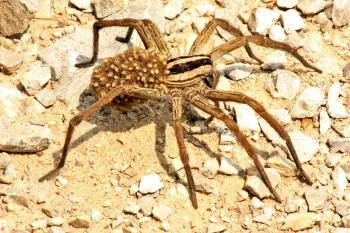
Spiders get a bad rap. Many people go to great lengths to avoid or get rid of them. Is it their other-worldly appearance? A concern about being bitten by a poisonous type or simply the idea of “creepy, crawling” things? Whatever the reason, before eliminating them, it’s good to know who these critters are and understand the invaluable role they play keeping pest populations in check.
Found around the globe with at least 50,000 known species, spiders inhabit everywhere but the oceans and Antarctica. These eight-legged predators are carnivorous, injecting venom through their fangs to paralyze or kill their prey. While insects are the bulk of their diet, they’ll go for other small invertebrates, including other spiders, and even frogs, fish, birds, and rodents.
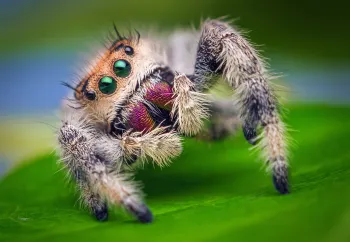
Spiders you may find indoors include cobweb spiders, funnel weavers, and yellow sac spiders, while in the garden, you’re most likely to see crab spiders, jumping spiders, orb weavers, and wolf spiders.
Cobweb spiders are frequent inhabitants of dark corners in basements, abandoned buildings and piles of wood, hanging upside down in irregular, sticky webs. They feed on insects that walk or fly into their webs. Their brown bodies are globular like widow spiders but they’re harmless to humans. Funnel weavers are the most common spiders found in homes, particularly during late summer and early fall. These sit-and-wait predators produce dense mats of silk on shrubs, thick grass, or corners of buildings. The small yellow sac spider spins a silken sac web in the corners of ceilings and walls, and behind shelves and pictures, and is also commonly found outdoors in shrubbery.
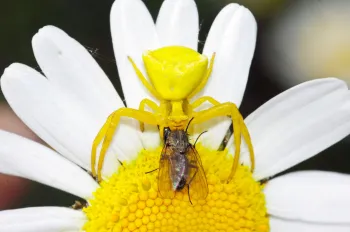
Colorful crab or flower spiders have enlarged front legs that give them a crablike appearance. They hunt during the day and often appear on blossoms where they blend with their background and pounce on unsuspecting prey. Hairy looking jumping spiders are day-active hunters in plants or on the ground. They don’t build webs but stalk and swoop down on their target. With their excellent vision, they have the ability to jump impressive distances for their size.
It’s hard to miss an orb weaver; the enormous mature females are adorned with exotic looking black-and-yellow markings. They spin new elaborate webs every day, recycling their silk supply by eating the old one. Due to poor vision,they rely on web vibrations to let them know that prey has become entangled in their web. With long hairy legs, big, dark wolf spiders hunt by running down prey on the ground. Actively hunting in the open during the day and night, they’re often observed on the ground in litter and on low vegetation.
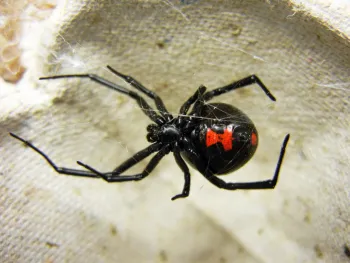
The spider of greatest concern in our area is the black widow. Easily recognized, the mature female is shiny jet black with a distinctive red hourglass marking on her underside. These spiders seek out holes, crevices, trash, and clutter and are often found around homes, outbuildings, and rock walls.
Of the many known species of spiders, only four species worldwide, are dangerous to humans, and of the four, widow spiders are the only ones found in the U.S. Bites from black widow spiders are quite rare, even where these spiders are very common. If bitten, seek medical attention immediately or call the California Poison Control Hotline at 1-800-222-1222. Effective anti-venom for black widow bites is available and bite victims can go from intense pain back to normal in 30 minutes.
Contrary to popular belief, there are no populations of the brown recluse spider in California. The few brown recluses that have been collected in the state are typically found in facilities that receive goods from out of state or are unintentionally transported by people who have moved from the Midwest.
If you happen upon spiders in the garden (other than the black widow), just ignore them and let them do their thing - helping to keep your garden pests in check.
By Nanette Londeree, September 20, 2025
Saffron made simple: grow the world's priciest spice at home
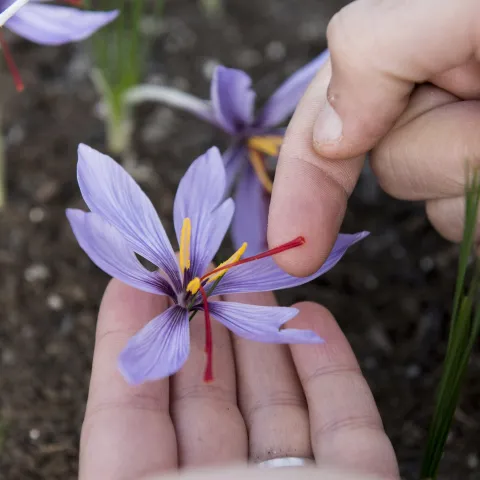
Saffron is one of the most expensive spices in the world—but did you know you can grow it right in your own backyard? With a little effort and patience, Marin home gardeners can cultivate Crocus sativus, the plant that produces saffron, even in containers or raised beds. This fall-blooming flower grows well in Marin’s Mediterranean climate, making it a great choice for those looking to add something special to their home garden.
Saffron comes from the bright red stigmas (threads) of the Crocus sativus flower. To grow your own, you'll need to buy corms online or at specialty garden stores during late summer.

When buying, larger is better. Big corms, corms that are 3.5" (9cm) or greater in circumference, can produce two to four flowers. More flowers mean more saffron.
Saffron can be grown in containers, raised beds, or directly in the ground.
- Containers are great for patios and small spaces. Choose a pot that’s at least 12" deep.
- Raised beds offer excellent drainage and make it easier to manage weeds. Hardware cloth or weed cloth at the base of the bed deters pest damage.
- In-ground planting works well if your soil drains properly, but beware of pests.
An especially creative method that works well in Marin is using milk crates lined with weed cloth. This setup gives your corms plenty of drainage while keeping the soil contained and weed-free and keeps pests out. Just fill the crate with a well-draining soil mix.
If planting in the ground, watch out for gophers, voles, and other burrowing pests, which may dig up or damage your corms. Wire mesh or underground baskets can help protect your crop. Deer also enjoy eating the flower and leaves of Crocus sativus.
Plant saffron corms about six inches deep and four inches apart in late August or September, before the rainy season begins. This gives them time to settle in and send up leaves before flowering in late October or November. Avoid overcrowding, as that reduces production.
Saffron corms will sprout leaves soon after planting. Flowers usually appear in mid to late fall, around 6–8 weeks after planting. Each flower only lasts a day or two, so you’ll need to check your plants daily when they start blooming. Saffron doesn’t like too much water. If it is an especially rainy season, consider covering with plastic or moving to a protected area.
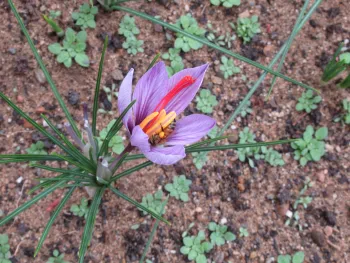
Each Crocus sativus flower has three red stigmas, which is the saffron you’ll harvest. Pick the flowers early in the morning, just after they open. Use tweezers or your fingers to gently remove the threads.
To preserve the saffron, dry the threads in a 200 degree oven for seven to ten minutes. Once dried, store them in an airtight container away from light. A little saffron goes a long way. Just a few threads can flavor an entire dish of paella or risotto.
After the flowers are harvested, the plant will continue growing green leaves through winter and early spring. These leaves feed the corm, helping it produce new baby corms underground. Don’t cut the leaves, they’ll die back naturally in late spring or early summer.
Once the leaves yellow and dry, you can either leave the corms in the ground or dig them up to divide and replant next season. If you planted in containers or crates, store them in a cool, dry place until fall.
Stay in touch with saffron growers around the world. Join the Saffron Email List Saffronnet. This is an international internet network established by the North American Center of Saffron Research and Development for those interested in growing saffron or learning more about ongoing research and other related initiatives. https://www.uvm.edu/~saffron/pages/saffronnet.html
By Jill Heiman Williams, September 13, 2025
Invite the good guys into your garden

Insects – they’re everywhere! With nearly a million named species, they make up about 90% of all species of animals on the planet and more than half of all living things on Earth. Yet it is estimated that only about one to three percent are truly harmful. Most insects go about their daily business pollinating plants, helping decompose dead material, or ending up as meals for birds, fish, and other creatures – part of nature’s food chain. One big service that a number of insects provide, hidden from most of us, is keeping pest populations down - the good bugs battling the bad ones.
Natural enemies, also known as beneficials, biological pest control, and good bugs, are the predators that attack, kill, and feed on their prey, the parasites that feed on or inside other insects, killing their hosts, and the pathogens (disease-producing organisms) that can infect and kill the host. While the majority of beneficials are insects, there are also spiders and mites (arachnids), nematodes, and a wide range of microbes.
Getting to know the good guys is the first step in effective biological pest control. Some common beneficials you may find in the garden include:
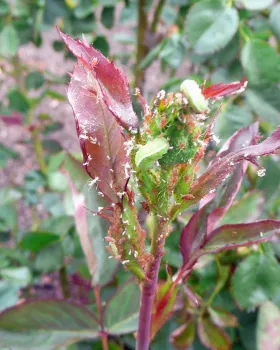
- Ladybugs, the rotund little reddish-orange beetle adult and the larval stage, looking like a small alligator, are both predators with enormous appetites.
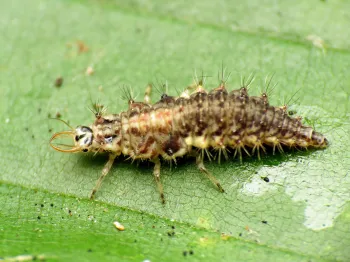
- Green lacewing adults, the ethereal-looking insects with a slender pale green body and immense golden eyes, aren’t predators at all, feeding on pollen and nectar. But their immature form, also resembling tiny alligators, is a very aggressive predator.
- Soldier beetles are predators of aphids and other soft-bodied insects. Adults are straight-sided beetles about one-half inch long with a red, orange, or yellow head and abdomen.
- Syrphid flies, also known as hover flies, resemble bees. The brightly colored adults are black or brown with yellow-banded abdomens and body markings. Their caterpillar-looking larvae are the predators. Adults feast on pollen and nectar and are considered an important pollinator.
- Spiders are major predators in the garden; some capture prey in silken webs, while others stalk insects across the ground or vegetation or lie in wait and pounce on prey.
Encouraging beneficials in your garden is about the greenest method of pest control you can use. Like any living creature, these good guys need food, water, and shelter, all generally available in the garden.
Here are some ways to attract and keep them around:
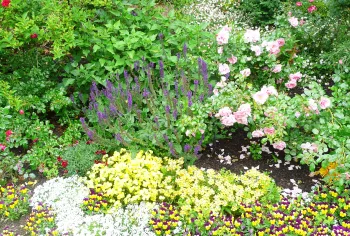
- Use diverse types of plants - natives, annuals, perennials, and herbs- to encourage a range of beneficials.
- Use sequentially flowering species to provide nectar, pollen, and shelter throughout the growing season.
- Include plants with many small flowers; they are preferred by many beneficial insects over those with large, single flowers.
- Create plantings of varied heights in sun and shade to provide food and habitat for different insect species and life stages.
- Maintain groundcovers and coarse mulches for non-flying predators to hide from their enemies.
- Provide water - a shallow dish of water filled with pebbles or gravel and placed in a sheltered area will give small beneficials a safe place to slurp.
- Tolerate low populations of plant-feeding insects and mites so that food is available for the predators.
- Go light on fertilizer; lush new plant growth encourages sucking pests like aphids to reproduce more rapidly than natural enemies may be able to control.
- Avoid the use of pesticides – they don’t discriminate between good and bad bugs.
These families of plants are attractive to multiple life stages of numerous beneficial insects:
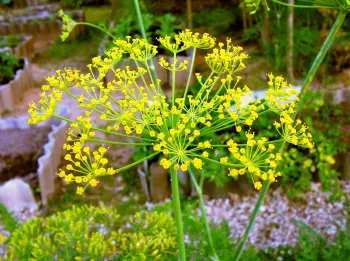
- Carrot (Apiaceae): cilantro, dill, fennel, and Queen Anne’s Lace
- Aster (Asteraceae): coneflower, coreopsis, goldenrod, sunflower, and yarrow
- Bean (Fabaceae): alfalfa, fava bean, and sweet clover
- Mustard (Brassicaceae): mustards and sweet alyssum
- Verbena (Verbenaceae): lantana and verbena
Providing the basics of food, water, and shelter to natural enemies in your garden is pretty easy and has a terrific payback by helping to keep pest populations at a tolerable level.
By Nanette Londeree, September 6, 2025