
IJ Archive
UC Marin Master Gardener Articles in the Marin Independent Journal
UC Marin Master Gardeners have contributed to the Marin Independent Journal's "Ask a Master Gardener" column every Saturday since 1999. We have a team of dedicated writers who have covered nearly every aspect of gardening for Marin County over the years. Search our archives below by category of interest, or use the search box to locate stories by year, month or specific subject.


Marin IJ Archive
UC Marin Master Gardener Articles in the Marin Independent Journal
UC Marin Master Gardeners have contributed to the Marin Independent Journal's "Ask a Master Gardener" column every Saturday since 1999. We have a team of dedicated writers who have covered nearly every aspect of gardening for Marin County over the years. Search our archives below by category of interest, or use the search box to locate stories by year, month or specific subject.
> BACK TO ASK US
Visit Marin Master Gardeners at Ember Stomp to see inspiring examples of fire-smart landscaping

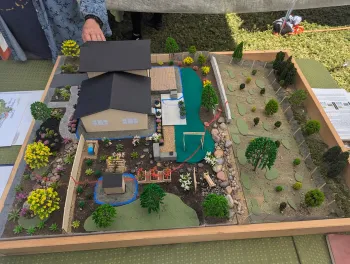
Come visit the UC Marin Master Gardeners at Ember Stomp, a free event on Saturday, September 6, at the Marin County Fairgrounds (10 am – 4 pm), to see beautiful, Earth-friendly, fire-smart landscaping and learn how to adapt your garden to wildfires to help your home survive.
Hosted by Marin Wildfire and Fire Safe Marin, the fourth annual Ember Stomp will also show you how to harden your home and remove combustibles and organics from Zone 0, the first 5’ around your house, to create an ember-resistant barrier to help preserve your structure. You can watch a live burn demonstration to learn about fire behavior. Your children can meet firefighting sheep and goats, and play in the Kids’ Zone, featuring a magician, face-painting, sing-alongs, and interactive games.
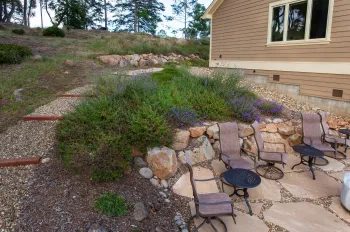
After you enter Ember Stomp, Master Gardeners will greet you with several interactive displays that demonstrate how to adapt your Marin garden to wildfires, helping you envision your garden in a new, fire-smart, and appealing way. Our focus will be on the area beyond Zone 0, just past the first 5’ around your home, called Zone 1. Master Gardeners’ displays will include:
- A garden oasis reveals how moving plants beyond Zone 0 can be beautiful while providing interest and privacy.
- A three-dimensional model illustrating how to strategically place plants. The model is built to scale, stimulating educational conversation and facilitating easy understanding of various fire-smart steps.
- Plant examples with fire-smart characteristics to increase the odds your home will survive a wildfire. Choose plants for your garden that don’t produce excessive dead, dry, or fine debris that can become fuel (avoid bamboo, eucalyptus, Italian cypress, and pine trees).
- Steps to take to ensure consistent maintenance, keeping your landscape well-groomed, hydrated, trimmed, correctly mulched, and free of debris.
- An interactive demonstration to show how fire spreads across the landscape and transfers to the house. A “lean, clean, and green” Zone 1 (5’-30’ from the house) reduces heat and fire movement. We will have examples of inviting gardens that are appealing from the curb as well as from inside your home, as you gaze out beyond your Zone 0 defensible space. We will show you how to use noncombustible materials for walkways, such as gravel, brick, or stone, and break up mulched and planted areas with hardscape, to create plant islands to interrupt a fire’s path.
- Mulch, placed on top of soil, to improve soil structure and enhance your garden’s overall appearance. You’ll be able to see various mulches and learn which ones are best (composted wood chips to a depth of 2” in Zone 1), and which to avoid (gorilla hair).
- For hillside homes, illustrations of appropriate plant spacing on slopes to slow a fire’s travel, while creating beauty, enhancing privacy, and stabilizing hillsides. You will learn that the steeper the slope, the more horizontal spacing you need between plants and trees to keep fire from spreading.
- Examples of native and non-native plants to use less water, avoid fertilizer and pesticides, and attract pollinators. We will also show you how to consider a plant’s size at maturity before you purchase it, to help have appropriate horizontal and vertical plant spacing.
- Pruning demonstrations to help maintain your fire-smart garden. We will show you how to limb up your tree’s branches to provide vertical spacing (for larger trees, remove branches 10’ up from the ground; for smaller trees, 1/3 the height), how to eliminate dead, dying or diseased materials, and how to create more open space by breaking up continuous vegetation (like hedges) that move fire across your garden. See how pruning can enhance a plant’s beauty as well as make your garden more fire-safe.
Marin Master Gardeners look forward to seeing you at Ember Stomp and helping you adapt your garden to wildfires. For more information about fire-smart landscaping, please visit https://ucanr.edu/site/uc-marin-master-gardeners/fire-smart-landscaping
Ember Stomp is free; food and beverages will be available for purchase. For more information, please visit https://firesafemarin.org/ember-stomp-2025/
By Julie McMillan, August 31, 2025

Managing yellowjackets in your garden
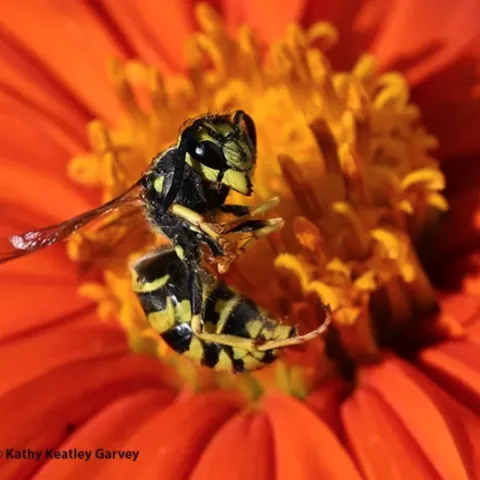

Ah, summertime in Marin! Long, sunny days, backyard barbecues, and—unfortunately—those uninvited guests at the picnic table: yellowjackets. These striped speedsters seem to have an uncanny knack for sniffing out your sandwich and making a beeline for your lemonade. But before you reach for the swatter, let’s take a step back and consider the bigger picture. Yellowjackets aren’t just party crashers—they’re also hardworking members of our local ecosystem.
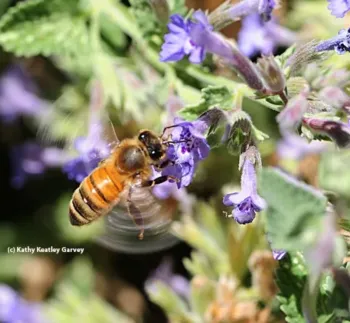
Yellowjackets (Vespula spp.) are often mistaken for honeybees, but they’re actually wasps, and they play an important role in nature. As predators, they help keep populations of garden pests like caterpillars and aphids in check. And while they’re not as famous for pollination as bees, they do contribute by feeding on nectar and transferring pollen as they zip from flower to flower.
That said, no one wants a yellowjacket nest under the deck or an aggressive swarm near the picnic table. Unlike honeybees, which die after stinging, yellowjackets can sting multiple times, making them a painful problem when they set up shop too close for comfort. Fortunately, there are ways to manage these feisty fliers while still respecting their ecological role.
Keep Yellowjackets from Moving In
The best way to deal with yellowjackets is to keep them from settling in your yard in the first place. Here are a few earth-friendly strategies recommended by the University of California’s Integrated Pest Management Program (UC IPM):
- Seal up food sources. Yellowjackets are scavengers, so keep trash cans tightly sealed and promptly clean up food scraps from outdoor meals.
- Limit sugary drinks. Open soda cans and juice boxes are like yellowjacket magnets. Use cups with lids and straws to cut down on their attraction.
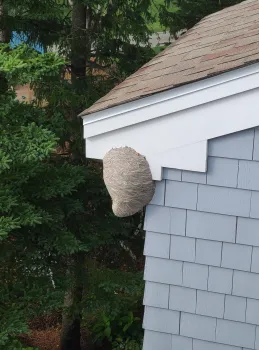
- Check for early nests. In spring, queens start new colonies. Look under eaves, in tree hollows, and around wood piles for small golf-ball-sized nests, which can often be removed safely before they grow. A common location for yellow jacket nests is underground, often in abandoned rodent burrows or other cavities. These are harder to find.
- Use yellowjacket traps wisely. Traps can help reduce numbers, but won’t eliminate a colony. If using them, place them away from eating areas to draw wasps elsewhere.
When You Have a Nest Problem
If yellowjackets have already built a nest in a high-traffic area, removal may be necessary—but not a DIY job! These insects defend their nests aggressively, and disturbing them can result in multiple stings. That’s where the Marin/Sonoma Mosquito and Vector Control District comes in. This free public service will assess and remove yellowjacket nests on residential properties, keeping you and your neighbors safe without harming the environment.
Natural Alternatives to Chemical Controls
Manage yellowjackets organically. Here are some safe methods:
- Soapy water spray. A simple mix of dish soap and water can be an effective way to neutralize a small aerial nest when applied at dusk or dawn (but again, proceed with caution!).
- Meat traps and Sugar Traps. Yellowjackets undergo a dietary shift as summer transitions to fall. In the early months, they hunt protein—such as insects and meat—to feed their developing larvae. However, as the colony matures and fewer larvae need feeding, adult yellowjackets pivot to a sugar-rich diet, seeking out ripe fruit, nectar, and even your soda can. A well-placed trap baited with fish or meat earlier in the summer, and then with a sugary lure in late summer, can help manage their numbers effectively.
- Keep compost bins covered. Rotting food attracts yellowjackets, so ensure your compost bin is secured.
Coexisting with Nature
At the end of the day, yellowjackets are just trying to do their job in the grand scheme of the garden. They may be a nuisance at times, but they also help maintain balance in our local ecosystem. By taking simple preventative measures, using environmentally friendly control methods, and calling in expert help when needed, we can all enjoy our summer gardens—without too many uninvited guests buzzing around our burgers.
For more information on yellowjacket management, check out UC IPM’s website (ipm.ucanr.edu) or contact the Marin/Sonoma Mosquito and Vector Control District for assistance.
By James Campbell, August 23, 2025
Cultivating expertise - your path to Master Gardener status

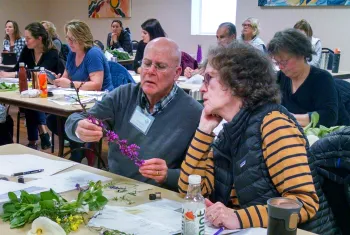
During a chat with a friend 19 years ago, I heard there was an opportunity to learn more about one of my lifelong passions--gardening. She said after certifying in this UC Marin Master Gardener program, I could not only learn more about plants, soil, and sustainable gardening to improve my own success with plants but gain enough expertise to do outreach to help others use more earth-friendly landscape practices. I was excited to meet others who shared my love of plants and to learn more science-based gardening information and skills during the training course. I applied and was accepted to the 16-week program. It did not disappoint. In fact, it was so much more than I had anticipated. I met others who had a rich variety of professional and personal backgrounds, but were soon to become lifelong friends and collaborators, talented in many ways, and fun to be with in our shared love of gardens and our community.
What Do Master Gardeners Do?
The mission is to extend research-based knowledge on home horticulture, pest management, and sustainable landscape practices to the residents of Marin County.
Founded in 1981 by the University of California Cooperative Extension in Novato, there are currently 344 UC Marin Master Gardeners serving our Marin County community.

How do Master Gardeners achieve their mission?
- Host hands-on educational workshops that teach our county’s residents how to protect California's natural resources by gardening sustainably.
- Answer questions by email, phone, or in person about how to grow fruit, vegetables, and flowers, and manage pests in the garden
- Provide hands-on demonstrations at school, community, demonstration gardens, and the Marin County Fair.
- Teach horticulture skills to youth and adults through producing videos, public speaking at libraries, and answering questions at farmers’ markets and our free Help Desk, to name just a few of the ways.
How to Apply to Become a Master Gardener?
Applications are available at http://marinmg.ucanr.edu starting July 14, with final applications due on or before September 12. Click on the link to become a Master Gardener. Requirements include being a Marin resident and being available to attend all 16 weeks of in-person and virtual trainings from January 22 to May 7. Trainings start at 9 a.m. on Thursdays and run through early afternoons each week. The program cost is $395, with limited scholarships available.
Once applications are reviewed, the next step is an interview with each applicant to match the best candidates with the available 2026 training opportunities. Selected trainees are required to be fingerprinted by the Marin County Sheriff before embarking on the training.
It’s All About Classroom, Community, and Collaboration
Once chosen, trainees get a wide scope of topics in the training classroom paired with a range of in-depth homework on a weekly basis. Subjects range from botany, soils, composting, plant pathology, integrated pest management, irrigation practices, growing fruits, vegetables, ornamentals, trees and shrubs, pruning on all types of plants and trees, fire-smart landscaping, and much more.
Subjects are taught by professionals from our community: UC faculty, nursery professionals, local horticultural experts, and certified Master Gardeners.
Each trainee is also partnered with a mentor to guide the student through the training classes. Mentors collaborate with and successfully help pair them with county-wide volunteer opportunities to serve Marin residents and further the MMG program.
The first-year volunteer requirement is 50 hours of service. After that, the yearly requirement is a minimum of 25 volunteer hours and 12 hours of Continuing Education annually.
I hope this information sprouts your interest in these rigorous and fascinating garden education classes and community service opportunities. To learn more details about how to make this opportunity blossom and become a Marin Master Gardener, please go to our website at https://marinmg@ucanr.edu.
Good luck! We look forward to breaking ground with you.
By Jill Fugaro, August 16, 2025
Summer pruning for fruit trees

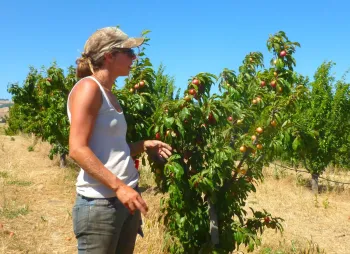
If you’ve ever wrestled with an overgrown fruit tree, you know the struggle—branches reaching for the sky, fruit hiding in a tangled mess, and those pesky suckers popping up everywhere. But don’t worry, summer is the perfect time to get out there with your pruners and give your trees a little mid-season TLC. Done right, summer pruning keeps your trees manageable, encourages better fruit, and makes harvesting a whole lot easier.
Years ago, I used to do all my pruning in winter, figuring that’s when the books said to do it. But then I learned that summer pruning has its own set of benefits. Unlike winter pruning, which encourages a burst of new growth, summer pruning helps slow things down. This means less wild, vertical growth and more energy directed into fruit production.
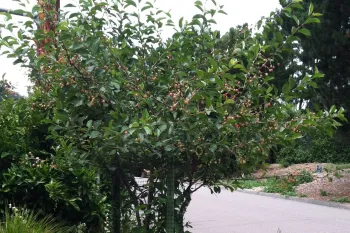
When it comes to summer pruning, I like to keep it simple. Here’s what I focus on:
- Water Sprouts and Suckers – You know those tall, skinny shoots shooting straight up from a branch? Those are water sprouts, and they don’t do anything for your fruit. Same goes for the suckers coming up from the base of the tree. I cut them off to keep my tree’s energy focused where it matters.
- Thinning Dense Branches – If I can’t see a bit of sky through the branches, it’s time to thin things out. Removing a few branches here and there improves airflow, reduces disease, and lets sunlight reach the fruit for better ripening.
- Shortening Long Branches – If I have a branch stretching too far out, making it tough to reach fruit, I trim it back by about a third. I’m careful not to remove too much at once—keeping at least 80% of the foliage helps prevent sunburn and stress.
Late June through August is prime time for summer pruning here in Marin. By then, the trees have put most of their energy into growing, and fruit has already started to form. I’ve also found that pruning in late summer helps reduce the risk of sunburn since the strongest summer heat has passed.
- Sharp, Clean Tools Are a Must – A good pair of bypass pruners and a sharp pruning saw make all the difference. Dull or dirty tools can tear bark and spread disease.
- Cut at the Right Angle – I always prune just above a bud or lateral branch, angling the cut slightly outward. This encourages healthy regrowth and keeps the tree in good shape.
- Less is More – It’s tempting to go wild with the pruners, but removing too much can stress the tree. I keep my cuts conservative.
- Watch the Weather – I try to prune on dry days to minimize the risk of fungal infections.
Every time we prune, we’re influencing the tree’s hormone balance. The tips of branches hold growth hormones (auxins), so when we remove those, the tree redirects its energy elsewhere. Summer pruning helps keep trees compact and productive, while winter pruning encourages new shoots to take off in spring. Knowing when and how to prune makes all the difference.
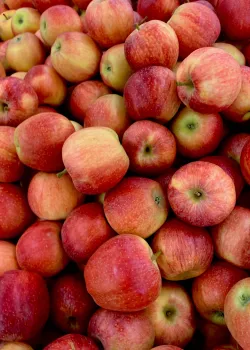
From my own experience and what the experts say, these are the best fruit trees to prune in summer:
- Apples & Pears – Keeps them a manageable size and improves fruit quality.
- Peaches & Nectarines – Thinning out excess growth helps with air circulation and prevents fungal diseases like peach leaf curl.
- Plums & Apricots – Good airflow helps prevent brown rot, which can be a real problem in our coastal climate.
- Cherries – Summer pruning helps prevent bacterial canker, which thrives in damp conditions.
Summer pruning may seem like an extra chore, but trust me, it pays off. A little effort now means healthier trees, tastier fruit, and an easier time harvesting later. So grab your pruners, step outside, and give your trees some love. Your future self (and your fruit bowl) will thank you!
By James Campbell, August 9, 2025
A kind approach to growing roses
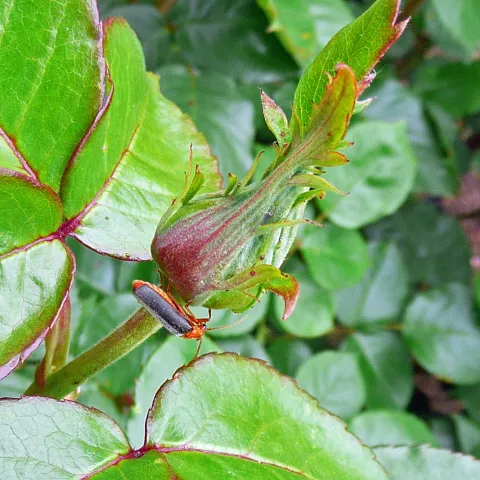
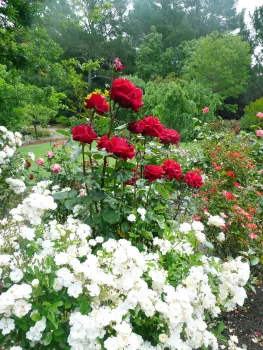
With their timeless beauty and grace, roses are often considered jewels of the garden. They also have the reputation for being persnickety plants that are high-maintenance and heavily dependent on chemical fertilizers and pesticides. Today’s gardeners are looking for easier and gentler ways of growing America’s national flower, and ask, can you have gorgeous rose blooms on plants that are bountiful and healthy AND be kind to the environment at the same time? The answer is a resounding YES! Grow your roses and all your other garden plants the Earth-friendly way. Using sustainable processes that mimic Nature, you can create a great-looking garden that’s healthier for you, your family, your pets, and the environment!
The key elements for this kinder approach to growing roses are to choose the right varieties for your location, build and maintain healthy soil, water wisely, promote biodiversity, and use integrated pest management.
Choose the right varieties for your location – When shopping for roses, look for varieties that are well-suited to your garden’s microclimate and have proven to resist disease. The Marin Rose Society website has a list of roses that do well in our environment. Plant in a place that gets a minimum of six hours of sun each day, is protected from wind, and has adequate space to spread out.
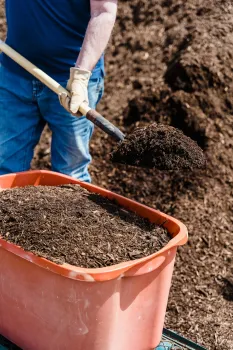
Build and maintain healthy soil - Like all plants, roses thrive when grown in healthy, living soil, rather than relying on chemical fertilizers that can harm soil life and pollute waterways. Feed the soil with compost, aged manure, or organic mulch. These materials provide a slow and steady supply of plant nutrients that improve soil structure, promote movement of air and water, and are a good home for plant roots and soil organisms.
Water wisely - Deep, infrequent watering that encourages the development of strong root systems is key to effective watering. Drip irrigation or soaker hoses are ideal, delivering water directly to the soil without wetting the foliage. Water early in the morning to reduce evaporation and allow leaves to dry if they do get wet, reducing the chance of disease.
Promote biodiversity - A wide variety of flowering plants, including natives, perennials, annuals, and herbs, supports diversity of soil microorganisms, and provides nectar and habitat year-round for beneficial insects like ladybugs, lacewings, and parasitic wasps that prey on common rose pests. Let parts of your garden grow a little wild, with areas of undisturbed ground, leaf litter, or flowering weeds like dandelions that can support a variety of life forms.
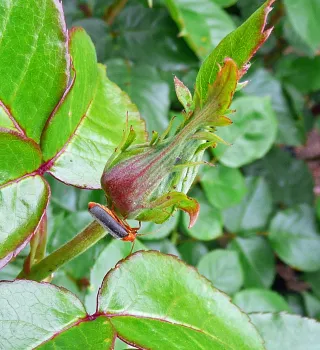
Use integrated pest management – Whether it’s aphids or spittle bugs, earwigs, or cucumber beetles, you likely don’t want these pests on your roses or other garden plants. Using integrated pest management (IPM), a holistic, ecologically based approach, you can prevent pests entirely or reduce them to levels you can live with.
In a healthy ecosystem, natural enemies keep pest populations in check (think ladybugs munching on aphids). Predators, parasites, and pathogens (disease-producing organisms) are the primary groups of natural enemies (also called biological control agents). These include many species of birds, mammals, amphibians, and reptiles, as well as predatory insects and spiders, and pathogens specific to pests, such as Bt (Bacillus thuringiensis) for many caterpillars.
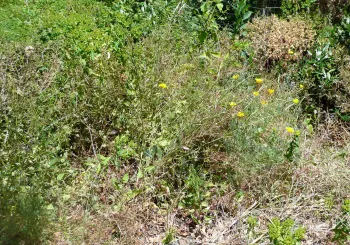
Take Nature’s approach and invite these helpful pest controlling creatures into the garden by providing them with food (seeds, berries, nuts, fruits, nectar, pollen, and foliage), water for drinking and bathing (anything from a cement birdbath to a depression in a stone), protection from predators and weather (dense shrubs, evergreens, rock piles, and wooded areas), and places for raising their young (mature or dead trees, dense shrubs, burrows, or even home-made nesting boxes). And do so while being gentle with your garden-nurturing your soil, using organic materials, and avoiding chemicals from synthetic fertilizers and pesticides that may harm wildlife.
It’s actually pretty easy to enjoy your beautiful roses grown the Earth-friendly way!
By Nanette Londeree, August 2, 2025
The Mediterranean Oak Borer: a tiny threat to Marin’s majestic oaks
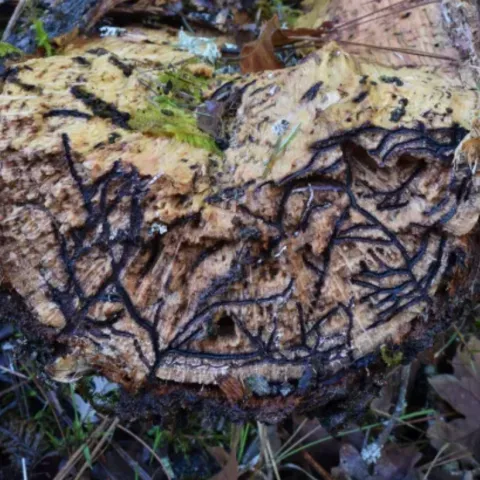
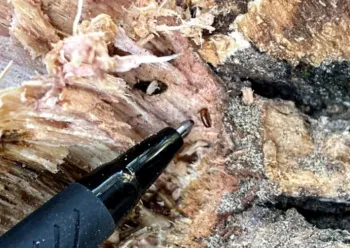
As you wander beneath Marin County’s stately white oaks, such as valley and blue oaks, be aware some little troublemakers are on the move. The Mediterranean oak borer (Xyleborus monographus), a beetle scarcely bigger than a peppercorn—about 3 millimeters long, or one-eighth of an inch—is quietly carving its way into our beloved oaks.
Where it came from and where it’s been found
This beetle hails from Europe, the Middle East, and North Africa—classic Mediterranean territory. It was first spotted in California in 2019 in Napa County. Since then, it has been reported in Lake, Sonoma, Mendocino, Sacramento, El Dorado, and Yolo counties—and as of May 2025, in Novato, here in Marin.
What trees it targets
The Mediterranean oak borer (MOB for short) mostly attacks native oaks, particularly valley oak (Quercus lobata) and blue oak (Quercus douglasii). It seems to prefer trees already stressed from drought, injury, or age. In some areas, black oaks have also been affected.
How it does its damage
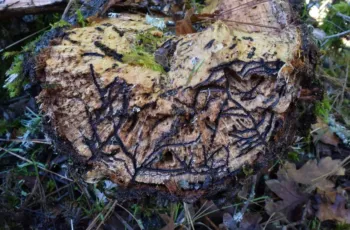
MOB is a type of ambrosia beetle, and it doesn’t eat the wood itself. Instead, it bores into bark and lays eggs in tunnels called galleries. There, the beetle cultivates fungus—specifically, ambrosia fungi—which serves as food for both adult beetles and their larvae. The problem is that fungus spreads through the tree’s tissues, disrupting its ability to move water and nutrients. Over time, this fungal invasion, combined with damage from tunneling, can weaken and eventually kill the tree.
The beetle can produce two or more generations each year in California’s warm climate, so infestations can escalate quickly. The spread is accelerated by females flying to other trees.
Signs to watch for
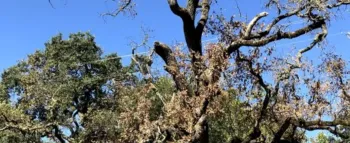
Keep your eyes on the canopy. One of the earliest signs of MOB activity is a single branch that wilts or drops leaves while the rest of the tree looks fine. You might also notice fine sawdust collecting in bark crevices or on the ground below. Tiny, round exit holes—about the size of a pinhead—may appear on the bark, sometimes with dark staining or oozing sap.
If you cut into an infested branch or trunk, MOB galleries appear as tightly packed, fan-like or trellis-shaped tunnels—unlike the rounder or more scattered galleries left by native beetles.
What to do if you suspect it
If you think your tree might have MOB, don’t wait. Consult a certified arborist familiar with invasive pests.
Early detection matters, and proper handling of infested material is critical to slowing the spread. If a tree is confirmed to have MOB, the recommended steps include:
- Do not transport firewood—MOB larvae can hitch a ride to new areas.
- Chip infested wood into small pieces (1–3 inches).
- If chipping isn’t possible, burn the wood locally or cover it with soil to prevent the escape of beetles.
- Letting cut wood dry thoroughly in the sun can also kill larvae.
Research on chemical treatments are underway, including those to manage MOB and reduce fungal infection. Until treatment options are confirmed effective, prevention and sanitation are the key tools in the fight.
What can gardeners do?
The best way to protect your oaks is to keep them healthy and well-maintained. Avoid injuring tree trunks with tools. Mulch to preserve moisture and reduce root stress. Water deeply during dry spells, especially for young or vulnerable trees.
And most importantly, stay observant. Check your trees regularly, especially in late spring and early summer, when beetle activity is at its highest. If something looks off, consult an arborist.
The Mediterranean oak borer may be tiny, but with your help, we can keep Marin’s oaks standing tall. For more information, https://ucanr.edu/sites/default/files/2024-09/330538.pdf
By James Campbell, July 26, 2025
Which soil amendments are healthy for the garden and the planet?

Seems like every time I go to the nursery, there are new things to buy – and I’m not talking about the plants. This is especially true when it comes to soil amendments. Some of these packaged materials are helpful. Worm castings are packed with millions of beneficial microbes. Leaf mold boosts nutrients. Biochar, a charcoal-like
substance, improves soil fertility and carbon sequestration. Aged manure from cows and other beasts conditions the soil, improves drainage, and provides macro and micronutrients. Compost, made from decomposed garden and kitchen scraps, enriches soil structure, aeration, and water-holding capacity.
These are tried and true, research-backed, science-tested amendments that can make a real difference in the health of your soil and garden.
But what about the other stuff? The vermiculite? The perlite? The peat? What is that stuff, and do you need it? Is it healthy for the garden – and the planet?

Let’s start with peat. Peat moss is a fluffy, absorbent, lightweight brown material you shovel into soil to increase water retention and acidity. For that reason, it has been a mainstay for gardeners growing acid-loving plants like blueberries, hydrangeas, and camellias.
Peat moss comes from peat bogs. These are large wetland areas where decaying plant matter called peat has accumulated extremely slowly – just a millimeter a year – for 12,000 years. For you armchair paleontologists, that’s about the time the last ice age was ending.
But here’s the kicker: peat bogs comprise just 3% of the planet, but they store a third of the world’s carbon. Incredible! That’s more carbon than all the planet’s forests combined. In fact, only the world’s oceans sequester more carbon than the peat bogs. As a result, they are absolutely critical to the health of the Earth’s carbon cycle – the process that regulates the Earth’s climate and supports life.
I think you know where this is going. Every time peat moss is harvested, carbon is released, habitat is destroyed, C02 is unleashed into the atmosphere, and the risk of a warmer Earth rises. The salt in the wound is that it takes a few millennia for the peat to regenerate. Bottom line? Peat moss is a non-renewable resource. And the harm that could be unleashed if the bogs were heavily stripped is unthinkable.
It should therefore come as no surprise that some countries have banned the sale of peat moss. Question is, should you join them?
That’s up to you, but to help nudge you into making the Earth-friendly decision, please consider some of the excellent alternatives. Coconut coir is fast becoming a peat moss alternative because it provides many of the same benefits. Adding compost, pine needles, and oak leaves gradually increases soil acidity.
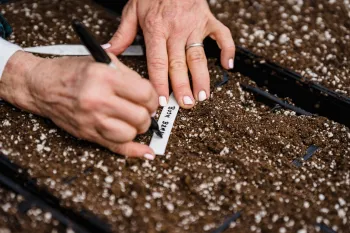
Next, let’s take a peek at those sacks of vermiculite, the small brown flecks you often see in potting soil, and perlite, the companion white flecks. Vermiculite is a
mineral that improves water and nutrient retention in soil and enhances aeration, which is critical for healthy roots. Perlite excels at improving drainage, which is good for plants that don’t like wet roots.
These common potting soil bedfellows sound like they were stamped out of a machine, but they are actually natural materials. Vermiculite is a mica-type mineral that’s heated at high temperatures, and perlite is a naturally occurring volcanic glass. Are they healthy for soil? Yes, they work extremely well together in soils meant for starting seeds. Are they an Earth-friendly choice?
Perlite is a non-renewable resource, although to date, less than one percent has been mined. Vermiculite, on the other hand, requires significant energy for the mining and processing. I guess you’d have to say it’s a mixed bag, but it seems to me that the benefits outweigh the negatives.
Finally, what about those innocent looking bags of sand? Should you mix it into your clay soil? No. Resist the urge. Why? Because mixing clay soil with sand creates
something akin to concrete. Oops!
By Marie Narlock, July 19, 2025
It’s a bug eat bug world
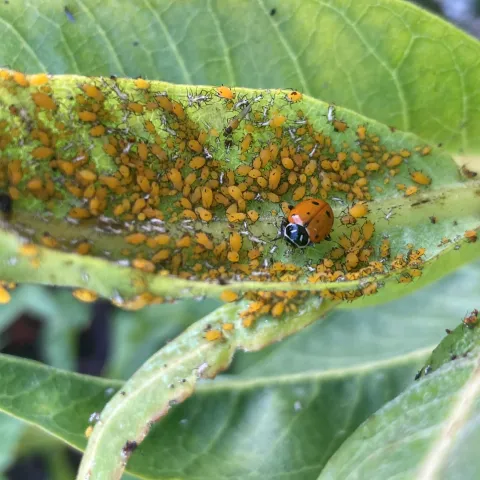
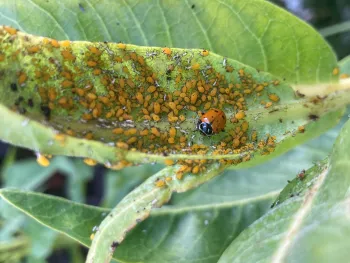
Bugs are the creepy-crawly critters you find in your garden. Scientists divide them into groups. The largest group is insects, such as butterflies, bees, and beetles, which have three pairs of jointed legs and two pairs of wings. Other groups include spiders (arachnids), sowbugs (crustaceans), snails (mollusks), and worms (annelids). While some bugs damage our plants, many beneficial ones protect our gardens by eating the bad bugs.
Lady beetles are the most widely known predatory insect, both as adults and larvae. They form a pest patrol, feeding on plant-eating insects such as aphids. Aphids suck the juice out of our plants and secrete sweet honeydew that attract ants. Another insect, the green lacewing larva – sometimes called “aphid lions”- is a voracious predator capable of eating up to sixty aphids in an hour. Adult lacewings feed on flower nectar and help to pollinate our plants.
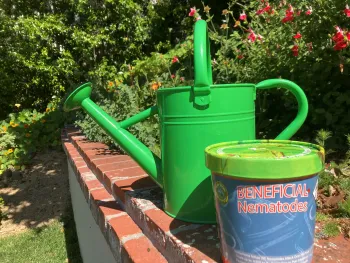
Another important garden ally is the nematode - a microscopic parasitic worm - that acts as biological control for many troublesome garden pests. These non-segmented round worms are too small to be seen with the naked eye, but they are a powerful pest management tool. They help control pests like slugs, ants, and beetles that would otherwise devastate your garden. They provide a way to avoid the use of artificial chemicals, such as pesticides. Note, these are not the same as “root knot” nematodes, which are plant parasites that damage the roots of specific plants.
There are over 20,000 known species of beneficial nematodes. To use them effectively, you must first identify the pest bothering your garden and then choose the corresponding nematode that targets it. You can purchase nematodes online or from your local garden center. Keep refrigerated until ready to use.
To apply, mix the nematodes with water and apply using a watering can, hose-end sprayer, or pump sprayer. Check the product label for the correct application rates. Quantities can range from the billions to the millions. For example, five million nematodes typically treat approximately 1,600 square feet.
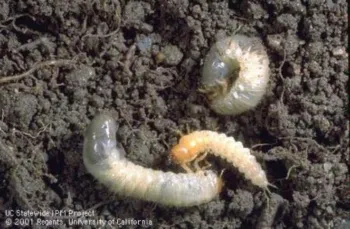
A common lawn pest is the masked chafer. Its larvae – white C-shaped grubs – feed on grass roots, causing significant lawn damage and dead patches of grass. Even worse, raccoons come to feed on the grubs, tearing up large sections of grass in search of a meal. When beneficial nematodes are applied, they find the grubs and attack, releasing bacteria that kill the pests within 24 – 48 hours. The nematodes then use the grub body as a breeding ground, increasing their population and sustaining pest control.
The best time to apply nematodes is late summer or early fall when the soil temperature is above 60 degrees. Water the lawn before application to ensure the nematodes move through the soil effectively. Apply in the morning or evening for the best results. Keep the soil moist after application to allow the nematodes to establish. Two applications 2 weeks apart stages the life cycle for complete coverage.
Beyond grubs, nematodes can be effective in controlling fleas, cutworms, root weevils, mole crickets, codling moth larvae, thrips, armyworms, and fungus gnats. Each one has specific nematodes that can target these pests.
- Steinernema carpocapsae target cutworms, billbugs, crane flies, and lawn moths.
- Steinernema glaseri and Heterorhabditis bacteriophora target white grubs.
- Steinernema feltiae target thrips
The use of nematodes is safe for people, pets, and plants. Since nematodes are naturally occurring organisms, they do not leave harmful residue in the soil or groundwater.
Remember that certain plants attract and support our garden helpers, so they stick around and do their important job of controlling the bad bugs. Good bugs pollinate our food crops, enrich and fertilize the soil, eat our garbage, and provide food for wildlife. Some give us honey, wax, and silk. The bugs that are food for other animals and regulate the pest populations are our allies in maintaining the web of life in a healthy, earth-friendly garden.
By Alice Cason, July 12, 2025
The joy of growing edible flowers and Asian greens in your garden
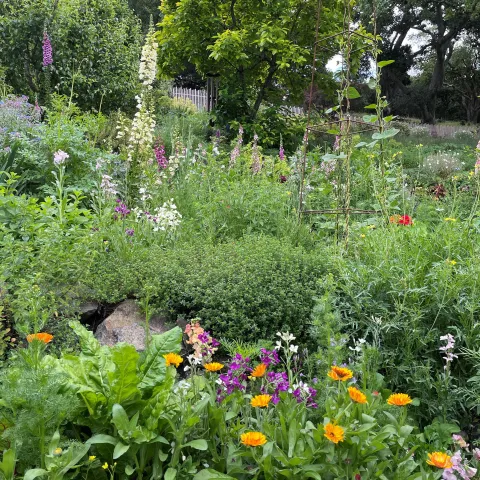
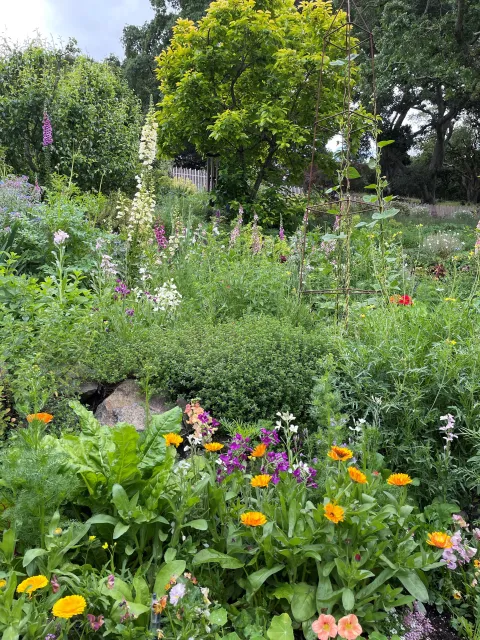
There is nothing more relaxing in summer and fall than venturing into the garden to harvest edible greens, herbs, and flowers. In my garden, tomatoes, herbs, berries, and citrus thrive tucked throughout the garden amongst roses and ornamental plants. This year, I have had the fun of planting more edible flowers and Asian greens, all promising vibrant colors and delicious flavors.
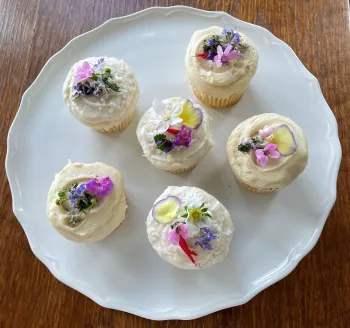
Cuisines around the world often favor specific herbs and greens. In that spirit of discovery, I planted a diversity of vegetables and edible flowers readily grown in Marin’s Mediterranean climate. Many edible plants have unrivaled beauty and can be introduced to existing gardens without major upheaval. For example, in a bed of fading bulbs, plant violas, nasturtiums, and scented geraniums, all of which produce edible flowers. Nasturtiums are annual warm-season plants needing a soil temperature of at least 60 degrees to germinate. Blooms are prolific and attract hummingbirds. Both the flowers and leaves of nasturtiums are edible. The peppery tasting leaves make a lovely pesto, and the petals can be added to salads, marmalades, and used as a garnish for bright, eye-popping color effects. Depending on the variety of nasturtium, they can grow in a mound (Tropaeolum minus) or as climbers (Tropaeolum majus). Next to the nasturtium, I planted violas; sun lovers, tolerating shade but with less bloom. Viola petals are quite flavorful adding sweetness to cakes and appeal to floral ice cubes. Scented geraniums with leaf and bloom fragrances of lemon, peppermint, and rose were planted next. These make lovely additions to baked goods and sugars. The final addition to the flower beds was calendulas, also known as pot marigolds. These are sun lovers too and tolerate moderate water once germinated. The tallest of this group of edible flowers, calendulas, sometimes grow to 24 inches. Online, you will find recipes for Calendula Confetti Salad, or you can use the petals as garnish. Calendulas attract bees, bumblebees, and other pollinators, making them good companion plants for tomatoes.
I chose to continue interplanting edible Asian greens under my Japanese maple. Shiso, commonly called Japanese Basil and scientifically Perilla frutescens, was planted amongst my Anise Hyssop and Japanese onions. Anise hyssop leaves and flowers are nice additions to salads. Shiso has ruffled leaves that have an intense spiced flavor, tasting a bit like cinnamon and cloves. The leaves can be green or reddish-purple. On your plate, Shiso pairs well with cucumbers, melons, tomatoes, and sushi. In addition to the leaves, the flowers and seeds of Shiso are very tasty.
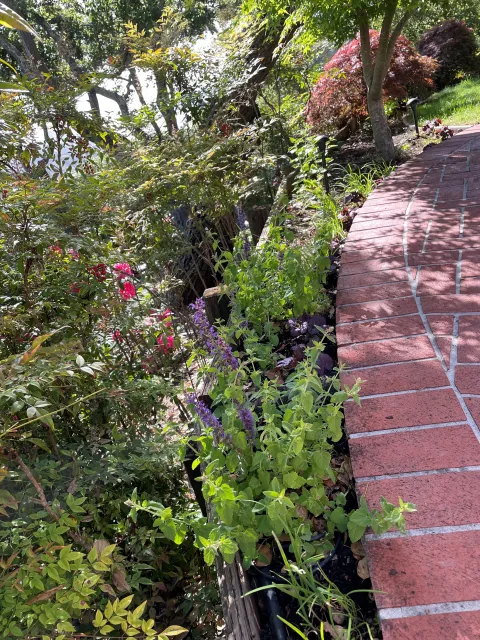
Although it is an annual, it freely reseeds itself and has thrived happily in my garden for three years. It makes a great companion plant with tomatoes. Shiso prefers air temperatures above 50°F, consistent watering, and grows to a height of 12 inches. Gorgeous leafy Asian greens have been planted between the smaller Japanese maples. Some varieties can withstand both heat and cold and can be harvested in both winter and summer, including Komatsuna, a scientific name Brassica rapa, which belongs to the Mustard family. It can be eaten much like spinach, raw or cooked. While classified as an annual, plant in spring and in late summer. Komatsuna prefers morning sun and afternoon shade. Its yellow flowers are edible too. To harvest Komatsuna, cut away the outer leaves, leaving the central part of the plant intact, ensuring the regrowth of new leaves. A second harvest is possible, achieved by cutting the stem down an inch above the ground. The stem will re-grow sometimes up to three times. The leaves can be cooked until tender in boiling water, drained, and cooled. Squeeze out excess water and chop the leaves as you would with spinach. Or wrap whole leaves around a filling and garnish with yellow flowers.
Have some fun this summer and fall planting edible flowers and Asian greens.
By Anne-Marie Walker, July 5, 2025

It’s a bug’s world; we’re just gardening in it!
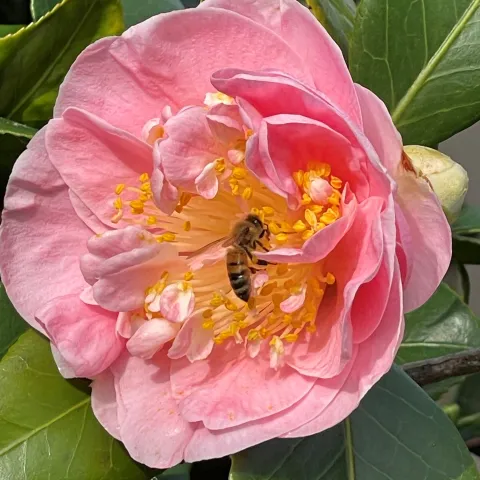
UC Marin Master Gardeners (MMGs) are ready to welcome you to the fair in our new fairground location, new booth, new speaker location (it’s air-conditioned!), and new educational information. We can’t wait to see you!
This year’s Marin County Fair theme is Bug-Tastic! - A theme made for Marin Master Gardeners! We are all about fostering good bugs and offering exit plans for bad bugs. Visit the MMG booth to learn about beneficial insects and ones that are damaging, and how to deal with those destructive critters.
We’ve moved to a new location just east of the Veterans Memorial Auditorium in Bug Land! Look for the white and blue Master Gardener banner with the yellow poppy.
What can you expect to find in the MMG booth?
- Educational elements focusing on good bugs and bad bugs – how to encourage the good and discourage the bad!
- The Beetle Lady (https://www.beetlelady.com/) will have beetle cases on display, providing equal parts education and awe!
- Meet pollinator plants and California natives live and in person. (See something you like? Don’t miss the plant sale from 9 am – 11 am, Monday, July 7th – come early for the best selection!)
- How working together, we can save the planet, one garden at a time.
Why should you visit the MMG booth?
- Ask a Master Gardener: From 11 am to 7 pm daily, UC certified Master Gardeners will be available to answer your most perplexing gardening questions. Ask us for low-water, earth-friendly, fire-smart ideas. Query us about your garden problems, fruit tree challenges, how and when to prune; we’re here to help!
- Be informed about MMG programs: farmers’ markets, outreach, school gardens, water walks, and more!
- Discover how to attract pollinators to your garden.
- Learn how you can become a Marin Master Gardener!
On Children’s Day, July 2nd, the MMG booth will offer a scavenger hunt – search for hidden items while learning about plants and bugs from 11:00 a.m. to 7:00 p.m.
Looking to chill out while learning good gardening practices? This year, our speakers will be located in the Exhibit Hall, which offers air-conditioned comfort.
MMG Exhibit Hall Speakers – noon to 12:45 daily
- July 2 - David Ross and Sharna Brockett will offer Fundamentals of Aesthetic Pruning. They will demonstrate techniques to shape plants in harmony with their natural structure.
- July 3 - Judy Orsini will provide guidance for growing luscious strawberries. She’ll offer tips on recommended varieties, growing requirements, and how to plant, care for, and propagate strawberries.
- July 4 - Are you aware that Monarch butterflies are in danger of extinction here in California? Peter Noras will discuss their life cycle needs and practical steps that we can take to help them survive.
- July 5 - Want to grow dahlias? Paula Jaffe is the person to give you advice! Learn how to successfully grow large, strong dahlias in our Marin clay soil. Paula grows more than 80 dahlias on two-thirds of an acre in Tiburon. Her "Dazzling Dahlias” were featured in an eight-page spread in Better Homes and Gardens.
- July 6 - Interested in bird watching and attracting them to your garden? Did you know that more than 500 species of birds have been seen in Marin County? Paul Mauceli is an avid birdwatcher who will offer suggestions to help you build a simple, sustainable, and bird-friendly habitat garden.
We are all about sharing good gardening practice, inviting pollinators and good bugs to your garden, and helping your garden thrive with the least toxic pest prevention products possible. Learn more about Integrated Pest Management (IPM), an approach that helps you solve pest problems with minimum impact on people, animals, and the environment here: https://ucanr.edu/site/uc-marin-master-gardeners/integrated-pest-management.
Marin Master Gardeners are looking forward to meeting you and sharing our knowledge to help you garden with your best bug buddies!
Visit our Marin County Fair website, https://ucanr.edu/site/uc-marin-master-gardeners/marin-county-fair, to learn more about our speakers and see what plants will be on display and available at the plant sale on July 7th.
By Jane Scurich, June 28, 2025