
IJ Archive
UC Marin Master Gardener Articles in the Marin Independent Journal
UC Marin Master Gardeners have contributed to the Marin Independent Journal's "Ask a Master Gardener" column every Saturday since 1999. We have a team of dedicated writers who have covered nearly every aspect of gardening for Marin County over the years. Search our archives below by category of interest, or use the search box to locate stories by year, month or specific subject.


Marin IJ Archive
UC Marin Master Gardener Articles in the Marin Independent Journal
UC Marin Master Gardeners have contributed to the Marin Independent Journal's "Ask a Master Gardener" column every Saturday since 1999. We have a team of dedicated writers who have covered nearly every aspect of gardening for Marin County over the years. Search our archives below by category of interest, or use the search box to locate stories by year, month or specific subject.
> BACK TO ASK US
Controlling spider mites in your garden
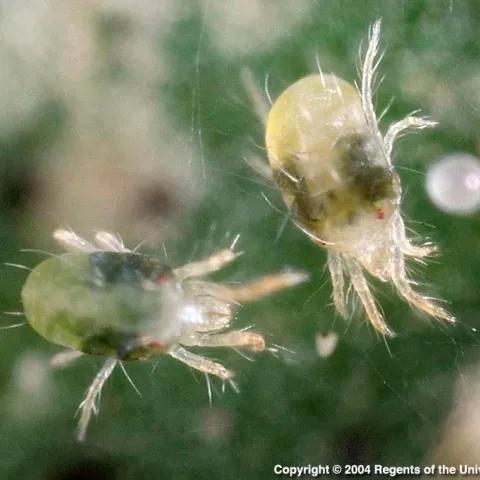
On a warm, dry summer day, the leaves on some of my plants had a sprinkling of light dots. Some were turning an unhealthy, ugly bronze color. The underside of the leaves revealed webbing, indicating that spider mites had infested the plants. Among the most common pests in the garden, spider mites can attack more than 200 plant species. Luckily, there are easy steps to take to control them.
Spider mites are not insects, but members of the arachnid class, along with spiders and ticks. They have eight legs and two body parts (insects have six legs and three body parts).
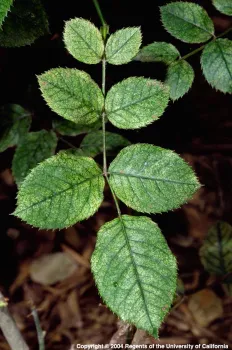
Spider mites make fine webbing on the underside of leaves, distinguishing them from all other types of mites and small insects such as aphids and thrips, which can also infest leaf undersides. They spin webbing to protect themselves from natural enemies and the weather. Then they suck cell contents from leaves, damaging plants including roses, fruit trees, vegetables, berries, vines, azaleas, dahlias, tomatoes, houseplants and ornamental plants.
These pests increase during the dry months of June to September. They prefer hot, dusty conditions and are usually first found on trees or plants adjacent to dusty roadways or garden edges. Plants suffering from a lack of water are more vulnerable.
To the naked eye, spider mites look like slight moving dots. I held a piece of white paper below an affected plant and shook a few leaves so some spider mites would drop off. They scooted around rapidly. They are tiny – less than 1/20” long.
Spider mites live in colonies; a single colony may contain hundreds of pests. Populations can multiply to huge numbers quickly; a generation can be completed in less than a week under the right conditions: hot weather, low humidity, and dust and dirt on leaf surfaces.
While a small number of mites isn’t usually a problem, high populations can damage plants, especially herbaceous ones. At first, the damage shows up as a stippling of light dots. As their feeding continues, the leaves turn yellowish or reddish and drop off. Damage may increase if plants are under water stress.
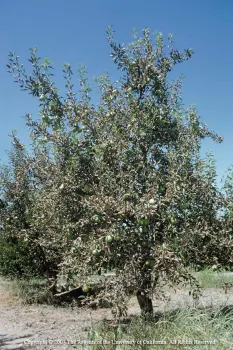
On ornamentals, spider mites may even kill plants when their populations become very high. Loss of leaves on fruit trees may impact next year’s crop. For annual vegetable crops, the loss of leaves can significantly affect yield and lead to sunburning. Spider mites can cause direct damage to sugar peas and beans, where pods are attacked.
To control spider mites, start by keeping your plants adequately irrigated. Water-stressed plants are most likely to become good homes for spider mites.
Spider mites have many natural enemies that limit their numbers in many landscapes and gardens, especially when undisturbed by pesticide sprays. One of the most helpful is predatory mites. Other insects are also good predators: predatory thrips, lacewings, and minute pirate bugs.
Cultural practices can also significantly impact spider mites. Dusty conditions often lead to outbreaks. Apply water to pathways and other dusty areas at regular intervals. Midseason washing of trees and vines with water to remove dust may also help prevent serious late-season mite infestations. Forceful spraying of plants with water should reduce spider mite numbers adequately, especially on the underside of leaves. Remove fallen leaves, branches, fruit, and weeds that may serve as a host for spider mites.
If more control is necessary, use an insecticidal soap or oil in your spray, such as neem, canola, or cottonseed oils. Be sure to test the product on one or two plants in advance to ensure it won’t damage them. If you have a spider mite infestation now, prune out damaged portions of plants and those with significant webbing.
As the seasons change, with cooler temperatures and rain, spider mite populations should decline rapidly – until next summer. Then, take preventive measures early to keep spider mites at a manageable level.
By Julie McMillan, June 21, 2025
Leaf miners
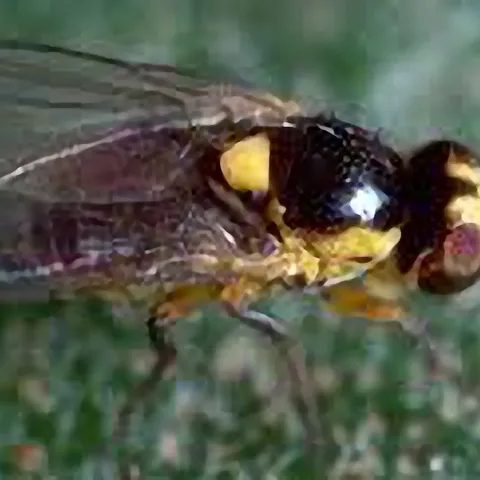
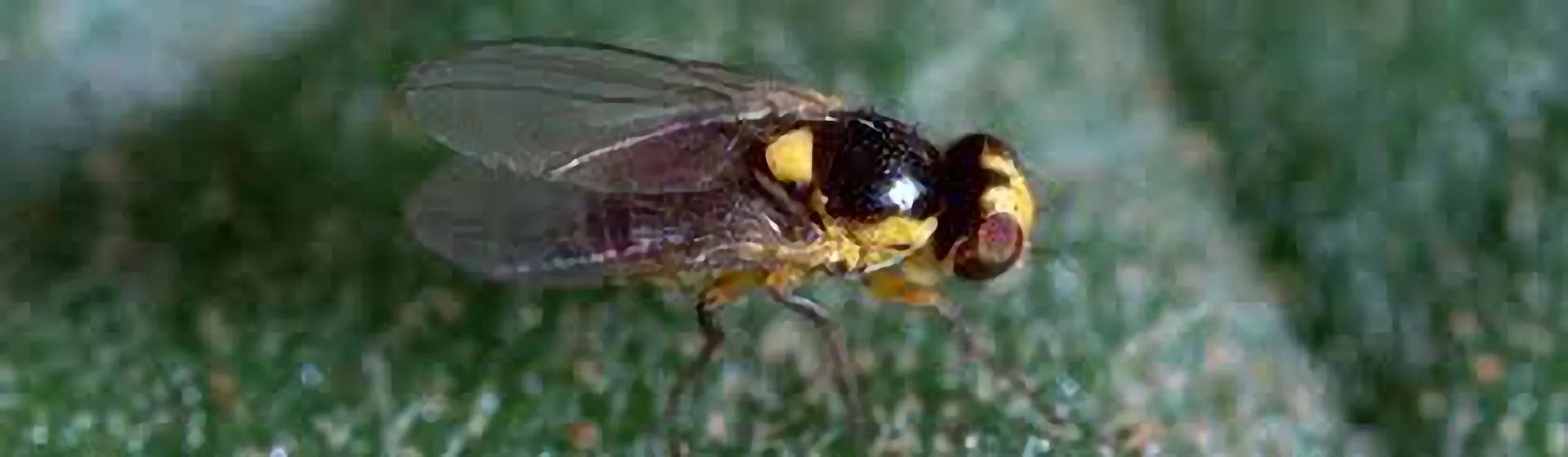
Leaf miners are just one of the many pests that affect our gardens. The two leaf miner types most often found in Marin are the Liriomyza spp, a mostly black & yellow fly with clear wings, and Phytomyza, a blackish gray fly on top with a cream- colored abdomen. Females of both these genera insert tiny eggs into the leaves of numerous vegetables and ornamentals so that their larvae, when they hatch, can feed within the leaf tissue. The larvae use their mouthparts to rupture plant cells, weaving long serpentine trails called mines through the leaf. Adult female flies also damage plants by piercing into leaves with their ovipositor and sucking the sap.
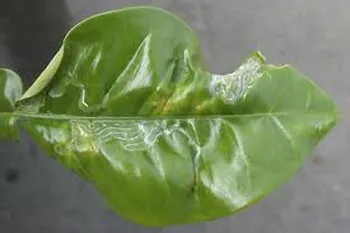
Identifying signs that the pest you are dealing with is a leaf miner are the presence of larval mines and, when populations are high, stippling due to females puncturing the leaves to feed and lay eggs. These mines appear as white, gray, or paler in color wavy lines, tunnels, trails, or blotches just under the surface of leaves and soft stems. In most cases, however, leaf miners cause little damage, and control is not necessary. Injuries are mainly cosmetic, so treatment decisions are based on the plant's appearance.
Flies emerge in spring, usually in late April or early May. The females lay their eggs typically around midday. Larvae are active for about two to three weeks. They drop to the ground next to plants to transform into pupae, surviving over the winter as pupae. Many generations can occur each year as the entire life cycle can be completed in three weeks when the weather is warm.
Leaf miners are most often found on seedlings or transplants. Inspect new plants and seedlings for signs of leaf mines before planting. And then, only plant in areas of your garden where you have not had an infestation. If you have had an infestation of leaf miners, prune and destroy any affected leaves on infected plants. Remove old plants at the end of the growing season.
Avoid pesticide use, as it suppresses parasitoid activity. Almost always, outbreaks are associated with pesticide use, as insecticide applications differentially destroy natural enemies. If the number of leaf mines increases, Spinosad can be an effective option if applied to leaves at times that coincide with periods when egg laying occurs, usually shortly after leaves have expanded in spring.
Notably, leaf miners are resistant to many insecticides and difficult to spray directly. It is advisable to keep your garden area free of weeds such as chickweed, lamb's quarters, nightshade, and plantain, as this reduces their availability as a leaf miner food source. Even though the mines that leaf miners leave on plants make them easy to identify as the culprit, it is critical that gardeners remember to correctly identify the insect causing the damage before applying any insecticide.
Leaf miners have many natural enemies in California, including parasitic wasps, predatory bugs, spiders, earwigs, and ants. Two of their natural enemies, parasitic wasps and hummingbirds, are particularly good at reducing the population of leaf miners. Other parasites attack leaf miners, but their feeding habits protect them from most predators. Beneficial nematodes attack the pupae of leaf miners in the soil. Birds and insects feed on them.
Plant plants that attract natural enemies or predators of leaf miners, e.g., insectary plants, which increase the abundance and effectiveness of natural enemies that help suppress pest populations. Insectary plants, e.g., fennel, buckwheat, and marigolds, can host alternate prey that will feed the natural enemies and keep them abundant locally. Avoid the use of pyrethroids to disrupt leaf miner biological control.
Liriomyza spp., commonly known as the American serpentine leaf miner, has a wide range of host plants. The measures cited above are a good place to start to prevent or address evidence of leaf miner activity in your garden.
By Martha Proctor, June 14, 2025
Apples, including our native Pacific crabapple
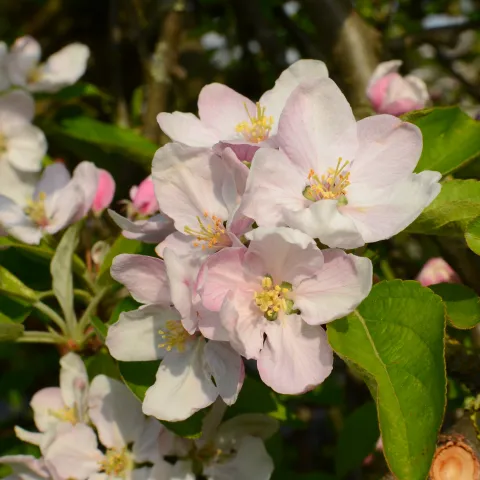
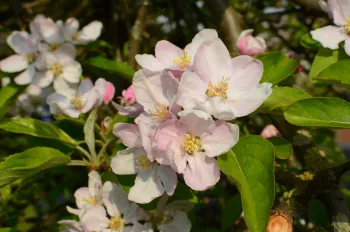
Apple trees are some of the loveliest in the world, as are their close relatives, the crabapples. Their blossoms in spring are intoxicating, and no wonder—they belong to the Rosaceae family, which includes roses and strawberries.
Pollinators like bees and bumblebees are drawn to the fragrant blooms. If a blossom is pollinated, a small apple will begin to form in late spring.
Since most apple trees require cross-pollination, a crabapple tree, being botanically similar, can pollinate an apple tree—and vice versa—if they are planted within 100 feet of each other.
You might be surprised to learn, as I was a few years ago, that Northern California is home to a beautiful native crabapple.
The Pacific Crabapple
The Pacific crabapple (Malus fusca), native to the Bay Area up to Alaska, is particularly easy to grow. It is more resistant to disease and tolerant of heavy clay soil. In my garden, I've found it can even thrive in standing water during winter and endure dry conditions in the summer. This shrub can grow up to 30 feet high and 20 feet wide, but can be pruned to a smaller size. Deer might nibble the leaves, and birds enjoy the small fruit, which is about the size of a cherry. Though crabapples are sour, they are edible straight off the tree. With their high pectin content, they make a delicious jelly. Like apples, they are rich in fiber, vitamins, and antioxidants.
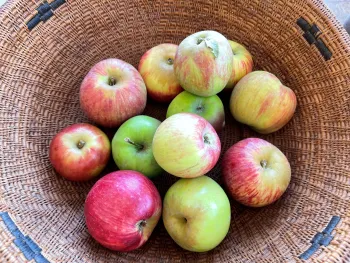
Apple Varieties for Marin
Choosing the best apple trees to grow requires some planning. The climate and microclimate must be considered. Apple trees need at least six to eight hours of sunlight, but they also require "chill hours"—a period when temperatures range from 32°F to 45°F. Trees that need a low to medium number of chill hours grow best in Marin.
A good starting apple to grow here is the Gravenstein. This heirloom variety was once the most popular fruit grown in California before grapes took over. Still widely grown in Sonoma, it's known for its satisfying crunch and flavor and makes excellent pies.
Other varieties that thrive in Marin include Anna, Fuji, Gala, Granny Smith, and Jonagold. Be sure to check your local nursery for information on chill hours and whether the variety is suitable for your specific microclimate.
You might want to consider a multi-graft variety if you have a small space. One tree in my garden has three different types of apples. This tree, now over 30 years old, is incredibly productive. Multi-graft trees are more expensive but work well for cross-pollination in smaller gardens.
Growing a Little Apple Tree
Emily Dickinson once said that heaven was an apple just out of reach. Nowadays, it's possible to grow apples within easy reach. Pruning techniques help keep trees small, and you can buy trees grafted onto dwarf rootstock (8–10 feet tall) or semi-dwarf rootstock (10–20 feet tall). A dwarf tree typically takes only two to three years to bear fruit.
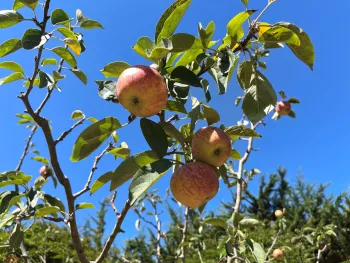
Planting an apple tree
In our Mediterranean climate, an apple tree can be planted in the fall, winter, or early spring. Fall planting gets the roots established early. Winter planting means the tree is dormant, and you can find deciduous, bare-root trees that are less expensive and easy to plant. Just remember not to plant in soggy soil. If planting in spring, make sure to plant before the last frost.
Apples are easy to grow, but there are some diseases and pests. Many of these can be avoided by pruning the tree so that it gets good airflow. Another tip is to thin your apples on the branch to one every six inches. This will lessen the chance of coddling moths and give you fewer but larger apples to enjoy.
Visit the UC Marin Master Gardener website for more information on planting, pruning, and maintaining apple trees.
By Pamela Noensie, June 7, 2025
Attract hummingbirds to your garden
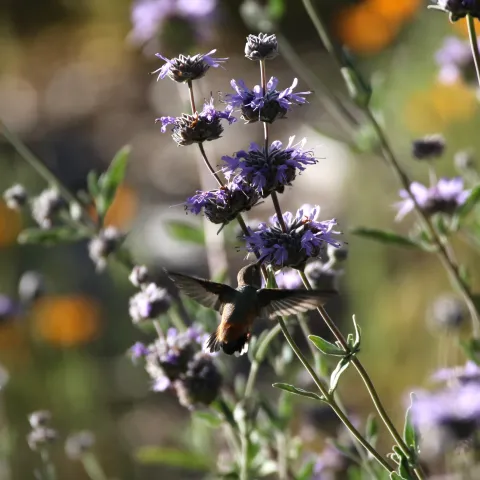
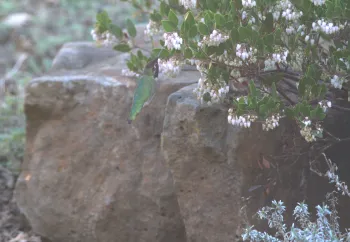
These living jewels in our gardens give us many gifts besides the joy of watching them in their pursuit of life, drinking nectar from flowers or feeders, nabbing an insect in the air, chasing another hummer from their territory, or flying acrobatics to impress the females. They bring the gift of efficient pollination by visiting hundreds of flowers daily to supply enough energy to support their metabolism. They devour insects for 80% of their diet.
Hummingbirds are mostly very small birds with long narrow beaks and fast wings that beat 60-80 times a second. They can fly forward or hover and excel at flying backward. Their tiny feet allow them to perch or scoot sideways but not to walk. This design eliminates drag in flight. Along with swifts, they belong to the order Apodiformes, meaning "footless".
Hummingbirds measure about 5 centimeters and weigh about 2-20 grams, and their speed and agility are amazing. These talents may give them the confidence needed to survive in a world so much bigger and, for some, to migrate thousands of miles. The Oholone tribe of Santa Clara Valley named Mt. Umuhnum for the word meaning "resting place of the hummingbird."
The three species of hummingbirds that live or migrate through Marin are Anna's, which are year-round residents on the West Coast; Allen's, which arrive in early winter; and Rufous, which just passes through, spending summer in Alaska and winter in Mexico.
Anna's hummingbirds are gray on the front and iridescent green on the back. Males have glittering magenta heads, while females have only a few bright patches on their throats. The colors tease, appearing black, magenta, or green depending on the angle viewed. The male Anna's hummingbird is famous for his song, but he also produces a remarkable sound with his tail feathers.

Allen's Hummingbirds have rusty red flanks with green backs. They breed along the coast from Southern California to Oregon. They are closely related to the Rufous Hummingbird and similar in appearance.
Rufous Hummingbirds fly 3,900 miles for one of the longest known hummingbird migratory flights from Alaska to Mexico. Other hummers that either fly through or reside in California are the Black-chinned, Calliope, and Costa’s hummingbirds.
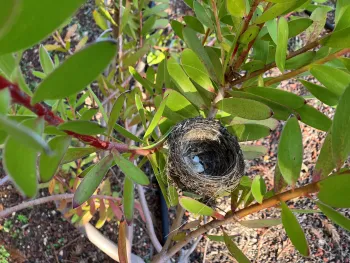
Male hummingbirds court females by soaring upwards and then diving at high speed, which ends in a loud squeak produced by spreading their tail. The female is the sole nest builder and caregiver of the babies. She builds a cup-like nest woven with a spider web, plants down and lichen, and lays two eggs about the size of jellybeans. The babies are fed nectar, small insects, and spiders.
To attract these birds to our gardens, we must provide habitat, food, and water. This means growing colorful blooming nectar-producing plants available all year long. Hummers are attracted to red. Provide clean water and do not use pesticides. Feeders can be used year-round but must be kept clean and free from ants and bees.
Here are some nectar plants that hummingbirds find irresistible. Two Manzanitas, Arctostaphylos desiflora, bloom in fall and winter, and the groundcover A. Emerald Carpet blooms from winter into spring when few plants are in bloom. There are many choices for spring and summer blooming plants: Western Columbine, Aquilegia Formosa, Pitcher sage, Lepechinia fragrans, two Honeysuckle vines, Lonicera hispidula, and the orange spring bloomer L. ciliosa.
Many salvias bloom in spring and summer. Some that attract hummingbirds are Salvia clevelandii, S. spathacea, known as the hummingbird sage, and S. amistad, which blooms into fall. The plant known as Orange Bunny Ears, Cuphea Strybing Sunset, blooms almost constantly. California fuchsia, Epilobium canum, is a summer and fall bloomer.
Some succulent blooms hummingbirds appreciate are Fox Tail Agave, A. attenuate, Torch Aloe, A. camperi, Live Forever, Dudleya farinose, and Red Hot Poker, Kniphofia.
For more plants, go to UC Marin Master Gardeners Hummingbird plants. https://marinmg.ucanr.edu/plants/pollinator_habitats/
By Sara O'Keefe, May 31, 2025
Succulents 102
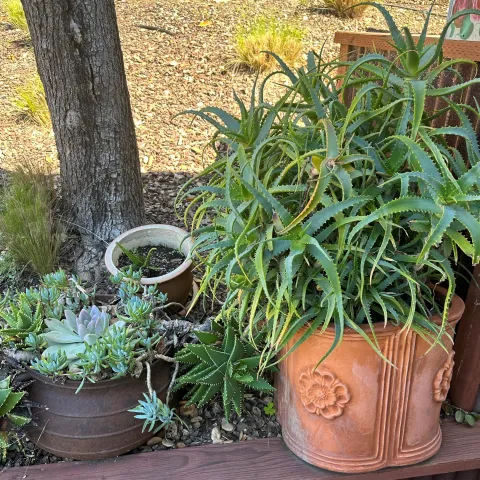
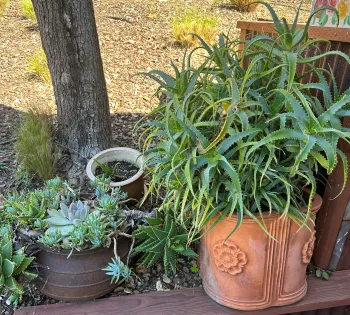
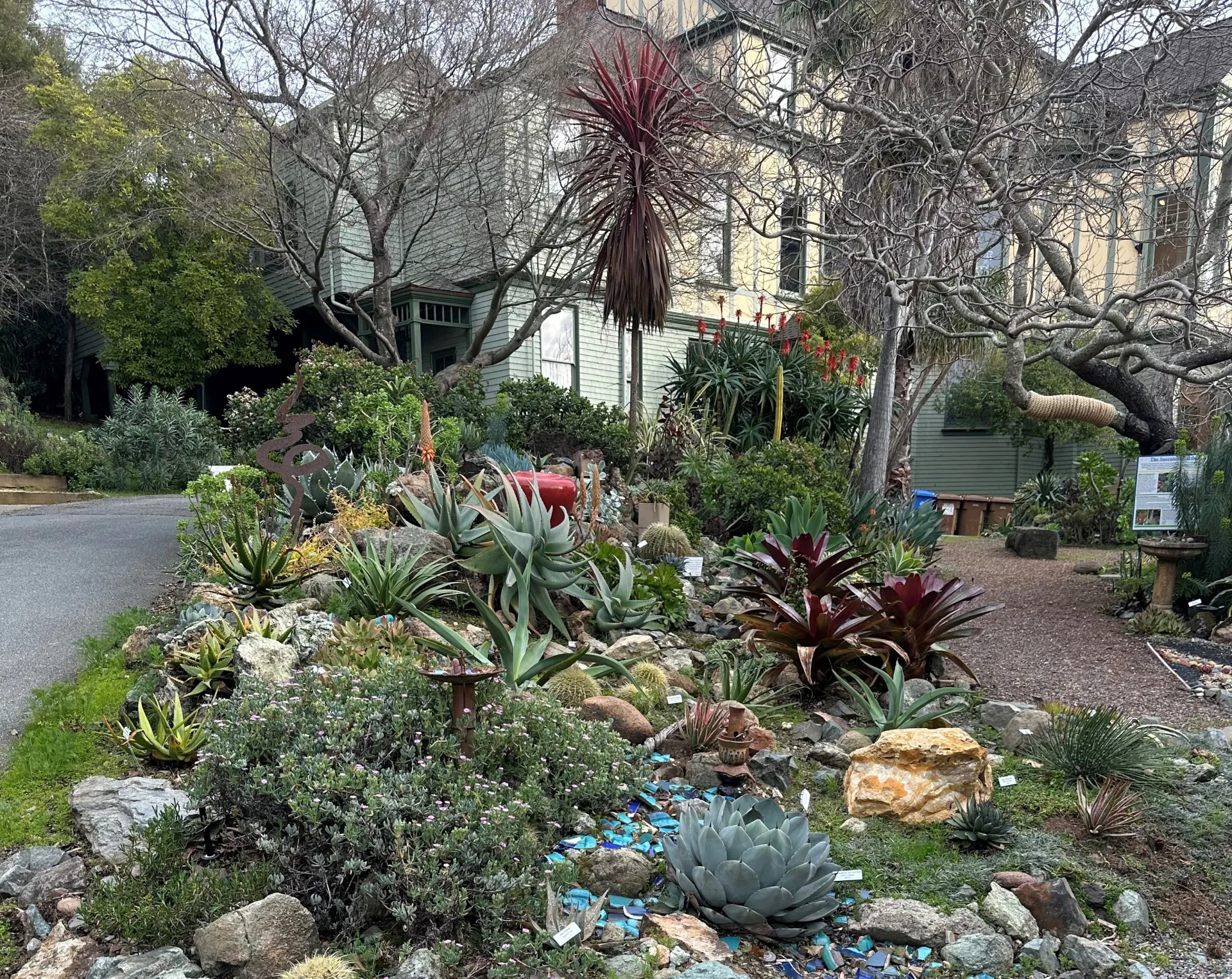
Master Gardeners enthusiastically support finding homes for succulents in your home garden. Once reserved for arid climates, succulents have proven resilient and adaptable. Including succulents in your water-efficient garden makes creating a dynamic, biodiverse, and pollinator-friendly garden easier. The Falkirk Demonstration Gardens include a stunning Succulent Garden showcasing many species and their uses. The garden also features bromeliads, a sub-category of succulents.
Most succulents originate from low-rainfall regions, making them ideal for Marin gardens. Their ability to store water in their thick, fleshy leaves, stems, or roots allows them to survive prolonged droughts, making them perfect for water-wise gardening in California’s Mediterranean climate.
Designing with succulents follows the same principles as planning any garden space. Consider soil, irrigation, lighting, and thoughtful design.

Soil While succulents are highly tolerant of poor soils, they love a nurturing home like any plant. Much of our local soil is clay, and succulents do not like to sit in clay. You can amend your soil with organic matter or plant in raised beds and pots.
Watering Succulents can survive long periods without irrigation, they appreciate occasional deep watering for a lush look. Water deeply but infrequently, allowing the soil to dry between waterings. When integrating succulents with other plants, ensure their neighbors have similar water needs.
Light Needs Like all plants, succulents have specific light requirements. Aloes and many crassulas thrive in full sun, but too much intense sunlight can burn them. Shady spots suit crassula multicava, haworthias, and gasterias, but not most other succulents.

Design Tips As you plan succulent placement, ask yourself about colors, size, textures, and contrasts. You would not want to put a spiky succulent next to where you sit or walk. The variety of colors in succulents is abundant, so have fun with them. Scale is important. If you are planting in a landscape, consider larger varieties in the back, medium-sized plants in the middle, and maybe a creeper in the front. In pots, thrillers (larger or taller plants) go in the middle, chillers (medium-sized plants) go around them, and spillers (hanging plants) go in front so they can drape over. Smooth or spiky leaves may like a more textured plant next to them to help show them off.
Maintenance Succulents are low-maintenance, but a few tasks help them thrive. The UC IPM suggests removing dead leaves to prevent pests and rotating potted succulents for even growth. If a succulent becomes leggy, prune it back to encourage fresh growth. The best time to trim your succulents to keep a more compact shape is in early spring, so they can quickly restore themselves during summer’s rapid growth. You can also take a cutting from the stems and create new plants by re-rooting them.
Join Us for the Succulent Sale! The Marin Master Gardeners are hosting their annual succulent sale on Saturday, June 14, from 9 a.m. to 12 p.m. at the Falkirk Cultural Center’s rear parking lot on Mission Street in San Rafael. There will be individual plants, potted arrangements, and bromeliads for sale. Experienced Master Gardeners will be on hand to answer your questions. https://www.youtube.com/watch?v=c5uRa4Shya0&t=2s
By incorporating succulents into your garden, you conserve water and create a beautiful, resilient landscape. Whether you're a novice or an experienced gardener, the sale offers a chance to find unique varieties and gain expert advice. We hope to see you there!
By Dot Zanotti Ingels, May 24, 2025
What do cattle water troughs and flourishing container gardens have in common?
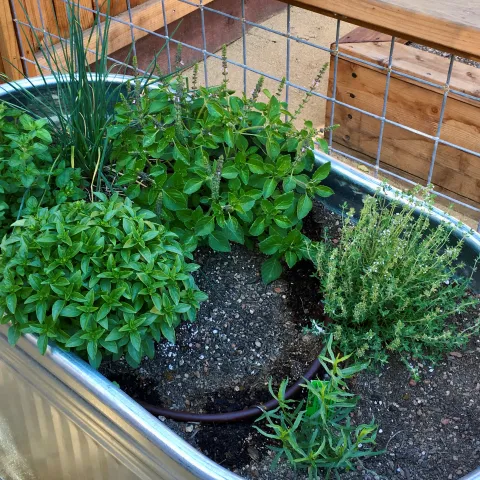
Is your yard filled with compacted clay soil and just the thought of attempting to grow vegetables and flowers seems daunting? Or perhaps you’re searching for a raised bed to avoid a lot of bending and stooping. Have you considered trough gardening?
Galvanized livestock water troughs, also known as stock troughs, can be used to create attractive, sturdy, non-rusting, and durable container gardens.
Advantages of troughs
- Unlike wooden raised beds, no assembly is required, and the galvanized metal will not rot.
- Troughs have metal bottoms to deter burrowing animals.
- Troughs are available in a variety of shapes and sizes to fit your available space.
- Taller troughs are helpful for gardeners with mobility issues, help discourage wildlife from invading, and offer deeper, cooler soil.
- Visualize your landscape filled with multiple circular troughs, or a series of rectangular troughs, or one statement trough.
Getting started:
- Identify an area in your garden where the trough(s) can be placed. Measure carefully. Consider the amount of sunlight available. Tomatoes, peppers, and many other veggies and flowers require six hours of direct sunlight per day to thrive.
- Identify a convenient water source: will you install drip irrigation or hand watering? Plan to water early in the day to avoid leaf pest problems.
- Level the area for the trough(s). Consider installing a layer of gravel under and around the trough. Elevate the trough slightly with tiles or bricks to facilitate drainage.
- Shop for galvanized troughs at farm stores, garden centers, hardware stores, and online.
- Consider plants you plan to grow and ensure the trough is deep enough to accommodate the roots. Tomatoes, beans, squash, and potatoes need a soil depth of 16 – 18 inches.
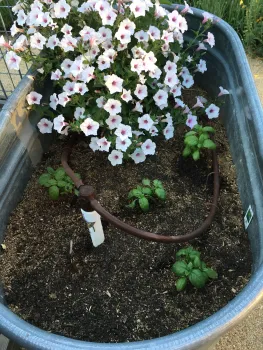
- Drainage is absolutely essential! Troughs have one spigot, which will not suffice! Turn the trough upside down on a drop cloth to capture the metal filings. Using a 1/2-inch bit or hole punch, create multiple holes horizontally and vertically across the bottom. Wear protective eye covering and sturdy gloves while drilling. Dispose of the filings in the trash.
- Insert a layer of ¼ inch hardware cloth or screening to discourage soil falling out and/or clogging the holes.
Soil
- This is the perfect opportunity to start your garden with rich soil – no more frustration with dense, nutritionally barren soil!
- Determine the amount of soil, compost, and optional amendments needed. Bulk soil is much more economical than bagged soil. You can use a truck or have soil delivered. Here’s a quick soil calculator: https://www.inchcalculator.com/soil-calculator/.
- Purchase high-quality, nutrition-rich potting mix. Consider a mixture of soil, compost and amendments.
- Fill the trough to the brim and water well a day or more before planting. The soil will settle dramatically.
Pest management
- One advantage of elevated container gardening is the ability to get up close and personal with your plants. Take time to observe your garden. Are there nibbling insects on the leaves? Is there mildew?
- Deadhead your plants frequently and clean up any debris that has fallen in the container.
- Don't over-fertilize, as this can encourage rapid growth, which attracts pests.
- If you find insects on your plants, treat them immediately with the least toxic method. For example, you can hose off aphids with a strong stream of water, hand-pick slugs and snails, and dispose of them. You can also hang yellow sticky strips to catch whiteflies and plant yarrow, dill, cosmos, and alyssum to attract beneficial insects.
Additional considerations
- Once in place and filled, large troughs will be quite heavy and may require total emptying to relocate. If you plan to move the container, add rollers to the trough before filling it.
- Container plants require more frequent watering and fertilizing.
The UC Marin Master Gardener website is brimming with valuable information to get your trough garden off to a fabulous start! Visit https://marinmg.ucanr.edu/ and search under Basics, Plants, Care, and Edibles. Happy gardening!
By Jane Scurich, May 17, 2025
Who’s eating my plants?
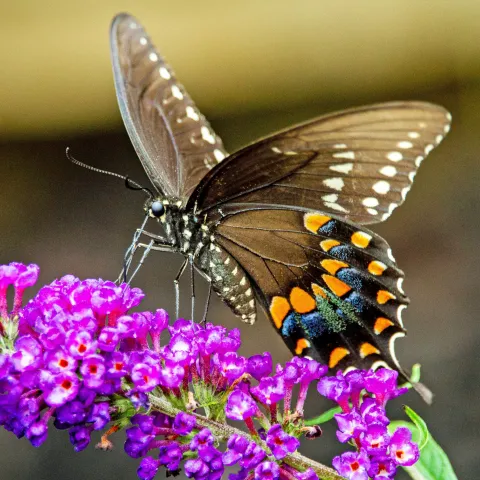
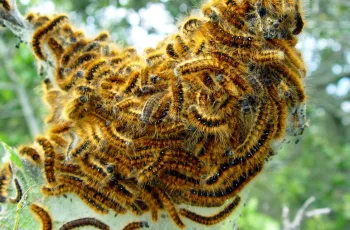
Ah, the bounty of spring! All the tender new foliage on trees and shrubs, flowers galore, and prolific growth in the vegetable garden. We gardeners revel in the abundance the season brings, and just like us, insect pests, both big and small, love it too. Since there are more insects on Earth than all other kinds of creatures combined – over 900,000 known species- it can be challenging to figure out which ones may be causing problems in your garden. It’s estimated that about one percent of insects are considered harmful, with the vast majority being either neutral or beneficial. By knowing just a few things about these masters of the planet – their basic anatomy, how they eat, and their life cycle- you can quickly narrow down the possible suspects and, if you choose to treat them, develop an effective pest management strategy. You’re also likely to identify some beneficial insects that you want to keep around!

First, a bit of insect anatomy. All mature insects have three pairs of jointed legs, one pair of antennae, compound eyes, and up to two pairs of wings. Spiders and mites are arachnids, not insects. They have two body parts, eight legs, no antennae, simple eyes, and no wings. If you observe something crawling around in your blossoms and you count eight legs, it’s not an insect – it's an arachnid.
Another defining attribute of insects is their mouth parts, the features they use to eat. Insects that cause much of the damage in the garden include those with:
- Piercing-sucking mouthparts: the outermost layer of plant tissue is pierced and plant sap from cells is sucked out, which damages the cells and removes valuable nutrients. These types of feeders may excrete a sweet liquid that attracts ants and supports the growth of sooty mold. Plant damage may include distorted leaves, curled leaves, yellowing tissue, deformed fruit, and even death of the entire plant. Some insects inject a salivary toxin into the plant that does additional damage. Well-known insects with piercing-sucking mouthparts include aphids, scales, leafhoppers, squash bugs, and plant bugs.
- Rasping-sucking mouthparts: the surface of plant tissue is rasped or scraped and fluids that ooze from the damaged area of tissue are sucked up. Affected tissue dies, turns brown, and tears easily; leaves become bleached and dry. The skin of damaged fruit appears sanded, and the underlying tissues may be off-flavored, hard, and/or dry. Thrips and mites are common pests with rasping-sucking mouthparts.
- Chewing mouthparts: plant tissue is bitten, ripped, torn, or rasped off. Damage includes holes in leaves, buds, roots, seeds, fruits or woody parts of plants, missing leaves, "windowpane" leaves showing bared veins, and scraped areas. Earwigs, caterpillars, sawfly larvae, webworms, leafrollers, cutworms, flea beetles, blister beetles, and cucumber beetles are some of the many insects that feed with chewing mouthparts.

The next important thing to identify is the life stage of the pest that is doing the damage. The majority of insects undergo some type of change during their lifetime, not only in size but also in form. A simple change has three stages – egg, nymph, and adult where nymphs, the young stage of the insect, look like an adult, only they’re smaller and lack wings. Complete metamorphosis involves a dramatic change (think butterfly). These insects pass through four stages – egg, larvae, pupae, and adult.
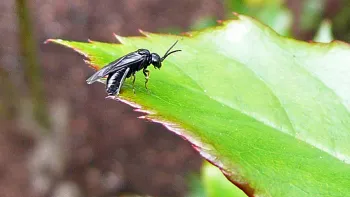
Often, the immature form of an insect, such as larvae or nymphs, is the damaging culprit. These immature stages are highly active feeders and require large amounts of nutrition to support their rapid development. In many cases, the adult does no damage at all, as they’re generally focused on reproduction. Consider the young form of butterflies – the caterpillar may devour lots of foliage, while the adult form lives on pollen and nectar.
Armed with the knowledge of basic anatomy, feeding habits, and lifecycle, how many different insects can you find in your garden?
By Nanette Londeree, May 10, 2025
Use passive and active protection strategies to safeguard your home from wildfires
Marin no longer has a “fire season.” Like many other areas, our fire season is now year-round due to climate change and other factors.
Southern California’s recent horrific fires underscore the urgent need to make our gardens ready for wildfire. “Create passive protection by careful garden design, and actively maintain your landscape. These strategies will make your property fire adapted, helping your home survive a wildfire,” recommends Kathleen Cutter, UC Marin Master Gardener co-lead of the Fire-smart Landscaping Team and Marin Wildfire’s Senior Wildfire Mitigation Specialist.
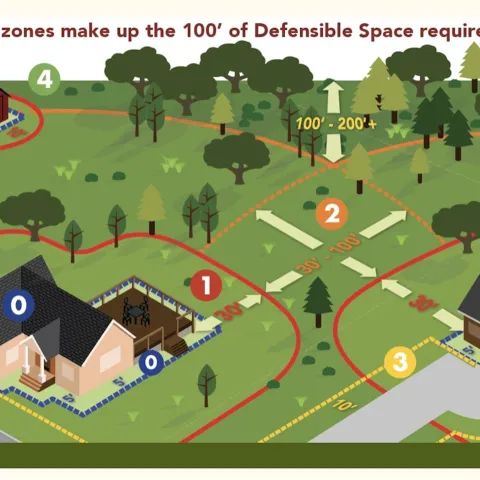
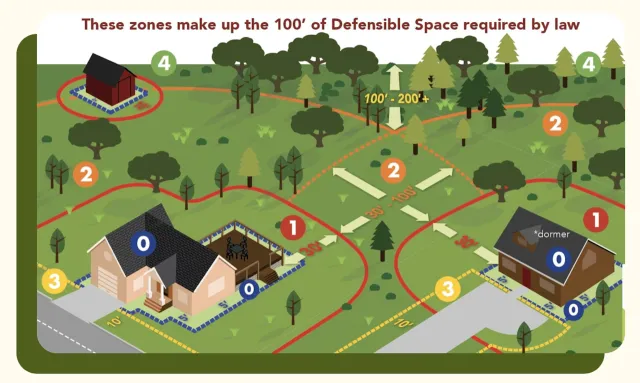
Passive protection means using thoughtful design. Start with the three defensible space zones and work out from your house (and other structures, including attached decks):
- Zone 0, 0’-5’ from your house: Your goal is no combustibles, which is best practice because “60-90% of homes ignite from embers,” says Ms. Cutter. Removing organic materials, or combustibles, on the ground in the first 5’ perimeter around your home “eliminates the receptive ember bed, increasing the chance your house will survive a wildfire.” (Your roof and gutter must also be free of leaves and other debris.) Use inorganic mulch (rock, gravel, pebbles); eliminate all plants; remove all other combustibles (e.g., firewood, garbage bins, wicker furniture, cushions, propane tanks). Trim tree limbs 10’ from your chimney and 5’ from your roof.
- Zone 1, 5’-30’ from your house: Your goal is to keep fire from spreading from plant to plant. Group plants in islands separated by fuel breaks such as hardscape, dirt, rock swales or seating areas. Trees should be 18’ apart. Create space for firefighters to defend your home.
- Zone 2, 30’ and beyond: Again, group plants in islands. Keep native grasses well hydrated and no higher than 4”. Limb up trees (6’-10’ from the ground, or 1/3 the tree's height). Keep tree canopies 12’ apart to prevent fire from jumping from tree to tree.
Plant choice is also critical. Look for plants with an open structure so embers fall through the canopy to the ground instead of igniting the plant. Densely structured plants (e.g., juniper, Italian cypress) trap embers and contain dead material inside, making them easier to ignite. Choose plants that are low growing and slow spreading for easier maintenance. Good choices are plants with minimal shedding to reduce debris (avoid bamboo and eucalyptus) and those with needles or feather-like leaves. Plants with high moisture content, such as succulents or with wide leaves, are good choices. Marin fire departments recommend avoiding plants with high resin or volatile oils because they may be more likely to ignite. Don’t overcrowd plants; consider a plant’s size at maturity before purchasing.
Active protection means consistently maintaining your plants and landscape. Visualize how a wildfire would travel through your garden, and then take steps to help prevent or slow it:
- Check the condition of your plants: Be sure they are well hydrated, remove all dead plants, and prune out dead materials. Larger plants should be further away from your house; Ms. Cutter recommends that “the closer to the house, the lower the plant.”
- Avoid tightly structured plants which hold debris and dead materials.
- Remove ladder fuels to prevent wildfires from spreading up from the ground into vegetation and then into tree canopies.
- If you have hedges, prune them to open them up and remove dead material inside.
Slopes present unique challenges. Flames travel uphill more quickly, preheating the vegetation above, making it more likely to ignite. More separation is needed between plants on hillsides. You can also install a low wall (stucco, rock) to act as a fuel break and deflect heat.
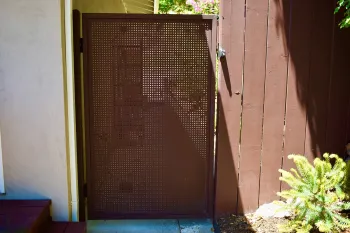
Finally, consider your privacy without increasing risk. Avoid a continuous line of plants that would act as a fire conveyor. Stagger plants and install noncombustible fence panels (metal, stone, stucco) between plants. Install non-wood fencing in the last 5’ from structures.
Now is the time to create passive and active protection to make your property fire adapted and help your home survive wildfires throughout the entire year. To learn more about Fire-smart Landscaping, please visit https://marinmg.ucanr.edu/BASICS/FIRESMARTLANDSCAPING/.
By Julie McMillan, May 3, 2025
Some natives you may have missed
There are many books devoted to California natives. Because our state is large and has many different habitats, from the sea to the highest mountains in the Sierras, from the cool northern part of the state to the deserts of Southern California, our plant life reflects this incredible diversity. Our state is part of the California Floristic Province, which goes from southwestern Oregon to Baja California. It is also known as a biodiversity hotspot. There are over 3000 vascular plants endemic to this region.
Many of these plants are so rare that some botanists never see them despite spending time in the field. Many natives make great garden specimens, adapted to do well in our gardens.
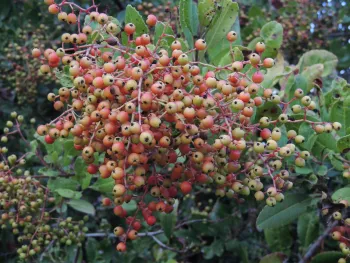
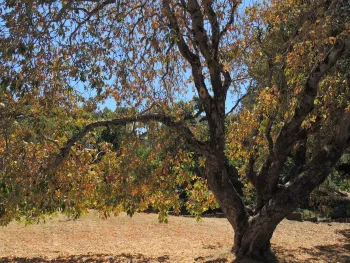
Trees that do well without overwhelming a small garden include the Western Redbud (Cercis occidentalis), which does indeed have red buds that open to bright purple blossoms followed by apple green foliage and the possibility in colder areas of fall red or yellow foliage. It can also be grown as an understory tree. The Californica Buckeye (Aesculus californica) will drop its leaves as early as summer in response to drought, but this reveals its lovely silvery branching. Its spring flowers can be spectacularly huge, though its pollen is poisonous to European honeybees. The large fruits are a glossy mahogany color and are poisonous to humans and many mammals. Toyon (Heteromeles arbutifolia), which still goes by its Ohlone name, is one of the very best habitat plants, producing bright red berries (or gold in ‘Davis Gold’). It’s the namesake for Hollywood and is best grown as a multi-trunked shrub that will eventually grow into a small tree. Along with its bounty of berries it’s also attractive to bugs which provide food for wrens and other bug eaters.
A few shrubs you may not have thought of include Carpenteria californica or bush anemone, which flowers for a couple of months in the spring with masses of beautiful white flowers with fluffy yellow stamens. It should be cut back after blooming. When Spicebush (Calycanthus occidentalis) blooms, the odor of crushed foliage is said to be redolent of a wine cellar…the solitary red/maroon blooms last a couple of months. Native to lakes and streams, Spicebush will do best with regular water. Fairy duster (Calliamdra eriophylla) is a small shrub with “flowers” that are actually stamens, which present as pink to dark pink “flowers.” It can be used for erosion control since it spreads by rhizomes. It’s a desert plant that will do well in warm coastal areas.
There are about 40 Dudleyas, succulents endemic to California, but only a handful are cultivated by the plant trade. Many are protected by law because they’re so rare. Dudleyas come in two forms: branching, which develops multiple rosettes, and unbranching, which develops a solitary rosette. Britton dudleya (Dudleya brittonii) has a single rosette and a chalky white appearance and will grow to about a foot across. Plant at an angle to keep water from accumulating in the crown which can cause rot.
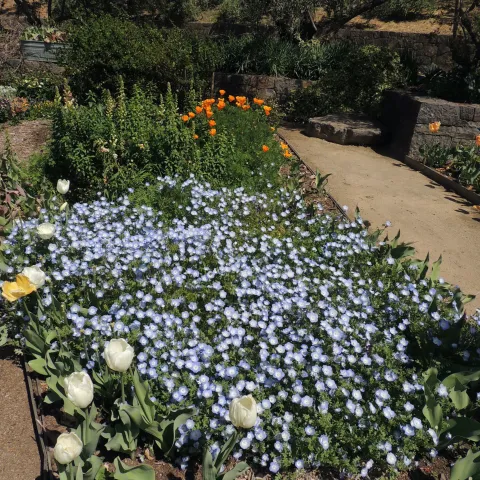
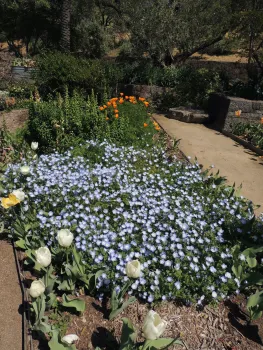
Don’t forget some wildflowers such as Baby Blue Eyes (Nemophilia menziesii), Farewell to Spring (Clarkia amoena), Milkweed (Asclepias fascicularis), Asters (Aster chilensis), California Fuchsia (Epilobium or Zauschneria), and our most wonderful wildflower the California poppy (Eschecholzia californica), which make me smile every time I see them.
By Diane Lynch, April 19, 2025
The caterpillars in my garden


As Eric Carle once wrote, there was a “very hungry caterpillar.” It hatched from an egg and began its search for food. After about two weeks, it became a big, fat caterpillar—two thousand times its original size! Then, it built a small cocoon, stayed inside for another two weeks, and eventually emerged as a beautiful butterfly. Finding caterpillars in your garden is a wonderful way to observe the butterfly lifecycle up close and appreciate this critical stage of metamorphosis—the transformation between egg and chrysalis.
Caterpillars are often mistaken for pests in the garden. While some, like the tomato hornworm, can cause damage, their overall impact on plants is usually minimal, especially in a healthy, balanced ecosystem that has evolved to tolerate them. In fact, caterpillars play a crucial role as an essential food source for birds and a vital part of the food web. This is especially true during the breeding season when adult birds need to meet the demands of hungry chicks.
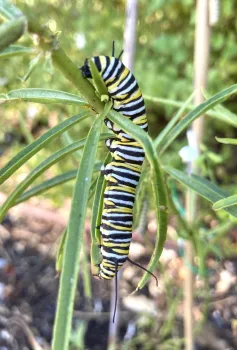
Caterpillars are picky eaters, so it is important to identify the host plants for specific species. My favorite caterpillars are Monarchs. Their host plant, milkweed, is the only plant where they lay their eggs and the only food their caterpillars will eat.
While eating milkweed, Monarch caterpillars grow 3,000 times their original weight. They go through several instars (growth stages), shedding their skin multiple times. Some caterpillars hide on the undersides of leaves, and others use camouflage to avoid predators. Monarchs and Pipevine Swallowtails absorb toxic compounds called cardenolides from their host plants and store these poisons in their bodies. This makes them distasteful to birds and other predators.
The U.S. Fish and Wildlife Service (USFWS) has determined that Monarchs are threatened under the Endangered Species Act. That means they are likely to become endangered soon. In California, they are protected by the California Department of Fish and Wildlife, which prohibits raising or handling without a scientific permit. Participate in Community Science by reporting caterpillars to the Monarch Larva Monitoring Project or https://www.inaturalist.org/.
Use sustainable gardening practices and strategies to support caterpillars and the butterflies and moths they become. Plant California native plants that have evolved alongside local wildlife and provide essential resources caterpillars need. The more native plants in your garden, the more caterpillars you’ll attract.
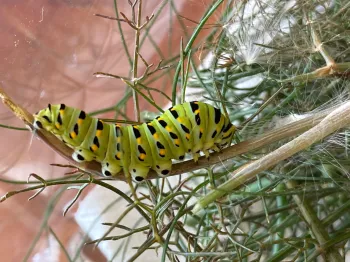
Provide both native host plants and nectar plants. Different species of butterflies and moths have specific host plant preferences. Here are some common examples:
- Milkweed for Monarchs (Asclepias fascicularis)
- Oak trees for a wide variety of caterpillar species, including the California Sister.
- Herbs, dill, parsley, and fennel for swallowtails
- California pipevine (Aristolochia californica) for the Pipevine Swallowtail
Avoid using chemical pesticides and herbicides, especially neonicotinoids, which can harm not only caterpillars but all insects in your garden. Instead, natural pest control methods, such as Integrated Pest Management (IPM), should be used.
Predators like yellow jackets and paper wasps are carnivorous and prey on caterpillars. To discourage yellow jackets:
- Remove pet food from outside.
- Use traps, and when you find a nest, contact the Mosquito and Vector Control District of Marin and Sonoma County for safe nest removal (a free service).
A significant parasite affecting Monarchs is Ophryocystis elektroscirrha (OE). Infection occurs when a caterpillar ingests OE spores from an infected butterfly on a milkweed leaf. The spores lodge in the caterpillar’s gut, causing weakness, deformities, and death. Non-migrating Monarchs that rely on non-native tropical milkweed (Asclepias curassavica) are particularly vulnerable to OE. Unlike native milkweed species, tropical milkweed does not die back seasonally, allowing OE spores to accumulate over time. Please cut back the foliage on the ground or replace it with the native species.
By creating a garden that supports caterpillars, you are nurturing the next generation of butterflies and moths and contributing to a healthier, balanced ecosystem for all wildlife.
By Alice Cason, April 19, 2025