
IJ Archive
UC Marin Master Gardener Articles in the Marin Independent Journal
UC Marin Master Gardeners have contributed to the Marin Independent Journal's "Ask a Master Gardener" column every Saturday since 1999. We have a team of dedicated writers who have covered nearly every aspect of gardening for Marin County over the years. Search our archives below by category of interest, or use the search box to locate stories by year, month or specific subject.


Marin IJ Archive
UC Marin Master Gardener Articles in the Marin Independent Journal
UC Marin Master Gardeners have contributed to the Marin Independent Journal's "Ask a Master Gardener" column every Saturday since 1999. We have a team of dedicated writers who have covered nearly every aspect of gardening for Marin County over the years. Search our archives below by category of interest, or use the search box to locate stories by year, month or specific subject.
> BACK TO ASK US
Plant a living windbreak to protect from strong winds
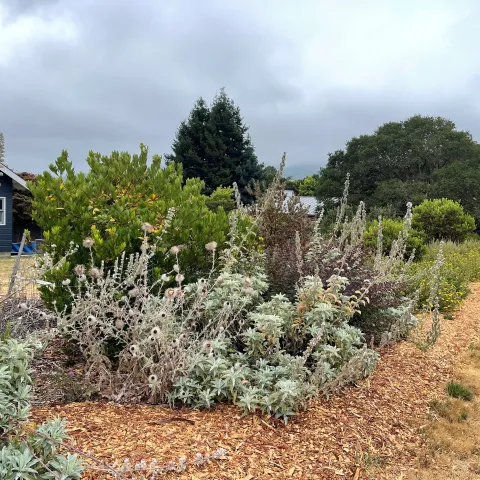

If strong winds are damaging your garden - breaking branches, pulling moisture from foliage, and drying out soil - why not consider planting a living windbreak?
A living windbreak is a group of plants positioned to filter the wind. The group can be as small as a few shrubs or as large as a group of trees, shrubs, and small plants that slow the wind. Benefits can include improving soil quality, conserving water, and creating a sheltered microclimate beneficial to wildlife.
When planning a windbreak, three important things to keep in mind are positioning plants to maximize their resistance to the wind, following the fire-smart guidelines for spacing plants, and choosing wind-resistant plants.
Position your plants to resist the wind

A windbreak is best positioned at right angles to the prevailing wind direction—in our area, this is usually north to northwest. Since it gets coolest in the winter on the north and northwest side of your home, planting in this area could even save you some money on heating.
The goal of a windbreak is not to block out all wind by planting in a dense, linear way. This, in fact, may lead to a fire hazard when the plants are fully grown. Instead, stagger the plants. And, if possible, plant several rows. This will temper the wind by allowing some air to pass through, thus reducing the intensity of the wind along the sides of the grouping.
Guidelines for spacing plants
It is recommended that windbreaks be planted thirty feet or more from your house or any structure. Calculate the size—how tall and how wide—that plants will be at maturity and give them plenty of growing space. Be aware of other safety rules, such as not planting a small bush directly under a tree, which might lead to a fire ladder. For more fire-smart guidelines, see the UC Marin Master Gardener website: marinmg.ucanr.edu/BASICS/FIRESMARTLANDSCAPING/Plan/#spacing
Choose wind-resistant plants
Plants that are multi-stemmed, with small leaves that can bend in the wind, offer the most wind resistance. Many of our native plants are in this category and many are also drought tolerant.
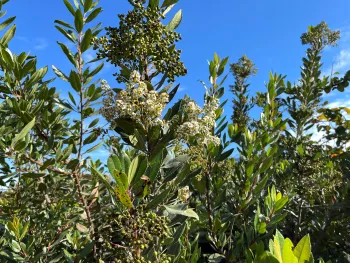
There are several native evergreen shrubs, for example, that make excellent windbreaks. The Pacific wax myrtle (Myrica californica) is one of my favorites. I have found the bush extremely easy to grow, although I did lose a couple to gophers. Now, I plant them inside gopher baskets. This native may need more water to get established. Grows to five to over thirty feet tall. Deer tolerant.
Another native shrub is the coffeeberry (Frangula californica). It grows five to fifteen feet tall with a ten-foot spread, or you can buy a dwarf size. It attracts a variety of birds with its dark red berries in the winter. Deer tolerant.
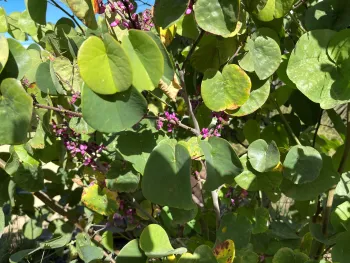
If you have room for taller tree-like shrubs, the toyon (Heteromeles arbutifolia) is a beautiful evergreen with red berries in winter. The Western Redbud (Cercis occidentalis) is another with vivid pink blooms and memorable heart-shaped leaves that are deciduous in winter. Both are deer-resistant once established.
Try to include a variety of plants in your windbreak. Many beneficial insects need nectar year-round, and you can help them with plants that bloom at various times of the year: California lilac (Ceanothus) flowers in spring, sage (Salvia) in summer, California fuchsia (Epilobium canum) in fall, and manzanita (Arctostaphylos) in winter. These plants come in a variety of sizes depending on the cultivar.
Winds can be fierce in winter and spring. A living windbreak can tame the wind while also benefiting soil and wildlife. Just remember to choose wind-resistant plants, position them at the right angle to the wind, and space them wisely for fire safety.
For more information, see the UC Marin Master Gardener website: https://marinmg.ucanr.edu/
By Pamela Noensie, April 12, 2025
Homegrown tomatoes
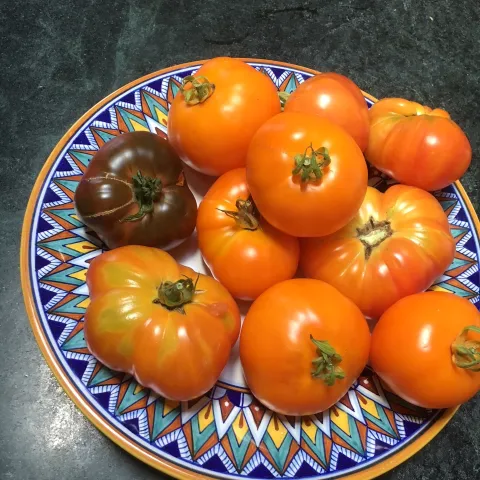
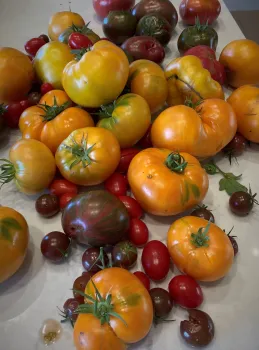
Songwriter Guy Clark tells us there is nothing better than “Homegrown Tomatoes.” Many of us believe this to be true, making tomatoes the most commonly planted garden crop in the United States.
UC Marin Master Gardeners will hold their annual tomato plant sale on April 12, 9:00 a.m., at Bon Air Shopping Center in Greenbrae and the new Pini Ace Hardware in San Marin Plaza, 191 San Marin Drive, Novato. Marin Master Gardeners will answer questions about selecting and planting tomatoes.
Tomatoes are a tropical crop native to areas in South America from Ecuador to northern Chile. They belong to the large nightshade genus Solanum, along with other members, including peppers, potatoes, tomatillos, eggplant, herbs, vines, shrubs, and trees.
Tomatoes grow in different sizes and a variety of colors. Choose from beefsteak, heirloom, hybrid, or cherry in shades of red, gold, green, brown or pink. They can be planted in containers, raised beds or in the ground. Some are best for cool coastal climates, and others for heat-tolerant areas. Three new varieties are available this year. Magic Bullet is a cherry tomato that is good for containers and cool coastal gardens. Pink Berkeley Tie Dye is a medium-sized wine-colored beefsteak/slicer with neon green stripes and pink inside. Mortgage Lifter is a red beefsteak heirloom with meaty fruit and exceptional flavor.
To prevent diseases, buy disease-resistant varieties appropriate for growing in your microclimate. The best location is full sun, with at least 6 hours of sun or more, and medium-texture, well-drained soil. If soil is lacking, amend it with compost or other nitrogen-bearing amendments. Replace container soil with new potting soil. Add another layer of compost or other amendments to raised beds.
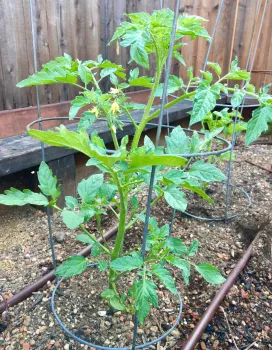
Before planting the seedlings, gradually expose them to the weather to harden them to outside conditions. Wait until the danger of frost has passed. Plant when the seedling has 4-6 leaves and 2 - 3 feet apart. If the plant is leggy, pinch off the bottom leaves and plant horizontally up to the remaining leaves. Gently ease the plants out of the container and separate the roots. Try not to touch the stems because the little hairs can become roots when planted.
Press soil firmly around the plant to form a depression that will hold water. Water plants thoroughly before planting, and after planting, water thoroughly to settle the soil. Avoid extreme fluctuations in soil moisture, as these conditions increase the incidence of fruit cracking and blossom end rot.
Pruning is unnecessary, but if you decide to prune to one leader, the plant will bear fruit earlier but yield less.
Additional fertilizer is not required before flower and fruit set are ongoing. Overhead watering is not recommended, but the soil needs to be watered often and not allowed to dry out. Drip irrigation works well. Tomatoes are ready when there is a slight give, and they easily pop off the stem.
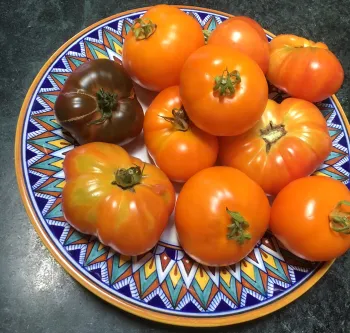
Heirloom plants have been grown for over 50 years. They are generally robust and have abundant flavor. Seeds may be saved for propagation.
Hybrid plants have controlled pollination, thereby creating plants with desired traits such as disease resistance. Seeds will not produce true-to-type plants unless they are purchased.
Determinate plants tend to grow bushy to a given size, 3-5 feet, produce fruit for 4 to 6 weeks, and then decline. These are typically canning types.
Indeterminate plants grow tall, needing support from cages, trellises, or stakes.
By Sara O’Keefe, April 5, 2025
Codling moths: protect your fruit tree from them now!
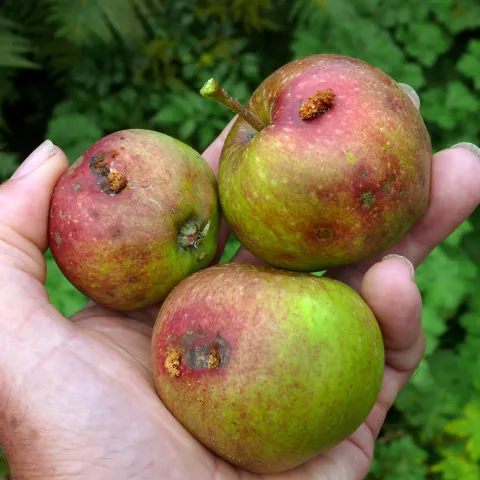
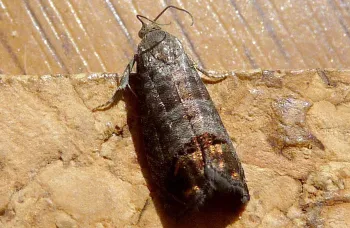
If you have fruit trees, especially apples, pears, or walnuts, now is the time to be on the lookout for the codling moth. This is the time of year (mid-March to early April) when the adult codling moth, a little grayish-brown lepidopteran, emerges from its cocoon.
It has spent the winter pupating, most likely in the bark and debris around the base of the tree, and is now ready to begin the next mating cycle. The new moths rest during the day, becoming active around sunset, and begin to mate when temperatures get into the low 6's. Impregnated females lay their eggs on the tree's leaves, developing fruit. The tiny white eggs will hatch within a couple of weeks, and the larvae, little worms with pinkish white bodies and brown heads when mature, begin to feed on existing fruit by borrowing in, heading towards the fruit's core, leaving behind a brownish mater al. Now you have the dreaded "worm in the apple," damaging the fruit and making it undesirable for both orchardists and home gardeners alike. This "worm" matures in the fruit and then emerges to spin another cocoon to begin another codling moth life cycle, perhaps as many as four in any given season.
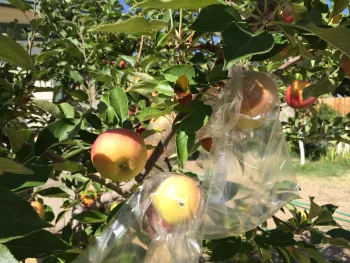
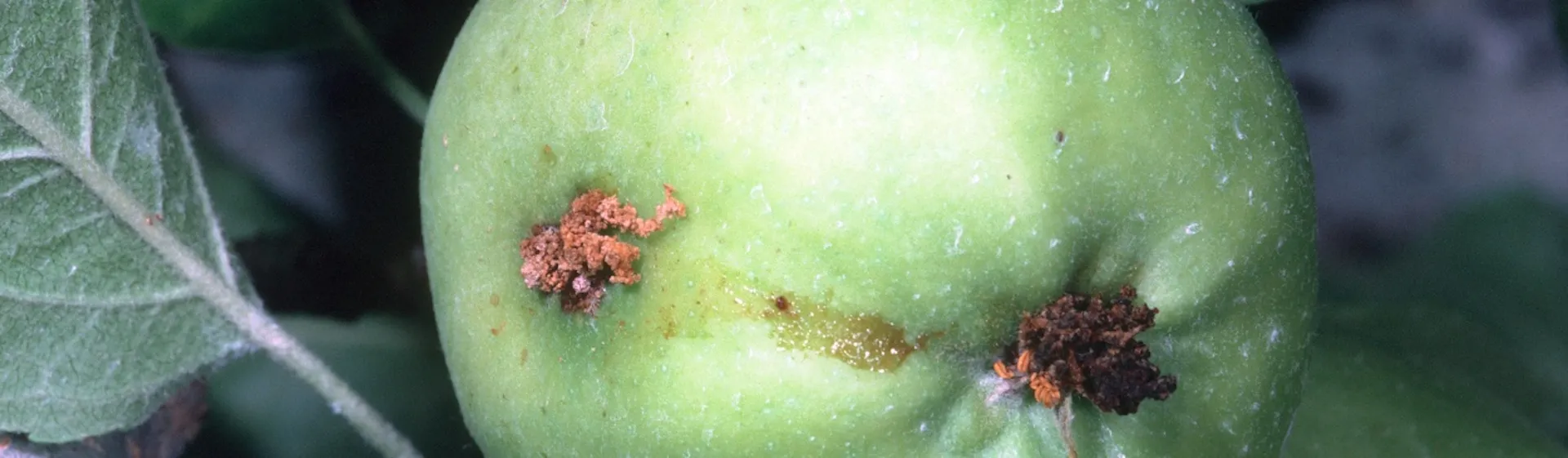
To control fruit damage and infestation by the codling moth larvae, fruit orchardists follow a routine based on this life cycle. Home gardeners can do much the same, beginning with cultural control focused on sanitation. Keep the area around your tree clean of debris and fallen fruit where overwintering codling moths can develop in cocoons. Keep your tree well-pruned and free of old fruit. Keep a close eye on your tree, looking at leaves and young fruit for codling moth eggs and larvae (beginning March and April). Scraping eggs, larvae, and cocoons into plastic bags can help. In May and June, look for "stings," entry wounds on the fruit where larvae have begun burrowing into the fruit. These holes are often filled with brown frass (insect excrement) and are easily recognizable. Promptly remove any infested fruit from the tree or the surrounding ground and dispose of it properly. You can also thin and bag healthy fruit when it is small to protect it from infestation – it is a little bit work intensive but helpful if you want to go a step further to control infestation without pesticides. Go to https://ipm.ucanr.edu/PMG/PESTNOTES/pn7412.html for a description of this technique.
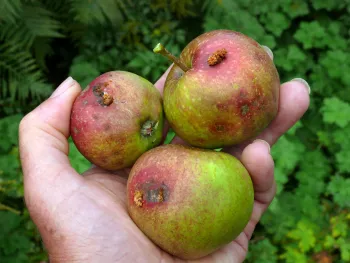
If cultural steps don't keep the codling moth away from your tree, or at least under control, a couple of safe biological agents are available to home gardeners. Codling moth granulosis virus (sold as Cyd-X) is a pesticide that won't harm beneficial insects, including bees. You can increase its effectiveness by adding 1% horticultural oil. You can apply it every seven days after eggs hatch for at least three or four times per generation. Spinosad is safe, although more toxic to beneficial insects than Cyd-X. Timing is key to the application of these controls. Spraying must be done before or just as eggs are hatching since larvae are protected from insecticides once they enter the fruit. Spraying needs to be repeated with each generation. A pheromone trap can be hung in your tree in late March to alert you that the codling moth has shown up, and your monitoring of egg hatch should be in. This can be done by observing your tree or using degree/day calculations.
It takes a bit of effort to keep your fruit tree free of this persistent pest, but worth it. Few simple things in life are more joyful than biting into a healthy, freshly picked apple (or pear) from your garden on a warm summer's day!
By Wendy Irving, March 29, 2025
Right place, wrong plant

What’s worse than a weed? The answer is an invasive plant. While weeds are plants that grow where they are not wanted, invasives are always non-native plants introduced (intentionally or accidentally) that spread rapidly and cause harm to the environment, economy, or human health. Invasive plants are aliens competing with our native species.
Marin’s mild Mediterranean climate, dry summers, and wet winters allow us to have fantastic gardens displaying plants from around the world. Sometimes, our “garden plants “jump the fence and become serious wildland weeds, threatening California’s biodiversity. You may be familiar with invasive Scotch broom (Cytisus scoparius), native to North Africa and parts of Europe, and pampas grass (Cortaderia selloana), native to South America, both mistakenly introduced as ornamental plants. The California Invasive Plant Council (www.calipc.org) can help identify hundreds of invasive plants that are a threat to maintaining a healthy ecosystem based on scientific criteria and expert reviews.

climbing fences. All parts of the plant are toxic. Photo: Alice Cason
An easy way to prevent invasives from taking over our gardens is not to buy them. A nonprofit organization called Plant Right (Invasive Plant List – PlantRight) lists horticultural invasive plants as the highest priority available for sale in California. They work with nurseries and commercial growers to recommend the right alternatives while banning the invasive ones.
To remove invasives, use methods that minimize harm to people and the environment following Integrated Pest Management ( IPM) principles. The best method may be mechanical removal or cultural control, such as hoeing, hand pulling, or sheet mulching. A weed wrench is a great tool that causes less soil disturbance. Soil solarization, covering with black plastic that is left in place for 4- 6 weeks, can also be highly effective. Using herbicides is the last resort only after reading all the instructions and safety precautions. Remove seeds before they disperse and germinate. Some seeds, like Scotch broom, for example, can remain dormant for up to 50 years.

One of the most problematic invasive plants is English Ivy (Hedera helix). Native to Europe, Western Asia, and North Africa, it spreads aggressively, rooting where stems touch the soil to develop roots. It also propagates via seeds. It can climb fences, strangle trees, invade natural areas, and outcompete native vegetation, degrading wildlife habitats. All parts of the plant, including the leaves, stems, and berries, are toxic. It also harbors pests such as rats and snails.
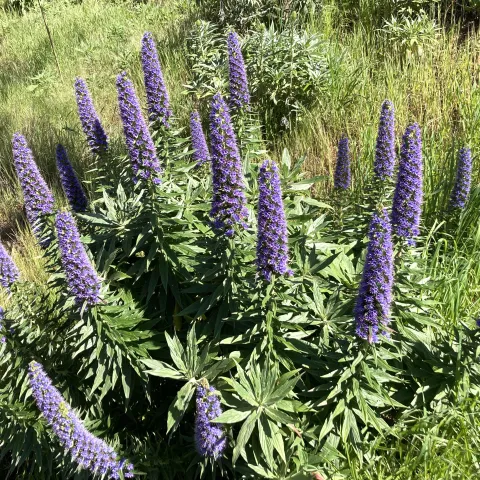
Another invasive plant on the watch list is Pride of Madeira (Echium candicans), a rapidly growing evergreen shrub native to Madeira, a region of Portugal and the Canary Islands. It grows 4- 6 feet tall and wide with long, narrow gray-green leaves. In the spring and summer, large flower stalks bear bluish-purple flowers. The flowers attract pollinators and are unpalatable to deer. It is listed as “Limited” by the California Invasive Plant Council as a plant to avoid. It will take over your yard, the nearby medians, and open spaces. Do not plant it near a natural open space (or your garden). Young plants can appear thirty feet from the parent plant. Cut off the flower stalks before seeds mature to avoid having to remove many seedlings and prevent fire hazards.
Marin Master Gardeners recommend using drought-tolerant, low-maintenance native plants that thrive in our local climate and soil. Native grasses, wildflowers, and shrubs create visually appealing, environmentally friendly landscapes that support our local ecosystems.
The California Native Plant Society has created and updated the website Calscape (Calscape.org) to help people pick perfect native plants for their gardens. It provides lists by zip code, sources plants in your local nurseries, and gives pictures, garden plans, and growing tips. Most plants behave well in their intended roles. By choosing suitable replacements for the plants that are problems, we can save trouble in the garden and help protect our natural California landscape.
By Alice Cason, March 22, 2025
Ant invasion


They can’t help it, that trail of ants crawling up a kitchen cabinet. The determined critters head inside to escape cold, wet winter days or hot, dry summer conditions. But our sympathies don’t extend to safe harboring ant armies. Nor are we happy to see them in the garden keeping aphids alive.
There are 12,400 ant species in the world, of which 270 species live in California.
The most common is the Argentine ant, Linepithema humile. A second less common but important species is the Carpenter ant, Camponotus species. Carpenter ants don’t eat wood like termites; however, they hollow it out to nest and thus cause damage inside.

Ant biology and behavior has long inspired science projects and allegories. But what we want to know is how to deal with these space invaders.
Outside, ants are beneficial insects when they recycle nutrients, aerate the soil, and feed on fleas, termites, and other pests in the garden. But when they help aphids, mealybugs, and scale survive, they are garden pests. Inside, they are simply unwelcome.
Whether you want to eliminate ants in the house or control them in the garden, the basics are the same: remove access, resources, and nesting sites.

Eliminating ants in the house
First, know what you’ve got. All ants differ from termites in three main ways: Ants have tiny waists, hind wings smaller than front wings, and front antennae with elbows. Termites have broad waists, equally sized wings, and straight front antennae. Argentine ants are about 1/8th inch long and dull brown. Carpenter ants are ¼ to ½ inch long, black or black and red.
- Breathe a sigh of relief if you have ants, not termites. You can vacuum the ant trails or wipe them up with soapy water and spray with window cleaner to eliminate them and wash away their scent trail. These techniques work better than insecticide sprays and leave no residual toxicity.
- Look for ant nests in potted plants. Take infected pots outside, submerge them in a solution of one to two tablespoons of insecticidal soap per quart of water, and allow the solution to cover the soil for 20 minutes or more.
- Remove whatever attracted the ants. Mop, scrub, and remove trash. Store food items, including pet food, in closed containers. Fix leaky faucets; they attract thirsty ants.
- Then, discover the entry points. Eliminate caulk holes, crevices, or cracks in foundations or walls by caulking openings or plugging them with petroleum jelly.
Ants are outdoor critters, so although you can eliminate them inside if you want to keep them out, you need to take action outside.
In the garden
Focus on removing or managing food sources, including aphid-infested bushes or trees with ripened fruit near your house. Eliminate nearby nesting spots by moving plants and mulch at least a foot from the foundation or even farther to be fire-smart.
If that doesn’t stop the invasion, and if you’re concerned about aphids, mealybugs, and scale, consider using slow-acting bait stations or gel bait outside. These pesticides don’t work immediately; you’ll likely need to continue wiping up scouts and trails inside for a few days until the worker ants have taken the bait to the colony. But baits are the only type of insecticide recommended in most situations and are the safest and easiest to use. Use them indoors only for a very serious infestation, and keep in mind they could attract outside ants inside. Instead, place baits outdoors near ant trails and nest openings.
Look for Argentine ant nests in shallow mounds and Carpenter ant nests in tree stumps and other wood with sawdust-like frass deposits alongside.
It is unrealistic and impractical to attempt to totally eliminate ants outdoors, though. Instead, focus on excluding ants from buildings or valuable plants. And remember—ants can be annoying, but they can also play a beneficial role in the garden.
By Barbara Robertson, March 15, 2025
Common soil problems in Marin
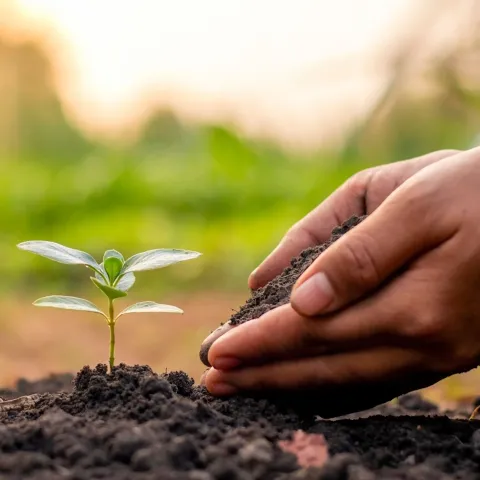

Good garden soil contains 30-50% sand, 30-50% silt, 20-30% clay, and 5-10% organic water. The bacteria, fungi, and worms in the soil produce substances that act like glue, binding all these different parts together to form groupings. These groupings determine the size of the soil pore space. In healthy soil, approximately half of the pore spaces are filled with water, and the other half are filled with air.
This environment promotes beneficial microorganisms and earthworms, which break down plant residue into organic matter, ultimately producing healthy soil. Healthy soil holds water and nutrients like a sponge, making them readily available for plant roots to take up. It also suppresses pests and weeds that may attack, sequesters carbon from the atmosphere, and cleans the water that flows through it into rivers, lakes, and aquifers.
Good soil is coffee-colored, has a good smell, is rich in organic matter, and can hold water but drains well. Poor soil can smell bad, is compacted, drains either too well or holds onto too much water. Soil that drains well is brightly colored, whereas soil with poor drainage and low oxygen content may have dull, grayish tones.
Much of the ground in urban areas and around houses is lifeless dirt. Topsoil is typically removed during construction, and low-quality fill dirt is added to replace it. Dead dirt results from the removal of topsoil, the overuse of chemicals, other harmful practices, and compaction.
Unhealthy soil induces poor plant performance and growth. Marin County gardeners must frequently amend their soil with mulch and organic matter to compensate for compaction, poor drainage, erosion, lack of air, too much or too little water, and pH issues.
Plants grow best when the air spaces between soil particles are maintained. When soil is compacted, the pore spaces inhabited by soil microbes collapse, limiting the movement of air, water, and nutrients through the soil and, ultimately, compromising the growth and expansion of the plant’s roots. Avoid walking on or working wet soil to decrease the likelihood of compaction. Soil should not be dug until it reaches 50 ° F and is sufficiently dry enough to crumble.
Compost, organic mulches, living plants, and cover crops (a crop, usually a legume, planted in the off-season to add nutrients) are examples of organic matter that, when added to soil, improves pore space, drainage, available organic carbon, the population of earthworms and microorganisms, water-holding capacity, nutrient retention, and plant root growth. Plants in well-drained soil are often less stressed and less susceptible to disease.
A good rule of thumb is to add compost to 25% of the planned depth of the plant’s roots, e.g., work two inches of organic matter into a depth of 8 inches. In late spring or early fall, spread 2–3 inches of mulch over the soil; avoid piling it up against tree trunks.
The soil’s pH is an important factor to check because it influences the availability of nutrients to plants growing in the soil. Most plants grow best in soil with a pH between 5.5 and 7.5, or slightly acidic to neutral, as this is the range in which all plant nutrients are most readily available. Soil microbes are most active in this range also. Lime can be added to the soil to raise pH or sulfur to lower it.
Add compost and topdress with mulch to promote healthy, productive soil in your garden. These amendments help provide the necessary oxygen and moisture to boost the number of microorganisms, beneficial fungi, and earthworms, encourage nutrient recycling, improve soil texture, and ultimately enhance fertility.
Correct soil deficiencies in your garden before you plant. Evaluating your soil and making adjustments prior to planting saves time and money and results in a healthier, more beautiful landscape. The health of your soil determines the health of your plants.
By Martha Proctor, March 8, 2025
Ready, set, go
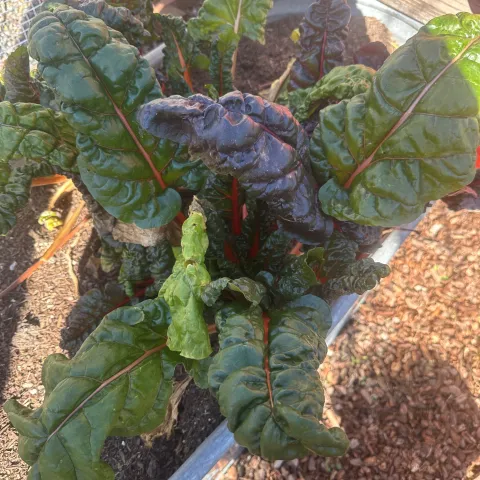
As I write this, it is mid-January, and I just finished weeding in my garden. The sun is so pleasantly warm, and I am picking peas, chard, kale, and lettuce from my winter garden. The days are getting a bit longer, bulbs are showing their faces, and my mind is moving towards my spring garden.
As is always the case in Marin, with its many microclimates, planting in spring is a moving target. Generally, the frost season is over by mid-March for those of us who see frost, but coastal and other areas with more marine influence may not see any frost all year. Spring planting calendars are based on the first date following the last predicted frost date.
In Marin, soil temperatures generally average between 40 and 60 degrees in March. At this time, you can start to sow some seeds directly into the outdoor soil. Soil thermometers are available if you aren’t sure. If you haven’t already done so, it is also a good time to start some of your warm weather choices indoors. The Master Gardeners are working on their pollinator plant and tomato grows.
Cool season veggies that you can plant by seed now are beets, carrots, radishes, peas, and leafy greens such as chard, spinach, and lettuce. If you have some space, consider sequential plantings of peas and lettuce until around May to keep your crop going. Where it’s hot here in the summer, these cool-weather crops tend to bolt. Try different varieties of all these cool season crops. There are so many to choose from. Seed potatoes can also go in the ground once they have begun to sprout. You may have planted broccoli, cauliflower, or Brussels sprouts in your winter garden, but if not, try them now. Again, try something new to you.
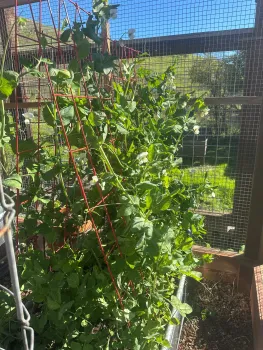
March is a good time to lift and divide summer and fall-blooming perennials. Daylilies, chrysanthemums, hostas daisies, and coreopsis are easy to divide and will do much better and look much better when they get room to stretch.
Annuals such as nasturtiums and sweet peas can also go in the ground now. You can try to sow some of the summer annuals outdoors, but it may be a bit early for good germination. There are so many more choices if you start your flowers from seed, so consider starting them indoors under lights till it’s a bit warmer outdoors.
Remember the gardening basics for any season as you consider your March garden.
- Make sure you are using fresh seeds. The packages contain expiration dates (or when you are less likely to see good germination success). Seeds that are not properly stored can also be ineffective.
- Prepare your soil. Hopefully, you started in the winter, but it is never too late to pamper your soil. Rich, balanced organic material gives your seeds and seedlings a happy place to thrive. Since spring here in Marin can bring showers, do not work or walk on soggy soil. It compacts the soil particles, squeezing out oxygen and giving the new roots a more challenging place to spread.
- Think through where you are planting. The right plant in the right place is a Master Gardener mantra. The spring sun is beginning to reach a higher arc and changing the light around your garden.
The Marin Master Gardener website can fill you in on the details of the principles I’ve put here. Or call us or email the help desk. Subscribe to the Leaflet for quarterly seasonal advice to grow by.
By Dot Zanotti Ingels, March 1, 2025
The beauty and singular importance of the pollinator garden
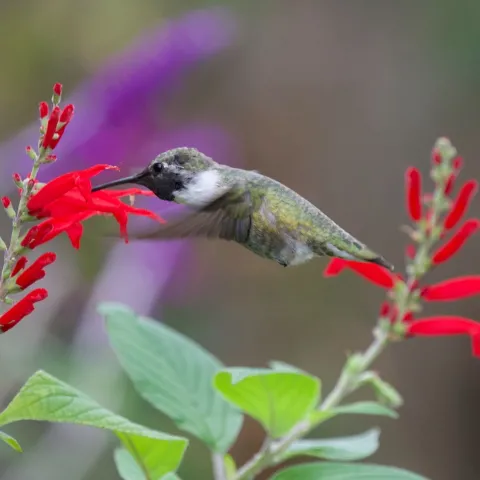

Gardening is a uniquely healthy, relaxing, and inspirational activity. Planting that seed or seedling is perhaps the ultimate expression of optimism. The beautiful blooms and bountiful harvests we labor to cultivate can provide matchless feelings of accomplishment and pride. But we don’t do it alone. The creatures we collectively call pollinators are there, in the background, working to make it possible. Many gardeners are finding great personal satisfaction observing and helping to protect the beautiful, exquisitely complex and extremely delicate world of the pollinators their gardens welcome and nurture.
What is a pollinator? The simplest definition is any agent that transfers pollen from the male portion of a flower to the female portion of a flower is a pollinator. Most pollinators work under our radar and are easily overlooked when a garden receives the admiring human gaze. A closer look into the flower of a plant in bloom may reveal a small invertebrate creature covered in pollen. Bees, beetles, flies, wasps, moths, and butterflies are all common pollinators, but bats, birds, small mammals, and even lizards contribute pollination services to flowering plants. The goal of every creature we call a pollinator is the caloric reward of nectar or pollen that will power them to the next flower. Along the way, they will inadvertently be carrying pollen. When they visit that next genetically compatible and receptive flower, pollination can happen. Because many pollinators co-evolved with flowering plants, they can be mutually dependent. A hummingbird hovering in front of a salvia is a more specialized pollinator, uniquely equipped to draw nectar from long tubular flowers while picking up and carrying pollen to the next. Many pollinators will visit a wide selection of flowers, but some like the iconic Monarch Butterfly depend exclusively on one plant, the milkweed, to complete its life cycle. Even the wind can be a pollinator. But the wind is not threatened with extinction. It is estimated that the Western Monarch has suffered a 99% reduction in its population since the 1980s, largely because of habitat loss. That means that it can’t find the once ubiquitous milkweed plants it needs to complete its complex lifecycle and remarkable migration. Because its decline has been closely studied, the monarch is considered a “signal” species. It is raising a faded orange and black flag, signaling that it is likely many of the other 350,000 pollinator species worldwide are also in decline. All pollinators contribute in their own unique way to the biodiversity upon which our entire ecosystem and our agricultural systems depend.

The good news is that we can all help extend the habitat and migratory corridors by planting pollinator-friendly plants in our home gardens. Ideally, they are planted in groupings, with an eye toward sequential bloom over the course of Marin’s growing season. More is always better, but even just a few in pots or planters on porches and balconies can provide a vital nutritional oasis.
This is where the UC Marin Master Gardeners are actively assisting the home gardener. Their annual Pollinator Plant Sale is next week, and they have carefully selected over 40 different species of plants for this sale. These plants are beautiful, highly desirable to a range of pollinators, and well suited to growing in Marin’s Mediterranean climate. The sale will include over 250 Narrowleaf Milkweeds, multiple varieties of Cosmos, Coneflowers, Lupines, Salvias, and many other species.
The UC Marin Master Gardener website below contains informative links to the sale, including photos, descriptions, and the important cultural needs of each species. https://marinmg.ucanr.edu/ASK_US/EVENTS/PollinatorPlants/
The UC Marin Master Gardener Pollinator Plant Sale will be held on March 1, 2025, at the Falkirk Greenhouse, 1408 Mission Avenue, San Rafael. 9 am until noon. Master Gardeners will be on-site to help answer any questions.
By Terry Amerson
The biggest gardening myth of all
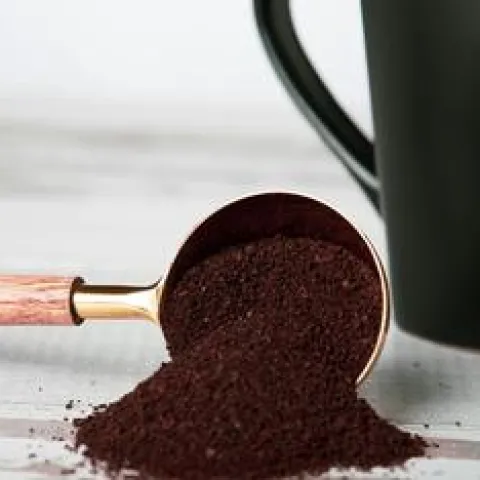

Gardening myths are common and hard to shake. Most of the time these old wives’ tales are harmless, but sometimes they offer false hope to the gardener.
Take the misconception about adding coffee grounds to soil to increase acidity for growing camellia, hydrangea, and azalea. Turns out fresh coffee grounds are acidic -- but used coffee grounds are not. So to change your soil’s pH using coffee grounds you’ll have to rob yourself of a cup of coffee. Ouch.
Same goes for amending with banana peels to add potassium for plant growth and flower production. Unfortunately, this can lead to problems. First, it takes nitrogen to break down the peel, which means less nitrogen for greening plants. Second, putting peels in shallow soil may invite unwelcome wildlife. Think rats, skunks, opossums.

While we’re at it, how about adding eggshells to soil for calcium? Unless eggshells are ground into a fine powder and put into an acidic solution, the calcium stays intact – for a very long time. How long? Undecomposed eggshells have been unearthed at archeological digs.
Then there’s the suggestion to put human hair, human urine, or Juicy Fruit gum in gopher holes to nab pesky gophers. If only this worked! There would be a sea of gardeners unzipping, clipping clumps of hair, and lining up at vending machines. Alas, there is zero science-based evidence that this works. Plus, do you really want to add gum to your soil?
Or how about spraying shrubs with dish soap to eliminate aphids? Unfortunately, this one can do some harm. Most dish soaps are detergents, which means they strip oils and fatty substances called lipids from man-made surfaces. Leaves are not man-made surfaces, but they’re covered with a layer of waxy lipids that protects them from water loss and diseases. Detergents can strip this protective layer, causing damage. Better choice? Avoid damaged, crispy-crunchy leaves and simply knock aphids off with a blast of water from the hose.
Same goes for vinegar for killing weeds. Because of its high acidity, vinegar might nail some annual weeds, but it’s unlikely to translocate downward. Translation: it won’t get down into the roots. That means it will be ineffective for perennial weeds. Worse? If you keep adding vinegar to your soil, you might end up over-acidifying it, which will affect what you can plant there. When it comes to soil, it pays to think like a doctor and “do no harm.”

Or what about braiding spent daffodil leaves? Who among us hasn’t gotten the rubber bands out to cinch those babies up after the flowers have died back? This common mistake reduces photosynthesis. Leaf parts not exposed to the sun can’t turn sunlight energy into stored chemical energy, which lessens the production of new leaves and flowers next season. Oops.
Here’s the good news: most of these gardening misconceptions are harmless or fixable -- goofs we’ve all made, often on the recommendation of well-meaning friends or neighbors. We learn. We move on. As the saying goes, we don’t sweat the small stuff.
What really matters is the bigger picture. The biggest myth of all is that your garden is not part of the broader environment.
It is.
And because of that, your choices matter.
Choose plants naturally adapted to your area: wispy grasses on the coast, heat-loving sages inland, and native currants and strawberries in damp forest locales. Protect our dangerously dwindling population of insects by turning off outdoor lights at night and growing plants that welcome them. Avoid pesticides and synthetic fertilizers that pollute air and water. Reduce or replace lawn to save water and energy that leads to greenhouse gases.
In the end, tossing a handful of used coffee grounds into your soil is not a big deal. Same with braided daffodils. But there’s no mythology about how best to manage our gardens to keep them and the surrounding environment healthy and thriving.
By Marie Narlock, February 1, 2025
Perhaps it’s time to plant an oak tree

“Oaks are key to the character and legacy of California — its visual beauty, the vigor of its rivers and streams, the clarity of its air, the richness of its wildlife.” — “Secrets of the Oak Woodlands” by Kate Marianchild
Stress is in ample supply these days, whether it’s aggravation from the news or loneliness from isolation. Perhaps it’s time for something uplifting. Something hopeful. Something the late UC scientist Douglas McCreary said symbolizes the values we hold dear: strength, beauty, adaptability and longevity.
Although California boasts other stately trees, nothing compares to the mighty oak. Scientist and bestselling author Doug Tallamy says it’s “the most productive plant in this country.”
Please plant an oak. Consider a blue, valley, island, or coast live oak if space allows, or a leather or huckleberry oak for tighter spaces. No room? Hike up Mount Tamalpais or Mount Burdell to enjoy them.
Oaks offer something for everyone.
For ecologists, there’s no better choice, as there’s more life in an oak woodland than any California ecosystem. Oaks are like factories filled with tireless workers day and night 365 days per year. Within the tree canopy, keen-eyed hawks perch while woodpeckers tap, tap, tap. Gray squirrels twitch and twirl as screech owls roost and hummingbirds nest in cozy lichen. Insects and spiders work silently.
Down below, blue-bellied lizards dart, gopher snakes slither, foxes and bobcats prowl. Scientists confirm 300 vertebrates and 5,000 arthropods in California’s oak woodlands. These animals use the flowers, leaves, twigs, branches, trunks and roots. Acorns, packed with nutrition, provide annual all-you-can-eat buffets.
The activity doesn’t stop there. The earth below an oak is a universe unto itself, supporting 1,100 plants and 370 fungal species — from ferns to chanterelles — not to mention the countless underground microorganisms.
Makes that sheared hedge seem pretty quiet, right?
If you’re an environmentalist, oaks are a superb choice. The dense wood stores more climate-warming carbon than most trees, as does the enriched soil below. Huge canopies and dropped leaves buffer rain, which helps filter water and stop soil from washing away. Oak leaves absorb air pollutants.
Oaks are also giant sponges, absorbing fertilizer, pesticides and other soil contaminants, which reduces pollutants in water. Next time you sip a refreshing glass of water, please give thanks to the oak gods.
But what if you’re a historian, a conservationist at heart? Few trees have a more distinguished legacy or are more iconic symbols of California. (Ever wonder how Oakland got its name?)
Back when oaks blanketed a third of California, the first inhabitants made food, dye and medicine from acorns. Things changed when the Europeans and American settlers arrived, especially after California’s Gold Rush.
Since then, millions of acres have been cleared for farms, rangelands, freeways, cities and suburbs. Other problems followed: culling oaks allowed aggressive plants to take over. Reduced reliance on controlled burns allowed towering Douglas fir trees to spread and shade out oaks. Pests and diseases arrived.
Today, oak woodlands cover 10% of California. Around 80% is privately owned, primarily for grazing cattle. But let’s not dwell on the negative. We’re planting oaks for the future, remember?
Perhaps you’re a pragmatist, pleased that the mature oak on your property boosts your home’s value. You relish its shade in summer, not to mention your lower A/C bill. Who wouldn’t?
On the other hand, maybe you enjoy a good mystery, like why oaks occasionally dump an overabundance of acorns, a phenomenon called masting. Or why some oak leaves turn brown but cling to branches through winter, aka marcescence. Theories abound, but no one knows for sure.
Many words describe oaks: essential, magnificent, resilient, centuries-old. Here’s another one: easy. If you’re a lazy gardener like me, you’re in luck. Maintaining an oak is about what not to do. Don’t rake up leaves. Don’t fertilize. Don’t mess with the roots. Don’t water mature oaks in summer. California’s oaks are environmental allies. We just need to let them be.
No matter who you are — an environmentalist, pragmatist or even a lazy gardener — there’s one thing we all seek: beauty. Fortunately, every oak tree comes with that quality.
By Marie Narlock, January 28, 2022