UCANR

Leaflet


The Leaflet

Articles available here have been published in the Leaflet e-newsletter. Leaflet subscribers receive emails with seasonal advice, gardening tips and fact-based information on how to deal with pest and garden problems. To do a search of past Leaflet articles, use the search widget at the top of the web page.

Subscribe to the Leaflet here!
>BACK TO ASK US

Marin IJ "Ask a Master Gardener" Column Archive

Spring 2026

Gardener's checklist for spring

Primary Image
spring blooms
Body

MARCH


Image removed.


Maintenance and prevention

  • Chop up cover crop foliage into small pieces if you grew a cover crop. Turn under or add the clippings to your compost pile.
  • Replace path mulches that have been washed away by heavy rains.
  • Apply two to four inches of mulch where existing mulch is thin or soil is bare, especially around newly planted trees and shrubs. Keep mulch back a minimum of 3 inches from tree trunks and 6 inches from perennials to discourage pathogens.
  • Inspect irrigation system for leaks and non-functioning emitters and sprayers. Make any needed repairs or changes.
  • Protect sensitive plants from cold injury when frost is predicted. Late frost is possible.
  • Sharpen pruning shears and other garden tools as needed. Clean and disinfect your pruning shears after use. Finish with a light coat of oil to protect the blades.
  • Eliminate standing water in gutters, drain pipes, and flowerpots to deter mosquitoes.
  • Clean winter debris from ponds, fountains, and bird baths.
  • Deadhead spring blooming bulbs. Leave the foliage in place to wither naturally and reenergize the bulb for next year.

Planting and propagating

  • Shop for rhododendrons, camellias, and azaleas while they are in bloom.

Cutting and pruning

  • Prune freeze damaged plants after all chance of frost has passed.
  • Prune fuchsias after chance of frost passes.
  • Finish pruning roses and planting new roses.
  • Clean up dropped leaves and old mulch around pruned roses.

Pests and weeds

  • Handpick snails and slugs after dark or apply pet-friendly bait.
  • Be diligent about pulling weeds before they set seed.
  • Apply one to four inches of mulch around plants and on bare areas of the garden to suppress weeds and help retain soil moisture as winter rains subside. Keep mulch away from the crown of plants.
  • Water in early morning if irrigation is required, to prevent foliage staying wet overnight. This can attract snails and slugs and cause fungal diseases.

Feed and fertilize

  • Test soil for pH, nitrogen (N), phosphorus (P), and potassium (K), and apply appropriate organic fertilizer.
  • Apply compost or organic all-purpose fertilizer to trees, shrubs, and perennials, especially those that were planted last fall.
  • Repot houseplants and give them their first feeding. Spring is the best time.
  • Feed citrus trees with organic fertilizer if needed.
  • Fertilize azaleas, camellias, and rhododendrons with an organic fertilizer after they have bloomed.

Edibles

  • Prepare beds for planting.
  • Hang codling moth traps in apple, pear, and plum trees.
  • Plant starts of arugula, asparagus, broccoli, cabbage, cauliflower, celery, chard, collard greens, kale, leeks lettuce, bunching onions, peas, and rhubarb.
  • Learn more about crops to plant in March and other activities in the edible garden.


APRIL


Image removed.


Maintenance and prevention

  • Troubleshoot irrigation system for missing or clogged emitters and broken spray heads.
  • Begin irrigation as rainy season ends.
  • Mulch around new plants to suppress weeds and retain moisture.
  • Renew mulch around existing plantings. Keep mulch clear of stems and trunks.
  • Clean winter debris from ponds, fountains, and bird baths.

Planting and propagating

  • Plant summer bulbs, corms, and tubers, such as callas, cannas, dahlias, gladiolus, and tuberous begonias.
  • Take softwood cuttings of trees and shrubs that have flowered.
  • Sow seeds of summer to fall blooming annuals. Keep planting beds moist.
  • Plant a tree or shrub for Earth Day or National Arbor Day.

Cutting and pruning

  • Prune back herbaceous perennials such as salvia to promote plant bushiness.

Pests and weeds

  • Check often for aphids on tender new plant growth. Remove infestations with a hard spray of water or insecticidal soap.
  • Handpick snails and slugs after dark or apply pet-friendly bait.
  • Be diligent about pulling weeds before they set seed.
  • Avoid using pesticides that may harm beneficials that feast on aphids, mites, whiteflies, and other insects.
  • Keep an eye out for early signs of insect infestation—blast any you see with a garden hose.
  • Set yellowjacket traps at the perimeter of the yard (not near eating areas) to discourage yellowjackets from visiting.

Feed and fertilize

  • Feed lawn with a slow-release organic fertilizer.
  • Renew container plants by adding a slow-release organic fertilizer or repotting in fresh soil.
  • Fertilize spring bulbs after bloom using an organic fertilizer. Remove dead flowers but not the leaves until they wither.
  • Fertilize citrus if needed, using an organic fertilizer.
  • Apply chelated iron to azaleas, camellias, and gardenias if leaves are yellowing between the veins.

Edibles

  • Move frost-tender seedlings and plants outdoors if weather permits. Harden off transplants before planting by gradually exposing them to outdoor conditions.
  • Thin fruit on apple trees.
  • Plant arugula, broccoli, celery, cucumber eggplant, ground cherries, kale, leeks, lettuce, bunching onions, peppers, pumpkins, squash, and tomatoes. Use crop extenders (covers) for heat loving crops.
    In cooler areas, plant cabbage, cauliflower, chard, collard greens, spinach, peas.
  • Learn more about crops to plant in April and other activities in the edible garden.


MAY


Image removed.


Maintenance and prevention

  • Check hose fittings for spent washers and leaks. Ensure hose has a shut off valve or other water conserving feature.
  • Aerate and fertilize lawn areas using an organic fertilizer. Re-seed bald patches and start mowing warm-season turf.
  • Replace any undesirable plants in containers and replenish soil, mixing in compost. Inspect for root rot (favored by excessive water and poor drainage).

Planting and propagating

  • Repot cymbidium orchids if they have outgrown their containers or if the planting medium has broken down.
  • Continue to plant seeds of summer and fall blooming annuals.

Cutting and pruning

  • Prune spring-flowering shrubs after bloom is past.
  • Pinch back chrysanthemums and annual flowering plants to encourage branching and compact growth.
  • Cut off spent flowers for continued bloom.
  • Prune azaleas, camellias, and rhododendrons after they have finished blooming. Feed with a balanced organic fertilizer formulated for acid-loving plants monthly during the spring and summer.
  • Prune pines.
  • Remove canes that are growing inward on modern roses. This aids in air circulation. For old garden roses that bloom only once, do the major prune after the bloom cycle is complete. Pick up diseased leaves.

Pests and weeds

  • Monitor and control snails, slugs, and aphids.
  • Use beneficial nematodes to manage grubs in your lawn.
  • Keep an eye out for early signs of insect infestation—blast any you see with a garden hose.
  • Set yellowjacket traps at the perimeter of the yard (not near eating areas) to discourage yellowjackets from visiting.

Feed and fertilize

  • Fertilize citrus if needed, using an organic fertilizer. 

Edibles

  • Move frost-tender seedlings and plants outdoors if weather permits.
  • Harden off transplants before planting by gradually exposing them to outdoor conditions.
  • Thin fruit.
  • Remove remaining spring crops and prepare beds for summer crop.
  • Plant beans, bunching onions, cucumbers, eggplant, ground cherries, kale, lettuce, melons, peppers, squash, and tomatoes.
  • In cooler areas, plant arugula ,beets, broccoli, cabbage carrots, celery, and peas.
  • Learn more about crops to plant in May and other activities in the edible garden.
UC Marin Master Gardeners

The Mighty Crabapple

Primary Image
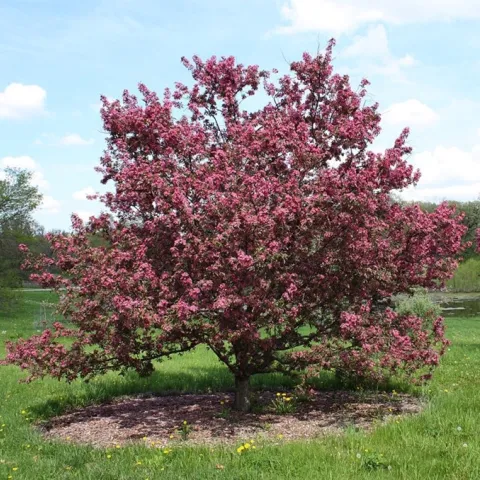
Malus ‘Purple Prince’ crabapple
Body

Few trees offer as much varied beauty as crabapples! These lovely trees are excellent additions to any landscape, offering year-round beauty as well as wildlife support. As a bonus, their fruit has culinary uses. Crabapples are relatives of the rose family and are native to North America, Europe, and Asia. As their name suggests, crabapples are close cousins of apples, but their fruit is smaller and more tarts. The name is thought to be derived from the Old English-Norse tern "scrab" in the 1400s, meaning rough and sour.

Image
Crabapple flowers and berries
Crabapple trees produce gorgeous flowers in spring – and mini-apples in fall and winter. Photos: Creative Commons

Crabapples are popular landscape trees

A 50-year-old crabapple tree in bloom
A 50-year-old crabapple tree from the author’s grandmother, who adds, “she’s put on her springtime ballgown.” Photo: Claire Anne Garrett

Crabapple (Malus) trees fill many roles in the landscape. They typically grow around 15 to 25 feet tall and wide, although there are shorter and taller cultivars. Their reasonable size is perfect for small gardens, and their innate beauty makes them striking accents in entry gardens and throughout the landscape. They also make excellent shade trees, providing dappled light rather than deep shade. Crabapples are low maintenance, drought-tolerant, and frost hardy. Minimal pruning keeps the trees shaped and healthy. If well cared for, crabapple trees have a long lifespan of 30 to 70 years.

Fabulous four-season interest 

Crabapples are often chosen for their radiant all-season visual display. For many weeks in spring, they are loaded with dense white, pink, or red blossoms favored by pollinators. By June they are chock full of tart mini-apples for eating, preserving, and decorating. In fall the foliage turns a myriad of bright colors. Finally, in winter, the bare trees often have leftover fruit - a tasty snack for deer and birds such as robins and bluebirds.

Small, tart fruit is ideal for jam

sparrow eating a crabapple
Crabapples are magnets for wildlife. Photo: PickPic

Red and yellow crabapple fruit ranges in size from small berries eaten by birds to miniature apples up to 2 inches in diameter. The official distinction between an apple and a crabapple is the 2-inch mark: anything larger counts as an apple. Crabapples tend to be far more sour than regular apples due to their high malic acid content, so they are best eaten in cooked and sweetened recipes, including mixed preserves with berries. Crabapples are also naturally high in pectin, and therefore they make exceptional jam.

How to grow and care for crabapple trees

Crabapples do not demand too much of the gardener. How’s how to grow and care for one of these wonderful trees. 

  • Choose a location with plenty of sunlight. Crabapples need at least six hours of sun per day year-round.
  • Provide rich soil. Crabapples perform best in loamy soil with plenty of organic matter, but they are adaptable to other soil types.
  • Assure good drainage. To avoid root rot, make sure water drains well where your crabapple is planted.
  • Water regularly. For the first year after planting, water deeply once or twice a week. In our area, and depending on the cultivar, crabapples may become drought tolerant after one to three years of regular irrigation. However, deep, occasional supplemental water is recommended during especially hot, dry spells.
  • Mulch. Apply a layer of mulch to help retain moisture, regulate soil temperature, and keep weeds down. 

Considerations when choosing a crabapple tree

  • Check chill hours. Like many other fruit trees, crabapples need a certain number of hours below 45° F to break dormancy and produce fruit. Most areas of Marin receive 800-1,000 chill hours, but this varies greatly from coast to inland areas and whether your crabapple is planted in a sheltered or exposed location. Make sure to choose a cultivar with an appropriate number of chill hours for your garden. If in doubt, choose a lower-chill variety.
  • Carefully consider planting location. Some crabapple varieties drop fruit before it can be consumed by birds, which can create a slime layer on your patio or lawn. Additionally, the fallen fruit that is not cleaned up can attract wasps, rodents, and deer.
  • Not all crabapples can be eaten (by humans). If you’re planting your crabapple for eating, make sure to choose a variety with a larger fruit size. Small-fruiting crabapples are useless for human consumption -- but are greatly enjoyed by birds and other wildlife.
  • Think about disease resistance. Some crabapple cultivars are prone to apple scab, blight, mildew, and rust. It’s best to choose a disease-resistant cultivar and make sure your crabapple is getting enough sun and water to lessen the chance of disease.
Malus ‘Purple Prince’ crabapple
Malus ‘Purple Prince’ in all its springtime glory. Photo: Creative Commons

Some varieties of crabapple to consider 

With up to 1,000 varieties of crabapples in the world, you can be sure that there is one for your garden. Here’s a list of crabapples that thrive in our area. See highlights below. 

  • Malus fusca (Pacific crabapple) is native to the Bay Area and as far north as Alaska. It is particularly easy to grow in our climate. These trees grow to 30 feet tall and 20 feet wide, but they can be kept smaller with pruning. Pacific crabapples bear fragrant light pink flowers in spring and orange fruit in summer that is delicious when cooked into jelly or raisins.
  • Malus ‘Prairie Fire’ (prairie fire crabapple) is a popular selection. It bears purple-tinged foliage in summer and maroon fruit that persists into winter. The burgundy-red leaves and brilliant pink spring blooms are spectacular in spring. Grows 15 to 25 feet tall.
  • Malus Evereste (Evereste crabapple) is a disease-resistant choice that is often available as a dwarf, growing just 5 to 14 feet tall. It produces masses of fragrant white blossoms in spring and one-inch red fruit in summer that can be used to make jelly, pickled apples, or apple cider.
  • Malus x Royal Raindrops (royal raindrops crabapple) has magenta pink, fragrant blooms, purple-tinged foliage, and red fruit prized by birds. Grows 15 to 20 feet tall
  • Malus x ‘Hargozam’ (harvest gold crabapple) bears stunning yellow fruit. Grows 20 to 25 feet tall.
UC Marin Master Gardeners

Dreaming of Dahlias

Primary Image
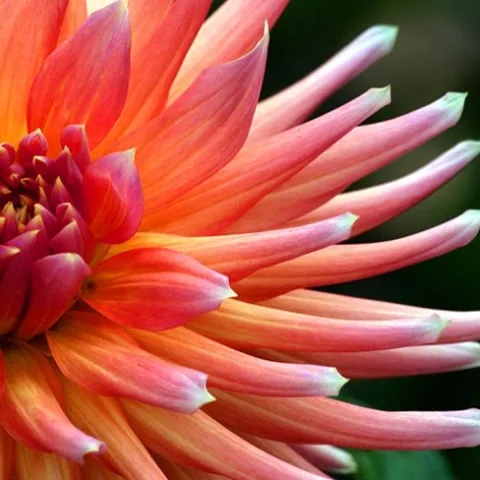
peach dahlia flower
Body
Dahlias in a wide range of sizes and colors
Dahlias are available in an extremely wide range of sizes and colors. Photo: Flickr, IdentifyWithResearch

Looking for an easy-to-grow perennial that blooms summer through fall? How about one with flowers available in a rainbow of colors and that range from 2-inch pompoms to dinner-plate size? Dazzling dahlias at your service! These bushy plants are excellent choices in many landscape settings. Dainty white blooms lend a formal look, 10-inch blooms with spiky petals add a wild feel to the garden, and a pot by the front door filled with dahlias is a great way to spiff up an entry. Check out some common dahlia varieties.

Originally from the highlands of Mexico and Central America, the nutritious, starchy tubers were a food source for the Aztecs. While some tubers are still edible, the variety of hybrids, along with the use of pesticides and fungicides, make eating tubers safe only after thorough research. Better to enjoy the blooms. Today, the dahlia is the national flower of Mexico and the official flower of San Francisco.

healthy dahlia tubers
Healthy dahlia tubers are firm like potatoes and free of soft spots or unpleasant odors. Photo: Creative Commons

What’s a tuber?

Whether you choose to plant in pots or in the ground, it’s important that you start with healthy tubers. Like bulbs, tubers are underground pods that contain the nutrients a plant needs to grow, survive, and reproduce. Healthy tubers should feel firm like potatoes – with no soft spots or strong, moldy odors. Local nurseries and plant societies carry a selection of dahlias, both as tubers, and later in spring, as established plants. For a wider range of options, search online. The biggest challenge you may encounter when growing dahlias is deciding which ones to grow! The variety of dahlias is staggering: there are only 42 species but more than 57,000 cultivated varieties. 

What do dahlias need?

Marin’s climate is close to ideal for darling dahlias. They also benefit from:

  • Six hours of sunlight every day. In extremely hot areas, go for morning sun and some afternoon shade.
  • Healthy, well-drained soil. Dahlias do not like wet feet.
  • Water two to three times per week for established plants; more during heat spells. 
peach dahlia flower
Dahlias bear gorgeous blooms from spring to fall. Photo: Creative Commons

How to grow and care for dahlias

New to dahlias? Not a problem. Here’s how to add one or more dahlias to your garden. 

  • Plant tubers directly in the ground in spring after the last frost. Use a good quality planting mix, incorporating compost. Mix in an all-purpose, low-nitrogen fertilizer. Excessive nitrogen will lead to more foliage and fewer flowers.
  • Dig a hole 4 to 6 inches wide.
  • Place tubers horizontally on the soil with an eye facing up.
  • Cover with 2 to 3 inches of soil.
  • Allow 2 feet between plants for room to grow.
  • Insert support stakes or a tomato cage if growing a tall variety. Install these as you are planting. This way you won’t injure any tubers by adding stakes later.
  • Water lightly once the tuber is planted. Dahlias are very susceptible to rot at this stage. Once the plant starts to grow, water periodically.
  • When three sets of leaves appear, pinch the center growth just above the third set. This will encourage a stronger, bushier plant that encourages more blooms.
  • Deadhead regularly. This will help keep the blooms coming well into the fall.
  • When temperatures drop, allow the leaves to yellow before cutting the plant down to about 4 inches. Dahlias will be fine left in the ground with our mild winters.
  • Dig up the tubers every two or three years. Share with neighbors and/or use them to expand your dahlia bed. If you wait longer to dig them up, you’ll probably see the tubers poking up in the soil and the vigor of your plant will decrease. 

Pests and Diseases

Don’t be discouraged by the list of possible problems below. Dahlias are actually quite easy to grow, and they provide an abundance of blooms to fill your vases and share with friends. 

  • Snails, slugs, and earwigs. You are most likely to see these pests when tasty young stems and leaves emerge. Pick these creatures off regularly or apply an organic pet- and wildlife-safe bait before they eat your young dahlias to the ground.
  • Thrips and mites. Deadhead plants regularly to discourage these unwelcome visitors.
  • Cucumber beetles. Hand pick early in the morning.
  • Leaf miners. These pests disfigure leaves, but they don’t affect flowers. Remove infected leaves.
  • Powdery mildew. This is a common nuisance to dahlias. Keep plants well-watered, fed, and encourage good air circulation. Remove infected leaves. 

Learn more.

For further information, visit the American Dahlia Society and consider joining a local society. No growing space, but want to enjoy the flowers? There is no place better than Dahlia Dell in San Francisco, home to more than 700 varieties of dahlias. Peak bloom time is July thru September.

Image
dahlias growing behind a bench
Dahlias add delightful, overflowing color to the garden. Photo: Creative Commons
UC Marin Master Gardeners

Winter 2025-26

Gardener's checklist for winter

Primary Image
Check citrus trees for snails and slugs. Photo: Marie Narlock
Body

DECEMBER Plant Care Checklist

tools
Maintenance and prevention
  • Clean up the garden to avoid over-wintering diseases.
  • Cover open compost bins with a tarp when the rains begin.
  • Protect frost-sensitive garden plants such as succulents. If frost is predicted, cover or move them under a sheltering overhang. Use stakes around the plants to suspend the covering material so it doesn’t touch the foliage. Remove frost blankets during the day. Consider applying an anti-transpirant compound to plant foliage to seal in moisture.
  • Wait until the weather warms up in March to prune off any frost damaged plant parts.
  • Tour your landscape during a heavy rainfall. See where water is coming off your house and where there are eroding torrents. Think about ways to slow, spread, and sink the rain.
  • Do not disturb soil – no digging, tilling, or walking on wet soil to avoid compacting.  Shovel less, nurture more.
  • Clean and sharpen tools - remove all soil and wash them with a 10% bleach solution to avoid spreading diseases. After drying them completely, apply a light layer of vegetable oil to prevent rusting.
  • Reduce watering houseplants to avoid root rot over the winter when they are not actively growing.
  • Ensure houseplants are not exposed to heat sources. Increase humidity by placing plants on pebble filled saucers.
  • Feed the birds. Keep suet and seed feeders full.

Planting and propagating

  • Take cuttings of succulents and create small container gardens for holiday gifts.
  • Finish planting spring blooming bulbs.
  • Continue planting native plants and bulbs and scattering annual wildflower seeds.
  • Shop for the winter blooming Camellia sasanqua while it is in bloom.

Cutting and pruning

  • Lightly prune any evergreen shrubs to keep pathways clear. Trees can be thinned to prevent storm/wind damage.
  • Prune woody shrubs, hardy deciduous trees, dormant shade trees, and winter flowering shrubs just after bloom. Wait to prune spring flowering trees and shrubs until after they bloom.
  • Bring trimmed bare branches indoors for a unique decorative element.

Feed and fertilize

  • Lightly fertilize potted winter-growing succulents such as Aeonium, Aloe, and Kalanchoe if needed.

Pests and weeds

Edibles

  • Plant bulb onions and rhubarb divisions.
  • Watch for frost; cover sensitive crops as needed.
  • Learn more about crops to plant in December and other activities in the edible garden.

Fire-smart Landscaping

  • Plan for the upcoming fire season. Start by understanding the defensible space zones, especially the five feet surrounding the perimeter of your home. Remove combustible materials or vegetation in that area, especially near windows.
  • Learn more about fire-smart defensible space zones.


JANUARY 
Plant Care Checklist

citrus
Maintenance and prevention
  • Observe water runoff during a heavy rain and correct any drainage issues.
  • Protect tender garden plants by covering them on frosty nights. Use stakes to keep material from touching foliage and remove the coverings when temperatures rise the next day. Consider applying an anti-transpirant compound to plant foliage to seal in moisture.
  • Water plants (except succulents) before an anticipated frost.
  • Avoid walking on or working in garden beds after heavy rains to avoid compacting the soil.
  • Pick off old flowers from camellias and azaleas and clean up dropped flowers to reduce petal blight, a fungal disease. Do not add them to your compost pile.
  • Clean, sharpen, and repair garden tools.
  • Organize your tool shed.
  • Revitalize houseplants by washing the leaves, inspecting for insects, and repotting them if necessary.
  • Reduce watering of houseplants to avoid root rot, as most are not actively growing.  
  • Water outdoor plants if rainfall is scarce.
  • Water outdoor plants that are not exposed to rain (under eaves, on covered decks, etc.).
  • Feed the birds in your garden.

Planting and propagating

  • Purchase and plant bare root trees, roses, vines and shrubs. Bare root plants are less costly and establish faster than plants in containers. Avoid planting in soggy soil.
  • Divide and pot spring flowering perennials.

Cutting and pruning

  • Prune and cut back perennials and ornamental grasses.
  • Prune woody shrubs, deciduous trees, dormant trees, summer blooming vines, and winter flowering shrubs just after bloom. Wait to prune spring flowering trees and shrubs until after they bloom. Learn more about pruning.
  • Prune roses. Remove and dispose all leaves and debris to prevent overwintering pests and disease. Do not add to home compost.
  • After pruning, be sure to clean tools.

Pests and weeds

  • Inspect pine trees for bark beetles Learn more about bark beetlespitch mothswestern gall rust, and wood borers.
  • Inspect citrus trees for snails and slugs, brown rot, and root rot.
  • Spray fruit trees and roses with horticultural oil to control pests.

Edibles

  • Buy seeds.
  • Prune fruit trees and grapes.
  • Plant bare root fruit trees and shrubs, artichokes, asparagus, blackberries, grapes, onion starts, raspberries, rhubarb, and strawberries.
  • Learn more about crops to plant in January and other activities in the edible garden.
Fire-smart Landscaping
  • Remove any limbs 10 feet from the chimney or roof and maintain separation between trees or groups of trees.
  • Learn more about Fire-smart Landscaping.


FEBRUARY 
Plant Care Checklist

camelias
Maintenance and prevention
  • Inspect irrigation system for leaks and non-functioning emitters and sprayers. Run the system for a few minutes, paying close attention to which emitters are not working. Straighten lines and use a pin or needle to free any trapped grit in emitters. Make any other needed repairs or changes.
  • Clean up old and dropped flowers from camellias and azaleas to reduce petal blight, a fungal disease. Do not add them to your compost pile.
  • Avoid working in or walking on wet soil.
  • Be alert to possible freezing temperatures and protect sensitive plants such as citrus and succulents. Learn more about frost.
  • Apply organic fertilizer to citrus if needed.
  • Repot houseplants and succulents in anticipation of spring growth.

Planting and propagating

  • Finish planting bare root trees, shrubs, and roses before they break dormancy.
  • Divide perennials such as daylily and yarrow.

Cutting and pruning

  • Finish pruning dormant plants. Wait to prune back frost-damaged plants until warmer weather when you see whether they have recovered.
  • Prune Japanese maples while they are winter dormant.
  • Prune woody shrubs and evergreen trees (spruce, firs, junipers, yews, redwoods, and cypress), hardy deciduous trees, dormant shade trees, summer blooming vines, and winter flowering shrubs just after bloom. Wait to prune summer blooming trees and shrubs until after they bloom.
  • Cut back woody shrubs to stimulate new growth. To rejuvenate leggy shrubs, cut to the ground one-third of the oldest stems each year.
  • Prune ornamental grasses.
  • Finish pruning roses and dispose of canes, leaves, and debris.
  • After pruning, be sure to clean tools.

Pests and weeds

  • Check plants for aphids as the weather warms. Remove infestations with a hard spray of water or insecticidal soap.
  • Stay on top of weeds. Hand pull them or cut off at the soil line.
  • Monitor tender new growth for snails and slugs. Hand pick or apply an iron phosphate bait which is safe to use around children, pets, and wildlife.

Edibles

  • Use dormant oil spray on fruit trees if needed.
  • Cut down cover crops if ready. Chop into pieces and dig into beds or put into compost pile.
  • Plant artichokes, asparagus, broccoli, cabbage, cauliflower, celery, collard greens, leeks, onion starts, and rhubarb.
  • Learn more about crops to plant in February and other activities in the edible garden.
UC Marin Master Gardeners

Brighten up your winter landscape

Primary Image
daffodils
Body

Are you looking out your window at a dull gray day -- and garden? Wondering when the roses will start blooming again? Welcome the winter showstoppers of our Mediterranean climate! We are so fortunate to live in an area with a myriad of options for colorful foliage, berries, blooms, fragrance, and habitat for wintering birds, bees, and other pollinators. Great news for those of us looking for a colorful, welcoming garden, and great news for our over-wintering birds, bees, and other pollinators. A true win win! 

Violets
Violets provide a splash of alluring color in winter. Photo: Creative Commons
Quick start: add annuals

If you’re looking for a quick and easy way to brighten your garden with fabulous blooms, start with colorful annuals like pansies and violets. They are readily available in an array of colors, easy to plant, and require very little care other than regular water if rain is unavailable. Botanically speaking, pansies and violets are both from the Viola genus, but pansies have bigger, showier flowers – always with four petals pointing up and one down – and violets have smaller, more prolific blooms – with two petals up and three down. 

Color every year: perennials and evergreens you can count on
Winter-blooming camellias
Winter-blooming camellias make a striking hedge around the holidays. Photo: Flickr, Twining Valley

These winter bloomers bring cheery color during the shortest days of the year.

Sasanqua camellias prefer full sun or partial shade and can grow quickly 6 to 14 feet tall and 5 to 7 feet wide. They can be pruned to control size. Leaves are glossy and evergreen. Grown in the ground or containers, the plants make a bright colorful winter statement and are excellent cut flowers. Somewhat deer resistant, they can easily be grown into a hedgerow.

Cyclamen are familiar, hard-working winter bloomers. The Royal Horticultural Society refers to cyclamen as “the flower that wakes up just as most other plants go to sleep for the winter.” They are available in a variety of colors – white, pink, fuchsia, red -- and their leaves -- some variegated, heart-shaped, or ruffled - are charming. As summer heads our way, their corms go dormant, only to come to life when the weather cools and rain returns. 

Hellebores, also known as Christmas or Lenten rose (Helleborus niger), have large evergreen leaves with flowers in a variety of colors. Plant in a shady spot in your garden for years of deer-resistant, low-water winter blooms. Beware – all parts of the plant may be toxic if ingested. 

Hardenbergia is an evergreen vine that bursts into a proliferation of purple flowers in winter. It quickly twines its way 6 to 12 feet up and through fences and arbors. 

Daphne sports soft pink blooms and a delectable fragrance that wafts through the garden. Daphne prefers part sun, regular water, and fertile, well-draining soil. Gardeners love daphne -- but deer do not. 

Coral bells (Correa) are Australian shrubs with delightful, deer-proof blooms. This easy-care plant grows 2 to 3 feet tall and 4 to 5 feet wide. It performs in light shade and prefers well-draining soil. 

Many California natives offer colorful winter flowers and berries. They are easy to grow, drought tolerant, and provide food and shelter for birds, bees, and other pollinators. Native plants have developed a symbiotic relationship with insects and birds that overwinter. Plants provide nectar, pollen, and seeds for nourishment. Insects, in return, provide help with pollination. These California natives shine in winter:

California native toyon
California native toyon sports brilliant red berries in winter – nutritious for birds and also nice on a holiday table! Photo: Flickr, Jeff Balzer

Ceanothus, also known as California lilac, is available as low groundcovers, mid-size shrubs, or low or multi-branched trees. Winter and early spring flowers range from bright blue, purple, pink or white. They are best planted in lean, native soil. Once established, avoid overwatering. 

Toyon, also known as Christmas holly, is a magnet for many of our local bird species. Its bright red berries are a delight during the holidays. 

Manzanitas are abundant in our open space preserves and neighborhoods. The first rains of the season trigger blooms. They are a very important source of pollen for birds and mammals. 

Pop-ups: bulbs provide cheery color 
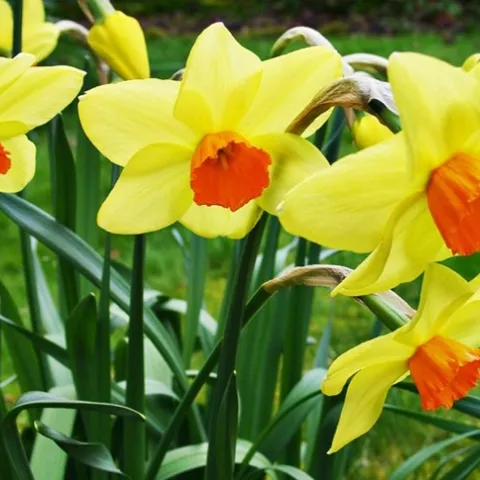
daffodils
Is there anything cheerier than daffodils? Photo: Creative Commons

Many of the flowers that spring up from bulbs in winter are the quintessential harbingers of spring. The best part? You plant them once and they come back year after year – so easy!

Daffodils are springtime darlings, but many emerge in late winter. As a bonus, deer don’t touch them and they make superb cut flowers. 

Crocus is one of the first bulbs to emerge in winter. Short and tough, it bursts up during the darkest days of the year. Blooming in shades of purple, white, yellow, pale pink, and anywhere in between, crocus are cheerful additions to any garden. 

Winter gardens can be beautiful – and colorful!

A winter garden filled with a variety of blooming plants and colorful seeds and berries will brighten even the gloomiest days. 

Learn more about plants that bloom in winter. 

UC Marin Master Gardeners

Viburnum tinus: a hard-working, versatile, evergreen shrub

Primary Image
Viburnum tinus seed pods or fruits
Body

Viburnum tinus is a broadleaf evergreen woody shrub that grows 6-12 feet tall and up to 10 feet wide. It is deer, drought, and salt tolerant. Showy, fragrant flowers bloom from November to spring, much to the delight of butterflies, birds, and bees. The flowers appear in clusters, the deep pink buds and white flowers often appearing at the same time. 

Viburnum tinus flowers
Viburnum tinus has glossy green foliage and fragrant flowers. Photo: Creative Commons

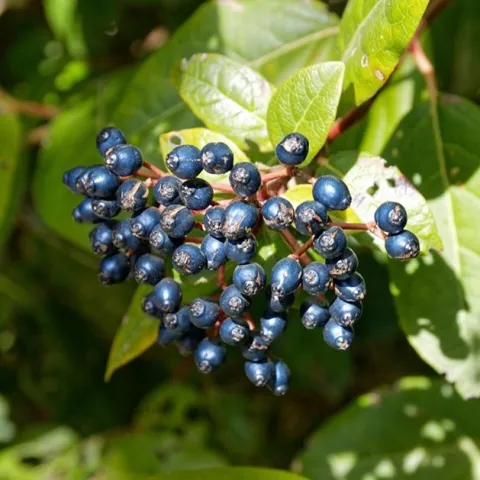
The fruit is also a food source for wildlife – the seed pods are metallic blue through summer, morphing to black as they mature. The 2 to 3-inch leaves are lustrous, dark green, oval, leathery, and slightly rolled at the edges. New stems emerge an alluring wine red. This easy-care plant is native to the Mediterranean areas of Europe and North Africa.

How to grow Viburnum tinus 

This lovely shrub is suitable for all areas in Marin County in full sun or part shade, although it prefers some shade where summers are hot and long. It also appreciates rich soil and regular moisture – but it tolerates drought once fully established. Viburnum tinus can be pruned to whatever shape is desired. Watch for aphids, thrips, spider mites, and scale. (Learn more about managing invertebrate pests.) Mildew can be also a problem if grown near the ocean. 

Viburnum tinus
Viburnum tinus blooms November to spring, with pink buds and white flowers that often appear at the same time. Photo: Creative Commons
Versatility: a major selling point

Viburnum tinus has dense foliage right to the ground, which makes it a great choice for a hedge, screen, small tree, stand-out flowering shrub, and even a clipped topiary shape. It is used in a variety of landscape themes including butterfly, cottage, pollinator, and winter gardens. 

What’s in a name?

The common name for Viburnum tinus is laurustinus or laurustine. The word “laurustinus” is Latin for “laurel-like tinus,” referencing its evergreen foliage that resembles a laurel tree.

Many Viburnum to choose from

Viburnum tinus is just one member of the viburnum (Viburnaceae) family. There are more than 150 other species of viburnum, both evergreen and deciduous. Here are a few cultivars to consider:

Viburnum tinus seed pods or fruits
The seed pods, or fruit, of Viburnum tinus are metallic blue in summer, morphing to black as they mature. Photo: Creative Commons

‘Viburnum tinus ‘Robustum’ – This cultivar has coarser and rougher leaves, less pink in the flowers, and more resistance to mildew. It makes an excellent small, narrow tree.

‘Viburnum tinus ‘Spring Bouquet’ – This plant has slightly smaller and darker green foliage and is fairly compact, topping out at about 6 feet. It is a good choice for hedges.

Viburnum tinus ‘Spirit  This cultivar has slimmer foliage, grows to about 6 feet, and tends to have a compact habit. It’s a good choice for low hedges. 

Here’s more on these and other viburnums to consider


UC Marin Master Gardeners

Growing Lettuce Year-Round

Primary Image
A harvest of crisp, bright green lettuce is satisfying anytime of the year
Body

Growing Lettuce Year-Round

Lettuce is generally considered to be a cool-season annual, but with a little advanced planning and some judicious plant selection, Marin gardeners can enjoy home-grown lettuce throughout the year. Our temperate climate makes it possible to modify the growing conditions for lettuce and enable the plants to thrive in all seasons. That’s good news for salad lovers!

A harvest of crisp, bright green lettuce is satisfying anytime of the year

EXTERNAL IMAGE

Seasonal Challenges for Growing Lettuce

Lettuce grows best in 45-to-73-degree temperatures. Heat above 80 degrees causes most varieties to bolt (produce flowers) and become bitter. Temperatures below freezing often result in plant damage. Additionally, the shorter winter daylight hours slow or pause growth.

Volunteers in the Edible Demo Garden like a challenge, so learning how to grow a steady crop of lettuce in every season was an ideal project. Lettuce has become a popular crop at the Indian Valley Organic Farm & Garden. Although the success of the project was evident quantitatively in the over 260 heads of lettuce harvested since July 1, 2025, the qualitative gains, in terms of knowledge and experience, are immeasurable. Some key strategies identified for lettuce growing success include selecting the best varieties, succession planting, and managing environmental conditions.

Selecting the Best Varieties

Lettuce varieties are divided into four categories: crisphead, butterhead, looseleaf, and romaine. Crisphead is the iceberg lettuce found in grocery stores. It takes longer to develop and is difficult to grow in hot climates. It’s not a popular choice for home gardeners and is not a variety grown at the Edible Demo Garden.

Butterhead lettuce, also called bib lettuce, is more heat-tolerant. Varieties of butterhead that have thrived in the Edible Demo Garden are ‘Red Cross’ and ‘Aunt Mae’s Bibb’. Both are heat-tolerant and slow to bolt. ‘Red Cross’ has bright red and green leaves making it especially appealing in summer salads.

Loose-leaf lettuces include the “cut and come again” varieties with different leaf shapes, some described as oak leaf-shaped. They can be harvested by taking the outer leaves and leaving the central leaves to mature for future picking. ‘Smile’ is a bright green oakleaf variety that has performed particularly well in the Edible Demo Garden. Other loose-leaf varieties grown in the garden are ‘Morgana’ and ‘Bijella’. ‘Muir Summer Crisp’ is a dense, wavy-leafed variety that is exceptionally heat-tolerant and slow to bolt. 

Romaine lettuce, such as ‘Little Gem’ also grows well in the Edible Demo Garden but takes longer to mature and is not as heat-tolerant as other types. As a result, it is not as productive in the garden as the butterhead and loose-leaf varieties.

Succession Planting
Sow lettuce seeds indoors to germinate for succession planting

A year-round lettuce harvest requires always having lettuce growing in different stages. That means starting seeds indoors or direct sowing in beds at the same time mature lettuce is being harvested. A volunteer day in the Edible Demo Garden might involve sowing lettuce seeds in cells to germinate in the greenhouse, planting the starts that are now ready in the garden beds, and harvesting the fully grown heads of lettuce for distribution in community-supported agriculture boxes. Intervals for succession planting vary according to the crop, but sowing seed every two weeks is about right for lettuce.

Managing Environmental Conditions

Lettuce requires proper watering and protection to thrive. Frequent, light watering is important for shallow-rooted lettuce. Too little water will stunt and toughen the plants, and too much water causes root rot. Mulching around the plants helps maintain moisture and keeps the leaves off the ground.

Lettuce seedlings need water and protection in outdoor garden beds

Protection from heat and pests can be challenging. Lettuce appreciates some shade in the summer, so planting it next to taller plants or using shade cloth can reduce the chances of it bolting. Animals and insects love lettuce too. In the Edible Demo Garden, lettuce beds are covered in protective netting to deter hungry birds, rabbits, and other critters. Mesh wire is placed under the beds to stop invasions from below. Even that didn’t prevent gophers from tunneling through the wood on the side of one of the beds and feasting on a few heads of lettuce. The protective netting also provides some shelter from the sun and flying insects. Aphids, earwigs, and slugs can still be a problem, so it pays to be vigilant and remove them as soon as they are discovered.

Click here for more information on growing lettuce:

https://ucanr.edu/site/uc-marin-master-gardeners/documents/lettuce

Check out our new YouTube video:


UC Marin Master Gardeners

Fall 2025

Manzanitas take a bow in winter and early spring

Primary Image
manzanita flowers
Body

Like people, some plants demand center stage. California poppies and lupine are springtime darlings, followed by fragrant sage in summer and crimson maples in fall. But what about the supporting players who work hard but never seem to get the limelight? Cue the manzanitas. 

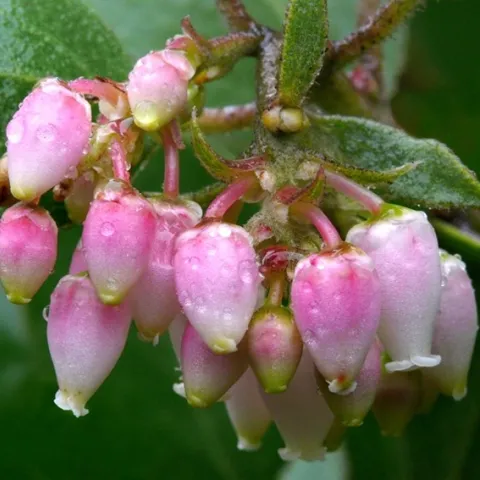
Manzanitas, aka Arctostaphylos, are rugged California native evergreen shrubs and trees with white or pink mini-bell flowers that dangle in delicate panicles in winter and spring and turn into “mini-apples” in summer and fall. Manzanita bark is stunning and variable -- sinewy and smooth, peeling and revealing, old and gnarled – in colors spanning cinnamon, burnt mahogany, chocolate brown, and driftwood gray. Like cracks of lightning, manzanita bark illuminates gray days and reduces the winter drab factor. 

Image
manzanita trunk and branches
Manzanita bark and form lend distinct color and sculpture to the garden. Photo: Creative Commons
Image
manzanita flowers
Manzanita flowers lure pollinators, including California native bees emerging from their overwintering nests. Photo: Flickr, James Gaither
Year-round beauty and many ecological benefits 

Manzanitas are outstanding additions to any garden, whether for low groundcovers, uplit accent trees, background shrubs, or hedges. In addition to their innate year-round beauty, manzanita provide many benefits to the environment (and to gardeners!): 

manzanita berries
Manzanita seed pods resemble mini-apples and feed a multitude of birds and animals in summer and fall. Photo: Creative Commons
  • Pollinator-friendly. Hummingbirds and bees delight in having a food source during the colder months in late winter and early spring. This is especially true for California native bees that emerge after overwintering in ground nests and hollow stems. Manzanitas are among the first plants they forage.
  • Food for many animals and birds. Summer and fall manzanita berries feed bears, deer, coyotes, foxes, quail, and many other birds.
  • Low water. These tough plants thrive on little water once established. This is due in part to their leaves, which have tiny pore-like stomates on both leaf sides instead of one side as in most plants. The result? The leaves are held perpendicular to the ground instead of parallel to minimize sun exposure and water loss.
  • Erosion control. Thanks to their extensive roots, manzanitas are an excellent choice to help keep steep slopes intact.
  • Long-lived. Manzanitas can live 100 years or more and disperse seeds that survive underground for hundreds of years.. Their elixir for long life? Co-mingling root fungi (mycorrhiza) with others in their own plant community, dramatically increasing the ability to absorb water and minerals, even in poor soil.
How to grow and care for manzanitas 

Manzanitas are easy and satisfying to grow. Here’s how: 

  • Grow in full sun.
  • Plant in well-draining soil. In general, manzanitas do not like water to linger on their roots, leaves, or at the crown of the plant (where the roots meet the stem).
  • Do not amend soil with compost or other rich organic matter.
  • Avoid fertilizer.
  • Water deeply until established, then cut back. Manzanitas are vulnerable to fungal diseases that thrive in warm, moist conditions, so avoid summer watering as much as possible.
  • Prune judiciously. Manzanitas bloom on old wood. If necessary, only prune in August through October before flower buds emerge. Use thinning and re-leadering cuts sparingly to unveil the plant’s natural structure. Make as few cuts as possible and do not force an unnatural shape. Never use heading cuts, which can lead to fungal issues and suckering.
‘Austin Griffiths’ manzanita
‘Austin Griffiths’ manzanita has red stems and large flower clusters that provides excellent nectar for hummingbirds, butterflies, and other pollinators. Photo: Las Pilitas
Many manzanitas to choose from

Manzanitas grow on dry slopes of chaparral and coastal range mountains, which is why we get to witness their quiet beauty on numerous Marin trails – from dry rocky slopes and ridges to the borders of pine and redwood forests to the exposed ocean-facing slopes of Point Reyes. Some even grow in serpentine soil where few other plants survive. Take a walk in China Camp, on the Shoreline Trail, or on King Mountain to spot these austere treasures. 

There are more than forty species of manzanita in California, not to mention all the cultivars, subspecies, and hybrids.[1] They are a promiscuous bunch, interbreeding freely to the point where it’s even hard for botanists to tell one species from another. They range from 2-inch ground huggers to 20-foot trees – and everything in between. 

If you’d like to add a manzanita to your landscape, here are a few to consider: 

Image
manzanita branches
Image
white manzanita flowers
‘Dr. Hurd’ manzanita grows upward into a 15-foot tree and has delightful white flowers in early spring. Photos: Marie Narlock
A long, venerable family line and history 
pink manzanita flowers
‘Sonoma’ manzanita bears a prolific number of pink blooms. Photo: Las Pilitas

All manzanitas are cousins to madrone, rhododendron, azalea, and a host of edible berry-producing plants including huckleberry, blueberry, and cranberry. The berries are indeed edible. Just ask the native Americans, who ate manzanita berries raw, dried, fresh, and crushed for cider. (Manzanita means “little apple” in Spanish.) They chewed the leaves to curb nausea and settle upset stomachs and made poultices from soaked leaves to combat poison oak rashes. One tribe dried and smoked manzanita leaves for good luck. 

Today many coastal manzanitas are endangered or rare, due in part to development. Among the rarest species is the Franciscan manzanita, which had not been seen since 1947 but was discovered thriving amid the litter and car exhaust fumes during the Doyle Drive expansion just south of the Golden Gate Bridge. That plant was moved to an undisclosed location for further research and propagation. The good news? It is now available in nurseries. 

Regardless of which manzanita you choose, you can look forward to years of a carefree plant with a long and proud history.

UC Marin Master Gardeners

Focus on Crocus

Primary Image
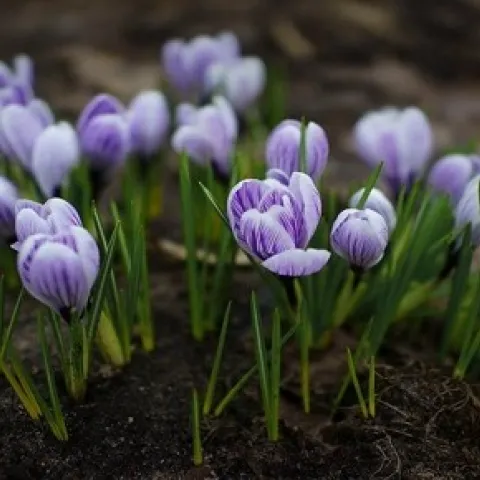
Crocus vernus ‘Pickwick’
Body
purple crocus
Crocus are among the first flowers to pop up in the spring garden. Photo: Tomas J. Stockholm, Creative Commons 

Blooming in shades of purple, white, yellow, pale pink, and anywhere in between, crocus are cheerful additions to any garden. While many species bloom in early spring, some, such as saffron crocus (Crocus sativus), bloom in autumn. These different species need different care, but there’s sure to be at least one (or two or three) that would be a wonderful addition to your garden.

Crocus are perennials in the iris family, Iridaceae. They are native to Europe and Asia and typically grow a petite 3 to 6 inches tall and bloom for two to five weeks. Crocus grow from corms, which are similar to bulbs in that they store food for the flowers when dormant. Although some species of crocus resemble tulips, there are differences. Crocus are shorter than tulips – often just a few inches tall –-- and they have open cup-shaped flowers and thin, grass-like leaves.

yellow crocus
Crocus chrysanthus blooms in spring in yellow or golden tones. This variety is called ‘Romance.’ Photo: Meneerke Bloem. Creative Commons 
Spring-blooming crocus: harbingers of spring, symbols of hope

The most common ornamental crocuses bloom in early spring and are considered symbols of hope and new beginnings. These crocus are native to the Mediterranean region and are a favorite of pollinators, providing them with an early source of nectar in late winter or early spring. In our climate, spring crocus bloom in February and March, making them a welcome respite from gloomy winter days!

Here’s how to grow spring-blooming crocus for years of delightful flowers:

  • Pre-chill the corms. Spring-blooming crocus can grow in Marin’s USDA zones 9 and 10. However, due to our mild winters, it's a good idea to pre-chill the corms before planting for one to three months in the refrigerator at 35 to 45° F. Note that some bulb companies offer pre-chilled corms so you can plant them as soon as they arrive.
  • Plant in fall. Plant corms in October or November to ensure best spring bloom.
  • Grow in sun or part shade.
  • Plant in well-drained, healthy soil. Crocus loathe becoming waterlogged, so provide well-draining, compost-rich soil. As a bonus, soil rich in compost blocks nematodes and mites that can infect corms.
  • Place pointy side up. Plant the corms several inches deep, a few inches apart, pointy side up.
  • Choose from a variety of planting locations. Grow corms in pots, raised beds, or in the ground. You can even plant crocus in a lawn for a stunning spring display: just make sure to wait to mow until the leaves have turned yellow and have died back, as the bulb is still photosynthesizing to make next year’s blooms when the leaves are green.
  • Prevent pests. Squirrels, mice, and other rodents love to munch on crocus corms. To avoid disappointment, consider planting crocus under a layer of wire mesh.
  • Add fertilizer. When planting, fertilize crocus with a small amount of an organic balanced fertilizer.
  • Don’t worry about irrigation. Because they are naturally adapted to our Mediterranean climate, crocus rely on our winter rains for growth and are tolerant of our long, dry summers. 

Here are some spring crocus to consider:

Crocus vernus ‘Pickwick’
Crocus vernus ‘Pickwick’ is a lovely spring-blooming crocus. Photo: Dmitriy Konstantinov, Creative Commons

  • Crocus tommasianus grows 3-4 inches tall and comes in shades of lilac and lavender. They are sometimes called “tommies.”
  • Crocus vernus is a larger-flowered species that has been hybridized into a range of varieties. These include the amethyst ‘Flower Record,’ the pale ‘Jeanne d’Arc,’ and the delightfully striped ‘Pickwick.’
  • Crocus chrysanthus has a mild honey-like scent and is often called golden crocus for its coloring, although some varieties are white or have maroon markings on the outside of the petals.
  • See more spring-blooming crocus
Autumn blooming crocus: one edible, one poisonous

There are two main groups of autumn-blooming crocus: saffron crocus and colchicum. Both are often called autumn crocus, but it’s very important not to confuse the two. Why? Because saffron crocus is a prized culinary ingredient while colchicum is poisonous to humans! 

saffron crocus
The red stigmas of saffron crocus are what make saffron spice. Photo: Meneerke Bloem, Creative Commons

Saffron crocus (Crocus sativus) was first cultivated for dye, perfume, and medicine in ancient Greece, Egypt, and Minoan Crete as early as 4,100 years ago. It was spread by human cultivation across Eurasia and beyond. Because of our Mediterranean climate, saffron crocus is well-suited to our climate and growing conditions. Here’s how to grow saffron crocus: 

  • Plant in August or September.
  • No need to pre-chill the corms.
  • Plant corms under wire mesh to prevent rodents from invading.
  • Choose from a variety of growing locations. Like spring crocus, saffron crocus can be grown in pots, raised beds, or in the ground.
  • Plant in well-drained soil at least 4 inches apart to maximize saffron production.
  • Harvest in October or November.  Harvest the bright red stigmas when they are fully open and usually in mid-morning when the dew has evaporated. Use tweezers and dry them in a 200° oven for 7 to10 minutes. Although it takes 4,000 stigmas to make an ounce of saffron, a little goes a long way – it only takes a few stigmas to flavor a dish.
  • Wait till leaves die back before removing them. Like spring crocus, waiting to remove leaves ensures the bulb has enough energy to flower the following year.
pink crocus
Colchicum comes in pink, white, and purple. Photo: Cris Dixon

Colchicum spp. resembles the goblet-shaped blooms of true crocus, but it is actually like a distant cousin, falling under the lily family. It flowers in colors ranging from white to pink to purple. Colchicum may struggle in warmer parts of Marin, but if you want to try growing this plant, here are some tips: 

  • IMPORTANT: wear gloves when planting, as all parts, including the corms, are poisonous.
  • Plant in August for September and October bloom.
  • Plant in part shade in a deep pot or in the ground.
  • Don’t remove brown leaves until they’ve died fully back.
picked crocus
Crocus bloom in early spring, around the same time as snowdrops. Photo: Emily Daane

See more fall-blooming crocus

With the wide variety of crocus available, there’s a crocus to suit every type of garden – and gardener. It’s never too early to look forward to spring, and now’s the best time to plant spring-blooming crocus for a stunning display come March!

UC Marin Master Gardeners

Gardener's checklist for fall

Primary Image
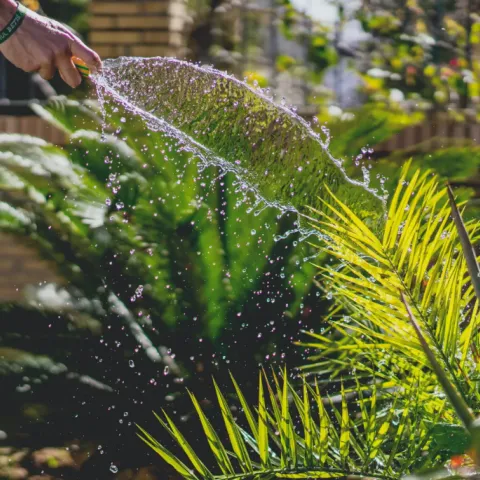
hose watering
Body

SEPTEMBER

water restrictions

Maintenance and prevention

  • Reduce irrigation times as day length shortens and plant growth slows.
  • Add garden waste, grass clippings, pruning material, and leaves to your compost so long as they are not diseased. Turn compost and keep it as moist as a wrung-out sponge.
  • Refresh the spring application of mulch to bring it to two to four inches.

Planting and propagating

  • Divide overgrown perennials as they finish blooming. Before replanting them, weed and amend garden beds.
  • Renovate lawn by seeding bare spots, dethatching, and fertilizing. Consider replacing or reducing lawn area. Learn more about lawn care.
  • Plant ornamental grasses, shrubs, perennials, evergreens, and groundcovers.

Cutting and pruning

  • Cut strawflowers, statice, yarrow, and other flowers that preserve well. Hang them to dry for use in arrangements.
  • Prune evergreen, summer-flowering shrubs.

Pests and weeds

  • Reduce spider mites, scale, and other insect pests by taking houseplants outside and spraying them down with the hose in a part shade area. Keep the foliage dust free to discourage indoor pests.
  • Use caulk to seal entries that ants may use to enter your home.
  • Manage aphids and scale on outdoor and indoor plants to discourage ants.

Feed and fertilize

  • Fertilize houseplants if needed.
  • Feed azaleas, camellias, and rhododendrons with an organic fertilizer with no nitrogen.
  • Feed citrus for the last time of the year, if needed.

Edibles

  • Plant cover crops to improve soil structure and fertility.
  • Plant artichokes, arugula, cauliflower, celery, chard, collard greens, kale, lettuce, bunching onions, and peas.
  • Learn more about crops to plant in September and other activities in the edible garden.

Fire-smart Landscaping

  • Clear leaf and needle litter from gutters, roof, eaves, and vents.
  • Clear branches 10 feet from the roof and chimney.
  • Learn more about Fire-smart Landscaping.

OCTOBER

CA fuschia

Maintenance and prevention

  • Reduce irrigation times significantly as day length shortens and plant growth slows or stops.
  • Clean up diseased and damaged plant materials so pathogens don’t overwinter.
  • Add garden waste, grass clippings, pruning material, and leaves to compost so long as they are not diseased. Turn compost and keep it as moist as a wrung-out sponge. Cover before rains start to retain moisture; cover during rainy weather to avoid the pile becoming waterlogged.
  • Add compost and organic soil amendments but don’t disturb shallow-rooted plants.
  • Refresh the spring application of mulch to bring it to two to four inches. (Avoid thicker layer of bark mulch as it may hide smoldering embers in the event of a nearby fire.)
  • Clean garden tools. Disease microorganisms may also overwinter on the surface of stakes, tomato cages, trellises, and other garden equipment. Remove all soil from the tools and clean them with a 10% bleach solution or other disinfectant to protect your tools from spreading diseases. Apply a light layer of oil to prevent rusting if you will not be using them for a while. Wash garden gloves.
  • Visit nurseries to see trees and shrubs with outstanding fall color; determine if there’s a place in your garden that would benefit from one of these selections.

Planting and propagating

  • Plant California natives. This is the perfect time.
  • Reseed bare spots in your lawn or install sod. Consider reducing or replacing your lawn to conserve water.
  • Plant ornamental grasses, shrubs, perennials, evergreens and groundcovers. Winter rains will help establish sturdy root systems.

Cutting and pruning

  • Lightly prune Japanese maples while still in leaf. Select and plant maples; now is the time to see fall color.
  • Prune deciduous trees and shrubs that need pruning such as crape myrtle, rose, and Spirea

Pests and weeds

  • Visit your garden after dark with a flashlight and handpick snails and slugs. Control measures in fall help reduce populations in spring.

Feed and fertilize

  • Feed azaleas, camellias and rhododendrons with an organic fertilizer with no nitrogen.
  • Change feeding program for cymbidium. During the fall and winter, use a formula with low nitrogen and higher potassium and phosphorus monthly to promote more and bigger blooms.

Edibles

  • Continue with last of summer harvest.
  • Plant artichokes, arugula, kale, garlic, shallots, and lettuce.
  • Learn more about crops to plant in October and other activities in the edible garden.

Fire-smart Landscaping

NOVEMBER

sheet mulch

Maintenance and prevention

  • Mulch bare soil to hold in moisture, keep out weeds, and prevent compaction by hard rains.
  • Clean up the garden before the rains begin. Remove leaves and debris from under and around plants.
  • Create new planting areas by sheet mulching over weed patches or unwanted lawn.
  • Turn off irrigation system for the season; continue to water plants under overhangs.
  • Protect sensitive plants from cold injury when frost is predicted. Water the garden if it hasn’t rained recently. (Do not water succulents if frost is in the forecast.)
  • Clean and store any unused pots and containers that can be used as hiding places by overwintering insects, slugs, and spiders.
  • Clean garden tools. Disease microorganisms also overwinter on the surface of stakes, tomato cages, trellises, and other garden equipment. Remove all soil from the tools, and clean them with a 10% bleach solution or other disinfectant to protect tools from spreading diseases. Apply a light layer of oil to prevent rusting if you will not be using them for a while. Wash garden gloves.

Planting and propagating

  • Plant shrubs, perennials, and treesFall is for planting! Winter rains will help develop a strong root system.
  • Plant spring blooming bulbs.
  • Plant California natives. Late fall, just as the rains start, is the best time for planting natives and scattering seeds of annual wildflowers.
  • Dig, divide, and replant overgrown perennials for more profuse blooms next spring.
  • Plant bulbs for spring color, including daffodils, crocus, freesia and hyacinths.
  • Remove all but one fat bud from each camellia stem for larger blooms.

Cutting and pruning

  • Lightly prune Japanese maples while still in leaf. Select and plant maples for fall color.
  • Remove dead, broken, or diseased limbs from trees and shrubs.

Pests and weeds

  • Do not compost debris from fuchsias, roses, and the camellia/rhododendron/azalea family, as they can spread a variety of fungi and molds and allow undesirable insects to overwinter.
  • Manage rainy season weeds before they flower using non-chemical methods such as cultivation, hand weeding, or mowing. Use toxic chemicals only as a last resort.

Edibles

  • Plant garlic, shallots, and peas.
  • Learn more about crops to plant in November and other activities in the edible garden.

Fire-smart Landscaping

  • Create adequate spacing of trees and shrubs in your garden to minimize the transmission of fire from one plant to another and ultimately to your house.
  • Learn more about Fire-smart Landscaping.
UC Marin Master Gardeners

Summer 2025

Goldenrod (Solidago): a beam of sunshine for the summer-fall garden

Primary Image
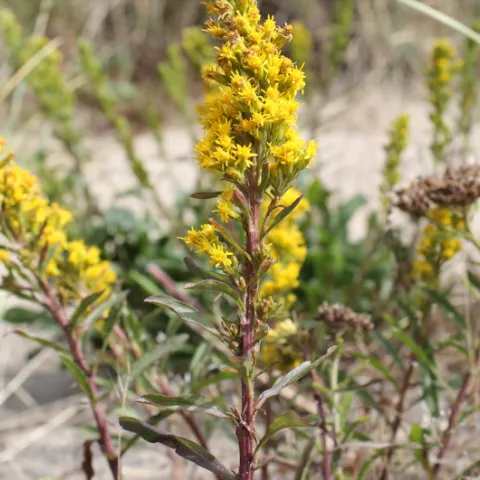
Coast goldenrod
Body

Goldenrod (Solidago) is a striking California native perennial that’s easy to grow in sunny gardens. A member of the Asteraceae (sunflower) family, it is recognizable by its masses of bright yellow flowers that bloom profusely in late summer and fall. The cheery blooms are a delight in the garden as many other perennials are fading this time of year. 

A word of caution

Some gardeners find that goldenrod is too much of a good thing. Why? Because it tends to creep. It does this in two ways: by underground rhizomes and by dispersing seeds after its blooms have died back. Your best strategy? If you plant Solidago, be sure to give it plenty of room to roam. To prevent spreading seeds, clip off the dried flowering stalks (and the dry foliage) after bloom.  

Many goldenrods to choose from 

There are a number of Solidago species and varieties -- some native to California and others native to nearby areas such as the southwest region of the US. All are relatively easy to grow and sport bright yellow flowers. Click here to see a handful of goldenrods. (Click on each photo to see more images and details.)

Solidago spotlight: four native species to consider for your garden
California goldenrod
Photo: Flickr, John Rusk

California goldenrod (Solidago velutina ssp. californica) grows fast and produces many showy flower spikes up to 5 feet tall. Birds and pollinating insects love this plant. It is found throughout California in open grassy places up to an elevation of 7,500 feet. It is a very garden-tolerant, easy plant that thrives in a variety of soil types in full sun to partial shade. It likes to be wet in winter and spring and dry in summer; however, it can tolerate some extra summer water. Be aware that California goldenrod may become invasive due to its ability to spread aggressively.


Threenerve goldenrod
Photo: Flickr, Cecilia Alexander

Threenerve goldenrod (Solidago velutina) is widespread in western North America. It is in almost every county in California. Threenerve goldenrod is winter dormant and is best used where a wild look is desired. The yellow-gold flowers in late summer are showy and attract a large number of insects as well as some birds. It grows at a moderate rate up to 3 feet tall. It requires little care and is not picky about soil, dry summers, or cold winters. It is visited by bats, bees, caterpillars, and butterflies. Photo: Flickr, Cecilia Alexander


Western goldenrod
Photo: Flickr, Jonathan Coffin

Western goldenrod (Euthamia occidentalis), also called western goldentop, is a deciduous perennial native to most of the western states. It is most widespread in California where it is primarily found at elevations below 5,000 feet in damp areas along rivers and streams, irrigation ditches, meadows, tidal channels, and other wetlands. It is a spreading plant with thin, tall, branched stems with long, narrow, gray-green leaves. It typically grows 4 to 6 feet tall and can be used for erosion control and bank stabilization. This variety needs supplemental water in summer and must stay moist. It attracts bees and other pollinators. Photo: Flickr, Jonathan Coffin

Coast goldenrod
Photo: Flickr, Steve Sullivan

Coast goldenrod (Solidago spathulata), also called dune goldenrod, is native to coastal regions of Oregon and California on sand dunes and hillsides overlooking the Pacific Ocean. It grows up to 20 inches tall and has a branching underground caudex (swollen woody stem or root). One plant can produce as many as 100 small yellow flower heads in a branching array. This species of Solidago is used as a groundcover or lawn alternative. Coast goldenrod is visited by bats, bees, caterpillars, and butterflies. Photo: Flickr, Steve Sullivan

UC Marin Master Gardeners

Vine maple

Primary Image
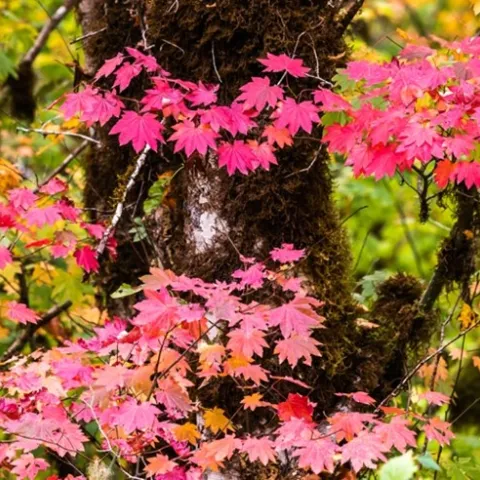
Acer circinatum
Body
Vine maple
Acer circinatum
Image
Acer circinatum
Photo: BLM, Flickr

Vine maple is a California native deciduous tree or shrub that typically grows 10 to 20 feet tall. In sunny settings it grows bushy and upright, but in shadier locales it spreads and sprawls closer to the ground. Vine maples grow moderately slowly. They prefer moist, shady settings, but they also thrive in sun. As a result, they are seen both in the understory of taller forest trees as well as in open ground. These beauties grow in damp woods along streams from British Columbia to northern California, typically within 185 miles of the Pacific Ocean. 

Fantastic foliage

Fresh, new springtime foliage emerges with reddish tones and then morphs to a vibrant green as it matures. In fall, vine maples grown in the sun glow with brilliant red, orange, and yellow colors. There are a number of striking cultivars that exhibit beautiful foliage or eye-catching combinations of foliage and bark. ‘Pacific Fire’ has bright red stems that contrast magnificently against crisp green leaves. ‘Monroe’ has finely cut leaves that turn yellow to bright red. Dwarf cultivars include ‘Little Gem’ with particularly small leaves and ‘Sunglow’ with orange-peach tones in spring that fade to chartreuse in fall. Because of these highly desirable traits, these shrubs and trees are often used in place of Japanese maples. 

Image
Vine maple leaves
Photo: BLM, Flickr
Key to success: rich soil and regular water

Acer circinatum prefers slightly acidic soil amended with organic matter. It can tolerate a range of soil types, including clay, as long as it’s well-draining. Water deeply after planting and provide regular water, especially during extra dry periods. Prune sparingly to maintain its naturally graceful shape. The best time to prune is in winter or very early spring. 

Image
maple tree in forest
Photo: Flickr, USFWS
Image
green maple leaves
Photo: Creative Commons
UC Marin Master Gardeners

Gardener's checklist for summer

Primary Image
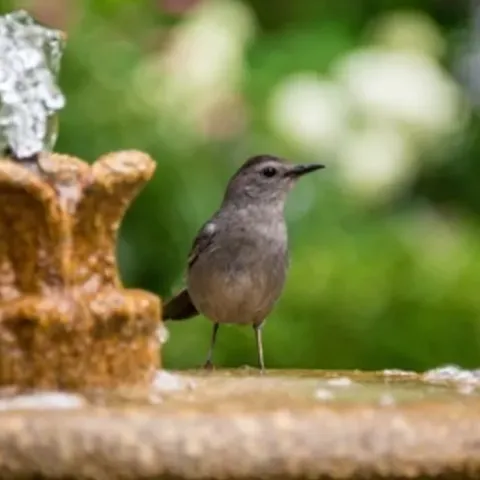
bird at birdbath
Body

JUNE 

June

Maintenance and prevention

  • Check soil moisture and adjust the watering schedule on your irrigation controller accordingly. Water early in the day. Watch container plants which may need daily watering.
  • Control powdery mildew, a fungus that likes dry summer conditions. Spray susceptible plants with a horticultural oil or biological fungicide.
  • Use pot feet or boards to elevate containers sitting on hot pavement.
  • Don’t forget to water houseplants as your attention focuses on the outdoors.
  • Check for standing water to keep mosquitoes from breeding.
  • Treat ponds with mosquito repellent.
  • Turn compost and keep it as moist as a wrung-out sponge. Add garden waste, grass clippings, pruning material, and leaves so long as they are not diseased.
  • Raise the cutting height of lawnmower 1 to 1.5 inches to help grass survive drought and heat (encourages deep roots and reduces water demand).
  • Leave lawn clippings on the ground for nutrients and as a mulch layer. Learn more about lawn care


Planting and propagating

  • Cut off spent flowers for continued bloom. (Consider leaving some for the birds.)
  • Stake tall plants such as dahlias, gladiolus, and lilies as needed.
  • Harvest blooming lavender to dry for indoor use.


Pests and weeds

  • Monitor and control snails, slugs, and aphids.
  • Use beneficial nematodes to manage grubs in your lawn.
  • Keep an eye out for early signs of insect infestation - blast any you see with a garden hose.
  • Set yellowjacket traps at the perimeter of the yard (not near eating areas) to discourage yellowjackets from visiting.


Feed and fertilize

  • Make compost tea for a mild liquid fertilizer.
  • Mulch shrubs and beds to conserve moisture.
  • Fertilize roses and other summer-blooming plants, if needed, using an organic fertilizer.
  • Use little or no fertilizer on herbs.
  • Feed azaleas, camellias, and rhododendrons with a balanced organic fertilizer formulated for acid-loving plants monthly during the spring and summer.


Edibles

  • Thin fruit trees.
  • Thin fruit on apple trees.
  • Protect summer fruit crops with netting or row cover.
  • Plant beans, broccoli, chard, cucumbers, eggplant, ground cherries, melons, peppers, pumpkins, parsley, squash, tomatoes
  • In cooler areas, plant cabbage, celery, lettuce, bunching onions, and peas.
  • Learn more about crops to plant in June and other activities in the edible garden.


JULY

July

Maintenance and prevention

  • Monitor soil moisture. The water requirements of plants peaks in July. Established perennials, shrubs, and trees need infrequent but deep watering. Container plants may need daily watering. Learn more about irrigation.
  • Adjust watering schedules monthly, according to the weather and changing needs of your plants.
  • Mulch garden and vegetable beds to protect them from summer heat, reduce watering needs, and keep the weeds down.
  • Lightly fertilize summer growing succulents if needed, such as Agave and EcheveriaLearn more about caring for succulents. Cactus and succulents are drought tolerant, but many appreciate some water in very hot weather. Succulents may find full sun to be too strong in some locations, so provide them with some shade if they appear to be struggling.
  • Drain standing water from saucers to eliminate mosquito breeding grounds.
  • Treat ponds with mosquito repellent.
  • Provide a water source such as a bird bath for thirsty birds and bees.
  • Raise the cutting height of lawnmower 1 to 1.5 inches to help grass survive drought and heat (encourages deep roots and reduces water demand).
  • Leave lawn clippings on the ground for nutrients and as a mulch layer. Learn more about lawn care.


Pests and weeds

  • Control powdery mildew, a fungus that likes dry summer conditions. Spray susceptible plants with a horticultural oil or biological fungicide. Follow package directions.
  • Monitor whiteflies — use sticky traps, thin out dense branches for air circulation, and use earth worm castings to discourage them. Using a reflective mulch or strips of foil will help repel them.
  • Check shade shrubs for thrips.
  • Check fuchsias for fuchsia mite. If found, cut back 6 inches beyond the infected site.
  • Set yellowjacket traps at the perimeter of the yard (not near eating areas) to discourage yellowjackets from visiting.


Planting and propagating

  • Pinch off spent flowers on perennials and annuals to encourage repeat bloom.
  • Pinch back chrysanthemums to encourage branching and increased bloom. Leggy impatiens and coleus also benefit from being pinched back.
  • Dig up and divide overcrowded bearded irises.
  • Dig up overcrowded bulbs after the foliage dies. Store bulbs in a cool, dry place for replanting in fall.


Feed and fertilize

  • Feed azaleas, camellias, and rhododendrons with a balanced organic fertilizer formulated for acid-loving plants.
  • Feed container plants if needed, using an organic fertilizer.
  • Feed citrus if needed, using an organic fertilizer.


Edibles

  • Plant beans and summer squash.
  • In cooler areas, plant broccoli, cabbage, chard, collard greens, kale, lettuce, bunching onions, and peas.
  • Learn more about crops to plant in July and other activities in the edible garden.


Fire-smart Landscaping

  • Move wood mulch 5 feet or more away from the perimeter of your home and any other structures on your property. Place non-combustible mulch in that area instead.
  • Learn more about Fire-smart Landscaping.


AUGUST

August Hydrangea annie-spratt-rmRa0OBAVoU-unsplash

Maintenance and prevention

  • Monitor soil moisture. Established perennials, shrubs and trees need infrequent but deep watering. Container plants may need daily watering.
  • Adjust watering schedules monthly, according to the weather and changing needs of your plants.
  • Check mature plants to be sure they are not water-stressed. Your 30+ year old plants are valuable!
  • Container plants may need daily watering, as soil in pots can dry out quickly and damage plant roots on hot summer days.
  • Treat ponds with mosquito repellent and empty containers with standing water.
  • Raise the cutting height of lawnmower 1 to 1.5 inches to help grass survive drought and heat (encourages deep roots and reduces water demand).
  • Leave lawn clippings on the ground for nutrients and as a mulch layer.


Planting and propagating

  • Choose drought tolerant plants that attract butterflies. Remember to plant some for nectar like Lantana (adults) and some for feeding like native milkweed (Asclepias fascicularis)Ceanothus, Buckwheat (Eriogonum), or dill (caterpillars). Note: do not plant milkweed if you are within 5 miles of the coast. Learn more about pollinators.


Cutting and pruning

  • Prune hydrangeas after blooms fade.
  • Pinch off spent flowers on perennials and annuals to encourage repeat bloom.
  • Maintenance prune coniferous trees: yews, junipers, redwoods and cypress.


Pests and weeds

  • Monitor for spider mites by looking for fine webbing on plants. Minimize the chance of infestation by rinsing dust and dirt off leaves with a spray of water.
  • Set yellowjacket traps at the perimeter of the garden (not near eating areas) to discourage yellowjackets from visiting.


Feed and fertilize

  • Feed azaleas, camellias and rhododendrons with a balanced organic fertilizer formulated for acid-loving plants.
  • Feed container plants if needed, using an organic fertilizer.
  • Feed citrus if needed, using an organic fertilizer.


Edibles

  • Plant broccoli, cabbage, cauliflower, celery, chard, and bunching onions.
  • In cooler areas, plant collard greens, kale, lettuce, and peas.
  • Learn more about crops to plant in August and other activities in the edible garden.


Fire-smart Landscaping

  • Keep the landscape hydrated during hot, windy days, but don’t over water on Red Flag Days because it depletes water our fire departments need.
  • Learn more about Fire-smart Landscaping.
UC Marin Master Gardeners

Spring 2025

A Westringia for every garden

Primary Image
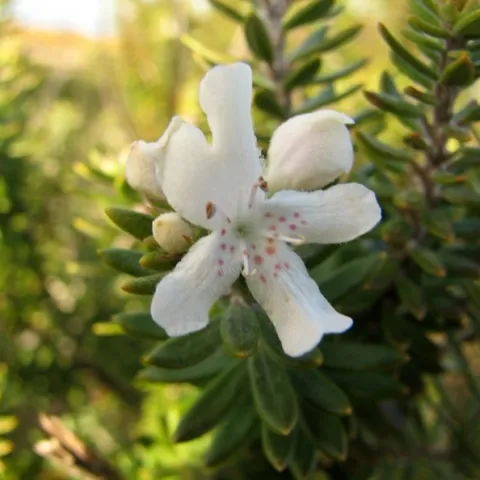
Westringia
Body
Westringia
Photo: Commons.Wikimedia.org

Looking for an attractive plant that uses little water, is pest and deer-resistant, looks good year-round, and can serve a variety of garden purposes? Westringia may be just the plant for you. This easy-care evergreen shrub has gray-green to green or variegated foliage. Westringia is native to Australia. A member of the mint family (Lamiaceae), these shrubs are sometimes called coast rosemary, since the foliage somewhat resembles rosemary. 

Reasons to love Westringia
  • Wide variety of shapes and sizes. From groundcovers to large shrubs 12 feet tall and 6 feet wide, there are plenty to choose from. Click here to see some popular varieties.
  • Easy to grow. They grow in most soils. Most varieties prefer sun, but some grow in part-shade.
  • Long bloom season. Many varieties flower consistently or intermittently throughout the year. As with other members of the mint family, the upper petal (or lip) is divided into two lobes. There are four stamens, and the leaves are in whorls of 3 or 4.
  • Good choice for coastal locations. Westringia tolerates wind and salt spray.
  • Drought resistance. Westringia is an excellent choice for a water-wise and Earth-friendly garden. In warmer, inland climates, some additional summer water will help keep it happy.
  • Helps with erosion control. This is helpful when planting on a hillside.
  • Useful in many settings. Generally speaking, these shrubs are used in hedges, mixed borders, screens, mass plantings and wind breaks.
  • Moderate growth habit. Westringia won’t outgrow your border anytime soon.
  • Pest resistance. Westringia are generally not bothered by pests.
  • Deer resistance. Many varieties are unappealing to deer.
Some varieties to consider for your garden:

Westringia fruticosa

W. fruticosa, the Australian or Coast Rosemary, is an evergreen shrub that grows up to 6' tall and 12' wide. Its growth rate is moderate. It has soft, gray green leaves. Its white flowers bloom throughout the year, especially in frost free areas. W. fruticosa prefers full sun. It is drought tolerant but will appreciate occasional watering in spring and summer. Its tolerance for wind and salt spray makes it a great choice for coastal areas.

Westringia fruticosa
Westringia fruticosa ‘NFL25’ Mundi. Photo: SK Reid, UCANR

Westringia fruticosa ‘NFL25’

‘Mundi’ Coast Rosemary is a groundcover version of Coast Rosemary. Darker green than other Westringia, it is a good-looking foliage plant with a dense form and nice texture. In addition to serving as a groundcover, it is a good “front of the border” option for a mixed border. It is generally not bothered by pests or disease, blooms throughout the year, and has low water requirements.

Westringia brevifolia
Westringia brevifolia ‘Raleighii’. Photo: UCANR

Westringia brevifolia

W. brevifolia (small-leafed Westringia) is an evergreen shrub, 5 to 6 feet tall and 3 to 5 feet wide, with small, narrow, gray-green leaves and pale purplish blue to white flowers almost year-round. It grows in sun or shade, and in most soils. It does best along the coast. W. brevifolia Raleighii’ (Raleigh Westringia) is a somewhat larger variant of W. brevifolia at 5 to 6 feet tall and 6 to 8 feet wide. 

Westringia 'Wynyabbie Gem'
Westringia 'Wynyabbie Gem'. Photo:  UCANR

Westringia 'Wynyabbie Gem'

Westringia 'Wynyabbie Gem' is an evergreen shrub that grows to 6 feet tall and wide.  It has narrow gray-green leaves and small lavender flowers that bloom almost year-round.  It prefers sun to part shade, and good drainage. 'Wynyabbie Highlight', a variant of 'Wynyabbie Gem', has variegated leaves.

Westringia fruticosa ‘Morning Light’ 

W. Fruticosa ‘Morning Light’ is a small evergreen shrub that grows 3 feet tall and wide. It has white edged leaves and small white flowers that bloom intermittently through the spring. It is very drought tolerant.

UC Marin Master Gardeners

Penstemon: too good to be true?

Primary Image
Penstemon
Body
Penstemon
Photo: Flickr.com

Foothill penstemon is a true blue California native that blooms profusely yet needs little water. It also attracts bees, butterflies, and hummingbirds – but deer stay away. This beautiful perennial has close relatives available in many colors: white, yellow, pink, purple, and red. 

Penstemon is the largest genus of flowering plants indigenous to North America, with 280 species and more than 100 native to California. Commonly known as “beardtongue,” these tubular, nectar-rich flowers are pollinator magnets, attracting native bees, honeybees, bumble bees, butterflies, and hummingbirds. Click here to see many varieties of penstemon.

Penstemon mexicali
Penstemon mexicali is a non-native perennial with gorgeous blooms. Photo: Public domain
How to grow penstemon

Penstemon are fast-growing summer bloomers, easily grown in a variety of soil types so long as it’s well draining. To keep penstemon happy, plant them in full sun to partial shade with good air circulation. They prefer little fertilizer. Once established in the right place, they require minimum care and will often re-seed. At maturity, most plants are just over one to two feet tall and wide although some cultivars are larger. Many non-native varieties also grow well in our Mediterranean climate and are readily available.

CA native penstemon are naturally adapted to our growing conditions

While many California natives go summer dormant to adapt to our dry summer months, various varieties of penstemon flower from April through September and require only occasional watering once established. 

Foothill penstemon
Photo: Flickr, Ron Parsons

Foothill penstemon (Penstemon heterophyllus) is a stunning CA native perennial herb with profuse clusters of blue to magenta tubular flowers. It is found in all major coastal mountain ranges in California plus the northern Sierra foothills. Bloom time is generally May through June. Remove dead flower stalks to encourage more flowering. Carpenter bees find foothill penstemon irresistible. 


Penstemon heterophyllus
Photo: Las Pilitas

Penstemon heterophyllus ‘Margarita BOP’ is another excellent variety, a low-growing, evergreen perennial prized for its long-lasting, vibrant blue-to-rose-purple flowers. Thought to be a hybrid of Penstemon heterophyllus and Penstemon laetus, its name comes from where it thrived with little care - “Bottom of the Porch.” This adaptable plant flourishes in various garden settings, from borders to rock gardens and slopes. It is drought-adapted once established and benefits from cutting back spent flower spikes to encourage reblooming. A magnet for hummingbirds and butterflies, Margarita BOP penstemon is an excellent choice for pollinator-friendly landscapes

Scarlet bugler
Photo: Las Pilitas

Scarlet bugler (Penstemon centranthifolius) is known for its bright red to orange-red tubular flowers that are irresistible to hummingbirds. It grows easily in northern, southern, and central California and thrives in rocky, well-drained soils, making it a perfect addition to rock gardens, slopes, and pathways. The upright, slender stems can reach over three feet in height, with thick, smooth leaves arranged in pairs along the stem.

UC Marin Master Gardeners

Gardener's checklist for spring

Primary Image
spring blooms
Body

MARCH


Image removed.


Maintenance and prevention

  • Chop up cover crop foliage into small pieces if you grew a cover crop. Turn under or add the clippings to your compost pile.
  • Replace path mulches that have been washed away by heavy rains.
  • Apply two to four inches of mulch where existing mulch is thin or soil is bare, especially around newly planted trees and shrubs. Keep mulch back a minimum of 3 inches from tree trunks and 6 inches from perennials to discourage pathogens.
  • Inspect irrigation system for leaks and non-functioning emitters and sprayers. Make any needed repairs or changes.
  • Protect sensitive plants from cold injury when frost is predicted. Late frost is possible.
  • Sharpen pruning shears and other garden tools as needed. Clean and disinfect your pruning shears after use. Finish with a light coat of oil to protect the blades.
  • Eliminate standing water in gutters, drain pipes, and flowerpots to deter mosquitoes.
  • Clean winter debris from ponds, fountains, and bird baths.
  • Deadhead spring blooming bulbs. Leave the foliage in place to wither naturally and reenergize the bulb for next year.

Planting and propagating

  • Shop for rhododendrons, camellias, and azaleas while they are in bloom.

Cutting and pruning

  • Prune freeze damaged plants after all chance of frost has passed.
  • Prune fuchsias after chance of frost passes.
  • Finish pruning roses and planting new roses.
  • Clean up dropped leaves and old mulch around pruned roses.

Pests and weeds

  • Handpick snails and slugs after dark or apply pet-friendly bait.
  • Be diligent about pulling weeds before they set seed.
  • Apply one to four inches of mulch around plants and on bare areas of the garden to suppress weeds and help retain soil moisture as winter rains subside. Keep mulch away from the crown of plants.
  • Water in early morning if irrigation is required, to prevent foliage staying wet overnight. This can attract snails and slugs and cause fungal diseases.

Feed and fertilize

  • Test soil for pH, nitrogen (N), phosphorus (P), and potassium (K), and apply appropriate organic fertilizer.
  • Apply compost or organic all-purpose fertilizer to trees, shrubs, and perennials, especially those that were planted last fall.
  • Repot houseplants and give them their first feeding. Spring is the best time.
  • Feed citrus trees with organic fertilizer if needed.
  • Fertilize azaleas, camellias, and rhododendrons with an organic fertilizer after they have bloomed.

Edibles

  • Prepare beds for planting.
  • Hang codling moth traps in apple, pear, and plum trees.
  • Plant starts of arugula, asparagus, broccoli, cabbage, cauliflower, celery, chard, collard greens, kale, leeks lettuce, bunching onions, peas, and rhubarb.
  • Learn more about crops to plant in March and other activities in the edible garden.


APRIL


Image removed.


Maintenance and prevention

  • Troubleshoot irrigation system for missing or clogged emitters and broken spray heads.
  • Begin irrigation as rainy season ends.
  • Mulch around new plants to suppress weeds and retain moisture.
  • Renew mulch around existing plantings. Keep mulch clear of stems and trunks.
  • Clean winter debris from ponds, fountains, and bird baths.

Planting and propagating

  • Plant summer bulbs, corms, and tubers, such as callas, cannas, dahlias, gladiolus, and tuberous begonias.
  • Take softwood cuttings of trees and shrubs that have flowered.
  • Sow seeds of summer to fall blooming annuals. Keep planting beds moist.
  • Plant a tree or shrub for Earth Day or National Arbor Day.

Cutting and pruning

  • Prune back herbaceous perennials such as salvia to promote plant bushiness.

Pests and weeds

  • Check often for aphids on tender new plant growth. Remove infestations with a hard spray of water or insecticidal soap.
  • Handpick snails and slugs after dark or apply pet-friendly bait.
  • Be diligent about pulling weeds before they set seed.
  • Avoid using pesticides that may harm beneficials that feast on aphids, mites, whiteflies, and other insects.
  • Keep an eye out for early signs of insect infestation—blast any you see with a garden hose.
  • Set yellowjacket traps at the perimeter of the yard (not near eating areas) to discourage yellowjackets from visiting.

Feed and fertilize

  • Feed lawn with a slow-release organic fertilizer.
  • Renew container plants by adding a slow-release organic fertilizer or repotting in fresh soil.
  • Fertilize spring bulbs after bloom using an organic fertilizer. Remove dead flowers but not the leaves until they wither.
  • Fertilize citrus if needed, using an organic fertilizer.
  • Apply chelated iron to azaleas, camellias, and gardenias if leaves are yellowing between the veins.

Edibles

  • Move frost-tender seedlings and plants outdoors if weather permits. Harden off transplants before planting by gradually exposing them to outdoor conditions.
  • Thin fruit on apple trees.
  • Plant arugula, broccoli, celery, cucumber eggplant, ground cherries, kale, leeks, lettuce, bunching onions, peppers, pumpkins, squash, and tomatoes. Use crop extenders (covers) for heat loving crops.
    In cooler areas, plant cabbage, cauliflower, chard, collard greens, spinach, peas.
  • Learn more about crops to plant in April and other activities in the edible garden.


MAY


Image removed.


Maintenance and prevention

  • Check hose fittings for spent washers and leaks. Ensure hose has a shut off valve or other water conserving feature.
  • Aerate and fertilize lawn areas using an organic fertilizer. Re-seed bald patches and start mowing warm-season turf.
  • Replace any undesirable plants in containers and replenish soil, mixing in compost. Inspect for root rot (favored by excessive water and poor drainage).

Planting and propagating

  • Repot cymbidium orchids if they have outgrown their containers or if the planting medium has broken down.
  • Continue to plant seeds of summer and fall blooming annuals.

Cutting and pruning

  • Prune spring-flowering shrubs after bloom is past.
  • Pinch back chrysanthemums and annual flowering plants to encourage branching and compact growth.
  • Cut off spent flowers for continued bloom.
  • Prune azaleas, camellias, and rhododendrons after they have finished blooming. Feed with a balanced organic fertilizer formulated for acid-loving plants monthly during the spring and summer.
  • Prune pines.
  • Remove canes that are growing inward on modern roses. This aids in air circulation. For old garden roses that bloom only once, do the major prune after the bloom cycle is complete. Pick up diseased leaves.

Pests and weeds

  • Monitor and control snails, slugs, and aphids.
  • Use beneficial nematodes to manage grubs in your lawn.
  • Keep an eye out for early signs of insect infestation—blast any you see with a garden hose.
  • Set yellowjacket traps at the perimeter of the yard (not near eating areas) to discourage yellowjackets from visiting.

Feed and fertilize

  • Fertilize citrus if needed, using an organic fertilizer. 

Edibles

  • Move frost-tender seedlings and plants outdoors if weather permits.
  • Harden off transplants before planting by gradually exposing them to outdoor conditions.
  • Thin fruit.
  • Remove remaining spring crops and prepare beds for summer crop.
  • Plant beans, bunching onions, cucumbers, eggplant, ground cherries, kale, lettuce, melons, peppers, squash, and tomatoes.
  • In cooler areas, plant arugula ,beets, broccoli, cabbage carrots, celery, and peas.
  • Learn more about crops to plant in May and other activities in the edible garden.
UC Marin Master Gardeners

Winter 2024-25

Abutilon

Primary Image
Abutilon ‘Halo’ blooms year-round in Marin. Photo: Marie Narlock
Body
Chinese lantern, Chinese bellflower, flowering maple

Abutilon

Abutilon is a beautiful shrub with maple-like leaves and flowers that resemble papery lanterns. Common names include Chinese bellflower, flowering maple, and Chinese lanterns. The flowers are very attractive to hummingbirds and butterflies. Abutilon comes in many shades, including white, red, orange, yellow, and pink – and some combinations. This plant is native to warm regions of the world, including many areas of South America, Cuba, and Florida. It requires little to moderate water and performs in full sun, especially in cooler areas, but prefers some shade in hot climates. Abutilon is not picky about soil, but needs good drainage. It is not bothered by any significant insect or disease issues.

Abutilon ‘Halo’

Depending on the variety, this attractive plant is upright and branching. It can grow 8 to 10 feet tall and will become a bit rangy if you don’t prune it back once a year. For best results, cut back branches selectively for shape and make cuts just above a node or on a strong shoot near the base. Flowers are borne on branch tips. Some Abutilon, like this ‘Halo’ variety, flower year-round. Abutilon can be grown in containers; just be sure to keep the soil evenly moist. It can be grown from seed, but the varieties seen in nurseries are typically propagated by cuttings.

Not sure which Abutilon to try? Check out these common varieties.


UC Marin Master Gardeners

Winter – A great time to shop bare root

Primary Image
A bare root fruit tree is ready to be planted. Photo: UC Regents
Body

Considering adding fruit trees or roses to your landscape in 2025? Winter is an ideal to shop! While you won’t find apples hanging from the boughs or roses in full bloom, you will find a large assortment of plant varieties to choose from, usually at lower prices than those in pots.

bare root fruit tree
What is a bare root plant?

Bare root plants are dormant plants with all foliage and soil removed. The plants are harvested in the fall and are full of starch reserves that provide energy as they emerge from dormancy. They are light and transportable, making them easier to handle and plant, and are generally less expensive.

When are they available?

Bare root plants are readily available from late December to early March, both at your local nursery and in mail-order catalogs. Shop early for best selection.

Why should I shop bare root?

Two of the best reasons to shop for bare root include the wide variety of plants available and the usually lower cost per plant. Shipping weight of a soilless plant is considerably lower, and nurseries have far more space to accommodate a variety of neatly packaged roots than rows of 5-gallon containers filled with soil.

Tips for buying bare root plants

Most local nurseries will display the canes or trunks with colorful photos of a mature plant in its full glory. They will also keep the root section in damp peat moss or other mulch. When selecting a plant, feel it for weight. A well-hydrated plant will feel heavy for its size. Beware lightweight, heavily packaged plants with no visible signs of moisture. Dried out roots may compromise your plant’s ability to mature.  Also, avoid any roses with canes coated in paraffin. Some suppliers feel that this thin layer of wax protects the canes, but it can also slow the development of the bud eyes.

Be prepared to care for your bare root plant once you have it at home. Do not let the roots dry out or freeze. Keep the roots moist (but not wet) by wrapping them in damp paper towels, moist sawdust, or other similar material. Store them in a cool, dark place like a garage or basement until you are ready to plant them.

  • Sally Holmes roses
    Roses:
    With so many varieties of roses, do a little homework before you shop. Where do you want to plant the rose? Are you looking for a climber, an upright bush, or a container-size miniature? How much room do you have for the rose to grow? Study the websites of the American Rose Society or Marin Rose Society’s Good roses for Marin. Be informed before you shop.
Bare root fruit trees
How to plant a bare root plant

Keep the plants hydrated and soak the roots for one to two hours before planting. Inspect roots and remove any dead, diseased, broken, or twisted roots. Dig a hole, place 3 to 4 inches of loose soil under the roots, and spread the roots out before backfilling with soil and watering thoroughly. Learn more about planting bare root.


UC Marin Master Gardeners

Aeonium

Primary Image
Photo: Elias Rovielo, Flickr
Body

Aeonium
Aeonium are small to mid-sized succulents native to northern Africa and nearby islands. Their waxy leaves form eye-catching rosettes -- a quick and easy way to add some serious zing to garden pots or mixed beds. These attractive plants are available in many colors: green, variegated green and yellow, purple, bronze, reddish, and dark purple-black. There are 35 species of Aeonium and each has its own growth habit. For instance, Aeonium arboretum grows around 3 feet tall, but Aeonium tabuliforme and Aeonium canariense stay compact and closer to the ground. The flowers are small and star-shaped and come in a variety of colors including white, yellow, pink, or red.

Regardless of the species, the rosettes die after the plant blooms. This is easily managed, however, as you can simply “behead” the rosettes and plant them. For best results, cut off the rosette and leave about six inches of stem. Allow the cutting to dry for a couple days. (This is a good habit when propagating any kind of succulent, as it reduces the chance of stem rot.) Plant the stem a couple inches deep into quick-draining soil such as a commercial cactus mix or potting soil mixed with perlite, vermiculite, or gravel.

Aeonium are easy to grow in our Mediterranean climate, especially in morning sun and afternoon shade. They appreciate warm, dry conditions and do not do well in freezing temperatures, especially for extended periods of time. For this reason, they are frequently grown in containers or even as houseplants, so long as they are grown where there is plenty of bright light. If you want to move an Aeonium houseplant outdoors, do so gradually to avoid leaf burn. Allow soil to dry between waterings.

These plants look terrific mixed with contrasting leaves such as grasses or as focal points in mixed pots. The deep purple-black cultivars look great alongside blue or silver foliage. Aeonium are readily available at nurseries. Check out these Aeonium to decide which shape, color, and size will work for your garden.

UC Marin Master Gardeners

Gardener's checklist for winter

Primary Image
Check citrus trees for snails and slugs. Photo: Marie Narlock
Body

DECEMBER Plant Care Checklist

tools
Maintenance and prevention
  • Clean up the garden to avoid over-wintering diseases.
  • Cover open compost bins with a tarp when the rains begin.
  • Protect frost-sensitive garden plants such as succulents. If frost is predicted, cover or move them under a sheltering overhang. Use stakes around the plants to suspend the covering material so it doesn’t touch the foliage. Remove frost blankets during the day. Consider applying an anti-transpirant compound to plant foliage to seal in moisture.
  • Wait until the weather warms up in March to prune off any frost damaged plant parts.
  • Tour your landscape during a heavy rainfall. See where water is coming off your house and where there are eroding torrents. Think about ways to slow, spread, and sink the rain.
  • Do not disturb soil – no digging, tilling, or walking on wet soil to avoid compacting.  Shovel less, nurture more.
  • Clean and sharpen tools - remove all soil and wash them with a 10% bleach solution to avoid spreading diseases. After drying them completely, apply a light layer of vegetable oil to prevent rusting.
  • Reduce watering houseplants to avoid root rot over the winter when they are not actively growing.
  • Ensure houseplants are not exposed to heat sources. Increase humidity by placing plants on pebble filled saucers.
  • Feed the birds. Keep suet and seed feeders full.

Planting and propagating

  • Take cuttings of succulents and create small container gardens for holiday gifts.
  • Finish planting spring blooming bulbs.
  • Continue planting native plants and bulbs and scattering annual wildflower seeds.
  • Shop for the winter blooming Camellia sasanqua while it is in bloom.

Cutting and pruning

  • Lightly prune any evergreen shrubs to keep pathways clear. Trees can be thinned to prevent storm/wind damage.
  • Prune woody shrubs, hardy deciduous trees, dormant shade trees, and winter flowering shrubs just after bloom. Wait to prune spring flowering trees and shrubs until after they bloom.
  • Bring trimmed bare branches indoors for a unique decorative element.

Feed and fertilize

  • Lightly fertilize potted winter-growing succulents such as Aeonium, Aloe, and Kalanchoe if needed.

Pests and weeds

Edibles

  • Plant bulb onions and rhubarb divisions.
  • Watch for frost; cover sensitive crops as needed.
  • Learn more about crops to plant in December and other activities in the edible garden.

Fire-smart Landscaping

  • Plan for the upcoming fire season. Start by understanding the defensible space zones, especially the five feet surrounding the perimeter of your home. Remove combustible materials or vegetation in that area, especially near windows.
  • Learn more about fire-smart defensible space zones.


JANUARY 
Plant Care Checklist

citrus
Maintenance and prevention
  • Observe water runoff during a heavy rain and correct any drainage issues.
  • Protect tender garden plants by covering them on frosty nights. Use stakes to keep material from touching foliage and remove the coverings when temperatures rise the next day. Consider applying an anti-transpirant compound to plant foliage to seal in moisture.
  • Water plants (except succulents) before an anticipated frost.
  • Avoid walking on or working in garden beds after heavy rains to avoid compacting the soil.
  • Pick off old flowers from camellias and azaleas and clean up dropped flowers to reduce petal blight, a fungal disease. Do not add them to your compost pile.
  • Clean, sharpen, and repair garden tools.
  • Organize your tool shed.
  • Revitalize houseplants by washing the leaves, inspecting for insects, and repotting them if necessary.
  • Reduce watering of houseplants to avoid root rot, as most are not actively growing.  
  • Water outdoor plants if rainfall is scarce.
  • Water outdoor plants that are not exposed to rain (under eaves, on covered decks, etc.).
  • Feed the birds in your garden.

Planting and propagating

  • Purchase and plant bare root trees, roses, vines and shrubs. Bare root plants are less costly and establish faster than plants in containers. Avoid planting in soggy soil.
  • Divide and pot spring flowering perennials.

Cutting and pruning

  • Prune and cut back perennials and ornamental grasses.
  • Prune woody shrubs, deciduous trees, dormant trees, summer blooming vines, and winter flowering shrubs just after bloom. Wait to prune spring flowering trees and shrubs until after they bloom. Learn more about pruning.
  • Prune roses. Remove and dispose all leaves and debris to prevent overwintering pests and disease. Do not add to home compost.
  • After pruning, be sure to clean tools.

Pests and weeds

  • Inspect pine trees for bark beetles Learn more about bark beetlespitch mothswestern gall rust, and wood borers.
  • Inspect citrus trees for snails and slugs, brown rot, and root rot.
  • Spray fruit trees and roses with horticultural oil to control pests.

Edibles

  • Buy seeds.
  • Prune fruit trees and grapes.
  • Plant bare root fruit trees and shrubs, artichokes, asparagus, blackberries, grapes, onion starts, raspberries, rhubarb, and strawberries.
  • Learn more about crops to plant in January and other activities in the edible garden.
Fire-smart Landscaping
  • Remove any limbs 10 feet from the chimney or roof and maintain separation between trees or groups of trees.
  • Learn more about Fire-smart Landscaping.


FEBRUARY 
Plant Care Checklist

camelias
Maintenance and prevention
  • Inspect irrigation system for leaks and non-functioning emitters and sprayers. Run the system for a few minutes, paying close attention to which emitters are not working. Straighten lines and use a pin or needle to free any trapped grit in emitters. Make any other needed repairs or changes.
  • Clean up old and dropped flowers from camellias and azaleas to reduce petal blight, a fungal disease. Do not add them to your compost pile.
  • Avoid working in or walking on wet soil.
  • Be alert to possible freezing temperatures and protect sensitive plants such as citrus and succulents. Learn more about frost.
  • Apply organic fertilizer to citrus if needed.
  • Repot houseplants and succulents in anticipation of spring growth.

Planting and propagating

  • Finish planting bare root trees, shrubs, and roses before they break dormancy.
  • Divide perennials such as daylily and yarrow.

Cutting and pruning

  • Finish pruning dormant plants. Wait to prune back frost-damaged plants until warmer weather when you see whether they have recovered.
  • Prune Japanese maples while they are winter dormant.
  • Prune woody shrubs and evergreen trees (spruce, firs, junipers, yews, redwoods, and cypress), hardy deciduous trees, dormant shade trees, summer blooming vines, and winter flowering shrubs just after bloom. Wait to prune summer blooming trees and shrubs until after they bloom.
  • Cut back woody shrubs to stimulate new growth. To rejuvenate leggy shrubs, cut to the ground one-third of the oldest stems each year.
  • Prune ornamental grasses.
  • Finish pruning roses and dispose of canes, leaves, and debris.
  • After pruning, be sure to clean tools.

Pests and weeds

  • Check plants for aphids as the weather warms. Remove infestations with a hard spray of water or insecticidal soap.
  • Stay on top of weeds. Hand pull them or cut off at the soil line.
  • Monitor tender new growth for snails and slugs. Hand pick or apply an iron phosphate bait which is safe to use around children, pets, and wildlife.

Edibles

  • Use dormant oil spray on fruit trees if needed.
  • Cut down cover crops if ready. Chop into pieces and dig into beds or put into compost pile.
  • Plant artichokes, asparagus, broccoli, cabbage, cauliflower, celery, collard greens, leeks, onion starts, and rhubarb.
  • Learn more about crops to plant in February and other activities in the edible garden.
UC Marin Master Gardeners

Source URL: https://ucanr.edu/site/uc-marin-master-gardeners/leaflet