
Marketing
A good marketing strategy is key to your operation's success.
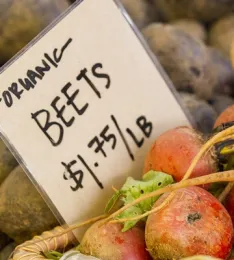
To develop this strategy, you must answer some very important questions:
- What should I grow? How much of it should I grow and harvest at a given time?
- Who is my ideal customer? Where can I most effectively connect with that customer base?
- How will I appeal to these customers and entice them to buy my products?
- How can I estimate how much they will buy?
- How can I develop the flexibility to change my marketing strategy if my current plan isn't giving me the results I desire?
Marketing Basics

|
Many growers, especially new ones, are inclined to start production without giving a second thought to the business of marketing. Good marketing is an absolute must for a successful agricultural enterprise. Some would even argue that it ranks higher in importance than production itself, especially for farmers planning to diversify. After all, what good is a product if one cannot sell it consistently for a profit? UCCE Placer/Nevada and UC Resources |

- To Market, To Market (Rutgers Cooperative Extension)
- Direct Marketing (ATTRA)
- Farmers Markets: Marketing and Business Guide (ATTRA)
- Growing for Market: News, Advice and Resources for Market Farmers (website)
- Growing for Market: Special Report on Selling at Farmer's Markets
- Marketing Strategies for Farmers and Ranchers (SARE)
Assessing and Managing Market Risk
Marketing risk is one of the five types of agricultural risk you need to assess, plan for, and manage. You must understand your risks thoroughly in order both to reduce them and to make contingency plans to deal with them when they arise.
Sources of marketing risk include:
Sources of marketing risk include:
- price risk due to increases in supply, changed demand, market trends, or improper pricing of products;
- loss of market access due to the relocation or closing of an existing market or processing plant or lack of understanding of the requirements of various market options;
- loss of marketing power due to lack of knowledge about potential marketing opportunities and options;
- improper or lax recordkeeping resulting in having too much or not enough product week-over-week at a given market.
Ways of assessing and managing marketing risk include:
- Creating a marketing plan, a constantly evolving document that relates directly to your farm business plan
- Maintaining your knowledge of markets for your products via regular market analysis and customer research
- Pricing correctly for your markets and your efforts
- Effective record-keeping
- Exploring alternative marketing strategies, alternative marketing organizations, and value-added ventures
Market Analysis
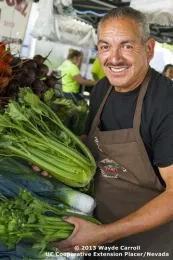
These tools will help you hone your product and your marketing tactics and reduce the time you spend on ineffective strategies:
- A Marketing Primer for Start-up Business - Agricultural Marketing Resource Center
- ATTRA - Adding Value to Farm Products: An Overview
- ATTRA - Community Supported Agriculture
- ATTRA - Direct Marketing
- ATTRA - Entertainment Farming and Agri-Tourism
- ATTRA - Farmers' Markets
- ATTRA - Market Gardening: A Start-up Guide
- ATTRA - Selling to Restaurants
- Cal Poly San Luis Obispo - Developing Your Market Plan
- Cornell - Knowing Your Market: The Most Challening Part of a Business Plan
- Cornell - Travel the Road to Success with a Marketing Plan
- Iowa State U - Determining Prices for CSA Share Boxes
- Purdue Extension - Marketing's Four P's: First Steps for New Entrepreneurs
- South Dakota State University - Market Plan
Other Marketing Options

An example of grower use of these tools is Dinner Bell Farm in Chicago Park. In addition to a website, they use YouTube videos, Twitter, Facebook, and a Flickr photo gallery.