Central Sierra: El Dorado County | Master Gardener | Gardening Articles
Featured Articles by UC Master Gardeners of El Dorado County
UC Master Gardeners in El Dorado County write articles for local publications on home horticulture, vegetable gardening, gardening for pollinators, irrigation, soil health, and seasonal garden chores, among other subjects of interest.
You can find those articles by clicking the link below or scrolling below the archived articles link.
Archived Articles by General Topics:
Find archived articles on a wide variety of gardening topics.
Central Sierra: Master Gardener Articles | El Dorado County
Published in local periodicals, this collection of articles is a treasure trove of advice from UC Master Gardeners of El Dorado County for the residents of this beautiful region.
Central Sierra: Best Plants for Imagination Gardens | El Dorado County
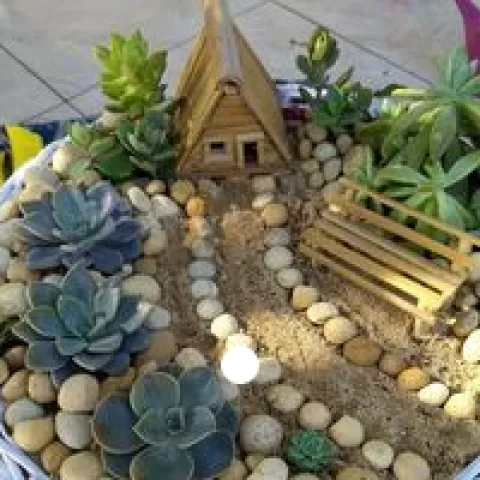
Imagination gardens are a fun way to plant container gardens
Almost all these tiny plants do best in indirect light and in moderate temperatures; in other words, indoors in the summer and winter. They may outgrow a small container but can be divided or pinched back to stay in scale. Do keep their feet damp but not wet, except the air plants, which prefer only misting or a weekly rinse. Most of these plants will live 3-4 years, the exception is the gloxinia which last only one season but may regrow after dying back. Most will need to be divided after a while, so you can use the cuttings for new plantings, or change out the look in your garden for variety.
Most of these will do well in shallow soil, 3-8 inches deep. It should be well-drained, in a saucer, so you can water frequently in warm weather but not allow the roots to be waterlogged. Use indoor potting soil, or a succulent potting mix if you will be planting echeveria and aloes.
Do not use “planting mix,” “garden soil,” or “top soil” as your primary soil component. These are too heavy or otherwise unsuited as a container medium. You can mix these with vermiculite or other soil amendments, but it is easier just to buy the "potting mix." Do not use gravel in the bottom- it aggravates drainage issues.
Consistent, sufficient watering is important for containers because they can dry out quickly. Check containers daily. Stick your finger into the top inch of soil. If it feels damp there is no immediate need for water. If it feels dry, water until some runs out the bottom of the container. Note: If a container dries out completely and the soil becomes hydrophobic, water may run through the container without actually moistening the soil. You may need to soak the entire pot.
Succulents
- Echeveria minima, echeveria elegans – white, or echeveria elora – pink
- Small aloes – some stay quite tiny
- Kalanchoe, stays small for months, can be pinched back
Mosses
- Pillow, mood, java, and feather moss are smaller varieties
- Scotch moss Sagina Subulata Aurea, has tiny white flowers
Ferns
- Button ferns or asplenium (spleenwort ferns)
- Maidenhair is slow growing but will outgrow a small container
- Nephrolepis exaltata ‘Fluffy Ruffles’
Air plants
- Tillandsia spp. - silver or gray-leaved varieties tolerate drier conditions than green varieties, and some are colorful-such as Tillandsia maxima with red leaves
Small shade-plants
- Hostas
- Oregano, and Cuban oregano -Plectranthus amboinicusis
- Small leaf varieties of mint
- Miniature ivy
Tiny flowers
- Sinningia pusilla (and other miniature gloxinias) grow just 3 inches tall. Will die back before they regrow and bloom again.
- Ageratum has small species that top out at 6-8 inches, with blue fluffy flowers
Have questions about building your imagination garden or anything else home garden related? Reach out to the UC Master Gardeners of El Dorado County by phone, 530-621-5512, or with the link to our Ask a Master Gardener survey.
Central Sierra: Grow a Loofah from a Seed
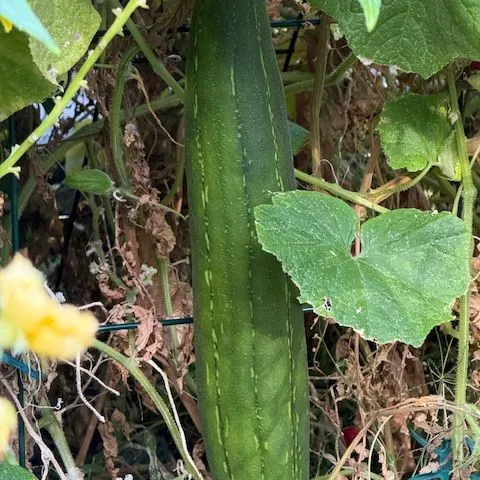
The versatile loofah (or luffa) is edible, but famous as a natural sponge
Luffa, often spelled loofah, Luffa aegyptiaca, is a vining gourd in the cucumber family. It can be used as a vegetable when it is young and the cucumber-like fruit is only six inches or less. It is rich in nutrients and high in fiber, often used in stir-fries and other Asian cuisine. Once it has matured, it dries into a fibrous, stringy interior, and is then used as a biodegradable sponge for the kitchen or bath.
Seeds can be started indoors four to eight weeks prior to last frost. Luffa has a long growing season of 100 to 180 days. For best results, soak seeds for 24 hours to help with germination. Seeds need consistent warmth to germinate, between 75-90 degrees F. A heat mat works well for this. Seeds can also be direct sown in warm soil, usually around mid-May in many areas. You should start your seeds indoors soon for harvest in September.
Once the danger of frost has passed, seedlings can be hardened off by leaving them outdoors for several hours each day.
The tricks for planting and growing luffa
Plant luffa in well drained fertile soil rich in organic matter. Ideal soil is neutral to slightly alkaline with high moisture and good drainage. Keep soil consistently moist but not soggy. Approximately five gallons of water per plant per week is a good guide. Fertilize using balanced fertilizer when flowers appear, as you would with cucumbers.
Small seedlings grow slowly, while the roots become strong, and luffas prefer warm dry climates. Luffa grows best in full sun; plants produce flowers in two months after planting. Flowers are bright yellow.
Pruning is a must to keep the vines healthy. The vines will grow everywhere if not kept under control. If grown in optimal conditions, gardeners may get between 10-40 gourds per plant! Each luffa can produce between 100-300 seeds on average. However, for every three seeds you plant, only two will grow, even for professional growers. You can grow luffa in a 25-to-30-gallon pot or large grow bag with a trellis of some sort to support growth.
Harvesting for sponges is the fun part
Harvesting luffa for sponges is the fun rewarding part of growing this plant. Gourds should be ready to harvest in the fall. To use as kitchen or bath sponges, the luffa should be dried out, be yellow to brown in color, and light weight. If you shake them, you can hear the seeds rattling inside. You can shake out any seeds to keep for your spring planting and share some with friends.
If it is close to fall frosts, you can harvest them and allow them to dry inside your home, just watch for signs of mold. Peel off the outer brittle brown skin, revealing fibrous, spongy material inside. Rinse and wash the luffa then let it dry completely, then cut the luffa into your desired sizes. Use your sponges as cleaning tools, and of course for your relaxing baths. Happy Planting!
This article by UC Master Gardener Judy Hobbs originally appeared in a March 2026 issue of the Mountain Democrat.
If you would like to discuss luffas or any other plant in your home garden, you can Ask a Master Gardener for help. Submit your question through our online survey tool.