
Central Sierra: Lake Tahoe Basin | Master Gardener | Tahoe Friendly Garden: Wildfire Safety Resources
Gardening for Fire Defensible Space
Gardening for fire defensible space serves to limit the threat of wildfire spreading to or from a structure. It includes the selection and maintenance of plants and mulch for low fire risk. Sustainable fire-wise landscaping should be easy to care for with minimal irrigation. Keeping bare soil covered with vegetation and mulch is a Best Management Practice in Lake Tahoe.
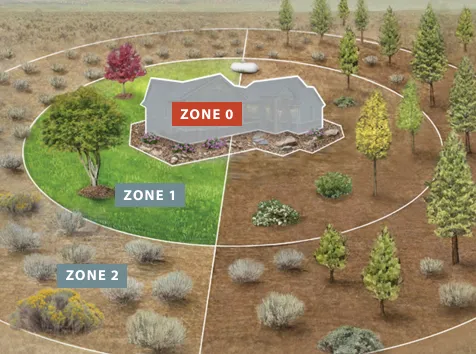
Defensible space is the area between a house and an oncoming wildfire where the vegetation should be managed to reduce the wildfire threat and allow firefighters to safely defend the house. Within the defensible space area, the homeowner should remove dead shrubs and trees, prune ladder fuels (low branches and shrubs under trees), create separation between dense vegetation, and plant and maintain less flammable vegetation.
Defensible Space Landscaping Guidelines by Zone
ZONE 0 Non-Combustible Zone (0-5 ft.) is the area directly adjacent to your home and/or other structures (including sheds, garages, wooden decks, and fences). It is the most restrictive of all the landscape zones. Fire districts, insurance companies, and county ordinances prefer no vegetation and only non-flammable hardscaping in this zone, such as gravel, decomposed granite, or pavers. If you do plant in this area, it is wise to only choose herbaceous groundcovers with rock mulch or maintained lawn. Plants should be less than 18 inches in height with high moisture content, non-woody, and irrigated. Acceptable examples include succulents such as sedums, ground covers such as well-maintained, irrigated turfgrass or prostrate herbaceous flowering plants (like certain creeping phlox or low-growing yarrow.) This zone should be regularly cleared of pine needles and dead leaves.
ZONE 1 Lean, Clean, and Green Zone (5-30 ft.) is the area in your yard where you can be most creative! This zone allows for landscape plants, shrubs, trees, groundcovers, maintained lawn, mulches, and edible gardens. We advocate for the use of native/adapted Tahoe plants.
For Tahoe gardens, it is important to break up plant continuity thereby breaking up combustible areas. Create a mosaic landscape (a patchwork of plants and other hard/soft materials). Utilize a mixture of plant sizes (shrubs, perennials, groundcovers) and hard materials (stones, pavers, flagstone) to create a defensible and beautiful landscape. In this area, you can also use a mixture of tilled wood mulch, rock, and or green mulch (groundcovers). Group plants according to their water and sun needs for maximum success.
Tahoe Friendly Plant Examples Ideal for Zone 1
- Sierra Currant “Mountain Pink,” Ribes nevadense
- Wood’s Rose, Rosa woodsii
- Stonecrop, Sedum spp.
- Creeping Snowberry, Symphoricarpos mollis
- Blue Elderberry, Sambucus nigra ssp. caerulea
Many other options can be found in our Native & Adapted Tahoe Plant List.
ZONE 2 Wildland Fuel Reduction Zone (30 - 100+ ft.) is the extended zone greater than 30' from your property, which for many of may be mostly on your neighbor's property! Garden how you would want your neighbor to garden to keep your home safe! If planting use only native & adapted plants. After native plants have been established (over 2 years) they will require less irrigation. Continue the mosaic design pattern described for Zone 1. Maintain your coniferous and deciduous tree limbs from your neighbor's fences and yards. Ensure separation between conifers, prune limbs, and/or bushes to minimize ladder fuels. Keep pine needle debris to a 2" maximum.
Learn more about fire-smart landscaping thanks to resources provided by Cal Fire and Living with Fire University of Nevada Reno.
Archived Additional Resources
This section contains archived content made available for reference, research, or recordkeeping purposes. These materials are not actively maintained and may not meet current accessibility standards, such as WCAG 2.1 Level AA. If you need assistance accessing this content or require an accessible format, please contact the Central Sierra main office 530-621-5502. We are committed to ensuring access for all users and will provide accommodations promptly upon request.
- Living with Fire Defensible Space Guide
- Tahoe Friendly Plants - a visual guide to native & adapted plants
- Choosing the Right Plants for Northern Nevada's High Fire Hazard Areas - Lake Tahoe Basin
- Backyard Native Plants
- The Combustibility of Landscape Mulches
Agencies to Contact:
- CAL FIRE, fire-smart landscaping
- Tahoe Resource Conservation District and Fire Adapted Communities program
- Living with Fire in the Lake Tahoe Basin Guides, resources, and other materials for Tahoe residents.
- Lake Tahoe Defensible Space Inspection Request: tahoelivingwithfire.com/get-informed/find-your-fire-district/