
Right Plant, Right Place, Right Care
Understanding the Importance of Maintenance
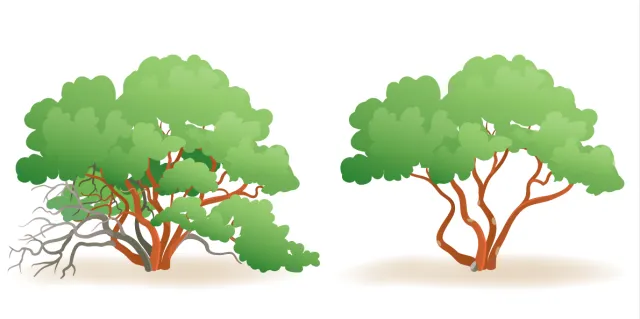
It is important to remember, plant placement is more important than plant type. All plants can burn under the right conditions, regardless if they are marketed as “fire-resistant” or an equivalent.
Fire safe landscaping requires maintenance (e.g., pruning, irrigation, and clean-up). Embers can ignite dry sloughed leaves and twigs dropped at the base of plants. Radiant heat can quickly desiccate hydrated, green plants. Maintenance, or the lack of it, can also influence the condition of the plant. Some plants drop older leaves and branches more easily, while others take a lot of effort to remove the dead materials. For example. think of a lavender. The foliage can be initially lush and supple, but over time, the plant often becomes woody if it is not cut back regularly.
Right Plant, Right Place, Right Care
You can enhance the fire-resiliency of your near-home landscaping by following this simple framework: Right Plant, Right Place, Right Care.
Right Plant
It is recommended to select plants that are low-growing, open-structured, less resinous, and have higher moisture content, especially for plants closer to structures (Zones 1 and 2). Native plants and pollinator-friendly or drought-tolerant plants can be good choices for people who value these plant characteristics, but such features don’t directly translate to fire resistance. Below are some questions to consider when selecting plants for your home:
- Does this plant shed bark, leaves, flowers, etc.? What time of year does the shedding occur?
- A plant that sheds bark or branches is likely to need more regular maintenance-related cleanup to reduce fuel accumulations on the ground.
- A plant that has a big leaf or needle drop will result in the need for more maintenance-related cleanup on the property, on the roof, and in rain gutters
- How dense are the foliage and branches?
- A plant that is more densely structured can capture embers and may be more likely to ignite. Its dense structure can make it more likely to be ignited by a surface fire.
- How fast does the plant grow?
- A plant that grows quickly may exceed growth expectations and require greater maintenance.
- Does the plant have waxes, oils, or resins?
- A plant with more waxes, oils, and resins will likely be more flammable and release more energy when it burns.
Right Place
Besides taking into account the plant's physiological needs (water amount, sunlight tolerance, soil properties, etc), this framework also considers the surrounding landscape, such as buildings, fences, sheds, or patios. Generally, plants can easily become fuel in Zone 0 (0-5 ft from the structure). Most structures are not resistant to smoldering or flames touching the structure. For the areas closest to the structure or in front of especially vulnerable building areas such as windows, vents, or combustible siding, removing all forms of fuel, including plants is highly recommended. By increasing the spacing between plants and groups of plants, a fire can be limited or stopped from spreading. Plant spacing includes both horizontal and vertical clearance between plants, as well as between plants and structures. Walking paths and gravel areas can be used between groups of plants to increase their spacing.
Right Care
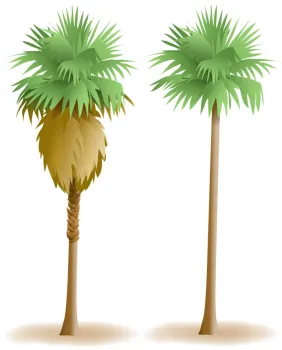
Whether a plant ignites depends more on pruning, maintenance, and cleanup than on what type of plant it is. Some plants, such as lavender, may initially have lush, non-woody growth, and then several years later become woody and full of dead material. Other plants may develop a dead thatch layer under a green surface that is highly combustible.
- Prune plants to provide horizontal and vertical space throughout your garden and surrounding structures
- Clean the understory of plants and trim the branches closest to the ground
- Irrigate plants appropriately
- Plants with big leaf or needle drop may result in more maintenance
Approach "Fire-Resistant" Plant Lists with Caution
Be cautious about "fire-resistant" or "fire safe" plant lists and labels. In general, there is little evidence to support fire safe claims. Often times, fire safe labels rely on inconsistent types of testing or no testing at all. Currently, there are many challenges limiting our ability to determine the flammability of individual plants, including:
- Inconsistent testing: there is no standardized test method among the research community; the time to ignition, heat release, duration of fire, and consumption of plant all vary, leading to varied results.
- Confusing definitions and names: the terms used in flammability testing can vary, leading to confusion. Many experiments use the common names of plants and it is unclear which plant species were actually evaluated.
- Care and region matter: often times, how a plant is cared for and where it grows can affect its fire resistance. Because maintenance can greatly influence resistance, the life stage and maintenance applied to plants can influence flammability results. Live plant moisture naturally fluctuates throughout the year: plants have strategies for frost protection, and plants retain less water to prevent damage from freezing. During the spring, they retain moisture to support new vegetative growth. Little is known about how tropical plants manage water in temperate climates.
- Location: is the objective of plant flammability tests to determine flammability in relation to other plants or the building?
Additional Resources
Check out these plant flammability-related resources from our colleagues! These materials are not maintained by UC ANR and may not meet current accessibility standards. If you need assistance accessing this content or require an accessible format, please contact University of California Cooperative Extension, San Diego.