
Community Preparedness and Involvement
Though implementing defensible space, hardening your home, and reducing fuels is important at the individual property scale, is most effective when carried out across multiple properties to address wildfire risk at the community level. Working together with your neighbors, community, and/or region is a key strategy for effectively reducing wildfire risk.
Californians have the benefit of working with a diversity of support organizations. Many organizations are doubling down and prioritizing their efforts to help address the fire challenges and fuels management issues. However, not every organization is present in every community or has equivalent skills. In order to help California become fire adapted and resilient to wildfire, all of the organizations that work with landowners should be elevated and recognized for their unique contributions. Below is a list that provides a brief snapshot of key agencies and organizations in the fire and fuels management space. Organizations are listed in alphabetical order.
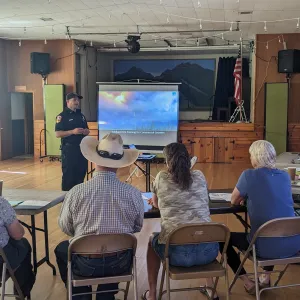
CAL FIRE
CAL FIRE has Forestry and Natural Resources staff that help landowners with technical, financial, and educational assistance. CAL FIRE Foresters help administer 1) the California Forest Improvement Program (CFIP), which is a cost share program to help landowners with forest management planning, reforestation, site preparation, thinning, and wildlife habitat improvement projects; and 2) the Vegetation Management Program (VMP) to help manage fuels and improve rangelands through a variety of treatment approaches.
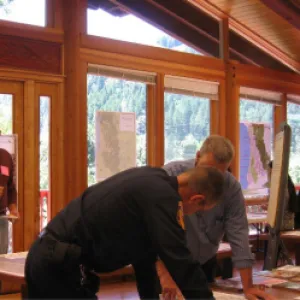
Fire Safe Councils (FSCs)
Fire Safe Councils (FSCs) are common throughout California. Each community fire safe council seeks to plan and manage fire prevention projects and acquire grant funding to accomplish their objectives. FSCs are local in scale and can be as small as a neighborhood or homeowners’ association or as large as a county. There is a California Fire Safe Council that seeks to provide overall coordination and guidance. FSCs can also help provide a framework for fire coordination and share fire safety information, assess fire risk, set fire protection priorities, etc.

Firewise Communities
The Firewise USA program provides your community with a framework to reduce the risk of wildfire. Meeting the criteria to become an official Firewise community helps residents get organized and implement wildfire safety and resilience actions. If you are interested in becoming a Firewise USA site, follow these simple steps!

Prescribed Burn Associations (PBAs)
PBAs are community based, mutual aid networks that help private landowners put "good fire" back on the land. Joining your local PBA can provide many benefits such as neighbors helping neighbors implement burns by providing labor, equipment, and skills. The PBA can also help with burn planning and organization. While PBAs in California vary in style and flavor - with different names, training and personal protective equipment (PPE) requirements, and organizational structures - they all share the common goal of facilitating community led burning that is ecologically minded, fun and safe.
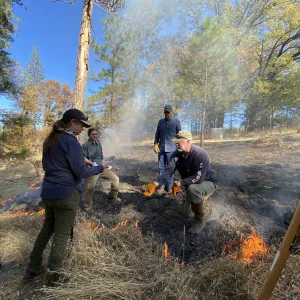
Resource Conservation Districts (RCDs)
Resource Conservation Districts (RCDs) are special districts of the State of California, set up to be locally governed agencies with their own locally appointed or elected independent boards of directors. California RCDs implement projects on public and private lands. The focus of each RCD is unique to the conditions and interests of their boards. The RCD network includes 98 special districts serving rural, urban, and suburban communities across the state. Many have a focus on soil and water conservation, and some have developed skills in forestry and fuels reduction. They are well positioned to help landowners implement projects and contracts within their jurisdictional areas; however, the priorities and programs of the RCDs may vary by location.
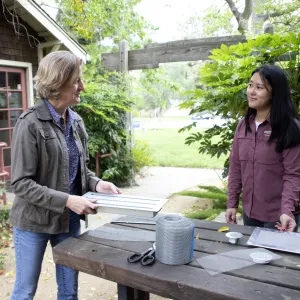
UC Cooperative Extension (UCCE)
UC Cooperative Extension Advisors are present throughout California and help build stronger and resilient communities through their leadership and technical skills in natural resources, agriculture, and community health. The UCCE network is embedded in county government and connects the research programs of the University of California to local communities. As trusted long-term partners, UC ANR provides educational delivery that empowers landowners and residents at every level. UC ANR evaluates and develops practices, disseminates new research and innovations through trainings and guidance documents, provides coordination and capacity for local and state-level collaborative efforts, and helps landowners and agencies overcome policy barriers. UC ANR has an existing network of Registered Profession Foresters, Certified Rangeland Managers, and State-Certified Burn Bosses that help navigate environmental compliance and permitting needs, and can provide similar levels of guidance, expertise, and coordination on fire topics throughout the state.