Research Commons
Reports from the Field
April 2026
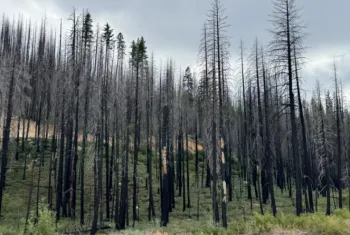
Fresno Wood Products Innovation Campus: A Siting and Techno-Economic Assessment of Forest Biomass–to–Renewable Diesel and Biochar Pathways
Authors: Md Sahadat Hossain (PhD, UC ANR), Haris Gilani (PhD, UC ANR), Cindy Chen (PhD, UC ANR), John Heywood (Sierra RCD), Rick Brenner (PhD, ATIP Foundation)
California’s climate, wildfire, air quality, and transportation challenges are increasingly interconnected. The state’s climate strategy, articulated in the 2022 Scoping Plan developed by the California Air Resources Board, targets an 85% reduction in greenhouse gas emissions below 1990 levels by 2045, alongside statewide carbon neutrality. Progress toward these goals is constrained by intensifying wildfire activity, declining forest resilience, and persistent air-quality nonattainment—particularly in the San Joaquin Valley (SJV). At the same time, diesel remains the dominant fuel for freight, agriculture, and oe-road equipment, where near-term electrification faces cost and infrastructure barriers. These conditions underscore the need for scalable, near-term solutions that integrate forest management, low-carbon fuels, and rural economic development. A woodbased bioeconomy pathway oeers such an opportunity by utilizing low-value forest and agricultural residues generated through restoration and hazardous-fuels reduction, displacing petroleum diesel with a drop-in alternative, producing carbonmanagement co-products beneficial to forestry and agricultural systems in the Central Valley. This report evaluates a renewable diesel– oriented Wood Products Innovation Campus (WPIC) in Fresno County. The proposed configuration is based on a thermochemical platform comprising oxygen-blown gasification, syngas cleanup and conditioning, Fischer–Tropsch synthesis and upgrading to finished renewable diesel. Biochar is produced as a co-product from clean biomass streams via slow pyrolysis. The analysis is designed as a replicable WPIC model that is financeable, permittable, and operationally viable, with adaptability to regional variation in feedstock availability, infrastructure, and market conditions. Read the report here:
Developing a Forest Biomass–to–Hydrogen Bioeconomy in San Bernardino County: California Wood Products Innovation Campus Strategy for Clean Energy and Regional Growth
Authors: Md Sahadat Hossain (PhD, UC ANR), Haris Gilani (PhD, UC ANR), Cindy Chen (PhD, UC ANR), John Heywood (Sierra RCD), Rick Brenner (PhD, ATIP Foundation)
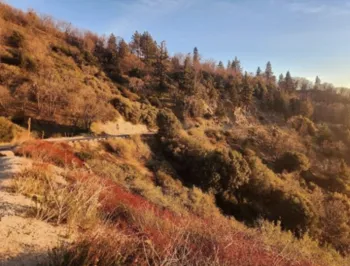
California’s decarbonization strategy requires scalable, cost-effective solutions for hard-to-abate sectors while simultaneously addressing escalating wildfire risk and persistent environmental justice challenges. This report assesses the technical, economic, environmental, and social feasibility of producing low-carbon hydrogen from forest biomass in San Bernardino County, California, using an integrated geospatial, techno-economic, and policy-analysis framework to inform state and regional policy, planning, and investment decisions. The analysis begins with a statewide assessment of forest biomass availability using the California Biomass Residue Emissions Characterization (C-BREC) framework. Under a representative 40 percent thin-from-below treatment scenario, California generates an estimated 112.75 million bone-dry tonne (BDT) per year of forest biomass of which 56.37 million BDT per year are technically accessible after applying conservative operational constraints. While biomass resources are highly concentrated in Northern California and the Sierra Nevada region, Southern California, particularly San Bernardino County, emerges as a strategic location due to its proximity to high wildfire-risk areas, availability of suitable land for facility siting, and access. Read the report here:
November 2025
California's Working Landscapes: Evolving Contributions to National, State and Regional Economies
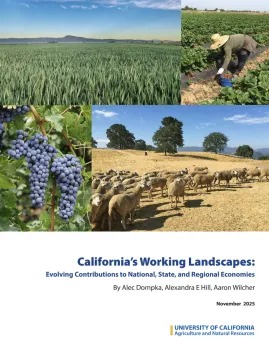
By Alec Dompka (Rural Economics Development Advisor), Alexandra E Hill (Assistant Professor of Cooperative Extension), Aaron Wilcher (Inyo/Mono Area Community and Economic Development Advisor)
California is well known to be the nation’s largest agricultural producer and sole producer of many specialty agricultural products. However, California’s working landscapes extend beyond agriculture and the major agricultural production areas in the state. The state’s vast and diverse working landscapes are key contributors to regional, statewide, and national economies.
This study updates and builds on a pioneering 2019 report which identified nine segments associated with working landscapes and analyzed their economic contributions across the state. As in its predecessor, this report focuses on nine segments of the working landscapes: agricultural distribution, agricultural processing, agricultural pro-duction, agricultural support, fishing, forestry, mining, outdoor recreation, and renewable energy. We analyze how these segments contribute to the state, regional, and national economy in 2024 by summarizing the number of jobs they provide, total worker earnings, total industry sales, and number of businesses.
2025 Working Landscapes Report
2019 Working Landscapes Report
March 2025
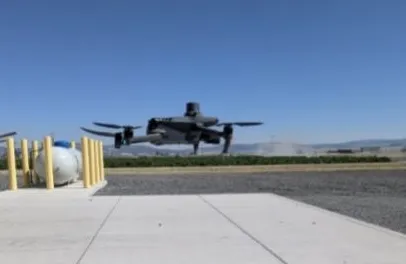
Drones’ activities update at IREC
By Ahmed, Kayad (Ag. Engineer Advisor at IREC)
Drones have emerged as a powerful and promising tool in agriculture for over a decade. Since then, many drone applications have emerged and proved their reliability, while others are under research and development stages. The first applications of drone imagery in agriculture were to map field variability using vegetation indices like the Normalized Difference Vegetation Index (NDVI) to check crop health, detect disease symptoms, and assist in creating prescription maps to apply variable-rate N fertilizer. Drones can capture highresolution images from fields, allowing growers to estimate crop health and see field variability. At the Intermountain Research and Extension Center (IREC), I’m testing several drone-based solutions to support growers’ decisions as well as research field trials. This article touches on some of the advancements in drone applications in agriculture and IREC activities. Read the article here:
February 2025
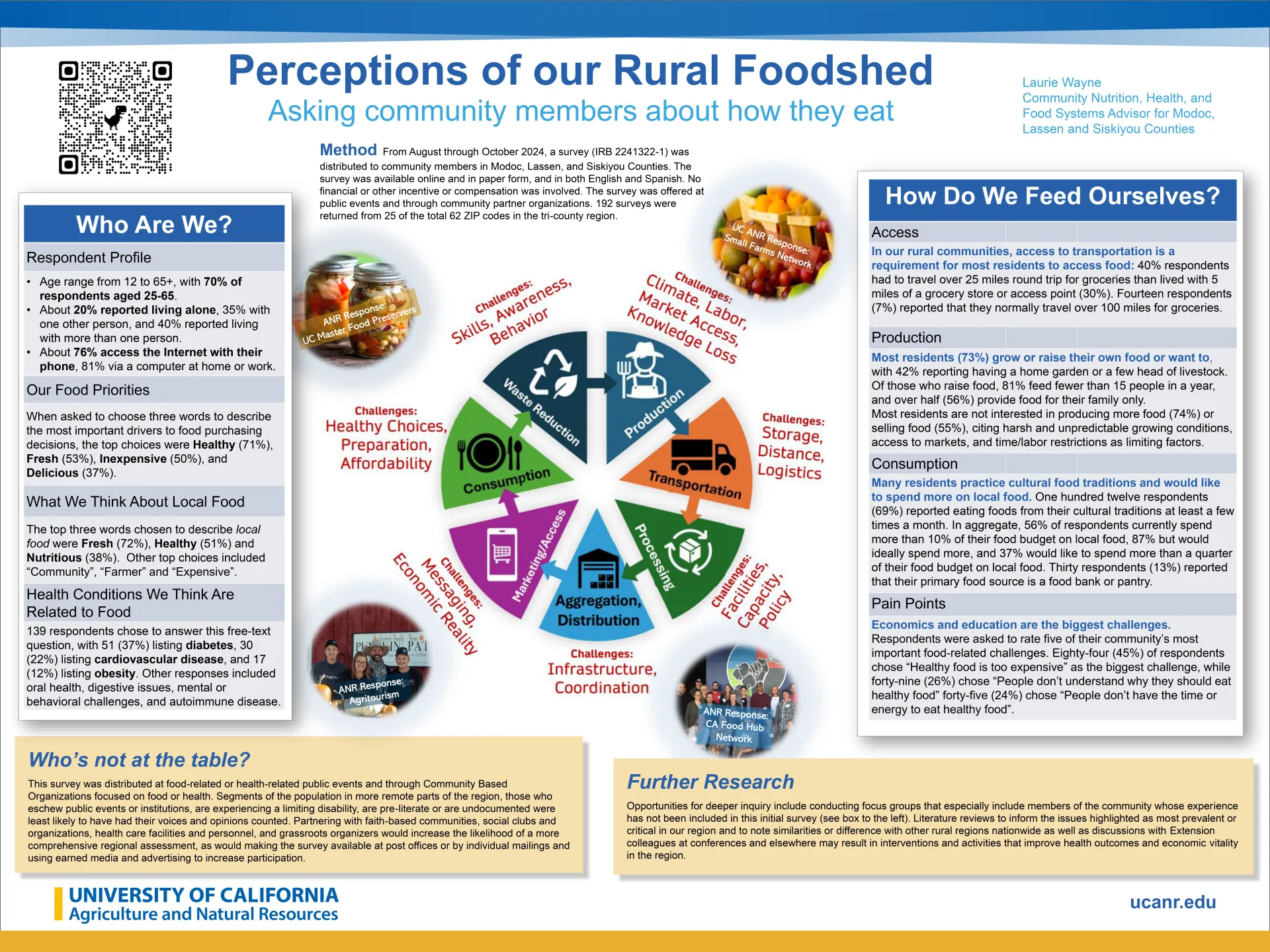
Perceptions of our Rural Foodshed: Asking community members about how they eat
Laurie Wayne (Community Nutrition, Health, and Food Systems Advisor for Modoc, Lassen and Siskiyou Counties)