
Livestock Management on Rangelands
|
Image

Unlike much of the land at higher elevations which is publicly owned, 80% of the oak woodlands in California are privately held. The majority is used for grazing, primarily for beef cattle. It is therefore essential that these property owners understand the importance of oak woodland conservation and be made aware of the latest management recommendations. Since its inception, UC’s oak conservation programs have worked closely with ranchers and the professional organizations that represent them, including the California Cattlemen’s Association, the Woolgrowers, and the Farm Bureau. We have also been actively involved in the California Rangeland Conservation Coalition. Our experience is that the vast majority of rangeland owners are good stewards of the land and want to ensure that their properties are passed along to future generations with their conservation values intact. Maintaining large acreages as ranches provides myriad public benefits in terms of high quality water, critical wildlife habitat, and iconic landscapes at little or no cost to the general public. |
Alternative Cow-Calf Grazing Concepts: A Rancher’s PerspectiveThere are many ways that cows can be run on the range. Many ranchers spread their cows out across the entire ranch, letting them graze where they want through the year and gathering only when it’s time to brand and vaccinate or at weaning. These operations typically seek to maximize the number of cows on the ranch in order to maximize returns. Drought years can change everything. The number of animals that a ranch can feed in a severe drought might be only half, or even a quarter, as many cows as in a more typical rainfall year. The subsequent culling of cows can be emotionally painful and economically harmful. In dry years, everyone is selling and prices will be depressed. After a drought, it can be a long, slow process to rebuild your herd from within, or a costly one to purchase replacement animals, some of which will not be well-acclimated to your range. A potential alternative is to run fewer cows than a ranch could typically support, and in drought years you can hang on to your cows, or perhaps only sell a few. In wetter years, you can keep your weaned calves until maturity, or purchase stockers to convert the extra forage into protein Operationally, this mixed cow-calf plus stocker approach can be used effectively by keeping a portion of the ranch untouched until you know what the rains have brought. If dry, use the unused fields for your cows; but if it’s wet, use those same fields for your stockers. Another concept is rotational grazing. Some landowners create small pastures and move their cows frequently. Usually, the cows will get used to this arrangement and will be eager to move to the new field without pressure. Larger ranches may not be able to create small pastures because of the cost of fencing. While electric fences can be quickly and easily installed in regions where the land is wet and soft most of the year, in the Southwestern US, the ground is too hard and the terrain too rugged to move the fences quickly and easily. Instead of electric fences for small pasture rotation, ranchers can put all their cows together in one large field for a few weeks, then gather and move them to the next large pasture. This is more labor-intensive, but crowding the field encourages the cows to move into harder-to-reach areas and to clean up the forage, rather than eating only favored plants, which leaves woody and weedy species to gain a competitive advantage later. With well-timed rainfall, a pasture that is grazed near the end of the growing season can also regrow before turning dry, giving the rancher more forage than would otherwise be available. |

By Douglas McCreary and Melvin George (2005)
|
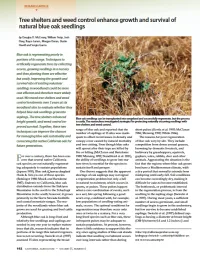
Protecting naturally occurring seedlings: “In our experience, blue oak seedlings in the open covered with tree shelters generally grow into saplings in less than a decade. Compared with artificial regeneration techniques, this natural regeneration strategy is more cost efficient and therefore more likely to be widely adopted by California landowners. We estimate that this approach would cost less than half of what it costs to plant seedlings. We feel that using tree shelters and weed control to enhance early growth and survival of naturally occurring blue oak seedlings could significantly improve the regeneration of this important woodland species and promote its long-term conservation.” By Douglas D. McCreary, William Tietje, Josh Davy, Royce Larsen, Morgan Doran, Dustin Flavell and Sergio Garcia (2011) Find more information about planting oaks at Oak Regeneration and Restoration |
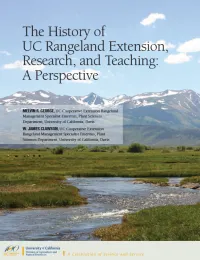
This publication documents significant milestones in rangeland extension, research, and teaching in the University of California. This historical overview chronicles the programs, people, facilities, and accomplishments that have contributed significantly to the success of these undertakings. By Melvin R. George and W. James Clawson (2019) |
Influence of oak canopy on forage productionIn blue oak woodlands (deciduous woodlands), research shows:
In live oak woodlands (evergreen woodlands), research shows:
For more information about the influence of oak canopy on forage production and oak management guidelines see pages 326-328 of
Terrestrial Vegetation of California
Archived
Edited by Michael G. Barbour, Todd Keeler Wolf, and Allen A. Schoenherr (3rd edition, 2007) |
Oak toxicity in livestock
UC Davis Vet Views
Archived

|