
The Art of Successfully Harvesting Pears
by Alison Collin, Master Gardener Volunteer
Were you taught that to check for a pear's ripeness you gently press on the top, beside the stem, and if it “gives” it is ripe and ready to eat? Well, that technique only applies to pears that have been harvested, and if you are using it to check on the pears hanging on your tree, you have already missed the optimum time for picking them, and the fruit will be likely be black and soft in the middle and be ruined.
Pears are one of the few fruits that need to be harvested before they are ripewhen they are still green and firm.
To check whether it is the best time to pick them, you gently lift up a fruit, and if it is ready it will snap off with a short piece of stem attached. If this does not happen try again in a couple of days.
Unripe fruits are then placed in single layers on a tray, or in a box or paper sack in a warm place where will ripen in a few days. Bartlett pear skins become more yellow and the flesh will soften as they ripen.
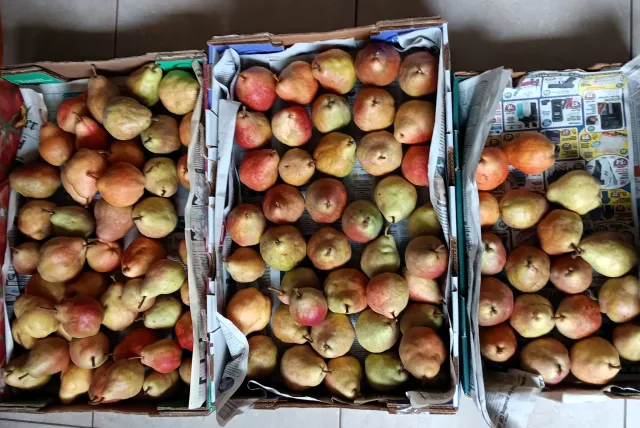
You can eat pears that ripen on the tree; however, their texture is not as good. They quickly will get overripe, and aren’t worth eating if they don’t fall off the tree first.
If you wish to delay ripening for a longer time, harvested pears can be placed in a cool dark situation, if you can find one!
Some varieties ripen best after a period of cold storage. Anjou, Comice and Bosc pears are of these types. These are often put into cold storage for about one month after harvesting, and then placed in a warm area to ripen. When you buy these from a store they will most likely have been chilled since harvesting, but if you see them at a farmer's market this might not be the case.
All around town I see pear trees with carpets of fallen fruit underneath, and I cannot help wondering if this is the result of gardeners not knowing how to correctly harvest pears and constantly finding that they are rotten when they pick them. This would be a terrible waste, because a perfectly ripened pear is one of nature's joys!