
Horseradish: The Bold Root of History and Heritage
Horseradish (Armoracia rusticana) is a hardy perennial in the mustard family
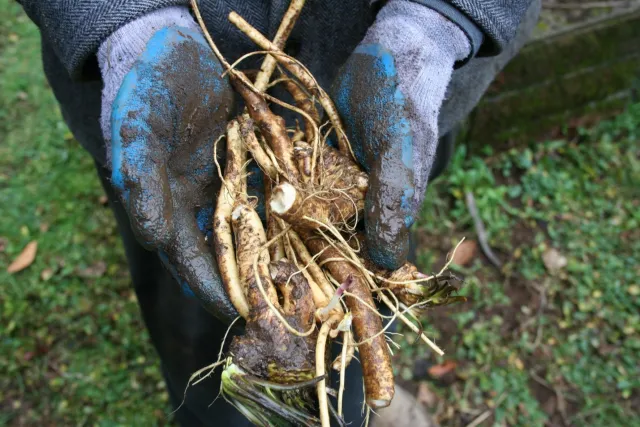
(Brassicaceae, or Cruciferae) admired not only for its pungent character but also for its deep cultural and botanical roots. Though most often thought of in its culinary context, horseradish’s story spans geography, tradition, and horticulture.
Origins, History & Cultural Footprint
Horseradish is believed to have originated in the southern regions of Russia and the eastern parts of Ukraine. The ancient Greeks and Romans cultivated it, attributing to it therapeutic properties for conditions such as back pain and menstrual discomfort. Over centuries, horseradish gained symbolic and ritual significance: by the Middle Ages, it became included as one of the marror (bitter herbs) in the Jewish Passover Seder.
In the 19th century, horseradish was imported to North America. Settlers in northeastern Illinois began commercial cultivation, helping the region around Collinsville, Illinois, claim the nickname “Horseradish Capital of the World.” Today, horseradish is also grown commercially in states such as Pennsylvania, Oregon, Washington, Wisconsin, and California, plus in Canada and Europe.
Botanical & Growing Characteristics
Horseradish is hardy to USDA Zone 5 and thrives in full sun. The plant does best in well-drained, loose garden loam or sandy soils, that are kept slightly moist (but not waterlogged). Due to its vigorous growth, horseradish can become invasive if not constrained. For home gardens, containers are sometimes used—as long as they are roomy enough to accommodate the root system and ensure adequate drainage.
Propagation is commonly achieved via cuttings or crown division rather than seeds, especially since seed-grown plants may vary in character. Pest and disease pressures include the imported crucifer weevil, cabbageworms, turnip mosaic virus (TuMV), white rust, bacterial leaf spot, and the beet leafhopper.
Harvesting & Storage Considerations
The roots of horseradish can be harvested throughout the growing season, but for the peak flavor, waiting until after the first hard frost is recommended. Roots are typically stored in cool, dark conditions. Traditional methods include burying them in moist sand or placing them in ventilated bags in a refrigerator. Roots stored properly can last up to three months.
A Note on Use & Disclaimers
While horseradish is widely known for its strong, spicy root flavor, the Herb Society’s fact sheet emphasizes their policy not to recommend herbs for medical purposes; the information is presented for educational purposes only.
This article contains information adapted from the Herb Society of America’s “Herb of the Month: Horseradish” fact sheet, available at www.herbsociety.org