
Rosie’s Corner: Rose gardening adjustments for autumn
This is a time of transition: cooler weather, shorter days, and reverting back to standard time. Sigh, I will miss the later sunsets, until the clock changes back in the spring. Forecasters are predicting a warmer and drier month for November. Remember that the new watering schedule starts Nov. 1. Your yard can only be watered once a week. Make sure to water your roses (and yard) in cycles (anywhere from 5 minutes to 15 minutes at a time, depending on the plantings, soil, etc.). That way, our precious water can be absorbed easier and stay in the soil, where it belongs (not running down the street).
You can fertilize on the 1st and/or on the 15th of November, if you wish. I use a nice organic fertilizer, so I don’t have to fertilize as often. That is it for fertilizing your roses until early spring of next year. So, sit back and enjoy your fall bloom. There should be beautiful blooms for Thanksgiving and up until Christmas or the first of the year, depending on the weather. Check for any unwanted bugs or fungal diseases and treat accordingly. (For more, see Rose Pests)
What if you don’t have a yard but still want to grow roses? Grow them in pots! I have several roses in pots since I don’t have room for them elsewhere. You can grow mini roses in a three-gallon pot. A bush rose will do very well in a five-gallon container (or larger). If you want to plant a large climbing rose, use a 13-gallon pot or larger.
Drainage is important — do not place pots directly on soil or lawn since it could block the drainage holes. I place all my pots on a rolling pot stand that holds up to 500 lbs. May sound like overkill, but I have used them successfully for decades before they need to be replaced. In reality, they still working fine but are beginning to show their wear, so I replaced them. Also, you will be surprised how often you end up moving your pots. Having them on the rolling pot stand makes all the difference in the world. Potted roses can be very heavy.
Your potting soil will eventually settle and compact after a year or two. I use a mixture of outdoor potting soil and mix in perlite for extra drainage. The perlite is lightweight, which also makes the pots easier to move. You can also mix in pine bark, mulch, sand or fine gravel. Any of those will help with drainage. Roses hate wet feet!
Feed potted roses every month. Plants will perform for about 4 to 5 years in a container. If they start to not flower as much, you will need to replace the potting soil. When the plant is dormant and pruned for spring, take them out of the pot, trim up the roots and replant with fresh potting soil (mixed with the perlite). For some of my more vigorous roses, I may re-pot every three years. The rose will let you know!
You can use clay or plastic pots. Just be aware that clay pots are heavy and expensive. They also can crack when we get freezing weather (unfortunately, I speak/write from experience). I use pots that are made from fiber cement material. They can be pricey; however, I have had mine for about 10 years or so before they started to need to be replaced. Look for them at membership stores in the spring, which tend to have the best prices.
They are sturdy, lightweight, and frost resistant to 0 F. I do drill extra drainage holes in the bottom (easy to do with these pots and they don’t crack). I also line the bottom part of the pot with window screening material. It keeps the soil from coming out of the holes and slugs cannot get into the pot through the holes on the bottom (great tip if you grow hostas as well!). I find these pots to be much cooler in the summer. They are thicker than regular plastic pots. They protect the roots from our heat during summer. I also plant in light-colored pots, not dark colors as I don’t want the dark color to absorb the sun and heat up the roots.
Do not use stones or pebbles at the bottom of your pot thinking this will improve drainage. This theory was disproved long ago. It creates something called a perched water table. This is a saturated zone where water pools and can’t drain away, leading to root rot. Here is an excellent video from our fellow Master Gardeners at the University of Missouri explaining the perched water table: MU Extension Perched Water Table Demo. As I have said before, roses hate wet feet!
Question from the Helpline about rose mosaic virus
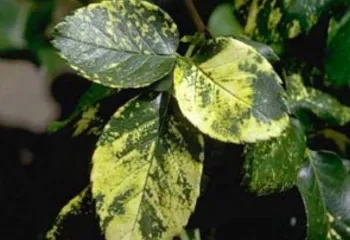
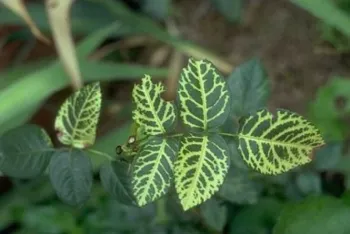
Last month, our Helpline was back in business! (Did you know you can reach our helpline 24/7 with your gardening questions? Find information here: Master Gardener Helpline Info.) I do work the helpline and received a question from someone about their rose leaves having yellow spots. The picture they included (pictures are so helpful!) showed that the rose had rose mosaic virus. The primary method of rose plants getting rose mosaic virus is through graft propagation. Plants that are infected are generally infected for life. There are three different viruses that cause this, Prunus Necrotic Ringspot Virus, Apple Mosaic Virus and Arabis Mosaic Virus. A plant can be infected with one or all at the same time! Since this is generally spread via infected rootstock, the virus is not caused by something that you did or didn’t do in your garden.

| 
|
| 
|
The National Clean Plant Network for Roses ensures that rose bud wood and rootstock are tested for the viruses. UC Davis tests and supplies clean virus-free rootstock to minimize the virus’s spread. If you find you have the virus on a rose that you just ordered or purchased, contact the nursery to see if it can be replaced with a clean plant. Most will do so. However, if you purchased your plant some time ago, do not panic. It usually doesn’t spread to other roses and you can still grow that infected rose. It may have smaller and fewer flowers than non-infected plants. The other option is to ‘shovel prune’ it and start over. The choice is yours. If you see a rose bush with mottled leaves in a nursery, don’t purchase it. Go for the one without the mottled leaves.
Until Next Time: “Something with inner beauty will live forever, like the scent of a rose.” - Alex Flinn
_______________________________
Written by UC Master Gardener Debbie D.