UCANR

The Latest Dirt

Image
The Latest Dirt Banner

Spring 2026 - Volume 16, Issue 1

Editor’s Note: Spring is Finally Here! 

Is there anything better than spring in Contra Costa County? After the rains, seeing the hills turn that brilliant green and watching the buds finally pop is the best reward for a winter of waiting. The recent hot spell has also really moved things along in our home garden (especially the weeds!). This issue of The Latest Dirt is as packed as our garden beds, and we're so excited to share what our members have been up to around the county.

Before we learn what’s happening in the new season, though, we have a chance to look back. Lisa Bramblet has put together a lovely recap of our December Recognition Dinner. If you missed it—or just want to relive a great night—be sure to click through the included slide shows and photo links. I’m always amazed at the absolutely Herculean contributions of CoCoMGs.

As we move into the "doing" season, Laura Brainin-Rodriguez gives us the rundown on the new Ask A Master Gardener booth schedule. Speaking of gardens, Liz Rottger’s piece on the Ribes at the Richmond Dry Garden is a must-read—this plant is an absolute showstopper right now. If you haven’t stopped by the Richmond Dry Garden lately, drop by. You’ll be so delighted. We also have a big celebration to share: the Gehringer Native Plant Garden is officially open to the public on April 4 from 12 – 3 pm! A huge thank you to the UC Master Gardener team, whose hard work every Thursday since 2022 has turned a weed–infested area, including a former parking strip, into an oasis.

Of course, spring brings its problems, but that doesn’t seem to be a problem for UC Master Gardeners and their problem–solving powers. Susan Heckly at the Help Desk shared a question from a local gardener asking about the major uptick in the Walnut Creek deer population (as many of you have probably noticed!). And Lisa Phillips also dives into Dorothy Abeyta’s expert strategies for handling fire blight. In Community Garden news, Kitty Cole interviews Darlene DeRose as she takes us inside the Martinez Discovery House Community Garden. Kitty also did some amazing research on how major gifts can help sustain our program’s mission for years to come.

Finally—the big one! The Great Tomato Plant Sales are almost here. Upcoming dates are Walnut Creek (April 11, 12, 15, and 22), Antioch (April 18), and Richmond (May 2). You’ll find the flyers at the bottom of this issue; please print them out and get them up in your neighborhoods. We’re going to need tons of help getting 70+ varieties out to our local communities, so if you have a few hours to spare, jump onto VMS and grab a volunteer slot. It’s always a whirlwind, but there’s nothing like the energy of those sale days.

Happy gardening, everyone. I'll see you out in the dirt!

Simone Adair
Editor, The Latest Dirt
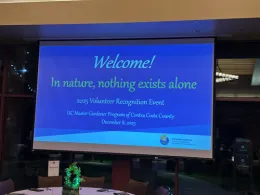

Opening slide for 2025 December Rocognition Dinner.

Spotlight on December’s Recognition Celebration

I had intended to write a piece about our December Recognition Event, a recap of all the happenings, presentations, and details. The more I thought it over, the less I could come up with to write down. But less is more ~ and I rather think it would suffice to say in summation that ‘a good time was had by all’.  

Read Lisa Bramblet recounting this wonderful event
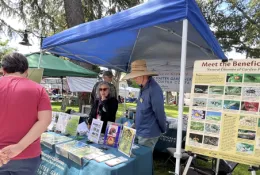
 

Ask A Master Gardener table volunteers John Fike Laura Brainin-Rodriguez and Greg Doyle

AAMG gets ready for the 2026 Season!

Ask a Master Gardener (AAMG) started its season in March 2026. AAMG is unique in that we reach Contra Costa County residents as they go about their lives at Farmers Markets, Our Garden and single–day events throughout the county. Our season runs from March to October.

Continue reading for more AAMG details.
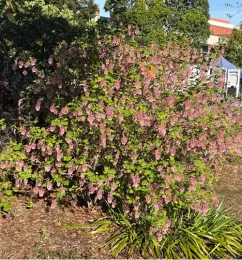
 

A beautiful wild crurrent, with a multitude of pink flowers calls the Richmond Low Water Use Demonstraion Garden Home.

Hidden Gem of the Low Water Garden: The Wild Currant

In mid-January, at the Low Water Garden in Richmond, I started digging up a large area of wild onions, the personal bane of my work there. I hardly noticed the small shrub nearby. It wasn’t until a few weeks later, still digging up the wild onions, when it began to leaf out with sticky, little maple-leaf-shaped leaves that have a slightly resinous, pleasant scent, that I realized it was a wild currant.

Discover More About the Wild Current
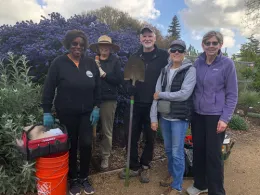
 

CoCoMGs (L to R) Allison Thomas, Anna Wendorf, Phil Quinlan, Robin Harper and Liz Whiteford gather in front of a stunning California lilac (Ceanothus) at the Gehringer Native Plant Garden in Concord.

Concord’s Gehringer Native Plant Garden Blooms

The Gehringer Native Plant Garden, designed, installed, and maintained by UC Master Gardeners, showcases California native plants that attract pollinators and thrive in Concord’s hot summers. It demonstrates how hardy, water-conserving plants can be used in homes, schools, businesses, and public gardens without pesticides, benefitting wildlife. It also provides a setting for UC Master Gardeners to develop hands-on skills in an area of growing public and business interest. 
Dig Deeper Into Gehringer
 

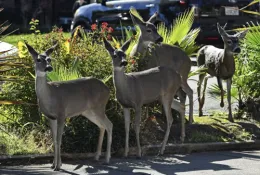
A small herd of deer stop to graze in a shopping center on Botehlo Drive in Walnut Creek, Calif., on Monday, Oct. 24, 2022

Changing Deer Behavior in Walnut Creek

Recently, the Contra Costa UC Master Gardener Help Desk received the following concern about the deer population in Walnut Creek. “I think the deer population has changed due to the climate crisis. I’ve lived here in Walnut Creek next to John Muir Medical Center for 35 years,” a local gardener wrote in.

Read all the details of this HelpDesk article
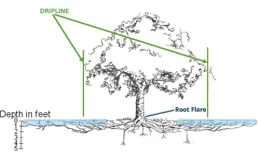
 

A diagram of a tree with roots, root–flare and dripline.

Dorothy Gets to the Root of the Problem

Dorothy Abeyta, a UC Master Gardener, frowned as she examined the sprawling pear tree. She quickly diagnosed the problem: fire blight. She explained, "It is a biotic disease caused by bacteria that overwinter, then become active in the spring. First signs are oozing, then blackened twigs and wilted buds. We have to act fast before the disease spreads to the rest of the orchard."

Here is Dorothy Abeyta's Expert Approach to Fire Blight.
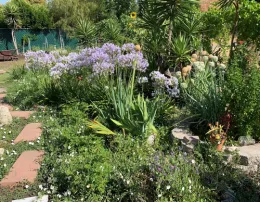
 

A lush section of the Discovery House garden with paving stones and green plants and lilac–colored flowers.

Cultivating Recovery: How Gardening Transforms

Discovery House is a Contra Costa County-run facility in Martinez that houses and supports men in treatment for substance use disorder. And it’s home to one of the first Contra Costa County UC Master Gardener community gardens!

Learn More About the Discovery House Garden
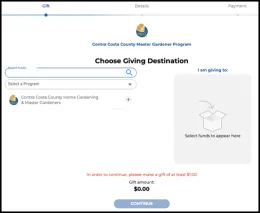

 
Here's a screeshot of the Online Gift webpage at https://give.ucanr.edu/forms/ContraCosta-MG

Legacy and Major Gift Opportunities for CoCoMGs

Kitty Colr recently met with Scott Brayton, the Major Gifts Officer at UC Davis, and Dawn Kooyumjian, our Contra Costa County UC Master Gardener Coordinator, last year after inquiring whether we had a legacy/major gift program. We do!


It is a wonderful way to give back to the UC Master Gardener program and is quite easy.
Read more on major Gifts
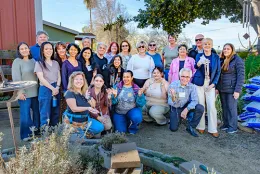
 

New Master Gardener Volunteers, Class of 2026

Congratulations, New 2026 UC Master Gardeners!

We can't wait to meet you out in the garden! Please note that UC Master Gardener Fletcher Oakes has uploaded his beautiful photos from graduation day to Flickr at the UC Master Gardener Program of Contra Costa.
 

GTPS Logo colored

Spring is Here and GTPS is Near!

We are looking forward to seeing your smiling faces very soon. Please mark your calendars for the 3 locations in Contra Costa County as we’d hate for you to miss a single minute of the excitement. See you there!

Get the full scoop on this fabulous event!


Go Back to:  CoCoMGHub     Top    CCMG Home

To contact us: email cocomg+subscribe@googlegroups.com to join our informal email list, CoCoMG@googlegroups.com. Moderators will add you after checking the current Contra Costa County UC Master Gardener list. 
You can also sign up for our external newsletter 'News to Grow By


Previous Issues:

TLD Fall 2025

Image
TLD Banner image
Fall 2025 - Volume 15, Issue 3

Editor’s Note: It’s been a while since our last issue of The Latest Dirt—thank you for your patience as our team took a short break to regroup and refresh! Over the past six months, we’ve been rethinking how best to share all the great work happening across the UC Master Gardener Program of Contra Costa County. We’re excited to be back, ready to dig in with new stories, timely gardening tips, and updates that highlight the many ways our volunteers make a difference in the community.

We’re also thrilled to welcome the New Volunteer Training class of 2026! This group brings fresh energy, curiosity, and a love of learning that reminds us why we do what we do. We can’t wait to see them grow into their new roles and share their enthusiasm in our gardens, at events, and throughout the county. Welcome, trainees—we’re so glad you’ve joined the UC Master Gardener family!

This issue opens with warm greetings from Dawn Kooyumjian, our CoCoMG Program Coordinator, and Terri Takusagawa, an Executive Leadership Team member-at-large. Ann Ramirez, NVT Project Lead, follows with updates on the New Volunteer Training Program. Then, meet our 26 new trainees in their own words—each with a unique and inspiring story—and hear from several 2025 graduates reflecting on their first year as UC Master Gardeners.

Also in this issue: David George highlights four CoCoMGs honored as 2025 Gardeners with Heart, a statewide recognition celebrating extraordinary dedication. Bonnie Dwyer offers an essential piece on using soap and detergent safely in the garden. At the same time, Emma Connery from the Help Desk investigates the curious case of lichen growing on a client’s Japanese maple tree. David also contributes a thoughtful profile of UC Master Gardener Titiana Buchholdt, and we wrap up with a look at the Water Conservation Garden’s first Open House.

And finally, if you haven’t already, please sign up as a member on CoCoMGHub.com. This site is moderated, as it contains a wealth of resources for Master Gardener volunteers’ eyes only! This issue of The Latest Dirt will be made available there a few days after publication. See you on the Hub!

Simone Adair, Editor
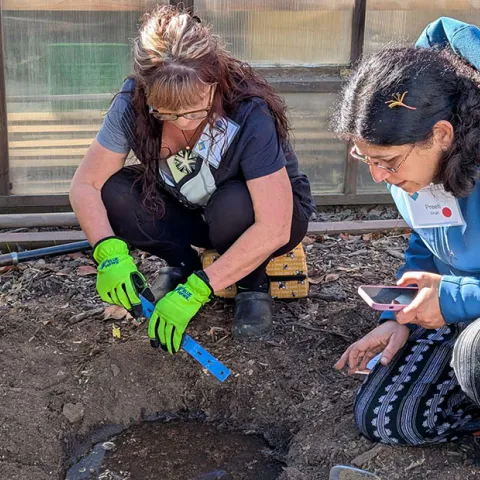
Primary Image
NVT2026-Trainees-Rivertown-by Dawn K.
UC Master Gardener Program of Contra Costa County: Page

Hybrid Learning, Hands-On Growth

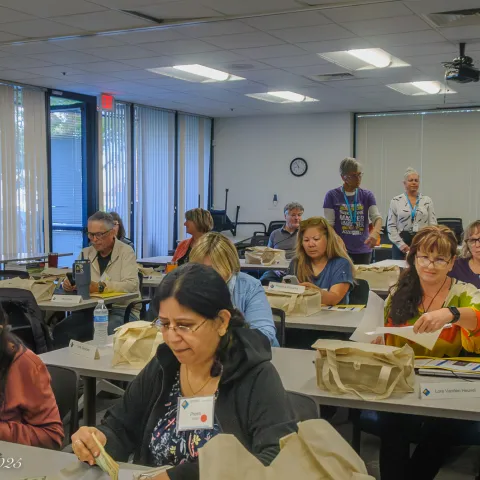
 Introducing the 2026 New Volunteer Training Class2025 Fall TLD Article & Photo by Dawn Kooyumjian, CoCoMG Program CoordinatorI want to extend a warm welcome to our new trainees—the soon-to-be Class of 2026! It is an absolute pleasure getting to know everyone.  You bring a wide range of…
View Page

Welcome to the Class of 2026 Trainees!

Body

By Terri Takusagawa: ELT Member at Large and Continuing Education Project Lead
Photo by Greg Doyle

Terri Takusagawa

On behalf of the Executive Leadership Team (ELT), we offer a warm welcome to the latest crop of trainees – the Class of 2026!

I was privileged to meet them at the first lab session of the training course, a workshop at the Rivertown Demonstration Garden in Antioch. The trainees were treated to a garden tour, orchard talk, family bed activity and an Ask a Master Gardener (AAMG) demonstration. For the latter, I was part of an AAMG team at a fully equipped table and canopy setup to demonstrate AAMG client interactions and resources. But the highlight was meeting the trainees when they approached the table for their own AAMG interaction. They were enthusiastic, curious, excited and eager to engage in the program! What a delight! We can’t wait to get them involved in our projects when they complete their training!

The 2026 New Volunteer Training project is under the capable leadership of Ann Ramirez, a seasoned UC Master Gardener who also leads the Growing Gardeners project. Wow! Ann manages a great team of volunteers who help with the many details required to run the training course. It is a tremendous job that Ann approaches with a fresh eye, calm demeanor, and creative new ideas. The lectures this year are delivered remotely via Zoom, while the in-person lab sessions are held at the Rivertown Demonstration Garden. The setting provides an excellent opportunity to experience the East County garden as it changes through the training period.

We hope for a strong turnout from the Class of 2026 trainees at the social event of the year – the Year-End Recognition Event – to be held on Monday, December 8th, at the Pleasant Hill Community Center. The Hospitality Team is busy planning for the event, and the ELT team is working on the program. Please join us to celebrate another successful UC Master Gardener year, connect with friends (old and new), and enjoy delicious food from our colleagues! You won’t want to miss the event and the opportunity to meet the new trainees! 

< Previous    Articles   Next >
Go to:    Current Issue     UCANR Home     CoCoMGHub

UC Master Gardener Program of Contra Costa County

New Volunteer Training Class: Program Overview & Updates

Primary Image
NVT Classroom 2026Trainees
Body

New Volunteer Training Class: Program Overview and Updates
Photos by Fletcher Oakes

Ann Ramirez, NVT Lead

Introduction
It is that time of year again —not just for pumpkin lattes, but also for our New Volunteer Training Class to begin. This year, we are making several updates to the NVT course. Our primary objective is to equip volunteers with essential academic knowledge and program-specific information, enabling them to understand the volunteer opportunities available in our CoCoMG program fully.

Program Changes
To enhance the training experience, we have implemented a few key changes. Instead of hosting a “meet the leads” session, students will now connect with Leads through our Passport program and conduct project research as part of their training. Additionally, program Leads are requested to create a “Help Wanted” notice outlining available volunteer opportunities within the CoCoMG program.

NVT Classroom 2026Trainees
2026 Trainees - photo by F.Oakes

Passport Program
Students are encouraged to explore multiple CoCoMG projects during their training. A comprehensive list of project Leads and corresponding email addresses will be provided. Each student will receive a passport book; kindly initial and date the student’s program page whenever a student visits.

Help Wanted Posters
We plan to display “Help Wanted” posters for every CoCoMG program, both in the classroom and through digital channels. Each poster should include a description of the tasks involved, the time periods during which help is needed, and any special requirements for the roles being offered.

Student Presentations
This year, students will choose a CoCoMG program to observe and present to the class. They will reach out to program Leads,  attend activities, and prepare their presentations accordingly. Each team will deliver a mock presentation highlighting their selected project and explaining how it engages the public or our UC Master Gardener group. For example, the Ask A Master Gardener program will use role-playing at the Rivertown workshop to provide students with hands-on experience and a thorough understanding of the responsibilities involved at the AAMG table.

Conclusion
We look forward to your continued support and collaboration as we introduce these enhancements to our NVT Class.

NVT Classroom 2026Trainees#2 - courtesy F.Oakes
2026 Trainees - photo by F.Oakes

< Previous    Articles   Next >
Go to:    Current Issue     UCANR Home     CoCoMGHub

UC Master Gardener Program of Contra Costa County

The Next Chapter in UC Master Gardening: Class of 2026

Primary Image
NVT Classroom 2026Trainees
Body

When You Meet Them…
[Be sure to say hello to our wonderful new group of trainees, the Class of 2026. They have taken the time to introduce themselves to us with what must be, for them, painfully brief bios, yet packed with information about their lives and passions. There are 26 new trainees–seven from Central County, six from West County, six from South County and seven from East County. We enjoyed editing these bios, and we think we speak for all of us when we say we look forward to meeting them in person on our projects, Demonstration Gardens, and perhaps at our upcoming holiday party on December 8th. Each year, a new class of volunteer UC Master Gardeners reinvigorates our organization and helps to expand its mission. They are our seed corn, with the potential to produce, in the future, even larger and more diverse harvests in the communities we serve. We also thank Fletcher Oakes for all of his beautiful portraits of the new class. Editors]

Image
Dev Ranjib

Ranjib Dey (Pleasant Hill) Marigolds and dahlias only bloom in winter. How you prune them determines the size of each flower. They need early morning watering, the right fertilizer, and at least a one–gallon pot. As a child in a small, densely populated town in West Bengal, India, I learned this through experience–climbing a bamboo ladder to reach our clay–tiled roof, where I tended my plants with care and creativity. Since I couldn’t afford fertilizer, I volunteered at local stables and butcher shops to collect manure and bone meal. The work was demanding, but the joy of seeing those flowers bloom made every effort worthwhile.

Over the next 20 years, I came to appreciate how deeply life, soil, and microbes intertwine. My curiosity led me to pursue a Bachelor’s in Microbiology and a Master’s in Bioinformatics, grounding my passion in science. Today, I live in Pleasant Hill, where I’ve spent the past five years cultivating a backyard vegetable garden, native perennials, and a few fruit trees. Gardening has also become a way to bond with my ten–year–old son, Ryan, as we explore nature together–from backyard soil life to the giant sequoias and bristlecone pines of North America. Through the UC Master Gardener Program, I hope to deepen my knowledge, give back to my community, and build the confidence to one day create a self–sustaining permaculture homestead in the High Sierra. I’m truly grateful for the opportunity to learn and serve.

Image
Dike Jay

Jay Dike (Oakley) I grew up in Vermont surrounded by dairy farms. We always had a couple of extensive gardens on our 50 acres. It was mostly my oldest brother who drove the garden efforts, and being 17 years younger, I became the main laborer in the gardens when I got old enough. Where we lived was actually a nursery in my great–grandfather’s days.

I remember looking through the Burpee garden catalogs each winter. Where we lived, we generally couldn’t break up the soil until early May, when we would plant peas. I remember in grade school that the W. Atlee Burpee company ran a contest for $10,000 to the first person to breed a pure white marigold. They sold seeds of an almost white marigold. I dreamt of creating that marigold. I didn’t, of course, but someone else did in 1975.

I spent a lot of time hoeing the gardens through high school and some college. After moving from Vermont to California, I didn’t really have room to grow anything until I got out of school, got married, and we bought a house. I struggled with the clay soils in Brentwood, though our cherry tree in our tiny yard did well. We then moved to Oakley, where the soil is a very fine sand. We had more room. I made a large indoor plant starting stand with strong lighting and some fans to help the plants be stronger.

We now have quite a few raised beds, lots of automated watering, a well with less–than–perfect water, and many chickens producing compost material. I still struggle to achieve the kind of growth I think should be possible, so I recently had soil tests done on various parts of the yard. My background as a mechanical engineer makes automation projects and technology, combined with gardening and its technical aspects, especially interesting.

I enjoyed my time as an assistant scoutmaster in the Boy Scouts while my sons were in it, helping them learn the many topics covered in the program. I’ve also helped with some infrastructure projects at the Vintage Parkway garden.

Teresa DiMeglio

Teresa DiMeglio (Danville, 38 years) I have been gardening since grade school. I was my father’s shadow in the garden. My father taught me about roses and camellias, and the environments they needed–sun vs. shade. This was the beginning of my love for gardening. We always had a small vegetable and herb garden, but flowers have always been my passion. My garden today has both roses and camellias.

I am recently retired. My last place of employment was Hewlett–Packard Enterprise. I managed a global Software Engineering team (Taiwan, Houston, and California) that delivered customized operating systems. On the weekends, I spent as much time as allowed in my garden. My most recent project was transforming a sun garden into a shade garden, taking advantage of the shade provided by my redwood trees.

I have been volunteering at Tassajara Hill Elementary School and the Hap Magee Ranch Bounty Gardens. Working in these gardens made me realize that I am missing a great deal of garden knowledge. Through the UC Master Gardeners Program, I hope to broaden my understanding of gardening and natural resources, allowing me to continue volunteering at school and bounty gardens and to begin giving back to my community.

Image
Tony DiStefano

Tony DiStefano (Orinda) I can’t say that gardening was my first love. Sure, I loved being in our little garden in Queens, New York, chasing butterflies and making bouquets for my mom. But my real love of gardening didn’t fully develop until much later–about 30 years ago. My first love was actually electricity. It was a love affair that began early, at about age 7, and ended tragically more than a decade later.

By the time eighth grade, I was a certified science nerd–reading every book on electricity and electronics that I could find, riding the subway into Manhattan to rummage through the army surplus electronics bins on Canal Street and entering (and winning) the New York City Science Fair for the Borough of Queens with my project “The Effects of Electricity on Plants.”

Sadly, in my early 20s, after attending a technical high school and earning bachelor’s and master’s degrees in electrical engineering, the affair had run its course, and I realized I wasn’t born to be an electrical engineer after all. I set off in a new direction, but that’s a whole other story.

A few years later, I found myself in the Bay Area, reunited with my high school sweetheart after a year apart (me in California and her in Paris). She was a passionate gardener and couldn’t live without dirt under her manicured nails. Six homes and six gardens later, I have her to thank for my development as a gardener.

We settled in Orinda back in 1992. Starting as her assistant and always an available source of free labor, moving on to studying horticulture myself, then planting a vineyard, fruit trees, hundreds of bulbs, and countless thousands of seedlings, I’ve found my own niche in the garden. Although I’m a jack of all trades, I especially love growing flowers. I study the Japanese art of floral design, ikebana, and there’s nothing that makes me happier than growing the materials for my arrangements. I’m an advanced student in the Sogetsu School of Ikebana and, together with my wife, Susan, have demonstrated and displayed ikebana arrangements on numerous occasions in the East Bay and at the DeYoung Museum’s Bouquets to Art exhibition.

Susan was a member of the Contra Costa UC Master Gardener Program Class of 2025, and I’ve seen the training program and subsequent volunteer activities up close. I’ve also had the opportunity to see the wonderful kindred spirits–trainees, mentors, and leaders–that this program attracts. I’m looking forward to deepening my knowledge of gardening and to working alongside all of you to share it.

Image
Leo Dominguez

Leo Dominguez (Walnut Creek, 50 years) I have always been interested in gardening since my maternal grandfather showed me how to graft when I was about 8 in my country of birth, Cuba. I grew up in San Francisco since I was 10 years old, when my family immigrated there from Cuba. I had a small yard at the time. As an adult, I bought a condo in Walnut Creek and soon thereafter a home in 1985. I am still in the same house with a very large yard. I often smile to myself because I had never mowed a lawn until I came to Walnut Creek and had to learn all about yard maintenance, making many mistakes along the way.

I tried to care for many fruit trees the previous owner had–apples, pears, cherries–and, of course, battled all the critters that wanted part of the “buffet”. Over the years, the trees suffered from different diseases, and none are still around. My career did not allow me much time to plant a garden, since most of the time I had left was spent on yard maintenance, aside from work. I retired in December 2017 and began learning more about gardening. A neighbor is a UC Master Gardener, and she convinced me to try to qualify for this program. I have been attending weekly presentations at the Our Garden, and it has been an absolute pleasure to continue learning about all that gardening encompasses. I am looking forward to meeting fellow volunteer students and hopefully becoming a UC Master Gardener.

Image
Letty Gonzalez

Letty Gonzalez (El Sobrante, 25 years) I am a gardening enthusiast with a passion for growing flowers and food. I started my journey years ago when my kids were young. Unfortunately, life got in the way, and the garden took a back seat. Fast forward to 2025. I retired in September 2025 after 20 years in the insurance business, specializing in employee benefits for small employers. As I approached retirement, I knew I wanted to get back into gardening. In April, I searched for classes, started following gardeners on Instagram, and drooled over photos of gardens. I took the CoCoMG Beginning Gardener class in Spring 2025.

Inspired, I decided to tear up my old garden. I removed pavers, buried rocks due to gophers, overgrown plants, huge roots, and lots and lots of weeds. I put in raised beds and started growing tomatoes, peppers, pumpkins, and dahlias. I spent hours looking online at plants and seeds, ordering way too many. I now have a garden blooming with color. I spend most of my time outdoors, making my rounds, digging in the soil, and smiling. Life is good.

Previously, I worked from home and rarely stepped outside. I enrolled in the Garden Design class at Diablo Valley College. It’s been a great learning experience. I plan to use my new skills to design my front yard. I love spending time in nurseries, among all the beauty, just dreaming. Gardening has been healing for me. I go out to the garden, and all my worries disappear. It’s my migraine–free zone. I am excited to participate in the UC Master Gardener program–to learn all I can about the plants I love and then share that knowledge with the community.

Image
Jenny Hammer

Jenny Hammer (El Cerrito, 25 years) I’ve been gardening in various places and with various success since I was a child. My family had a small plot at the Huntington Organic Garden in Long Island, New York, and I was mesmerized by the steam rising from the huge manure pile there, from my shovelfuls, and from the wheelbarrow in the early morning hours. I love every aspect of growing things (mostly vegetables) and have become an avid organic gardener, soil amender, and gardener. In the early ’90s in San Francisco, when I didn’t have a garden, I raised three chickens. I also joined the San Francisco Hobby Beekeepers (under the tutelage of Louis Dubay). I kept bees for about four years, sequentially, at Crystal Springs Reservoir, at Sibley, and in my backyard in Berkeley.

I enjoy growing standard vegetables but also like to try exotics, even as I learn more about the importance of planting native species. I grew cotton and hops while in Berkeley and, since moving to El Cerrito, have tried jatropha, sorghum, tobacco, chayote, passion fruit, pumpkins, corn, soybeans and quinoa. I like to experiment, though many of my attempts to “grow outside the box” have failed.

The six fruit trees I planted in the side yard (cherry, peach, two apples, nectarine, and persimmon are watered by a graywater system from my washing machine. I am passionate about saving water and was introduced to the UC Master Gardener program through several volunteer opportunities at the Water Conservation Garden here in El Cerrito. I’ve also gotten tomato starts from the Great Tomato Plant Sale in Richmond.

I look forward to learning best practices from the program and disseminating the same to the broader gardening community. I also want to generate interest from non–gardeners in the joys and importance of working with the natural world.

Image
Colleen Hilker

Colleen Hilker (Concord) First of all, my career in journalism means I never do anything until there is a deadline. So here I am. I can’t say, as many others have, that I have always been interested in gardening. In my younger years, I was always on the go; I didn’t have time for such things. I am one of those who, as I have grown older, have slowed down a bit–not much–and have taken up gardening.

I did have early exposure to vegetable gardening. My grandparents always had a large vegetable garden. As a child, I thought I didn’t like tomatoes until I tasted the tomatoes from my grandparents’ garden. And then I learned I didn’t want mushy, tasteless tomatoes – this was a totally different experience! And now I grow my own tomatoes and enjoy them as much as I did my grandparents’ tomatoes. I’m ready to expand my knowledge and introduce others, like me, who may have thought gardening wasn’t for them, until they taste a home–grown tomato!

Image
Jillian Kerrins-Torres

Jillian Kerrins–Torres (Richmond, 8 years) Hi everyone! I’m excited to join the 2026 UC Master Gardener training class. I’ve been an on–and–off edible gardener for about 20 years, growing everything from tomatoes and greens to fruit and herbs–usually from seed and often with the enthusiastic help of my two young kids.

My gardening has become more intentional over the years, and I’m excited to deepen my knowledge, especially around native plants, sustainable practices, and how to better support others who want to grow their own food, regardless of space or experience.

I currently live in Richmond Annex and have lived there for over 8 years. I’m very involved in my daughter’s school, serving as both a class garden parent and the PTA’s social media manager. Previously, I volunteered at the UC Botanical Garden at Berkeley, where I supported docent training and event coordination. I also worked with Freedom From Hunger, assisting with global program research and education.

Professionally, I work in digital experience and operations, with a background in e–commerce program management, content strategy, and cross–functional team leadership. I also hold a certificate in Graphic Design from UC Berkeley Extension and pursue photography on the side. I speak conversational Cantonese, and I studied Italian in college. I’m always drawn to opportunities that combine creativity, communication, and community–building. Becoming a UC Master Gardener feels like the perfect intersection of personal passion and public service.

I’m looking forward to learning from all of you, getting my hands dirty, and eventually giving back–whether that’s through community garden work, the Help Desk, or school garden programs. Can’t wait to meet everyone soon!

Image
Laura Klemme

Laura Klemme (Antioch, 6 years) I’ve lived in the Bay Area for over 20 years and in Antioch for the past 6, where gardening has become both a creative outlet and a grounding practice. My love of gardening began early, growing vegetables and flowers with my family. Still, it’s taken on new meaning as I’ve reconnected with the rhythms of local soil, seasons, and community.

Much of my career has been spent in the fast–paced world of technology, and gardening offers the perfect counterbalance –a slower, hands–on, and deeply rewarding way to learn, create, and restore balance after long days spent working in tech. I’m especially interested in native plants, pollinator habitats, and sustainable garden design. Through the UC Master Gardener Program, I hope to deepen my horticultural knowledge, contribute to community education, and help others discover the same joy, curiosity, and calm that gardening has brought to me.

Image
Sabine Kroeber

Sabine Kroeber (Germany, 33 years, Walnut Creek, 25 years) I knew I had a severe case of “plantitis” when I was more interested in the front yards and street vegetation of the cities I visited than the actual landmarks I was supposed to see. I just came back from Denver, and my camera roll has 50 photos of plants, insects, front yards, and community gardens, and five photos of Denver sights. You can call that selective perception. But it really makes every stroll an adventure because there are always new miracles to discover.

I grew up in Germany and moved to the Bay Area in 1999. I had three careers: One as a journalist and public relations manager for a nonprofit (working in nature conservation), one as a mom of three kids and one as an instructional assistant at an elementary school. I recently combined my passions and started working as a garden educator for Growing Healthy Kids at Highlands Elementary in Concord.

From 2021 to 2024, we moved back to Germany for my husband’s job. That brought me back to my roots as a naturalist and environmentalist. We lived in the beautiful city of Ulm, and I started leading urban green city tours with a friend. The question of how we can promote biodiversity with plants and how green cities can soften the effects of climate change became big topics during our tours and have been with me ever since. When I returned to Walnut Creek in 2024, I joined the Walnut Creek Open Space Foundation to volunteer at its restoration site in Lime Ridge.

I am slowly gaining knowledge about the native plants in this area and their relationships to the insect world. It is still fascinating to me that keystone plants in Germany (like English ivy and milk thistle) are considered invasive and non–beneficial here, and vice versa: Our native goldenrod has overrun vast areas in Germany and was long considered a villain there.

I’ve been a passionate gardener my whole life, and my gardening style has changed with me. When I moved to California, I was fascinated with succulents, agaves and cacti. I couldn’t believe I could grow lemons in my garden! Fruit trees I had never heard of before ended up in my yard: jujubes, loquats, guavas and even a failed attempt with a pawpaw tree. Lately, I have been adding more California native plants to support local wildlife. That is the beauty of gardening: It changes with you, and there is an endless amount to learn. It connects people and can empower them. You might not be able to control what is happening in the world, but you can control what happens in your garden – and it matters. I am so excited to become a UC Master Gardener, to give my passion a solid foundation of knowledge, and to bring it back into the communities I live and work in!

Image
Jim Laird

Jim Laird (Alamo, 30 years) I first became interested in the UC Master Gardener program through my wife, Laura (class of 2025). Watching her go through training and volunteer at the Danville and San Ramon Farmers Markets with Ask a Master Gardener inspired me to get involved myself.

Our initial introduction to the UC Master Gardener community came through Gail Bowser, who helped us reimagine our front yard by replacing the lawn with drought–tolerant landscaping. I still remember Gale’s enthusiasm as she walked our property, pointing out where different plants would thrive based on sunlight and soil conditions. That experience sparked my curiosity about sustainable, climate–smart gardening.

My love of gardening started early. Both of my parents were avid gardeners, and when I was five, our family moved into a fixer–upper with a quarter–acre of weeds for a front yard. After the local fire department used it for a training burn, we began planting. Some of my favorite memories are of driving to the dump with my dad, rescuing discarded nursery plants, and loading up our truck to bring them home. A few cigars for the dump attendant and several trips later, our yard was filled with thriving redwoods, willows, plums, oaks, and pines; all revived from what others had thrown away.

Professionally, I’ve spent my career in the software industry, most recently working with product compliance platforms that help organizations navigate complex regulations ranging from mineral sourcing in the Democratic Republic of Congo to FDA transportation compliance for food safety. Beyond my career, I enjoy mentoring nonprofit leaders on building strong teams, developing sustainable revenue streams, and scaling their impact through modern technology. I’ve worked with organizations such as GiveCloud, the Human Trafficking Network, and More Than Sport. I hope to combine my UC Master Gardener training with this experience to support nonprofits focused on community gardens, home gardening education, and environmental sustainability.

Image
Dominique Miller

Dominique Miller (Richmond) I’ve been outside, loving nature, for as long as I can remember. I’ve been farming, gardening and educating with Urban Tilth since October 2020, which has been made easier since I live on the Richmond Greenway Trail. I just celebrated my fifth anniversary with them.

I want to become a UC Master Gardener because I know how important green spaces and access to locally grown organic food are. Helping home growers is a passion of mine. Being self–sustainable is a revolutionary asset for all people and families. I plan to continue serving as a UC Master Gardener and to continue my journey, learning and sharing knowledge on how to grow your own.

Image
Eli Lito Nevel-Tyler

Eli Lito Nevel–Tyler (Richmond, 2 years) One of my earliest memories is of sitting in the backyard of my family’s Section 8 apartment, looking at a dry patch of land in a communal space, and wondering, “Why doesn’t anyone grow anything there?” I’ve asked myself that same question over and over again as I’ve traveled and moved to different locations all over the world. It motivated me to start collecting succulents in high school, since they were hardy enough to grow almost anywhere, and then to spend a few summers in college as a WWOOFer (World Wide Opportunities on Organic Farms) in Mendocino County. I felt like I really became an adult on the farms there. To this day, nothing tastes more nostalgic to me than fresh goat cheese and basil, and patchouli and sage still smell a little like home.

I got my degree in Environmental Studies but didn’t feel like I could make a sustainable living working close to the outdoors. I instead ended up in a series of direct service and administrative nonprofit roles, mainly serving the LGBT community. My interest in gardening and small–scale farming has stayed strong. Since this is the Bay Area and housing is a struggle for so many, I’m especially interested in learning how to make natural systems more accessible for people who either might not have much space of their own or move too frequently to keep a permanent garden. The Master Gardener program looked like the perfect way to get my hands dirty again, and I’m excited to share whatever knowledge I can gain with the community.

Image
Jeff Olson

Jeff Olson (Brentwood) When we first moved to Brentwood, the town had just installed its very first stoplight. Over the past four decades, we’ve raised our five children here, welcomed 12 grandchildren, and watched both our town and the greater East County area transform from a quiet, rural agricultural community into a vibrant and growing region.

Having lived in England and, more recently, Barcelona, Spain, we’ve always enjoyed visiting gardens. Each visit left us inspired and deepened our appreciation for the beauty and creativity that goes into cultivating a great garden. I’m currently a semi–retired real estate broker–still advising and mentoring agents–but this phase of life has opened the door to new opportunities. It’s allowed me time to serve the community and finally pursue some of those long–standing hobbies that once lived on the “someday” list. Gardening was one of those passions.

Over the past 10 years, I’ve experimented (and yes, unintentionally killed quite a few plants) to the point where I’ve developed a habit of apologizing to them at planting time, just in case. But each mistake has been a lesson, and the desire to learn and improve continues to grow. I’m truly excited about the opportunity to learn from and work alongside a passionate, knowledgeable group of gardening enthusiasts. I look forward to contributing to the community in a meaningful way.

Image
Nehal Parekh

Nehal Parekh (San Ramon, 12 years) The memories of my childhood are as fresh as the herbs from my garden. I can still feel the warmth of my dad’s hand as I walked beside him, taking my very first steps as a gardener. He held up a leaf to my nose, “Smell this, it’s eggplant!” He taught me how to recognize plants by the scent of their leaves: tomatoes, eggplants, peppers, and corn, each with a fragrance uniquely its own. Wherever we went, he made the world a classroom. I remember watching farms rush by through the window of a moving train. He would point and name each crop: sugarcane, wheat, cabbage, peanuts, cotton, tobacco, and more.

At home, I would intently read about herbal remedies from my grandfather’s copy of the Charaka Samhita, the ancient foundation of Ayurvedic medicine. Though the pages of that book have long since withered, the lessons remain vivid in my mind. That’s where the first seeds of my herb garden were truly planted. Life, of course, kept moving–school, marriage, moving to California, children. Gardening quietly slipped into the background. But years later, when we moved to Bangalore, India, next to a village rich in farmland, something stirred again. I began exploring the fields, buying produce directly from farmers. I realized that the best produce grows right where you are.

I began gardening again–this time, to grow my own food, herbs, and medicine. I discovered that seeds from my garden grew stronger than store–bought ones, already adapted to the local climate and soil. I began saving seeds intentionally.

Eventually, we moved back to California and bought a home with more backyard space, which I made the most of. It was just a lawn when we got the keys. Still, soon it was flourishing with summer vegetables and the nostalgic plants of my childhood: sugarcane, butterfly pea, guava, paan, turmeric, damask rose, night–blooming jasmine. I also branched out with plants from other regions, like pawpaw, Surinam cherry, ice cream bean, and countless herbs. I started a small seed bank to share with others, encouraging new gardeners to begin their own journeys.

As my garden grew, so did my community. I found joy in offering advice, connecting with like–minded people, and volunteering at local farms and gardens. My curiosity deepened; I wanted to understand better plant genetics, plant intelligence, permaculture, and sustainable gardening. What began as the fragrance of a single leaf in my father’s hand has become a lifelong journey rooted in memory, soil, and seeds. Through this program, I hope to deepen my knowledge, connect with fellow gardeners, and learn practices that will help me cultivate more resilient, sustainable gardens.

Image
Kranthi Pasupuleti

Kranthi Pasupuleti (Brentwood) I’m a garden enthusiast with a Bachelor’s in science and over 5 years of gardening experience. Though not from a farming background, I’ve successfully grown tropical fruits and vegetables in Brentwood for the past three years and opened my garden to the public. Flowers are my passion, and I love inspiring others to start their own gardens.


Image
Prakash Raygor

Prakash Raygor (Danville) I was born and raised in a small town in a middle–class family in India. During my childhood, I did not have electricity (using a lantern), a fan, a refrigerator, or any other modern facilities. I even studied under street lights at night. I was a very studious, hardworking student and had a positive attitude towards life. I wanted to help people, so I decided to study medicine and become a physician. I worked as a Medical Officer for 10 years in my town. Then, 45 years ago, I had the opportunity to come to the United States. I further studied in my specialty and worked as a physician for 40 years. To be helpful to the community, I worked in underserved areas for a while and participated in international medical missions in developing countries.

I retired 2 years ago at 72. In my free time, I got exposed to gardening and attended many events at Our Garden. Gardening seems like meditation to me, and working with plants feels like taking care of a family member. It keeps me busy, and after learning more skills, I want to help my community that wants more insight into gardening.


Image
Stephanie Recinos

Stephanie Recinos (Antioch) Born to Mexican and Salvadorian roots, I was raised with a deep respect for nature, animals, and the rhythms of the earth. From an early age, I spent many days exploring the outdoors, studying plants, caring for (and capturing) insects and animals, and living in harmony with the land. My childhood was rich with lessons passed down through generations –how to grow food, how to respect the land, and how to honor the natural world.

This early love of learning and desire to share my knowledge with others as a kid shaped my career path as an early childhood educator (ECE Specialist), a role I’ve held passionately for over 11 years. With a deep commitment to community, I have dedicated my career to nurturing not only young minds but also instilling in them a sense of caring for our natural world. I challenge myself to integrate nature–based philosophies into my teaching, encouraging children and families to reconnect with the land, understand their ecological impact, and learn and adopt sustainable practices.

As a bilingual educator and advocate, I work to bridge cultural wisdom with modern environmental practices, offering families accessible, hands–on learning experiences rooted in ancestral knowledge and ecological awareness. Whether leading nature walks, gardening with toddlers, or guiding parents in sustainable living, I remain a passionate voice for the planet, believing that caring for nature begins in early childhood and thrives in community.

Image
Miriam Rene

Miriam René (Antioch 2+ years, Bay Area 9 years) Hi everyone! I’m thrilled to be joining the UC Master Gardener program and learning alongside all of you. My gardening journey began about three years ago, and it’s quickly become one of the favorite parts of my life. Even before I started gardening, I loved watching YouTube videos and sharing what I learned with friends. Now, I have eight raised beds and several containers filled with fruits, vegetables, and herbs–everything from citrus and stone fruit to tomatoes, peppers, broccolini and carrots to basil, garlic, and thyme. Each season teaches me something new! I’m especially interested in growing medicinal herbs and creating a more pollinator–friendly garden.

Before discovering my love of gardening, I spent seven years as an elementary school teacher and now work in Human Resources, supporting employees across four countries. In both roles, I’ve been passionate about learning, teaching, and building inclusive communities. I’ve also been an active volunteer for many years, serving at my church as a Prayer Team leader, coordinating financial literacy classes, and helping at our local food pantry. Giving back is deeply important to me, and I see gardening as another way to nurture both people and places. I’m especially excited to support community garden projects in Antioch and can’t wait to grow, learn, and serve together!

Image
Preeti Shah

Preeti Shah (Berkeley, 12 years, San Ramon, 13 years) They say love can make you do anything–and in my case, it made me smuggle a tiny curry leaf stem (Murraya koenigii) inside an eyeglass case during a trip from India. My deep affection for this plant, rooted in childhood memories and cultural traditions, made me fearless. At immigration, I even declared that I had the little stem in my case. Despite my best efforts, the plant did not survive, but the experience only deepened my commitment to growing the plants I love. Today, that story is a source of laughter among friends who jokingly call me “the smuggler,” but it also symbolizes the passion I bring to gardening.

After living in Berkeley for 12 years, I moved to San Ramon 13 years ago. The additional space allowed me to grow two of the most meaningful plants from my upbringing in India: Holy Basil (Ocimum tenuiflorum) and Curry Leaf. These plants, common in Indian households, are used not only for cooking but also for their medicinal properties. I have been nurturing my curry leaf plant for over seven years now, carefully managing its environment by bringing it indoors during colder months and preventing it from flowering to maintain healthy growth. Holy Basil, being an annual, is started from seed each year. These plants have become an essential part of my home and identity.

A few years ago, I expanded my gardening efforts and tried growing tomatoes. Though I harvested only one tiny tomato that season, it brought immense joy and pride. That small success inspired me to take the Growing Gardeners Vegetable Gardening Course, which boosted my confidence and gave me practical knowledge about plant care, soil health, companion planting, and pest management. I now enjoy teaching others what I’ve learned, sharing tips on which plants grow well together and why rainwater benefits plants by delivering natural nitrates.

In my professional life, I am a preschool teacher. Just as gardening does, teaching young children requires patience, care, and a deep sense of responsibility. I often bring gardening into the classroom, and my students are eager learners. When we discuss the role of plants, they say things like, “Plants give us oxygen to breathe and help bees pollinate so we can get food!” These moments reaffirm my belief that gardening can be a powerful educational tool.

I feel fortunate to be accepted into the UC Master Gardener Volunteer Program. I want to expand my knowledge in areas such as soil science, pest control and sustainable gardening. More importantly, I want to use this knowledge to educate and support my local community. I look forward to collaborating with experienced UC Master Gardeners and contributing to outreach programs that promote ecological awareness and home gardening. Each moment in the garden has taught me something, and I truly believe that every day is a learning opportunity. The UC Master Gardener Program represents the next step in my growth as both a gardener and an educator. I am excited to be part of a community that shares my passion and commitment to making a difference through gardening.

Image
Heera Sharma

Heera Sharma (San Ramon) Hello! I am delighted to be joining the UC Master Gardener Program of Contra Costa County. I live in San Ramon with my family, and I am excited to deepen my connection to this community through gardening education and outreach. My relationship with plants began in childhood, growing gladioli in pots on our terrace in the mountain town where I was born–a treasured memory that still brings me joy. We didn’t have much space, but I found immense satisfaction in nurturing those flowers and admiring well–kept gardens around us.

This passion continued when my family lived in Cleveland, where I cultivated a small plot in a community garden for vegetables. It was a magical experience that reinforced my belief in the profound fulfillment of growing your own food. Today, I maintain a small balcony garden, though I dream of having more space to grow vegetables and truly expand my gardening someday.

What excites me most about the UC Master Gardener program is the opportunity to empower individuals and communities to grow their own food. This fosters resilience and builds stronger, healthier neighborhoods. I remember my maternal uncle’s vegetable plot and the simple joy of harvesting fresh produce for our meals–and then sharing that abundance with others. That sense of self–sufficiency and community connection is something I’m passionate about cultivating in Contra Costa County.

I bring substantial volunteering and leadership experience to this program. I founded Go Laadli (meaning “beloved daughter” in Hindi), a nonprofit organization dedicated to powering young women’s leadership in India. In this role, I’ve had the privilege of working with more than 300 volunteers across five continents. Over the years, I’ve tutored math and science students and GED students and mentored international women’s groups and undergraduate startup students. I currently serve on the San Ramon Valley School District Deep Learning and Innovation Steering Committee.

Through fellowship programs like Vital Voices, Coro NorCal Women Leadership, and others, I’ve developed strong skills in cross–cultural collaboration and working with diverse communities. These experiences have taught me the value of bringing people together across different backgrounds and perspectives to achieve common goals. While I’m a novice gardener without professional horticulture experience, I’m deeply committed to learning. I’m particularly interested in teaching others to grow their own produce in spaces large and small and in promoting environmentally responsible practices such as composting, water conservation, and reducing pesticide use.

I contribute through demonstrations, workshops, clinics, and one–on–one consultations. I also bring skills in project management, program development, social media, and graphic design that I’m happy to share with the program. My goal is to strengthen Contra Costa communities by promoting food security, increasing access to fresh produce–particularly in underserved areas–and spreading sustainable gardening practices. I’m eager to reconnect with soil and plants on a deeper level while making a meaningful impact in our community. The opportunity to learn alongside fellow gardening enthusiasts and share that knowledge with others is precisely what drew me to this program!

Image
Suzanne Kelez Soshea

Suzanne Kelez Soshea (El Sobrante, 21 years, Oakland, 10) I moved to California from Washington at the age of eight and spent my childhood in Foster City before moving to San Francisco. There has never been a time when I wasn’t in the garden. Both my maternal and paternal great–grandparents were gardeners, and that love of gardening has been passed down to each generation. I’ve always had a garden, even if it was just a few pots on a fire escape in the city. As a child, I spent a lot of time outdoors, either in the garden or camping and fishing.

My fascination with the natural world led me to pursue a degree in geomorphology from UC Berkeley. My love of travel led me across the globe with my backpack, “the blue beast,” discovering amazing cultures, cuisines, and wine! I spent many years in the restaurant business as a sommelier and later in management. But after designing a few gardens for friends and family, I decided to pursue a degree in landscape architecture from UC Berkeley. I could finally merge my love of the natural world with design and plants. Now I get the opportunity to work one–on–one with clients to create the outdoor spaces of their dreams. I am also a passionate advocate of California native plants and incorporate them into all my designs. Creating an environment for people to connect with nature is immensely gratifying.

There is a wine term, “terroir,” which refers to a sense of place. It includes everything that affects a wine’s expression, from soil and climate to human interaction. Becoming a UC Master Gardener will allow me to discover how this sense of place is reflected in the interconnected web of soil, plants and people here in the East Bay. And I look forward to sharing my experience and passion with the community and my clients.

Image
Lore Vanden Heuvel

Lore Vanden Heuvel (Brentwood, 25 years) I grew up in Austria, where gardening and homeopathic fertilizing were a natural part of daily life. Growing vegetables, berries, and fruit trees was not just about food –it was a way of connecting with the land and with one another. From a young age, I was inspired by how my parents and neighbors shared their gardening knowledge and supported each other. Many weekends were spent hiking as a family, collecting wild mushrooms and berries, and sharing our harvest with friends and neighbors. Those experiences taught me the value of working with nature and building community through shared effort.

One of my fondest memories is of my grandmother, who used only natural methods to nourish her plants. Twice a year, she would ask her nephew to bring fresh cow manure for the garden. Though I complained about the smell, she would smile and say, “Honey, this way the flowers and vegetables will grow beautifully – you will see!” And she was right– her begonias, herbs, and balcony plants flourished. She even spoke to her flowers as if they could hear her, and perhaps they could, because they always seemed to bloom brighter under her care. Those early experiences profoundly shaped my appreciation for gardening and its power to connect people. I believe that gardening is not just about growing plants– it’s about nurturing life, building community, and sharing knowledge.

Image
Frederika Villacarlos

Frederika Villacarlos (Walnut Creek, 12 years) We moved to our home in Walnut Creek in 2013; my eldest had just graduated from college, and my youngest was starting high school. The property is a little less than a third of an acre, and I’m able to plant on a tenth of an acre. My first attempts at gardening consisted of growing herbs in containers. In 2016, amid recurring droughts in California, I availed of a Lawn to Garden rebate program to replace our front lawn with drought–tolerant plants, mostly California natives. In the backyard, I started my first raised garden bed.

When we sheltered in place in 2020, I realized we needed to be more resilient and grow our own food (or at least some of it). We converted the remaining lawn into 144 sq ft of raised beds and grew vegetables, herbs, and flowers (annuals) from spring through fall. The tomatoes, cucumbers, onions, garlic, eggplants, peppers, zucchini, beans, broccoli and many more have never tasted so good!

In the last two years, we replaced most of the ornamental plants on our property with fruit trees, other fruit–bearing perennials, and native plants. The pomegranate tree, blueberry bushes, and passion fruit vine have already been producing abundantly. I can’t wait for the rest of them also to bear fruit! I learned mainly from YouTube videos, blogs, articles, and gardening webinars – all of which were prolific during the pandemic – and through trial and error.

Eventually, I earned a Permaculture Design Certificate from Oregon State University. Permaculture is a design approach that seeks sustainable solutions to ecological and social problems in harmony with nature. I’ve become quite passionate about growing nutrient–rich food for my family and to share with the community; creating a space that is sustainable, regenerative, self–maintaining, and rich in biodiversity; and providing a welcome place for family, friends, pets, and wildlife to live, work, and play, now and for generations to come.

I’ve recently retired after 30 years in the financial services industry as a marketing professional. And now, I would love to deepen my knowledge and experience in gardening and food–growing, as well as serve by using my skills to help others on their gardening journeys.

Image
Colleen Westfall

Colleen Westfall (Walnut Creek, 4 years) Some of my fondest memories from childhood were spent with my grandmothers in their gardens. One had a lovely patch of wild mint, beautiful roses, and irises. The other grew exceptional tomatoes, squash, peaches and satsuma tangerines (turns out soil that used to be home to a chicken ranch is suitable for the home garden 😉). My mother, like her mother, focused on roses and irises–some of her plants were over 50 years old! But one of my favorite childhood memories was picking and eating the boysenberries that she cultivated for a few years.

I find comfort and connection to my past when I garden, which is why I sought a volunteer opportunity that would allow me to garden and give back at the same time. I’m a retired elementary school teacher, so finding something that will allow me to both learn and potentially teach is a bonus.

My husband and I relocated to Walnut Creek (from inland Southern California) four years ago to be closer to our children and our granddaughter. It has become home, and we couldn’t have landed in a better location than the East Bay. We are both retired now and in our “let’s travel while we can” phase. One thing I like to do while traveling is to explore botanical gardens, national parks, and city gardens wherever possible. The botanical gardens in Wellington and Christchurch, New Zealand, the national parks of Croatia and Norway, and the rainforest and cloud forest in Costa Rica have been highlights for me.

Besides gardening, I’m an avid reader and participate in a family book club. I’ve been a quilter for over 30 years, and I attempt to fit sewing into my schedule several times per week. And I love to cook and bake. I have learned to bake bread in the last few years. Probably my favorite part of retirement is the freedom and time to learn and try new things. I’m excited to start this new adventure with the UC Master Gardener Program of Contra Costa County: to learn, to share what I know, and to meet new people.

Portraits by Fletcher Oakes and Robyn Barker

< Previous    Articles   Next >
Go to:    Current Issue     UCANR Home     CoCoMGHub

UC Master Gardener Program of Contra Costa County

A First Year’s First Year

Body

Photos by Dan Chavez

Image
Lisa Phillips

I am Lisa Phillips, a Year 1 UC Master Gardener, Class of 2025.  The best advice at graduation was to sample everything and then decide where you fit. Here's what I did!

Our Garden - My time at OG gave me a whole arc of hands-on experience. In the spring, I staked new tomato seedlings. Mid-summer, I harvested lettuce, and late summer, I pulled spent plants and planted cover crops.

OG Talks - Those weekly summer talks under the oaks were heavenly. Some talks reinforced classroom concepts (Vertebrate Pests, Insects, Citrus) while others were new to me (Propagation).

Presenting a Talk – My classmate Kitty Cole and I were invited to share our classroom presentation on Roses at OG. The idea was a little intimidating, given that we were first years! But we took the plunge. Not only did it force us to master the topic even more, but it also thrilled us to see others' passion for roses.

Rose Garden Talk
CoCoMGs Lisa Phillips and Kitty Cole giving a  rose talk at Our Garden. 

Social - It's not all soil and textbooks! UC Master Gardeners love food, as I learned from attending the OG Summer Potluck and the South County garden party. I was warmly welcomed and greatly impressed with everyone's delightful dishes.

Community Garden - San Ramon Community Garden asked for help with a diseased tree. I joined Dorothy Abeyta who, diagnosed Fire Blight and taught us how to treat it. The on-site visit was a significant complement to the classroom work because we were able to see problems —biotic and abiotic —up close.

Executive Committee Meetings – The monthly business meetings are open to everyone. All projects are reviewed, so a new person can get an overview of what the work is and where to lean in.

As a first-year, I'm grateful for the advice to "sample" before committing. Whatever you choose, there are plenty of friendly, knowledgeable CoCoMGs to help you on your way.
 

< Previous    Articles   Next >
Go to:    Current Issue     UCANR Home     CoCoMGHub

UC Master Gardener Program of Contra Costa County

New UC Master Gardeners Jump In

Body
Mike and Karen in Rivertown

We are Mike and Karen Lance, and this is about our experiences as First Year UC Master Gardeners, Class of 2025. We went through the training together and were impressed with the depth and breadth of the materials and the great instructional staff. Among many other things, we learned that we’ve been doing a lot of things wrong in the garden! An unexpected joy is the comradery we have developed with our classmates and other “CoCoMGs” that we’ve met along the way.

We have volunteered at the Water Conservation Garden in El Cerrito, Our Garden in Walnut Creek, and much closer to home, the Rivertown Demonstration Garden in Antioch at the County Fairgrounds, and we enjoy the attributes of each of them. Below are where we have/are spending most of our CoCoMG hours these days.

Rivertown Demonstration Garden -  Our Tuesday mornings are spent helping around the garden. We have met many new friends there, have been able to use our training, as well as continuing to learn new areas such as succulents, maintaining the orchard, growing California Natives, and composting in place. Everyone there is friendly and very happy to share their knowledge and experience with us. It feels nice to belong somewhere and we feel like we are contributing to the community.

Cherry Talk

Sharing Cherries – We were asked to rework our final group presentation about Growing Cherry Trees from training into a talk at the weekly Our Garden Talks series. Given the PowerPoint deck we had from class, and considering no PowerPoint at the garden, we created a multi-page flip chart walking through cherry tree selection, pollination, cultivars and root stocks, planting, watering, pruning, and so on. We practiced each part and talked about what worked and what needed a reworking. Lastly, we put together a handout for attendees along with a QR code to access the presentation and references. We were surprised to see so many people come for the talk, especially on a chilly morning! Afterwards we received a lot of kind words, and we felt like we had truly done something well.

New Volunteer Training - We have joined the team of people working to help train the new “Class of 2026” as our way of giving back to the program. It’s wonderful working with people we know and with CoCoMGs that we haven’t met before, everyone is happy to work together and share knowledge. Class is Thursday meetings on Zoom and in person weekly on Saturdays. Since the Saturday training is at the Rivertown Demonstration Garden, we know the garden and feel like we can step right in and get to work. As we get to know the new trainees, it is hard to believe that we have only been involved in this program for a little over a year.

Ongoing Training – We have attended several trainings held at Our Garden, and it is nice to go there and see familiar faces. Days start with hugs and a chance to catch up on what others are doing, then we dive into instruction in some area of gardening. Learning new things is always nice, but sometimes it turns out that we had heard something before and had forgotten we had heard it. Relearning things can also be a pleasure!

Together, we enjoy all the time we have spent learning new concepts, working with others, and contributing to this community of UC Master Gardeners. We hope you too enjoy your time here as much as we do!

< Previous    Articles   Next >
Go to:    Current Issue     UCANR Home     CoCoMGHub

UC Master Gardener Program of Contra Costa County

A First Year’s Musings

Body
Liz Engh

I continue to be astounded by what I don’t know and am grateful to be an old dog able to learn a few new tricks, oh, I mean gardening gems.

The UC Master Gardener training was like having the entire Bancroft Library thrown at me and was a bit overwhelming. I didn’t really get to savor the personalities and dedication of our instructor volunteers and my fellow students. Since graduation, the pace has been slower, allowing me to get to know and enjoy my classmates and instructors, and it has been a total treat. Also working alongside other UC Master Gardeners has been lovely, and yes, I have been shamed into growing vegetables.

All aspects of the Great Tomato Plant Sale were amazing.  I loved the camaraderie of “potting up” seedlings and actually balanced my cash register as a cashier (I disproved the saying “never trust a lawyer’s numbers”). I am looking forward to the 2026 GTPS.

The Help Desk has been a terrific learning experience. Bonnie Dwyer has shown incredible patience and brilliance in her mentorship. I do like working in an “in-person” group setting and having input from multiple UC Master Gardeners on perplexing questions. I think I will come to appreciate the Quality Assurance meetings the more I advance. I was thrilled to recently get my own access card key and no longer feel trapped by the locked MG Bisso Doors.

I do love the Farmers’ Markets and have participated in a number of the local markets.  Since I have sun and heat issues, I was quite appreciative of the Shadelands Ask A Master Gardener booth with its early morning shift. Martinez remains my favorite, and I’ll sign up again next year to hear teenage boys’ stories of Great Blue Herons stalking and consuming gophers.

In our divisive political climate, it has been a pleasure and a calling to participate in an endeavor that offers universal, healthy perspectives and serves all our community members.

I love this program.

< Previous    Articles   Next >
Go to:    Current Issue     UCANR Home     CoCoMGHub

UC Master Gardener Program of Contra Costa County

Congratulations to Gardeners with Heart Awardees!

Body

The UC Master Gardener Program is thrilled to honor four UC Master Gardener volunteers as “Gardeners with Heart.” They join others across the state who are celebrated this year for their extraordinary dedication. In 2025, the Contra Costa County UC Master Gardener program selected representatives in two statewide impact areas: Community Wellbeing and Food Gardening.

The following three remarkable UC Master Gardeners were identified by the Executive Leadership Team (ELT) for strengthening relationships with community partners, with a focus on increasing program reach and being inclusive of new or more diverse audiences:

Dorothy Abeyta, Co-Awardee for Contra Costa County Community Wellbeing

Dorothy Abeyta with John Fike
CoCoMGs Dorothy Abeyta and John Fike 2025 New Volunteer Training class graduation. Photo by UCANR.

Dorothy Abeyta was certified only three years ago, graduating with the 2022 New Volunteer Training class. She is a credentialed arborist and lends credibility to all of our tree-oriented discussions, ventures, and webinars.

Dorothy also co-led the 2023-2025 New Volunteer training classes along with John Fike. When new volunteers step into the UC Master Gardener Program in Contra Costa, she was the first face they met—and one they wouldn’t soon forget. As co-lead, she donated over 2,000 hours of service and trained more than 50 new volunteers. Her lessons are invitations to believe in one’s own potential to teach and serve. Dorothy’s demeanor is brusque on the outside and sweet on the inside. Both the graduating classes of 2024 and 2025 awarded her the highest possible marks for leadership and caring.

“With her fiery passion, Dorothy led and inspired UC Master Gardener trainees to strive for excellence. Her efforts exemplify the highest standards of service and leadership, and she cares deeply about her fellow UC Master Gardener colleagues,” says Program Coordinator, Dawn Kooyumjian.


John Fike, Co-Awardee for Contra Costa County Community Wellbeing

John Fike
Photo by UCANR

John Fike earned a doctorate in biology and has been instrumental in the successful community outreach of Contra Costa’s Ask a Master Gardener tables at farmers markets. John’s special interest in gardening, pesty bugs, and healthy soils helped him instruct and mentor many recent graduate classes of new CoCoMG volunteers. He co-led the New Volunteer training classes of 2024 and 2025 with Dorothy Abeyta.

John is an accomplished educator, and his deep-rooted commitment to outreach has led to his participation in many Speakers Bureau webinars and on-site talks. In addition, he has poured many hours over the years into supporting the Our Garden’s produce contributions to the Monument Crisis Center.

“To me, it has always been easy to put in those efforts because of the enjoyable collaborative environment that exists here,” says John. “I feel privileged to have been able to work with so many passionate and engaged UC Master Gardeners, most of whom have become good friends. So, the Gardener with Heart recognition is not so much about me but about the environment that inspires us to put in time and effort to help friends and colleagues, as well as the public.”  

“John is a superstar UC Master Gardener, combining his scientific background and curiosity with a truly special presentation style that educates and motivates his audiences,” says Dawn.

Phil Quinlan, Co-Awardee for Contra Costa County Community Wellbeing

Phil Quinlan
CoCoMG Phil Quinlan showing the total food donation Gehringer Demo Garden made that day. Photo by UCANR.

Phil Quinlan started volunteering at the Gehringer Community Garden, a lively public garden focusing on California natives, pollinators, and edibles, before becoming a UC Master Gardener in Contra Costa County. Educated in the United Kingdom, Phil felt a need to get more connected to California. Today, as a UC Master Gardener, Phil’s work goes beyond connection into leadership and community impact.

“Phil is someone who wants to drive change in local communities. He makes things happen and is a great mentor to budding gardeners,” Dawn says.

Along with initiating the community garden and serving as an exceptional mentor, Phil started a 4-H Youth Development Program project at the garden. He also established educational programs for two groups of adults with special needs. Fellow volunteers admire his organization, quiet diligence, and ability to offer timely, sincere encouragement.

In addition to promoting equal access and opportunity to garden education for all community members, Phil is passionate about food access and sustainable landscaping. When demand for Gehringer Community Garden plots outpaced supply, Phil was instrumental in securing a plot to grow food for local food banks.

“I love that our Geringer Community Center Demonstration Garden is publicly accessible, and that the local community is so supportive. I feel we are driving real change with food donations and sustainable gardening practices ... and we’ve only just begun.”

The ELT identified the following remarkable UC Master Gardener for his commitment to advancing food gardening education and enhancing food access:  

Joie Spinelli, Awardee for Contra Costa County Food Gardening and Food Access

Joie Spinelli
CoCoMG Joie Spinelli hands out UC Master Gardener lanyards. Photo by UCANR

Joie, a gold badge UC Master Gardener volunteer in Contra Costa, is a warm and inspiring leader at our UC Master Gardener demonstration garden in Walnut Creek, primarily known for his work in composting and food gardening. Described as the “heart and soul” of New Volunteer training, he excels at engaging newcomers and connecting them to meaningful projects. His leadership shines as he oversees the production of a significant portion of the demonstration garden’s compost each year, utilizing on-site green produce.
“Joie Spinelli is often heard saying, ‘Compost is always there for you’ and ‘Make the world a better place: volunteer,’ words that inspire all who work with him,” says Dawn.

Thank you to all four Contra Costa County UC Master Gardeners who have been recognized this year as “Gardeners with Heart”! Today and every day, we celebrate your unwavering dedication and compassionate contributions to our community.

< Previous    Articles   Next >
Go to:    Current Issue     UCANR Home     CoCoMGHub
 

UC Master Gardener Program of Contra Costa County

The Use of Soap and Detergent in the Garden

Body

Many environmentally minded gardeners are looking for simpler pest-control solutions. These gardeners are turning to soaps and detergents for insect and disease control; it’s cheap, it’s handy, and it seems to do the job. Gardeners have been adding a few drops of “soap” to liquid pest spray for years; this acts as a surfactant, helping the spray stick to the plant’s surface. Some gardeners use a soap/detergent mixture, hoping to control a host of pests and diseases.

Household Products
Pesticides made from household ingredients lack the details needed to safely and effectively control pests. Photo by B Messenger-Sikes.

While we applaud the desire to be gentle on the environment, protect our pollinators and use low-impact strategies, we also have an obligation to give accurate information.

As UC Master Gardeners, we need to help our clients understand that there is a significant difference between soap and detergent; they are not interchangeable. Many products labeled dish soap, dishwashing soap and laundry soap contain little or NO actual soap.

Soap is one of humanity’s oldest chemical reactions; it has been around for thousands of years. Soap is made by combining a natural fat or oil with a strong alkaline substance. Our forefathers used lye, a combination of wood ash and water. When lye and fats are mixed, a chemical reaction forms soap, a process called saponification: “sapo” (soap) & “facere” (to make).

Detergents are a more recent creation developed during World War I. Oils and fats used for making soap were in short supply, so scientists turned to the lab to formulate a cleaning agent that did not rely on plant-based oils. Most detergents are made from synthetic materials; many are petroleum derivatives. Detergents are synthetically produced and chemically designed to be powerful cleaners.

Soaps and detergents share some similarities and some differences:

  • Both soap and detergent do the same job: they clean, though they are formulated to do so in different ways.
  • Soap is biodegradable; most detergents are not.
  • Soaps and detergents are not formulated for use on plants; they are formulated for cleaning.

Research shows that when soap or detergent is diluted correctly, it can be effective in controlling small, soft-bodied insects by disrupting their breathing, effectively smothering them.

Damaged Leaves

However, detergents pose a problem: they are formulated to break down and disperse oils and waxes. This is why they work so well to remove oil and grease in the kitchen. When detergents are sprayed on plants, in addition to smothering the insect, they break down the oily, waxy coating on leaves, which protects leaf tissue. Detergents, even if properly diluted, can be phytotoxic to plants.

While soap sprays are less likely to cause phytotoxicity than detergents, they come with their own set of limitations and problems. Soap sprays work as contact sprays; the insect must be present and completely coated with the soap mixture for them to be effective. Soap sprays have no preventative effect, nor do they have any residual effect.

If a client plans to use a soap product, advise them to use pure soap, not a detergent. Pure soap products include vegetable-based soaps, castile-based products and glycerin-based products. If clients insist on using soap sprays, a 2% solution of soap & water is the safe dilution. A 2% solution would be four teaspoons of soap to 1 quart of water.

Simply put, our clients need to be aware of the reason we advise against using detergent spray and why we discourage using soap spray for insect control:

  • Detergent spray can cause serious phytotoxicity in plants.
  • Soap spray can accumulate, potentially causing leaf damage.
  • Soap, when mixed with hard water, results in a high level of residual soap scum, which damages leaf tissue and reduces the effectiveness of insect control.

The SAFEST approach for small-bodied insect control would be to use a plant-based insecticide, such as insecticidal soap. The benefit of this product is:

  • It is formulated for use on plants while minimizing injury to leaf tissue
  • It is specifically formulated for insect control
  • It is evaluated by the Environmental Protection Agency (EPA)
  • The label contains directions for use and precautionary statements
  • The label includes instructions for storage and disposal
  • Relevant environmental and physical warnings are listed
  • Chemical hazard warnings are listed

I encourage you to share the difference between soap and detergent when this subject comes up with clients. Encourage the use of insecticidal soap instead of household soap. If a client insists on using a soap spray, reinforce that it must thoroughly saturate the insect to be effective. In addition, clients can reduce potential damage to plant tissue by washing the plant down as soon as the soap spray dries. This action will dilute or eliminate soap residue, reducing the risk of plant damage.

https://ucanr.edu/blog/uc-master-gardener-program-statewide-blog/article/dangers-homemade-pest-control-remedies

< Previous    Articles   Next >
Go to:    Current Issue     UCANR Home     CoCoMGHub
 

UC Master Gardener Program of Contra Costa County

What’s Growing on My Tree? Understanding Conks

Body
Conks

A Client recently wrote to the Help Desk seeking feedback on the lichen growing on their Japanese maple tree.

“Thank you for contacting the UC Master Gardener Program Help Desk regarding your Japanese Maple. Thank you also for the great pictures, as they are always helpful in understanding a situation,” replied CoCoMg Emma Connery.

“The white structures you see running up the trunks are not lichen but are ‘conks’. Conk is a common name for a type of reproductive structure of wood-rotting fungi. Wood rots are primarily fungal, and fungal spores typically gain entry via tree wounds. Once a conk appears, the decay is fairly advanced,” she noted.

She provided the client with a link to a UC publication titled “Wood Decay Fungi in Landscape Trees.” It provides information on various types of decay fungi.
https://ipm.ucanr.edu/legacy_assets/PDF/PESTNOTES/pnwooddecay.pdf
 

Conks

“Ultimately the tree should be removed. With only pictures to look at, I am unable to determine the exact fungus infecting the tree or the extent of the rot. You might want to have a qualified expert assess the tree and recommend appropriate treatment.

“Here is the link to the International Society of Arboriculture’s tool for finding a certified arborist in your area: https://www.treesaregood.org/findanarborist. Click on Find an Arborist and then enter your location. I suggest selecting several that seem to have the credentials you are looking for and contacting them for information regarding your specific situation and to compare costs,” she added.

“I hope you find this information helpful. If you have additional questions, feel free to contact us again.”

Photos provided by client.

< Previous    Articles   Next >
Go to:    Current Issue     UCANR Home     CoCoMGHub

UC Master Gardener Program of Contra Costa County

Source URL: https://ucanr.edu/site/uc-master-gardener-program-contra-costa-county/latest-dirt