
A visit to the Royal Botanical Gardens in Edinburgh, Scotland
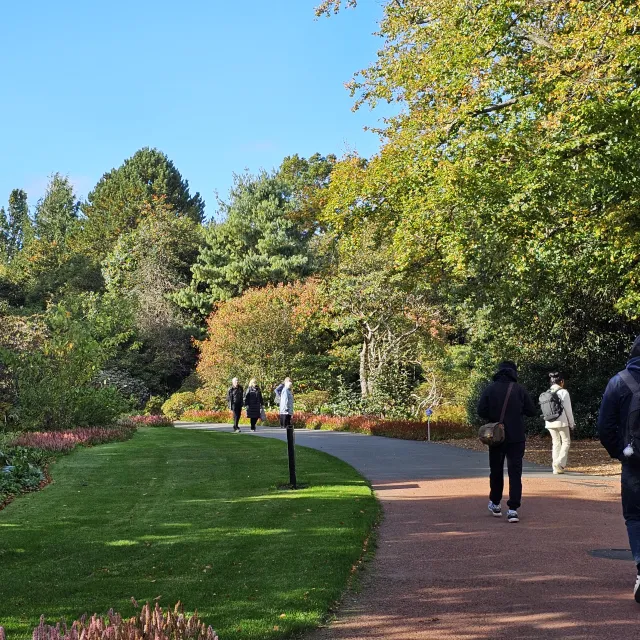
On Oct. 10, 2025, I visited the 70-acre Royal Botanical Gardens in Edinburgh, Scotland. It was established in 1670 and moved to its current location in Edinburgh in 1823. It is part of a network of over 1,700 botanic gardens in 148 countries, has research learners in 55 countries and is part of collaborative research programs in 34 counties.
The garden’s original purpose was to supply fresh plants for medical prescriptions and to train botany students. It received a royal warrant in 1699 and now has over 13,000 plant species and 3,000,000 herbarium specimens. It has developed a specialty in rhododendrons and boasts the largest collection of cultivated subgenus Vireya plants in the world.
The garden is very walkable and can be done by wheelchair or with a stroller. It is laid out like a park or palace. I found it to be a very relaxing and interesting walk. The areas open when I was there in October include:
- Arboretum, over 3,500 trees and 730 species. Many trees were different than those found in the Central Valley, some of them more than 200 years old. The hickory and chestnut trees reminded me of my youth in the Midwest. They have very full and developed canopies. The trees and plants from six continents were amazing. When I saw the coastal redwoods, I couldn’t believe it. They were thriving in Scotland!
- Rhododendron, with more than half of all the world’s species.
- Rock Garden, with over 5,000 plants, many in bloom, from mountains worldwide, plus Arctic and dry rocky Mediterranean habitats. Mounds reflect the plants’ original habitats.
- Woodland Garden, with large conifers, rhododendrons and other woody plants.
- Chinese Hillside, which contains perhaps one of the largest collections of Chinese plants being cultivated outside China.
- Hedge and Herbaceous Border, which is over 540 feet long and has 158 individual trees, and many herbaceous plants.
Biodiversity Garden, with over 500 different species.
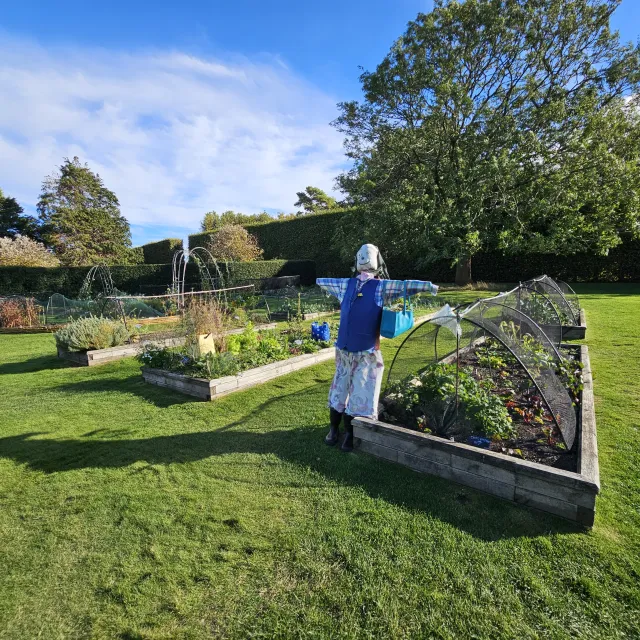
A area set aside for demonstrating food production. - The Demonstration Garden is longer than the Herbaceous Border and has an educational mission similar to the Fresno County Master Gardeners’ Garden of the Sun. It includes an Edible Gardening Project, where visitors can learn the skills and knowledge needed to grow their own food; Physic Garden Beds, a university Horticulture and Plantsmanship degree program; and a location for hosting local school groups.
- The pond in the center of the garden is very serene. It felt like no one else was there. The color surrounding it, the reflection of the trees on the water and the ducks swimming made it a good place to rest my feet on a bench.
I spent three and a half hours at the garden and could have spent more. It is amazing. The visit made me want to learn more about plant identification, plant species and the threats to them. I would love to go back in the spring or summer, when there are more flowers in bloom.
_________________
Written by UC Master Gardener James Miser