
Agave in California: from a farmer's perspective
Agave is a perennial plant characterized by metabolic, physiological, and morphological characteristics that enable it to thrive in conditions considered extreme for most vegetation. At night, it opens its stomata—pores in its leaves and stem cells that manage gas exchange and water transpiration—to absorb CO2. During the day, it synthesizes sugars through photosynthesis, significantly reducing its overall water and nutrient consumption. This highly efficient adaptation for regulating water and CO2 usage is referred to as crassulacean acid metabolism (CAM) (Black and Osmond, 2003). Such adaptations not only make agave thrive in arid and semi-arid conditions but also make it ideal for intercropping with other crops, as it does not compete for soil moisture or nutrients. Additionally, its high biomass production provides a viable option for a variety of products (Nava-Cruz, 2015). Historically, agave has been utilized for thousands of years in Mexico to produce fiber, medicine, distilled spirits, sugars, and food (Davis and Ortiz-Cano, 2023). Nowadays, due to its resilience and versatility, it is being cultivated by regenerative farmers in various regions of California. One such farmer is Ofelia, who operates in Campo, a city in San Diego County. I had the opportunity to interview Ofelia and learn a little more about her agave production. Below is a summary of our conversation:
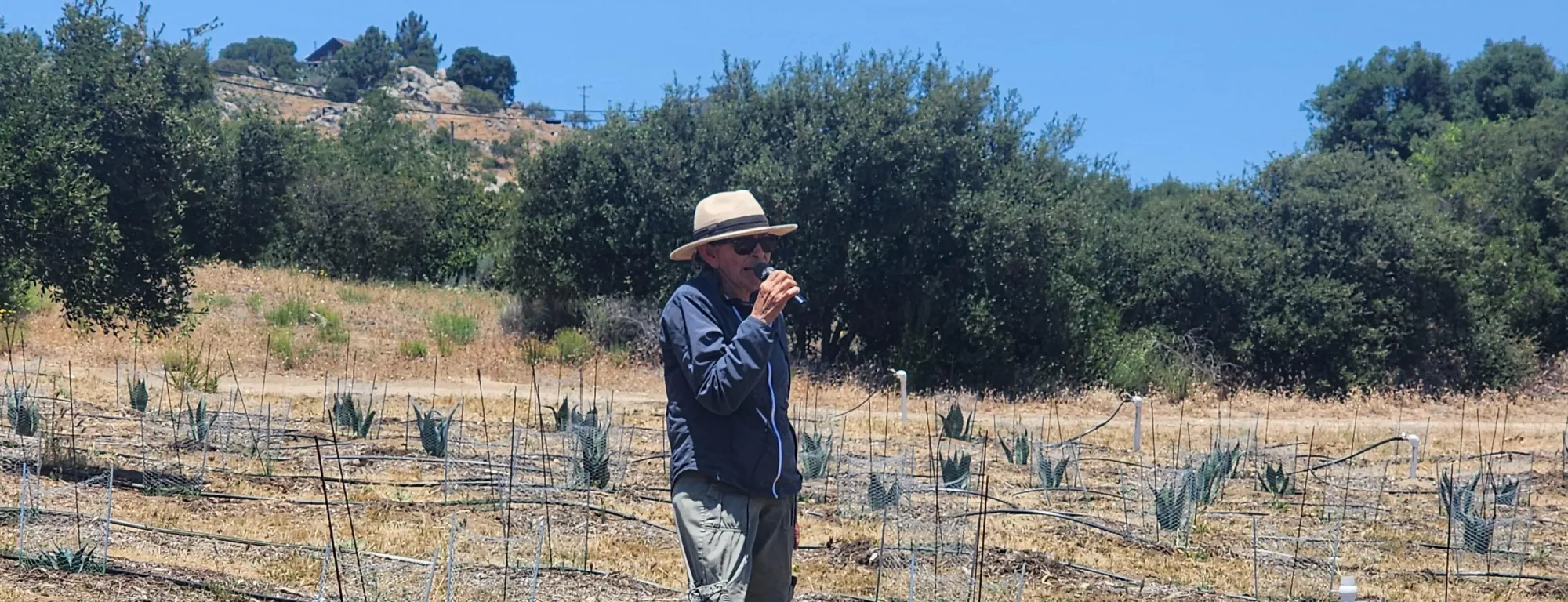
[Ofelia]: I decided to grow agave primarily because of the water situation. Agave is a resilient and intelligent crop. At night, when the environment is cooler, they open their stomata, absorb that moisture, and thus survive. In Campo, we get approximately 10 inches of rain per year, and that's more than enough for the agave to survive once it's acclimated and has developed its roots. We usually plant the agaves (without roots) in May. For the first month, we water them once a week. The second month, every 15 days, and the third month, once a month, until the summer is over. In September and October, the rainfall is sufficient to meet their watering needs. The following year, we water them only if we notice they need it.
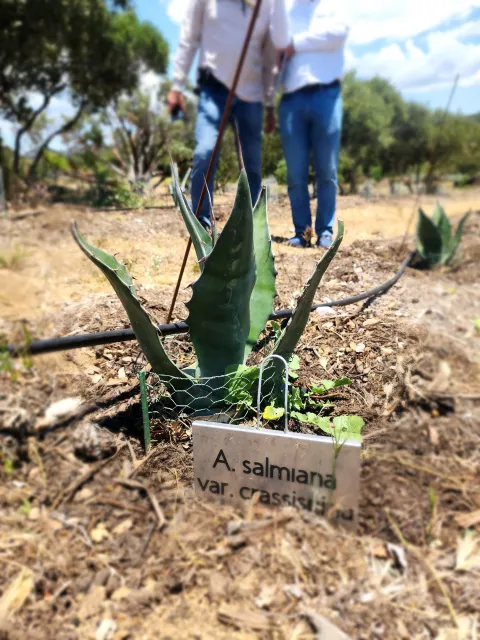
Agave is very resilient, but less processed and undisturbed soil is better for the plants. We take great care of the network of microorganisms and their interactions. When the agave develops roots, we apply either chicken or cow manure. We put it around the plant. We also use mulch to help maintain moisture and cool soil temperature since Campo is at a high altitude, approximately 3,000 feet above sea level.
Among our main challenges is the abundant wildlife on my ranch. These include rabbits, squirrels, and a variety of rodents. Each agave needs to be planted with a gopher basket to protect the roots underground. Rabbits, on the other hand, mainly eat the leaves and could easily eat the younger agaves in a single night. Squirrels eat the younger parts of the plant, which stops growth. So, we not only use the underground baskets when they are young, but we also put another one to protect the plant above ground. After about two years, the plants are large enough that they no longer need the baskets, and at this point, the animals remove the youngest ‘‘pencas’’, performing a necessary task for the agave's maintenance.
Agave is an emerging industry in California, but it's essential to recognize that Mother Nature likes diversity. In recent years, the production of agave has expanded as a monoculture in the state, leading to an increase in the use of agrochemicals. However,growing agave is an environmentally friendly practice that helps protect the ecosystem and promotes sustainability. For instance, some farmers are planting agave alongside their vineyards, with plans to transition fully to agave in the future since it requires 90% less water and significantly fewer agrochemicals. Many agave farmers are not only dedicated to enhancing soil health, conserving water, and protecting the environment; they also believe that California has the potential to become a leader in agave spirits, just as California farmers are leaders in wines and olive oil.
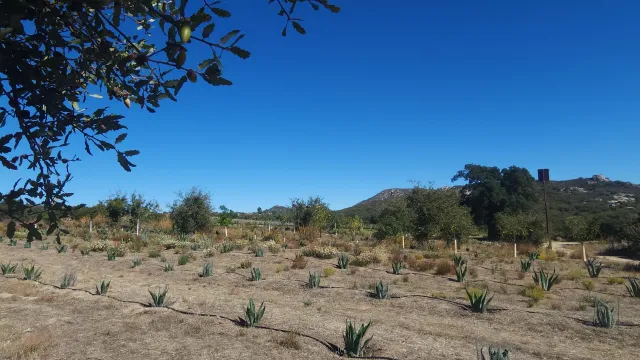
The agave market is quite diverse. Mezcal, for example, has gained significant popularity recently. One advantage of growing agave for mezcal is the wide variety of species that can be used, allowing for different flavor profiles. Mezcal can also be infused with various fruits; in Guanajuato, Mexico, there are mezcals mixed with berries that offer different flavors and colors. Other market opportunities for agave include inulin, which is a natural prebiotic; it can be used for potting soil, also fiber for pet food, insulation for homes, and even tampons. Agave syrup and disposable utensils are additional products derived from this plant. Moreover, when combined with nitrogen-fixing trees like mesquite, agave can produce high-protein silage for livestock.
For those interested in cultivating agave, I advise considering soil health and implementing agroecological practices, prioritizing diversity, and being open to planting multiple agave species.
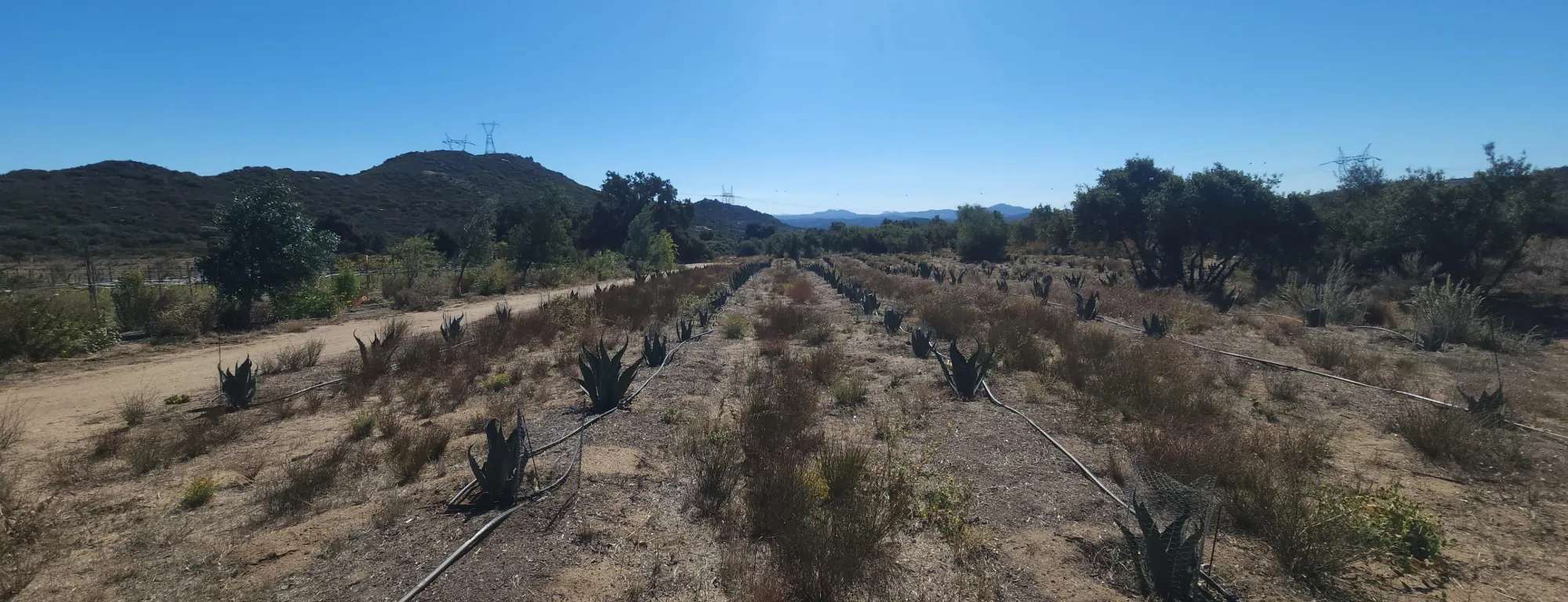
Ofelia is available to discuss agave cultivation with interested farmers, and she also mentioned that her farm is open to farmers and anyone interested in learning more about this crop.
Another useful tool is this agave guide developed by a multidisciplinary team, which serves as a guide for selecting agave based on climatic conditions and characteristics of the different distillates and agave species.
Ofelia collaborated with a team of experts, and together with the UC Organic Agriculture Institute, they developed an agave catalog.
We will be presenting more details about agave production in a Spanish-language workshop at the 2026 Small Farms Conference. If you’d like to learn more, register for the conference here.
References
Black, C. C., & Osmond, C. B. (2003). Crassulacean acid metabolism photosynthesis: ;working the night shift'. Photosynthesis research, 76(1-3), 329–341. https://doi.org/10.1023/A:1024978220193
Nava-Cruz, N. Y., Medina-Morales, M. A., Martinez, J. L., Rodriguez, R., & Aguilar, C. N. (2015). Agave biotechnology: an overview. Critical reviews in biotechnology, 35(4), 546–559. https://doi.org/10.3109/07388551.2014.923813
Davis, S. C., & Ortiz-Cano, H. G. (2023). Lessons from the history of Agave: ecological and cultural context for valuation of CAM. Annals of botany, 132(4), 819–833. https://doi.org/10.1093/aob/mcad072