
Poor Pollination in Raspberries
3/9/2026 - this is a blog post I wrote back in early 2010, but when we switched over to the new blog presentation system last year it was unfortunately removed from the thread. Still, it's good information to have out in the public domain, so I post it back up again. Mark
There are many causes of poor formation and misshaping of raspberry fruit, including bad weather, genetics or viruses. However, the most common cause is a lack of pollinators, such as domestic and wild bees, during the flowering period. Although raspberry flowers are self pollinating, bee activity is still responsible for 90-95% of pollination. Generally, two strong hives are recommended per acre of raspberries.
To understand how poor pollination can result in misshapen fruit, it is important to view the nature of the raspberry flower. The flower is composed of 100-125 pistils, to which the pollen must be transferred to create a mature seed and the druplet surrounding the seed.
Around 75-85 druplets compose a raspberry fruit and each individual druplet has the same structure as a plum, cherry or peach. If each and every one of these druplets is not pollinated, the overall integrity of the fruit is compromised. This is because the immature druplet stays small, does not contribute to the structure and strength of the whole, and the resulting fruit is misshapen and crumbly (i.e. falls apart easily).
The pictures below demonstrate what improper pollination will look like in raspberry. In this case, many of the druplets at the tip of the fruit have not apparently been pollinated, and are staying immature and small. Beyond that, one can see clearly in the second picture that there is excess nectar accumulating on the flower, simply because it has not been collected by bees. Later, this nectar is certain to cause problems with sooty mold and other fungi, which flourish in this nutrient rich medium.
There are several things raspberry growers must know of when managing bees:
1. Hives must be strong. There should be many frames of brood in the spring and lots of bees in the boxes. Anything less will be an indication of a weak beehive. Flight activity should be heavy, and the raspberry field should be full of bees, not just a bee here or there.
2. Raspberry flowers are supposed to be quite attractive to honeybees. However, the possibility remains that they are being attracted to other flowers in the vicinity, either because they are more attractive, or because the raspberry crop is overwatered, meaning the nectar might be thin and not attractive. If a grower’s bees are not going to his or her field, they should be followed out to see where they are going.
3. Some pesticides, if not directly toxic to bees, may yet serve to repel them. Growers should take note of any changes in bee behavior or hive strength following pesticide application.
I thank Dr. Eric Mussen from UC Davis for his valuable insight and contributions on this issue.
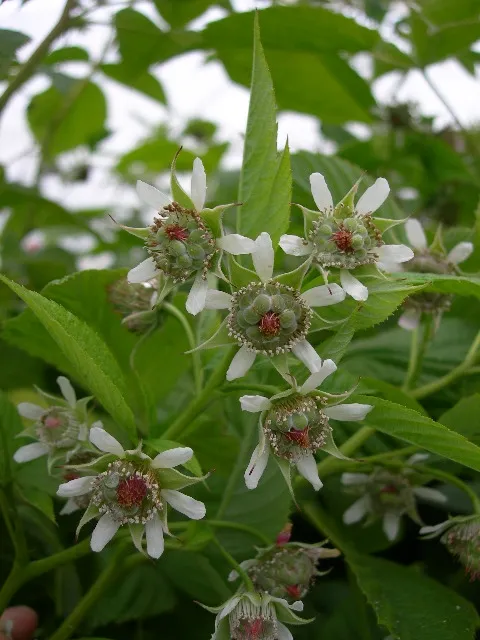
Poorly pollinated raspberry fruit, note the lack of full druplets on each flower. Photo Mark Bolda
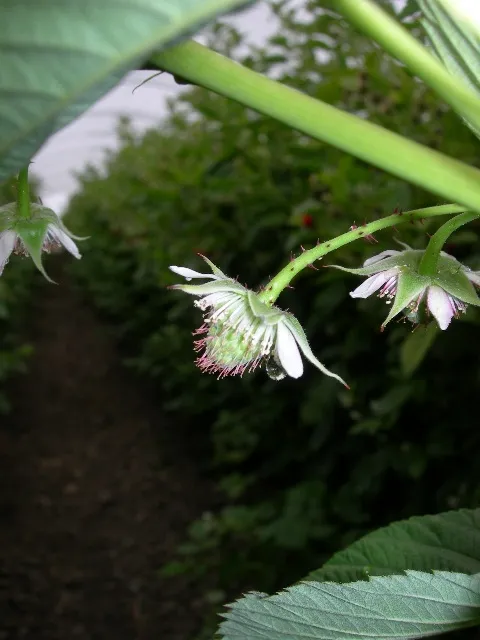
Nectar dripping out of a flower for lack of collection by pollinators such as honeybees.