
Fuel Their Minds: Two Decades of UCCE Experiential Health Education Improves the Health of Preschoolers
The Issue
Children consistently underconsume fruits and vegetables. This increases the risk of malnutrition which impacts growth, immune function, overall development, obesity and diet-related chronic diseases. Evidence shows nutrition education can increase children’s intake of these crucial foods.
Often, young children eat a limited variety of foods (often referred to as “picky eating”), because familiarity helps them feel safe and reduces stress. This instinct likely evolved to protect children from eating harmful substances once they can move more independently away from caregivers. Combined, this narrowing of diet can limit variety and reduce fruit and vegetable intake during a critical period.
Repeated positive exposure to new foods helps children gradually accept them, making early childhood an important time to support families with practical, research-based strategies. Nutrition education at this age is therefore critical and should emphasize the introduction and continued exposure to highly nutritious foods so children are more likely to accept and consume them throughout life.
How UC Delivers
The UC Cooperative Extension (UCCE) Nutrition Education Program in Yolo County, primarily funded by the federal Supplemental Nutrition Assistance Program-Education (SNAP-Ed) began in 2005 and remained in continuous operation for 20 years. During a UCCE Advisor’s needs assessment, research and conversations with local community partners indicated a service gap for preschool-age children, as other age groups were already being served by existing agencies. Preschool-age children became the priority for extension efforts and curriculum options were explored.
When outreach by Cooperative Extension began, the YMCA of Woodland was the first site to express interest. Serving Spanish-speaking families and using a Montessori approach, the preschool found existing English-only, traditionally structured curricula unsuitable. In response, the existing curriculum was adapted by the UCCE Advisor and Nutrition Educators to meet community needs and renamed Fuel Their Minds (in consultation with the original author) to reflect its growth and broader application.
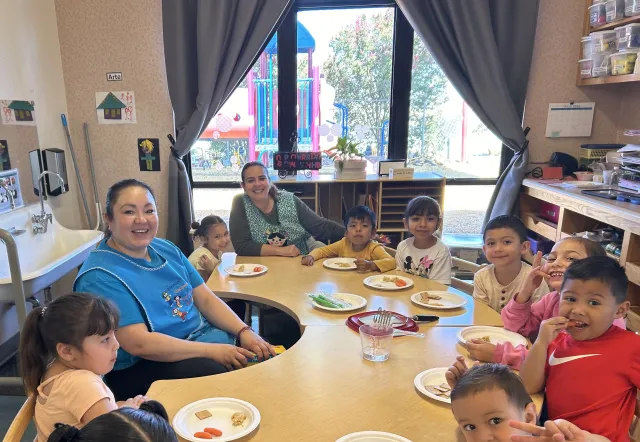
Recognizing that preschool educators lacked the time and resources to develop hands-on materials for pre-literate learners, UCCE educators designed and produced ready-to-implement kits. This approach supported fidelity of Fuel Their Mind lessons while integrating structured training, feedback, and paperwork collection with each kit exchange. At its peak, the program delivered one new activity per week over three years, building a comprehensive foundation in nutrition, physical activity, hygiene, and overall health. Additionally, each year, UCCE educators coordinate taste tests with novel foods to increase exposure to healthy options. Foods like hummus, sunflower seed butter, blood oranges, and sugar snap peas were prepared and brought into the classroom for students to try.
As the program expanded to additional sites, new educators were hired. Program funding grew in Yolo from $53,096 in FFY2006 to $730,692 in FFY2026. Yolo County Head Start sites were added, and at one point all but one eligible preschool in the county was enrolled. Over the course of 20 years, 16,268 young children in Yolo received nutrition and health education. The program expanded into Sacramento in 2022.
The Impact
On average, preschool students participating in Fuel Their Minds lessons engage in 4 more hours of nutrition education than their statewide peers using other materials and methods. Community-driven, responsive, culturally appropriate curriculum kits proved to be a successful model for preschool classrooms. This is clearly demonstrated by a teacher at Whitehead State Preschool, who during the 2024-2025 school year, delivered more than 50 hours of Fuel Their Minds activities!
Catalyst Kids teachers at Madison Migrant Centers have implemented Fuel Their Minds activities for more than 10 years. In 2024, they developed a fruit and vegetable extension activity to further incorporate nutrition activities with children in their care. One teacher shared, “We extended [the Very Hungry Caterpillar] activity to try all the fruit that the caterpillar ate when making fruit kebabs."
During the 2024-2025 school year, more than 787 students tried a novel food with 78% expressing willingness to try the target food again. After one tasting, a teacher shared, “I enjoy the taste tests because afterwards, children were more open to trying new foods in the classroom and at home.”
Materials were used in one of the first federally funded large scale research studies to address childhood obesity at the population level in the nation. Results showed an increase in fruit and vegetable consumption amongst participants. These findings support the use of educational materials with young children to increase fruit and vegetable consumption and develop lifelong healthy habits that lower disease risk and improve quality of life.
Due to the elimination of the federal SNAP-Ed funding and national policies that do not allow the Expanded Food and Nutrition Education Program to directly educate young children, this program will be ending in 2026.