
Oh No! Another Infestation!
Blog by Michelle Schlegel
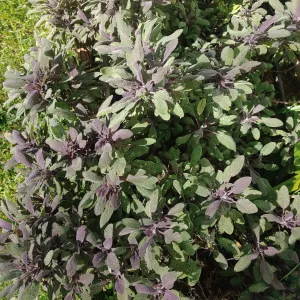
Last night, I wanted to make Chicken Scallopini and needed fresh sage. In the back garden are my culinary sage plants. I had noticed a few Leafhoppers last year, but didn’t treat the plant. I was hoping a cold winter would kill them. Well, that didn’t happen. This spring is its usual buggy self, but the sage plant has a full- blown infestation going on now. Needless to say, my Scallopini had sage leaves with bug bites on them…YUK!
There are many leafhoppers, with as many as 20,000 species. Leafhoppers have piercing, sucking mouthparts that suck out plant juices. In feeding, they remove Chlorophyl from the leaf. The affected leaves have white or yellowish spots called ‘stippling’. Eventually, the leaves can yellow, curl, and become stunted. Some leafhoppers can transmit diseases. In California, one of the more feared is the Glassy-Winged Sharpshooter. This leafhopper, up close, is downright UGLY! Its primary passion is for California's grape plants. They can spread a bacterium that causes Pierce’s disease. This disease weakens and eventually kills the plant. The California Department of Food and Agriculture waged an aggressive campaign to limit their spread and has limited them, so far. Sadly, Solano County was on their list as an infested area.
The Leafhopper on my plant is small, green, and about 1/8 Inch in length. I sure have a lot of them all over this plant, so I have to use something that will quickly kill them on contact. I really don’t want to use chemicals because we eat the leaves that I would be spraying. There are a few organic choices. Neem oil is a strong, pungent oil, and that would not be too palatable at all. Insecticidal soaps mostly kill the young leafhoppers but not the adults. I was able to find a Pyrethrin (made from Chrysanthemums) that has canola oil as a carrier and does not leave a residue. I will probably have to spray the sage a few times to make sure the population is depleted enough. Ladybeetles and Lacewings will be good to help manage the population later.
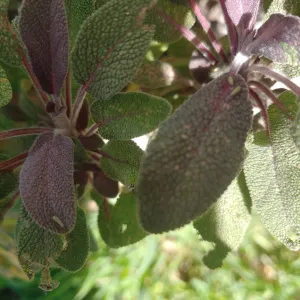
I sure hope I can get a handle on these Leafhoppers. My purple sage plant is big and beautiful, and hopefully it will stay that way!
Banner photo: "Homalodisca vitripennis - Glassy-winged sharpshooter (16283561424)" by Insects Unlocked is licensed under CC BY 2.0.