Incorporating California Native Plants into Your Landscape
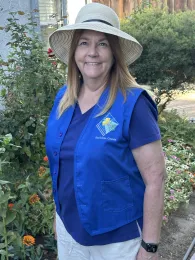
By Barbara Kissinger-Santos
California’s diverse climate and ecosystems make it home to thousands of native plant species, many of which are perfectly suited for home gardens. Incorporating California natives into your landscape not only enhances beauty but also supports local wildlife, conserves water and reduces maintenance needs. Here are some ideas on how to successfully integrate these plants into your outdoor spaces.
Why Choose California Natives?
Native plants have evolved to thrive in California’s unique conditions — from coastal fog belts to arid inland valleys. This adaptation means they typically require less irrigation, fertilizer, and pest control than non-native species once established. Additionally, they provide critical habitat and food sources for pollinators, birds, and beneficial insects.
Key benefits include:
Water efficiency:
Many natives are drought-tolerant, reducing reliance on supplemental irrigation.
Wildlife support:
Native flowers, seeds, and foliage sustain local species year-round.
Low maintenance:
Reduced need for chemical inputs and pruning.
Soil health:
Deep root systems improve soil structure and prevent erosion.
Planning Your Native Landscape
Before planting, assess your site’s soil type, irrigation, and sun exposure. California’s native flora is incredibly diverse, so matching plants to your specific conditions is essential for success.
Steps to plan effectively:
Identify your plant community:
Determine whether your area resembles a chaparral, oak woodland, coastal sage scrub, or grassland ecosystem.
Consider seasonal interest:
Choose species that bloom at different times to maintain year-round appeal.
Group by water needs:
Even drought-tolerant plants need water during establishment; grouping plants with similar needs simplifies irrigation.
Plan for mature size:
Many natives grow larger than expected; give them space to reach their natural form.
Selecting Native Plants
Start with reliable, widely available species before experimenting with more specialized plants. Some popular choices include:
California poppy (Eschscholzia californica)– The state flower, with vibrant orange blooms in spring.
Toyon (Heteromeles arbutifolia)– Evergreen shrub with red winter berries that attract birds.
Manzanita (Arctostaphylos spp.)– Striking bark, urn-shaped flowers, and drought tolerance.
Ceanothus (Ceanothus spp.)– Blue-flowering shrubs that fix nitrogen in the soil.
Yarrow (Achillea millefolium)– Hardy perennial with clusters of white or yellow flowers.
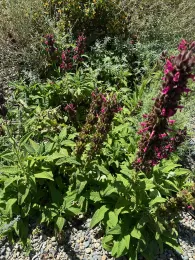
Cleveland Sage (Salvia clevelandii) All salvia attract hummingbirds; seeds attract sparrows and other small birds.
California Lilac (Ceanothus thrysiflorus) Blooms late winter, early spring, attracting hummingbirds. Seeds attract small birds. Supports several Caterpillar species.
Hummingbird Sage (Salvia spathacea) Evergreen perennial. Blooms Winter – Summer. Popular with hummingbirds. Likes shade.
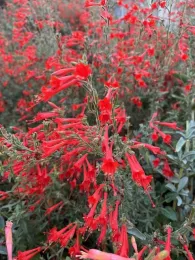
California Fuchsia (Epilobium canum) Perennial. Blooms summer & winter. A hummingbird favorite.
Bush Monkeyflower (Diplacus arantiacus) Shrub with tubular flowers that bloom from May to October, attracting hummingbirds and bees.
When possible, source plants from reputable nurseries specializing in local ecotypes to ensure genetic suitability for your region.
Soil Preparation and Planting
Most California natives prefer well-drained soils. UCANR advises against heavy soil amendments, as many natives are adapted to lean, low-nutrient conditions. Instead:
Loosen compacted soil to improve root penetration.
Avoid over-fertilizing, which can encourage weak, fast growth that is susceptible to pests.
Plant in the fall to take advantage of winter rains, allowing roots to establish before summer heat.
For clay soils, consider mounding or raised beds to improve drainage.
Watering and Irrigation
While drought-tolerant, most natives require regular watering during their first one to two years. UCANR recommends:
Deep, infrequent watering to encourage deep root growth.
Gradually reducing irrigation after establishment.
Using drip irrigation or soaker hoses to minimize evaporation and leaf wetness.
Once established, many natives can survive solely on rainfall in most regions, though occasional deep watering during prolonged drought can help maintain vigor.
Additional information and resources:
California Native Plants for the Landscape. https://ucanr.edu/sites/default/files/2019-12/271397.pdf
Calscape Save Water with California Native Plants https://www.calscape.org/save-water
Barbara Kissinger Santos has been a UC Master Gardener in Stanislaus County with UC Cooperative Extension since 2024