
April Fool! It's a Syrphid Fly!
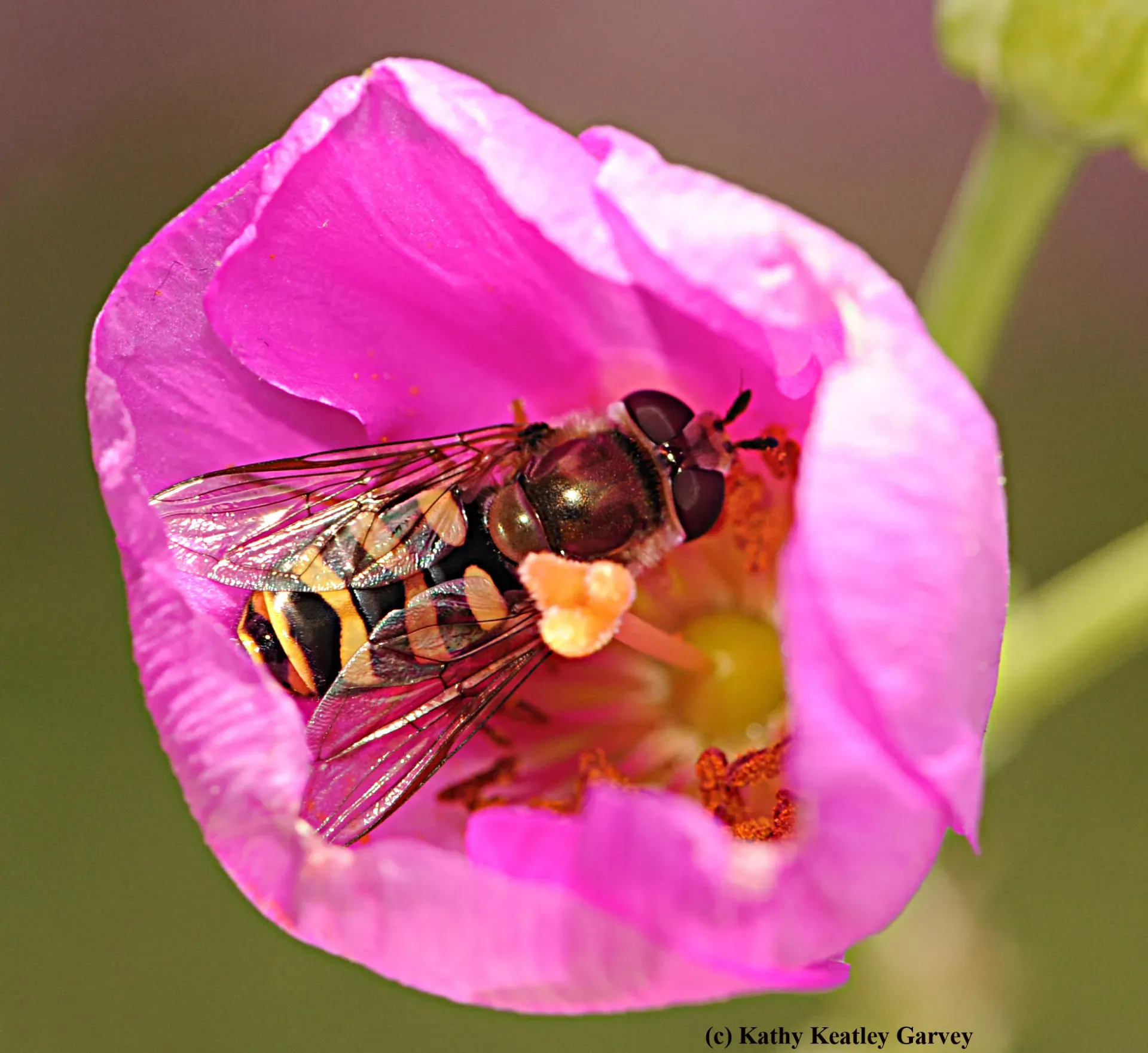
It's April Fool's Day and a good time to ask: "How many of you have been fooled thinking a syrphid fly is a bee?"
To the untrained eye, everything that lands on a flower is a bee!
However, syrphid flies, also known as hover flies or flower flies, are easily distinguished for honey bees:
- Syrphid flies have one pair of wings, while honey bees have two
- Syrphid flies have large eyes and short antennae
- Syrphid flies hover; honey bees do not
- Honey bees have pollen sacs, syrphid flies do not
- Syrphid flies belong to the order Diptera, while honey bees belong to Hymenoptera
Many syrphid flies have yellow and black stripes, and are mistaken for wasps. In fact, they are a classic example of Batesian mimicry.
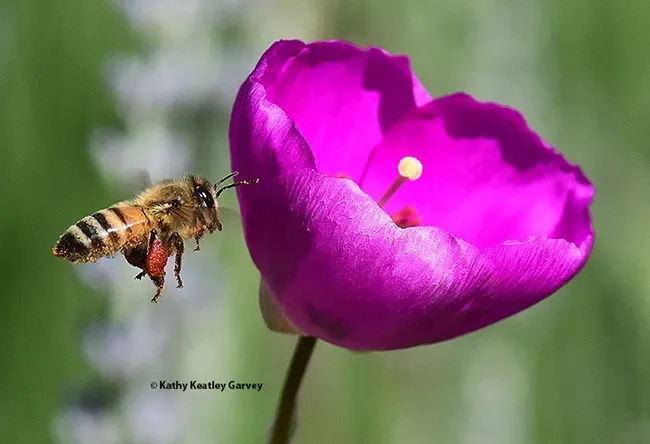
Both Pollinators
Both are pollinators. The honey bee is probably the best known pollinator, but syrphids are highly efficient, too. And in their larval stage, syrphids are voracious predators of aphids.
"Aphids alone cause tens of millions of dollars of damage to crops worldwide every year," Wikipedia tells us, adding that syrphid flies "are important natural enemies of these pests, and can be used in biological control. Some adult syrphid flies are important pollinators. Some orchids mimic aphid alarm scent (pheromones), which attracts hoverflies. The hoverflies then pollinate the orchids."
To date, scientists have described about 6,000 species of syrphids in 200 genera. They're found on all continents except on Antartica.
And still there's that mistaken identity.
Hey, we could make the syrphid fly an "honorary bee" or crown her a "queen bee" and give her a retinue.