
Fire Resilient Gardening Blooms in the Wake of the Palisades and Eaton Fires
In the wake of the 2025 Palisades and Eaton wildfires, the UC Master Gardener Program of Los Angeles County has emerged as a vital resource for residents and a collaborative partner for UC ANR advisors, academic researchers and organizations working to understand wildfire impacts and support landscape recovery in Los Angeles. Over the past year, their work has provided not only tangible solutions for communities affected by the fires, but also something just as important: hope — hope that recovery, while difficult, is possible.
Hitting the Ground Running
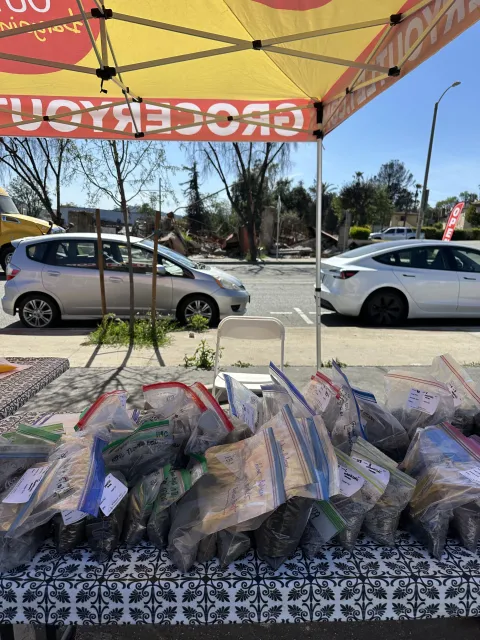
Following the devastating Los Angeles fires, UC Master Gardener volunteers hit the ground running, creating a Fire Resilient Gardens team. Spearheaded by Jessica Yarger, associate program coordinator, and UC Master Gardener volunteer Joleen O'Brien, the effort quickly gained momentum. In the beginning, they reached out to and relied on support from the UC Master Gardener Program of Sonoma County, which drew on its experience with the 2017 Tubbs Fire. The Los Angeles Fire Resilient Gardens team quickly grew to 37 UC Master Gardener volunteers who focused their efforts almost exclusively on the Eaton Fire burn area in Altadena and Sierra Madre. Many of the volunteers live in or near the impacted communities, with an emphasis on fire recovery outreach and research. That early response quickly grew into a larger effort.
UC Master Gardener volunteer Kristy Brauch, who leads the pollinator team and lives less than a mile from the burn scar, began collecting soil samples within days of the fire. "I kind of took from my background — which may sound weird coming from the pollinator team — but also from my experience as a naturalist and my understanding of fire ecology," Brauch said. "Within days after the fire, I went out and started collecting soil samples. I didn't know what I was going to do with them; I just knew something needed to happen."
Brauch wasn't alone. Many residents were left wondering what had settled into their soil — ash, heavy metals or other contaminants carried through the neighborhood. The uncertainty felt close to home. Gardens where children once played and backyards where families grew food no longer felt as safe. Soil testing became a way to get answers. With results, residents could better understand the risks, decide which areas to avoid and take the first steps toward protecting their families and restoring their landscapes. Within three months, UC Master Gardeners had connected with about 500 residents and collected soil samples across impacted neighborhoods. With hundreds of samples collected, they began seeking partners who could help test them.
On March 7, 2025, an initial partnership began to take shape between the UC Master Gardeners of Los Angeles, TreePeople and UCLA after meeting at the 4th Los Angeles Urban Soil Symposium. Brauch and a group of volunteers attended with one goal in mind: not to leave without a partner. Brauch said, "Bringing the [UC] Master Gardener component into it was the easy part for me," referring to the program's strong community connection. "Soil testing was exactly what we needed."
TreePeople and UCLA proved to be strong partners, contributing soil testing expertise and resources, while UC Master Gardener volunteers connected with residents eager to have their soil tested. Together, this collaboration transformed a grassroots effort into a coordinated, community-driven response laying the foundation for expanded research, outreach and meaningful support to the people impacted by the Eaton Fire.
Fire Recovery Outreach and Research
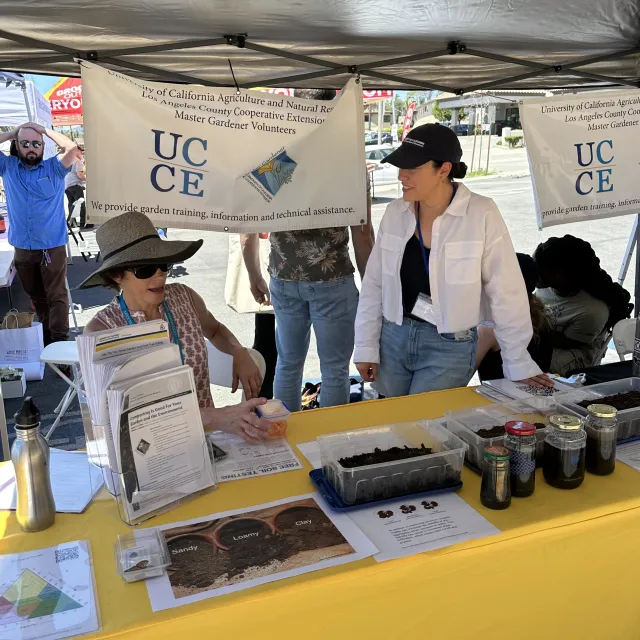
The partnership led to a four-part Clean Soil event series held between May and December. The first event took place at a Grocery Outlet parking lot in Altadena, one of the few structures left standing after the fire.
UC Master Gardener trainee Lakshmi Reddy said that during these events, "Residents were very concerned about soil contamination and their children's exposure after the fire. We recommended practical steps like adding compost and mulch to stabilize the soil and encouraging good hygiene practices such as handwashing and removing shoes."
Following the first event, three additional outreach events took place at Washington Park in Pasadena later in the year, with a continued focus on residents bringing soil samples from their properties for free soil testing and consultation.
UC Master Gardener volunteers, working alongside UC ANR soil health and organic materials management advisor Natalie Levy, Ph.D., demonstrated proper mulch and compost application methods onsite. These outreach events collectively laid a strong foundation to support Los Angeles' soil needs after the fire.
Expanding Community Reach
The Fire Resilient Gardens team also showed up at seven community events, including Summer in the Neighborhood in Altadena, and maintained a regular presence at the Pasadena farmers markets and other neighborhood gatherings throughout the year. At each event, volunteers answered questions about damaged landscapes, safe gardening practices and how to begin again.
Research That Supports Recovery
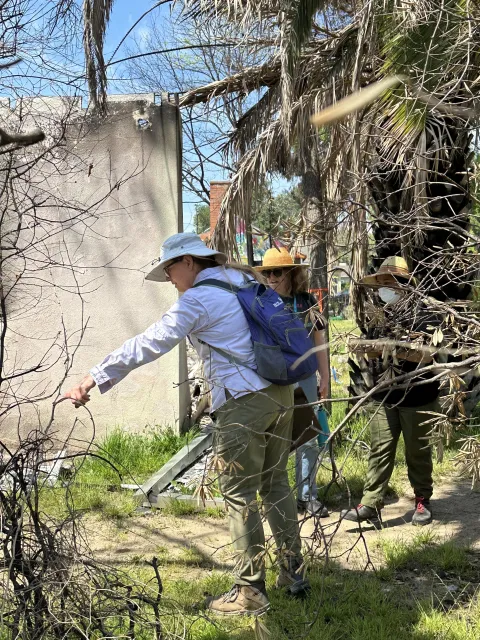
At the same time, the Fire Resilient Gardens team partnered with UC ANR environmental horticulture advisor Chris Shogren, Ph.D., to support research on fire-impacted trees. UC Master Gardeners walked neighborhoods and documented tree damage. They focused on capturing conditions early, before trees began to recover.
"We documented all the damage [… ] We wanted to get that point of contact before they started healing so we could clearly see the damage," said Katie Kasprzyk.
By mobilizing quickly and receiving specialized training, UC Master Gardeners played an important role in documenting research that will help shape our understanding of how fire affects urban landscapes compared to woodland areas.
Grounded in Community
This project was deeply personal. Many UC Master Gardener volunteers were also impacted by the fire while supporting others who had experienced loss.
According to Brauch, "Sometimes […] people didn't need numbers or technical information; they simply wanted someone to hear the story of a tree." She added that residents would say, "'I don't want to cut down that tree because it's all I have left.' It was a very emotional experience, and I felt honored to be there with the team, learning from the community and understanding what people were going through."
These moments showed the unique role UC Master Gardeners play. They bring science-based information, but they also listen and support their communities. Jessica Yarger said, "UC Master Gardeners occupy a really unique space. We work alongside scientists and researchers, but we're also on the ground with communities. That helps keep the human side of the work in focus because beyond the numbers and data, this is about how these issues are unfolding in people's real lives."
Planting Hope and Continued Work
More than a year later, recovery is still ongoing.
"When we're out in the field — whether at tabling events or community gatherings — we see how much people need hope," Brauch said. "We're not just sharing science; we're sharing the stories of recovery. We're already seeing flowers return, and the landscapes are beginning to come back. Trees can grow again, and we can help residents repair their soil as they rebuild."
The work continues as UC Master Gardeners expand outreach and prepare to support fire-wise landscaping efforts. New UC Master Gardener volunteers are being trained in climate- and fire-resilient gardening, helping ensure this work continues into the future.
AI tools were used in the preparation of this article to assist with organizing content and reviewing grammar, clarity and sentence structure in alignment with UC guidelines. All content was reviewed, verified and approved by the author prior to publication.