
UC Davis Scientist Spotlighted in 'Antenna'
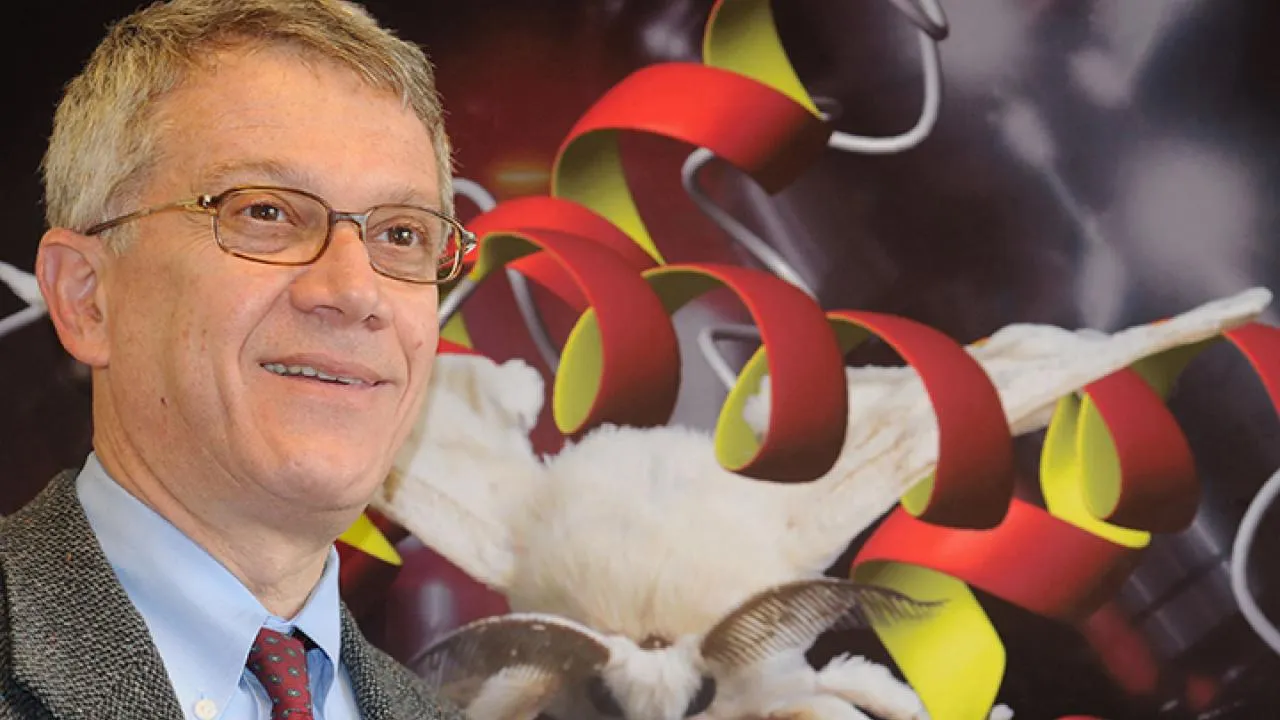
You could say that UC Davis Distinguished Professor Walter Leal, Honorary Fellow of the Royal Entomological Society (RES), is being treated "royally."
He's featured in the RES publication, Antenna, Volume 50, celebrating the organization's 50th year.
Jozsef Vuts, a chemical ecologist with Rothamsted Research and author of the article, wrote that Leal is "an iconic and leading figure in insect chemical ecology" and that his research is "unravelling the molecular mechanisms in the olfactory system of moths and mosquitoes, including odorant binding, release and transport, and pH-dependent conformational changes."
Vuts related that "a long time ago, the very first paper that it was compulsory to read (when beginning his master's degree program) was Professor Leal’s seminal review on the chemical ecology of scarab beetles."
Leal, a distinguished professor with the Department of Molecular and Cellular Biology, and a former professor and chair with the UC Davis Department of Entomology, holds many national and international honors, including an elected member of the National Academy of Sciences (NAS), Fellow of the American Association for the Advancement of Science (2005), Fellow of the Entomological Society of America (2009) and Fellow of the National Academy of Inventors (2019).
Among Leal’s scores of accomplishments: he co-chaired the 2016 International Congress of Entomology in Orlando, Fla., a conference that drew 6,682 registrants from 102 countries.
Leal, who joined the UC Davis faculty in 2000, is the only UC Davis faculty member to receive all three of the Academic Senate’s major honors: the 2020 Distinguished Teaching Award for Undergraduate Teaching, the 2022 Distinguished Scholarly Public Service Award, and the 2024 Faculty Distinguished Research Award. His teaching honors also include the 2020 Award for Excellence in Teaching from the Pacific Branch of ESA.
Leal, truly "a citizen of the world," speaks Portuguese, Japanese and English. A native of Brazil, he holds a bachelor’s degree in chemical engineering from the Federal University of Pernambuco, Brazil; a master’s degree in agricultural chemistry from Mie University, Japan; and a doctorate in applied biochemistry from the University of Tsukuba, Japan. He completed a postdoctoral fellowship in entomology and chemical ecology at the National Institute of Sericultural and Entomological Science, Japan.
UC Davis Distinguished Professor Bruce Hammock (1947-2026), a longtime NAS member, once commented: "Walter is the elevator bunny on high, a full-time teacher, a full-time scientist, and he is engaged in multiple projects that make the university community a better place, all at the same time."
Some excerpts from the Antenna interview, courtesy of RES:
How has the field of chemical ecology changed since you started?
"It has changed dramatically, because the foundation of chemical ecology was pheromones. People started discovering pheromones through the behaviour of insects and antennal electrophysiology and so forth. And then came the study of plant–insect interactions, later using molecular biology approaches. One issue in the field of chemical ecology is that we are not able to attract many people working with aquatic insects or the aquatic environment in general. Chemical communication in water is quite different and very exciting. We have people from time to time, but that’s not a sector that is following the general trend of chemical ecology. We cannot define chemical ecology today in the same way as it was done before. The definition of the field is the same, but its scope is changing. I love that and want to see people attacking the same subject from different angles."
Have new techniques brought new areas into chemical ecology?
"Definitely. For example, when we started, we had no idea about genomes and transcriptomes and things like that. These are now standard tools that help answer very important questions. The techniques are very important, but not the goal. For example, many years ago, we discovered a pheromone by just purifying it via behaviour-guided isolation. Then came GC-EAD as a shortcut to guide us and give us the active peak to start the behavioural studies."
Does our research have to address an important problem, or can it be purely curiosity driven?
"I think both. For example, at the moment, I am working with the Asian Citrus Psyllid (Diaphorina citri). So that’s focussed research, because it’s a big problem in citrus cultures, and they want ways and means to reduce populations and, more importantly, reduce transmission of the bacterium that causes the disease. This is applied research. However, some other research can be curiosity-driven, because it allows a deeper understanding of the field. These are two different sectors of chemical ecology, and both are important in the advancement of the field."
What unsolved questions in entomology and chemical ecology do you find most exciting or pressing today?
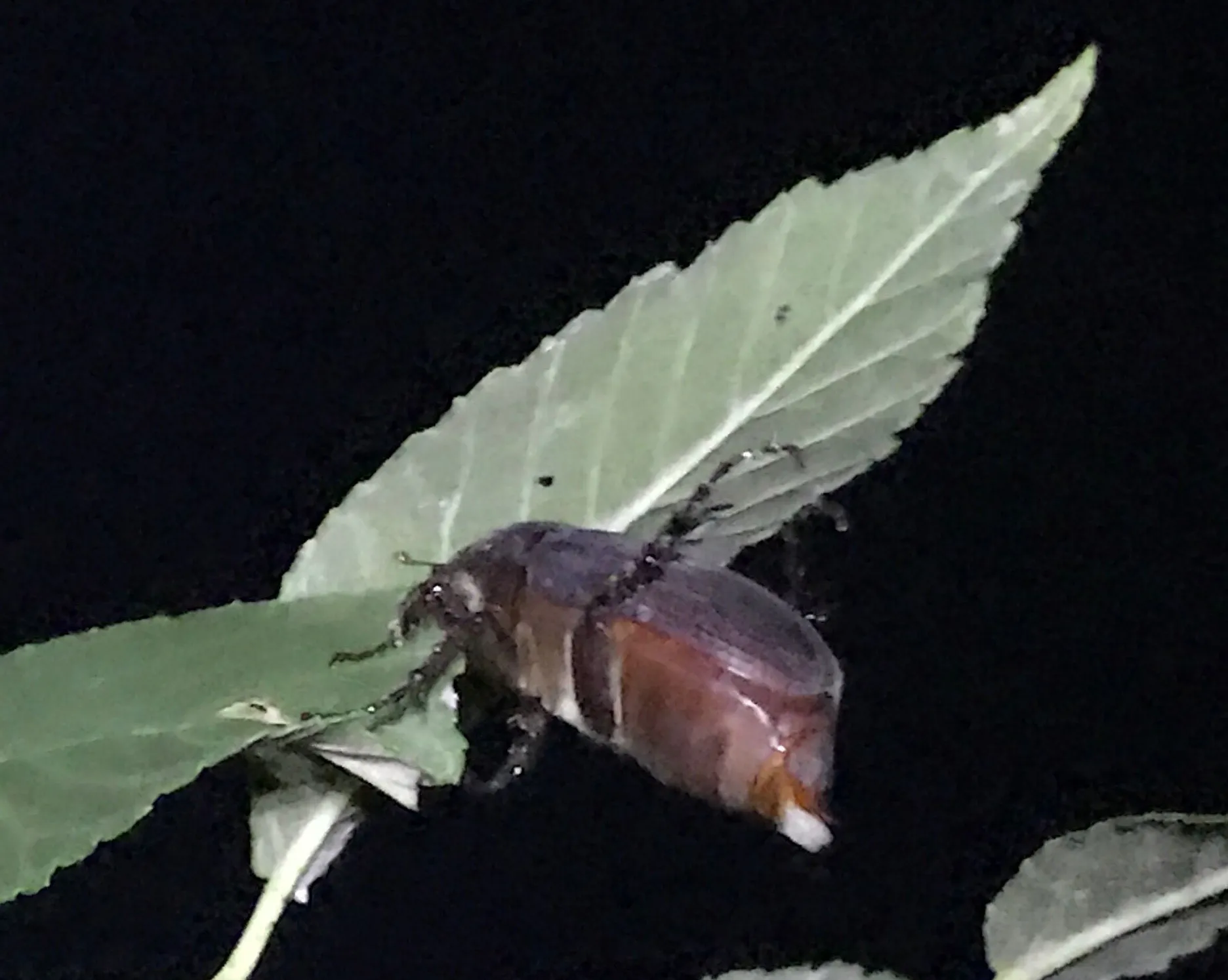
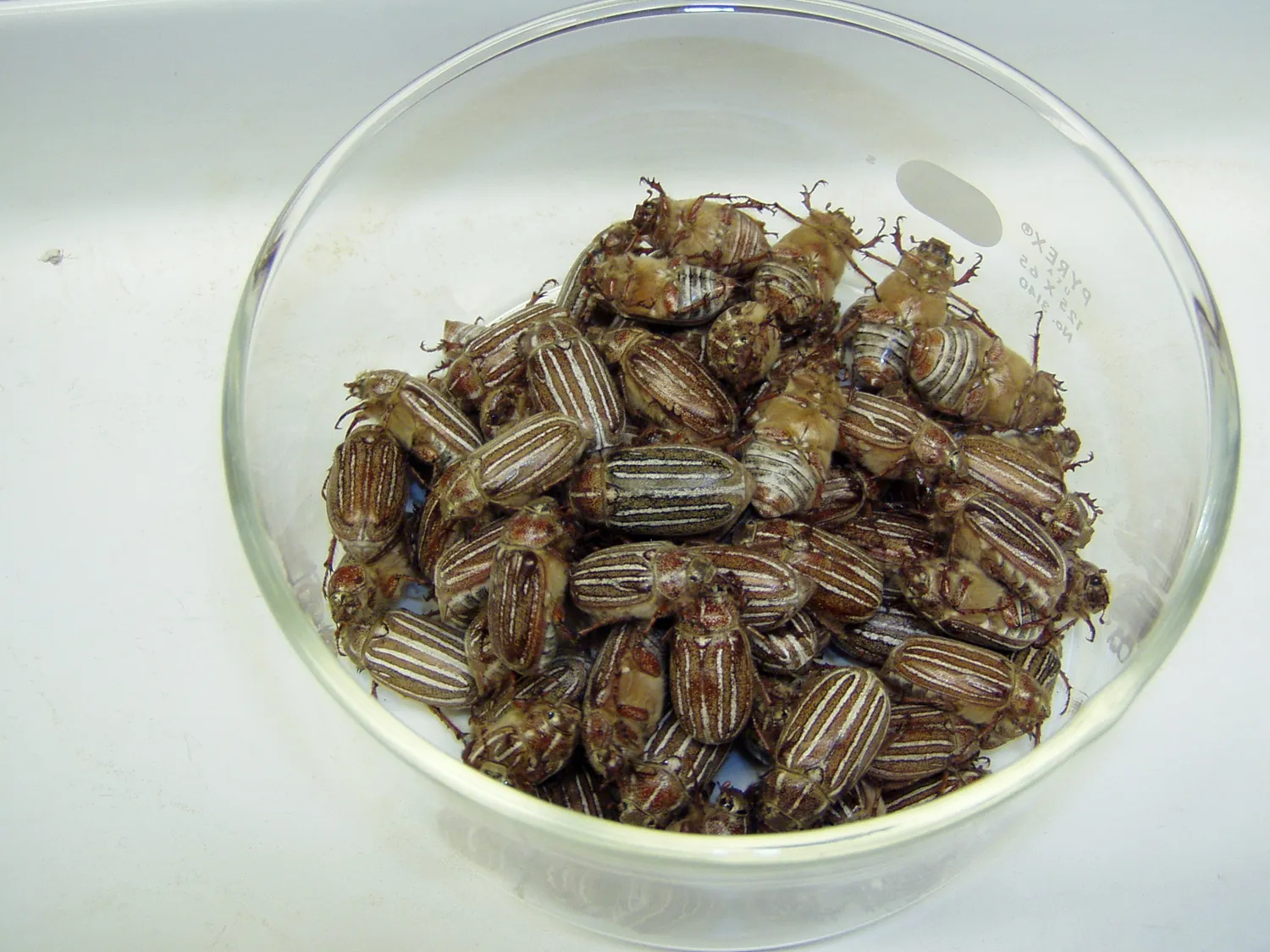
"There is a species of scarab beetle here in California that I have worked on for many years, and I will not retire until I find its pheromone! I know for sure that the compound is there, but in amounts so small that I cannot take a mass spectrum of it. It doesn’t undergo derivatisation, except once by accident, but that’s the only information I know about the structure. I’ve already talked to one of the best chemists in the field, Stephan Schulz in Germany, and showed him what I had, and he even tried with his graduate student to synthesise some molecules to see if their mass spectra matched, but they didn’t. So, to me this is a very important problem, but for everyone else it probably isn’t. People sometimes ask me: 'How long does it take to isolate a pheromone?' I tell them that sometimes it takes an afternoon, sometimes thirty years."
Most-Cited Paper
Leal told Vutz that one of his most highly cited research papers "is the paper published in the Proceedings of the National Academy of Sciences (PNAS) where we discovered the receptor for DEET." (The paper, Mosquito Odorant Receptor for DEET and Methyl Jasmonate, is linked here.
"In a more recent paper in PNAS, we discovered that mosquito odorant receptors respond to the smell of old, degraded samples, but not to fresh ones," Leal told the author. "Why? It figures because old samples generate acetaldehyde, which triggers the most sensitive receptor we have ever found in all the species that we have studied. Then we asked the mosquito: 'why do you like acetaldehyde?' Well, because it is an oviposition attractant. That paper is also not very well cited; however, it’s a nice story, and the discovery was very exciting. Maybe the field doesn’t yet need this information, but it’s sitting there and will one day be available for researchers going in that direction."
See more at https://www.royensoc.co.uk/antenna-50-1-interview-walter-leal/
Cover image: UC Davis Distinguished Professor Walter Leal on the UC Davis campus. (Photo by T. J. Ushing)