
Growing Food in the Lake Tahoe Basin: Site, Soil, and Irrigation
Growing food in Tahoe is not for the faint of heart - it can freeze any night of the year, it can snow in any month, but generally our frost-free growing season lasts at least 90 days--from mid-June to mid-September, which is enough to grow a wide variety of edible crops. Here we'll walk you through what you need to know to get growing in Tahoe!
Frost Free Dates
For annual vegetables, i.e. ones that you plant in spring and harvest by fall, the most important dates to work off of are your estimated frost-free growing dates. The National Gardening Association provides a tool you can look this up for your individual zip code. This will give you a guideline not only when to plant, but which variety to select based on number of days to maturity indicated on most seed packets and plant labels. Our crop-by-crop guide will help you know which crops you can try planting before a first estimated frost date, versus those that should definitely be grown inside until the thread of frost has passed.
Hardiness Zones
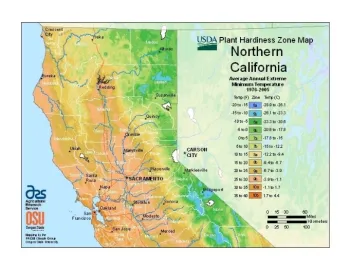
The USDA Plant Hardiness Zone Map is the standard by which gardeners and growers can determine which perennial plants, shrubs, and trees are most likely to thrive at a location. The map is based on the average annual minimum winter temperature, divided into10-degree Fahrenheit zones. Zones in the Lake Tahoe Basin range from 6a to 7b, depending on your individual location. Look up your Hardiness Zone on this interactive map provided by the U.S. Department of Agriculture. This will help guide you to appropriate varieties of fruit trees and perennial edibles such as Asparagus, Herbs, and Rhubarb you can grow.
Soil Types & Amendments
Soil Type: Texture & Water Holding Capacity
Soil scientists have many ways to break down types of soils, but the three three general types used most often for the home gardener include:
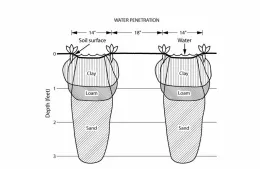
- Sandy soils will crumble and fall apart when released. Water will tend to go straight down in this type of soil.
- Loamy soils will hold together but then easily break apart. Water will move slowly and will spread evenly. This type is the ideal for gardening.
- Clay soils will hold together without breaking and water will be absorbed very slowly.
By far the most common type of soil in the Tahoe basin is sandy soil, composed of mostly decomposed granite, also known as DG. This soil doesn't hold moisture for very long at all, and contains few nutrients that allow edible plants to thrive, so we almost always need to amend our soil to grow food. Common soil amendments to improve soil texture and water holding capacity include:
- Topsoil: In many areas in Tahoe, new topsoil is required. Natives grow in it, but little else.
- Compost, including composted manures and commercial blends often labeled "Planting mix", is super for amending Tahoe soil. These materials can be purchased by the truckload or by the bag from most garden centers.
Soil Amendments & Nutrients
In addition to amending your soil to obtain the appropriate texture and water holding capacity, for edible crops you'll also need to provide sources of plant nutrients, the most important being nitrogen.
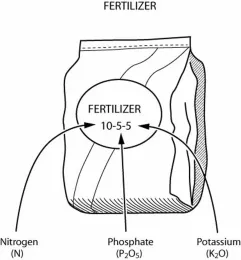
The most straightforward way of ensuring fruits and vegetables get the right balance of nutrients is to use an appropriate amount of plant food, or fertilizer. Without the right macro and micro-nutrients, vegetables won't have the ability to grow healthily and produce food. While compost provides some level of nutrients to your soil, and often enough for ornamental plants, a regular feeding schedule usually needed to grow food. For vegetable gardening, we recommend using a slow-release fertilizer, either ones labeled organic, which lend themselves to slowly releasing nutrients into the soil, or ones that are labeled as 'slow-release', usually formulated in small capsules that are dug into the top few inches of soil. To keep your soil healthy, in addition to protecting the quality of our water, be certain not to exceed the amount of fertilizer recommended on the label, and due to concerns of high phosphorous levels in Lake Tahoe aim for ones with no or a relatively low phosphate level.
Another method of ensuring soil has nitrogen is by encouraging nitrogen fixers to grow. Nitrogen fixation is a process in which atmospheric nitrogen (in the air) is converted into more usable nitrogen compounds in the soil. These compounds build up in nodules in the rhizosphere (root zone.) Once the plant dies, these nodules release the nitrogen compounds into the soil, making them readily available for other plants to use. Nitrogen fixing plants you can grow here in Tahoe include White Clover, Alfalfa, Legumes (peas, beans, etc), Lupines, and Bayberry bush.
Site Selection
Sun and Seasons
The seasonal change in the height of the sun in the sky create seasonal microclimates. You'll need to find an area of your garden that gets at least 6, often 8 or more hours of direct sunlight per day for most vegetable crops. Due to the angle of the sun, south-facing aspects will warm more quickly and may extend your growing season. North-facing slopes are slower to warm and can delay your growing season. For this reason, you'll want to ensure warmer-weather crops, i.e. those that you plant later in the season such as Tomatoes, Peppers, and Eggplants, are getting the warmest southern-facing exposure, while cooler-weather crops, i.e. those you can plant earlier in the season such as Cole Crops, Lettuce, and Spinach can handle northern exposures a bit better.
Wind
Winds can drastically change the microclimates around your home, causing some crops in wind-prone areas to struggle both with temperature and physically standing up to winds. Consider planting in areas that have natural protection from prevailing wind directions (downwind of dense trees, plants, or other structures.) Fences, walls, decks, even large boulders can both serve as windbreaks while also absorbing and/or reflecting heat, influencing the microclimates in your garden.
Topography
You'll want to consider elevation changes on your property and how they impact growing conditions. Hill tops receive sun first, however they may be more exposed to wind. Because cold air is heavier than warm air, it collects in lower areas, that may warm more slowly.
Season Extenders: Cold Frames, Hoop Houses, and Beyond
There are many ways you can extend your season by small-scale backyard infrastructure investments. You can create warm, protected pockets within your garden with a variety of projects ranging from planting in moveable containers to building hoop houses or even a greenhouse to extend your season.
Growing in Our Natural Habitat
We live in a thriving forest. We love our trees, the closeness of the wilderness, the purity of the lake. How do we best garden and preserve what is wild? What is our responsibility to our environment?
Encouraging Wildlife
Planting flowers that attract pollinators and other beneficial insects can not only help our local environment, but can improve the health of your edible crops. Pollinators can help make vegetables more prolific, and beneficial insects such as aphid-eating ladybugs can keep many garden pests at bay. The University of California Integrated Pest Management Website is a fantastic resource for learning more about how to encourage beneficials into your garden.
Protecting from Wildlife
Bears, Birds, Gophers, Rabbits, Raccoons, and Voles are among the vertebrate pests that we love here in the Tahoe Basin--but they also love the vegetables we grow! It's important when selecting a site to grow vegetables to consider that you will more than likely need to incorporate physical barriers to deter these critters. Most common solutions include gopher baskets or hardware-cloth lined raised beds to keep underground critters at bay, fences to keep bears and raccoons out, and netting or even above-ground cages to keep others away. Once again, UC's IPM Website offers plenty of information on a critter-by-critter basis.
Irrigation
Most plants in your edible garden will need a steady supply of water - multiple times a week if not daily, depending on how well your soil holds water. The root zone of your plants (generally 2-8 inches) needs to retain at least some amount of moisture during the entire growing season. Because of this, you'll want to be certain you have a plan for keeping plants watered.
- Automated irrigation is the most reliable choice: your system will apply water on a regular basis, or in the case of smart irrigation systems when conditions are appropriate.
- Drip irrigation is very appropriate for edibles, since it delivers the right amount of water directly to the root zone. Our colleagues in Marin County have developed some excellent detailed information on how drip irrigation systems work.
- Overhead or micro-sprinklers can be effective choices, but they can lead to excessive moisture in the leaf zone you'll want to be sure you only schedule watering in the morning hours.
- Hand watering can be very effective, as it gives you a chance to check in on your plants, monitor soil moisture, and use short bursts of water as a way to deter aphids and other pets, but any lapse in remembering to hand-water could be fatal to your plants.