
Preserving Eggs
Let's think about eggs differently! Fluctuating egg prices and supply issues make it appealing to pick up an extra dozen or two, when available, but how long will they keep? According to the United States Department of Agriculture (2019), eggs can be safely preserved in the refrigerator as long as they are in their shells and covered in a container for up to a month. However, there are options for preserving eggs for an extended period.
Freezing is a simple process that allows you to stock up on eggs when available and safely preserve them to use when needed. To freeze eggs, crack them into a bowl and gently mix them to break the yolks. Whole eggs can be mixed together, being careful not to add air. Separating egg whites and egg yolks is also appropriate. They can be frozen in ice cube trays and then popped out and put into freezer-safe bags or containers—a convenient, pre-portioned product. One egg ice cube is equal to about one tablespoon of egg. Airtight containers are perfect for storing larger amounts. To thaw frozen products, use the refrigerator at a constant temperature of 40°F; it will take approximately 5 hours per pound of product. Properly frozen eggs can last up to one year frozen. Thawed eggs can be used in cooking and baking.
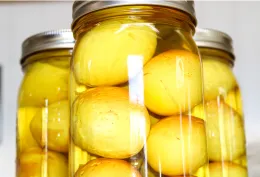
Pickling is a fun and zesty way to preserve eggs. It is important to note that the Center for Home Food Preservation says, "There are no home canning directions for pickled eggs," and they are not shelf-stable. The only safe way to store pickled eggs is in the refrigerator. They will last 3-4 months, and can be used for salads, grazing boards, and eating as snacks. Glass jars are a great way to keep them airtight. Brines can vary and use up juices that are otherwise thrown down the drain. Repurposing canned beet brine, apple, and pineapple juice for pickling is a win, and the recipes that follow will get you started.
Freeze-drying is a technique that preserves food for up to 25 years. (Talk about being well-fed during a zombie apocalypse!) This technique uses a specialized machine to freeze the product on trays to a low temperature between -30°F and -50°F. Then, the vacuum pump setting pulls out all the air from the chamber and heats the trays slightly. The preservation technique will remove up to 98% of the water found in the food. Removing moisture means there is no longer an environment for pathogens to thrive. One thing to remember is that this method does not kill pathogens but retards them until favorable conditions persist; any pathogens in the product will be revived when moisture is reintroduced. Freeze-dried eggs have a foamy, light texture that appears dry, but when water is added at the appropriate ratios, the eggs can be scrambled or used in quiches and baking. Another benefit is that this form of preservation retains almost all of the nutrition in the eggs.
Water-glassing: lately, there has been a revival in some community circles around the practice of water-glassing eggs, which involves soaking them in a mixture of water and sodium or pickling lime. However, it's crucial to understand that research shows this method is not an approved means of preserving eggs. Since the containers of liquid and eggs are set out at room temperature and temperatures vary throughout the year, there are opportunities for growing pathogens, such as Salmonella Enteritidis, to enter eggs through their very porous shells. Again, this method is not recommended.
Dehydration can sometimes be confused with freeze-drying. Dehydration removes up to 70% moisture; however, a dehydrator does not produce high enough temperatures to kill harmful pathogens or dry properly. Thirty percent or more moisture can encourage the growth of bacteria and is not safe to consume, either raw or cooked. Using this method of home food preservation with eggs is also not recommended.
In addition to preserving, there are a few egg alternatives to use in baking: 1/4 cup of applesauce (unsweetened) or 1/4 cup of mashed bananas is equal to one large egg. These ingredients add sweetness and leavening to baked goods such as pancakes, muffins, or quick breads. Add 1/2 tsp of baking powder to the dry ingredients if your recipe turns out too dense. When using eggs for a thickener in puddings and sauces, mix two tablespoons of cornstarch or arrowroot powder with three tablespoons of filtered water into a smooth slurry, making sure there are no lumps, then add as per the recipe. Lastly, nut butter can be the answer if you have a hankering for cookies or brownies. Mix three tablespoons of almond, cashew, or peanut butter per egg into the recipe, giving a nice gooey texture, and add protein to your snack.
Budget-friendly ideas for your kitchen can help alleviate some worries about buying in bulk and food going to waste. Get creative in the kitchen and see what new favorites can come from your experiments. Let nutritious eggs work for you; if not, the alternative suggestions may also turn heads and create new favorites.
RECIPES
Each of these recipes uses 12 peeled, hard-cooked eggs. The directions for each recipe are to bring all the ingredients except the eggs to a boil, reduce the heat, and simmer for 5 minutes. Pack no more than one dozen peeled, hard-cooked eggs loosely into a warm, pre-sterilized quart jar (or other similar-sized container that can be closed tightly). There must be plenty of pickling solution to cover the eggs completely. Pour the hot pickling solution over the eggs in the jar, cover, and refrigerate immediately.
RED BEET EGGS
1 cup red beet juice (from canned beets)
1½ cups cider vinegar
1 teaspoon brown sugar
a few canned sliced red beets (to add to the jar)
SWEET AND SOUR EGGS
1½ cups pasteurized apple cider
½ cup cider vinegar
1 package (about 12 oz.) of red cinnamon candy
1 tablespoon mixed pickling spice
2 tablespoons salt
1 teaspoon garlic salt
PINEAPPLE PICKLED EGGS
1 can (12 oz.) unsweetened pineapple juice*
1½ cups white vinegar
2 medium onions, peeled and sliced
¼ cup sugar
1 teaspoon salt
1 teaspoon whole pickling spice
*If sweetened pineapple juice is used, omit sugar
These recipes and more can be found at the Oklahoma State University Extension website.
Oklahoma State University Extension - Pickled Beets and Eggs Recipes