
Lovely Lavender
There are so many things to love about lavender! This versatile shrub provides colorful, prolific blooms in the garden and delightful fragrance to oils, soaps, potpourri, and sachets. It’s also helpful in the kitchen, whether in cooking or for adding a zing to herb mixes and beverages.
This dependable, drought-tolerant perennial has fragrant flowers and foliage and grows one to three feet tall. Depending on the cultivar, the flowers are purple, blue, pink, or white. Lavender is a good choice for borders along sidewalks, against a wall, in pots on a patio, or in raised beds or other containers. It is loved by pollinators but disliked by deer. Bees are the primary pollinator, but butterflies and moths also drop by for a visit.
Mediterranean beauty thrives in Marin
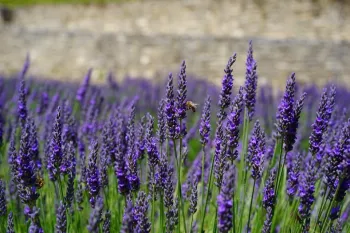
Long coveted for its fragrance, calming presence, and healing properties, lavender (Lavandula) has been used for more than 2,500 years in many cultures around the world. It is believed to have originated in Greece and is indigenous to the Mediterranean area including Europe, the Middle East, North Africa, and Cape Verde. The word “lavender” is derived from the Latin verb lavare, which means to wash.
How to grow and care for lavender
Lavender is a member of the mint family (Lamiaceae). It grows beautifully in Marin, preferring our hot and dry summers and cool and wet winters. It generally falls within USDA Zones 9a-9b and Sunset Zones 15-17 (coastal to inland). Here’s how to grow it for years of gorgeous, fragrant blooms.
Plant in spring or fall.
Plant in spring after the risk of frost has passed or in the fall so long as the roots have enough time to become established before the first frost. Dig a hole large enough so that the crown of the root ball is level with the soil surface, and space the plants so that they get good air circulation, typically about three feet apart.
Provide full sun.
Lavender grows best with six to eight hours of sun per day. If you have less than ideal conditions, your plant might have smaller or less profuse blooms. Lavender is heat tolerant, with many varieties even tolerating radiant heat.
Use well-draining soil.
Lavender is not picky about soil so long as it drains well. If your soil is heavy, moisture-retaining clay, be sure to amend it with organic compost before planting. As an extra precaution, plant on a mound to help aid drainage.
Encourage drought resistance.
Water regularly the first year to help get the roots established. After that, the plants only need a little water. Use drip irrigation and avoid overhead watering as it can damage the plant. Yellowing leaves are a sign of over-watering which can result in root and crown rot. Let the first three to four inches of soil dry out before watering.
Minimize fertilizer.
Lavender performs in nutrient-poor soil and therefore does not require a regular fertilizing schedule.
Prune after flowering.
Prune lavenders as you harvest flower stems. Prune only the supple new growth and shape into a tidy mound. Never cut into the woody part of the plant because lavender does not produce new growth from woody stems. Instead, to encourage repeat bloom, lightly trim after each bloom cycle. At the end of the season, cut Spanish or French lavender back by one-third and English lavender by one-half.
Harvest and store the crop.
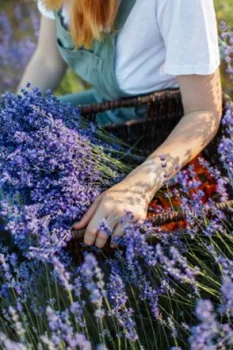
Harvesting of lavender for essential oils occurs when the flower heads are opening. Cut back the stem to just below the first set of leaves. To dry, hang in upside down bunches in a low light area with good air circulation. Once the flowers are dry, separate the florets from the flower heads and store in a glass jar for potpourri, culinary use, or crafts.
Check for common pests and problems.
Lavender is susceptible to crown and root rots, both of which are usually the result of too much water or poor soil drainage. Insect pests rarely bother lavender. Spittle bugs can occasionally be attracted to the blooms.
Three popular lavender species: French, Spanish, and English
These three varieties grow well in Marin.
French Lavender (Lavandula dentata)
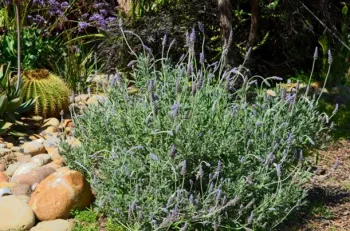
This species is known for its flowering spikes and striking toothed-leaf structure, which is more fragrant than the flowers. It blooms from spring to summer and can grow 3 to 4 feet tall and 4 to 6 feet wide. It has extra-strong fragrance and is therefore more often grown for essential oils rather than for culinary uses.
Spanish Lavender (Lavandula stoechas)
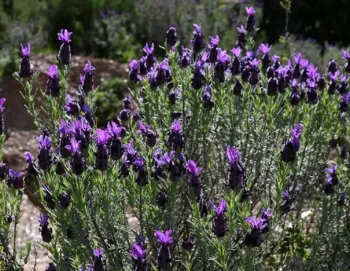
The flowers of this heat and drought-tolerant lavender are “bunny ear” bracts sprouting from the top of the flower spikes. It is one of the earliest bloomers, beginning in early spring and continuing into summer. If cut back, it may bloom again. Spanish lavender grows 1.5 to 3 feet tall and is available in a range of colors from white to dark purple. A reddish-purple variety called ‘Otto Quast’ is a particularly good variety for Zone 9b (Novato). Spanish lavender is not recommended for culinary uses due to its high camphor content, which gives it a stronger, sharper scent and a bitter taste.
English Lavender (Lavandula angustifolia)
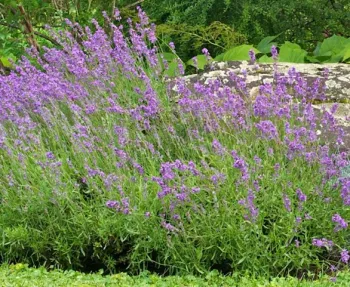
If you’re interested in growing lavender for use in the kitchen, this is the type you want to choose. The flowers are delicious in sweet and savory dishes, herb mixes, and beverages. English lavender is also a good choice for perfumes and sachets. It grows 2 feet tall depending on the variety and blooms in early summer and sometimes again in late summer into fall. ‘Royal Velvet’ is a popular variety known for its sweet fragrance and mild flavor. English lavender is an excellent dried flower as its blooms retain their color.