
After UC California Naturalist course, City Gurlz Hike founder strives to instill wonder
Daisy Prado expands access to outdoors, nurtures curiosity and care for nature
Caught in the swift current of life, it’s easy to get swept away and forget to recover the pebbles of lost dreams.
And yet Daisy Prado was able to do just that, thanks to the University of California Environmental Stewards program and All Hands Ecology, a nonprofit that stewards lands in coastal Marin County.
During her youth, Prado aspired to a career in marine biology or conservation. As a first-generation college student, however, she jumped at a full scholarship to pursue journalism, and she now works as a communications professional in San Francisco.
Then, last year, during a UC California Naturalist course delivered by All Hands Ecology, she got to go tidepooling for the first time in her life.
She and her 20 cohort-mates in the course, administered by the UC Environmental Stewards program of UC Agriculture and Natural Resources, spent hours exploring tide pools at Duxbury Reef. Prado came away “obsessed” with nudibranchs, mollusks that look like sea slugs.
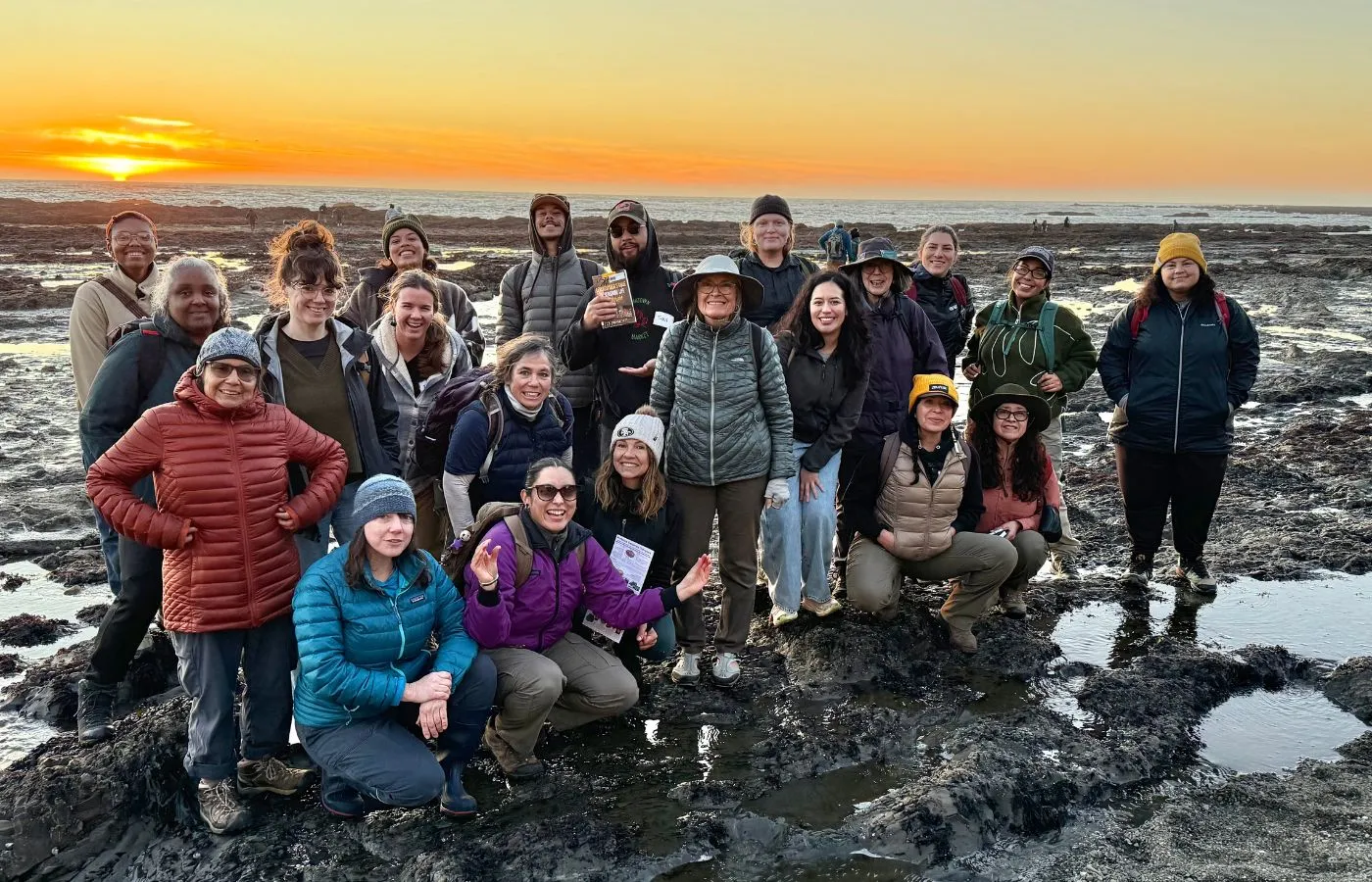
“As an adult, you don’t get that many opportunities to just lose track of time and marvel at creatures in a tide pool,” Prado said. “Most of us are behind a screen for eight hours a day, so just being able to dive into that childlike wonder is something that stayed with me – and it made me want to bring others to do that.”
After getting her certification through the course (which ran from January to May 2025), Prado has been bringing her UC California Naturalist experiences to her “5 to 9” job as the founder of City Gurlz Hike.
Through a monthly series of hikes, campouts and other outdoor activities, Prado brings Black, Latina and Indigenous women and allies to experience nature within a safe and inclusive community.
“San Francisco is a place where every resident is within 10 minutes of a green space, but when you go to those green spaces and you see who’s on those trails, it’s definitely not reflective of myself,” Prado said. “So, in 2022, we were awkwardly coming out of the pandemic and having to talk to people again, and I just started asking people if they wanted to go hiking with me.”
From that first meetup of five people, City Gurlz Hike events now regularly sell out, and Prado has to cap the hikes at 50 or 60 people to limit impact on trails and ecosystems.
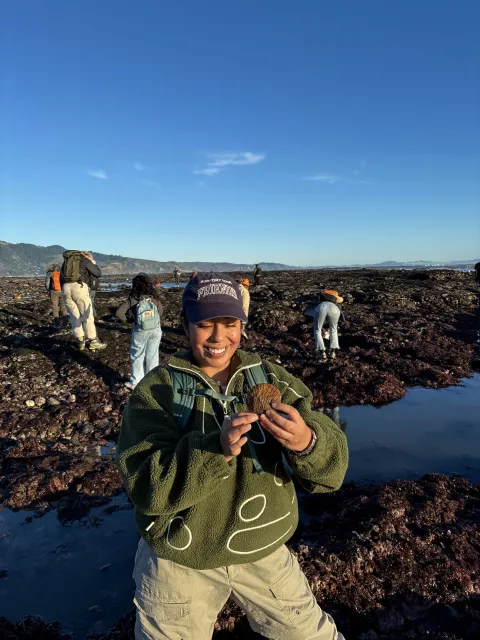
The UC California Naturalist course, which combines virtual sessions with assigned readings and field excursions, helped Prado feel more comfortable with identifying species and logging observations in the iNaturalist app. It also reminded Prado of the importance of slowing down – something she now tries to instill in her own programs.
“This world is extremely fast, and because of that, we tend to not see the small things in the macro,” she explained. “Being a Naturalist invites you to slow down and invites you to ask questions.”
That inquisitiveness also nurtures a greater sense of stewardship and responsibility for the fate of the planet.
“We do need to be more curious about our collective home, and that curiosity also leads to deep affection for our collective home,” Prado said. “And the more people that care about our collective home, then the more people will work to protect it.”
UC California Naturalist course, partner organizations foster supportive community
During the “CalNat” course, participants lifted “cover boards” to peek at snakes and insects underneath, inspected animal scat, restored native habitat, banded birds, learned about prescribed fires and heard from an owl expert.
Conversing with scientists and ecologists, Prado felt welcomed even though she did not have specialized technical knowledge or an academic background in the sciences. Prado, who grew up in Arizona and was encouraged by her mother to explore nature in her backyard, said she could bring her authentic self to the UC California Naturalist course.
“It made me feel seen and it made me feel like asking questions about the place that we live in is okay and should be encouraged,” Prado said. “Our facilitator told us – and I have it written down here – being a naturalist is more than what you see, it’s also what you don’t see and don’t know about.”
Prado also credited her course instructors – Catie Clune and Vini Souza of All Hands Ecology (formerly known as Audubon Canyon Ranch) – for cultivating a diverse community who brought a range of experiences to the course.
“It was people from all different walks of life, all different ages; we had young people; we had elders; we had folks who were part of the Miwok community and had different relationships with the land,” Prado recalled. “It was just an incredibly well put together course and I don’t think it could have been any better.”
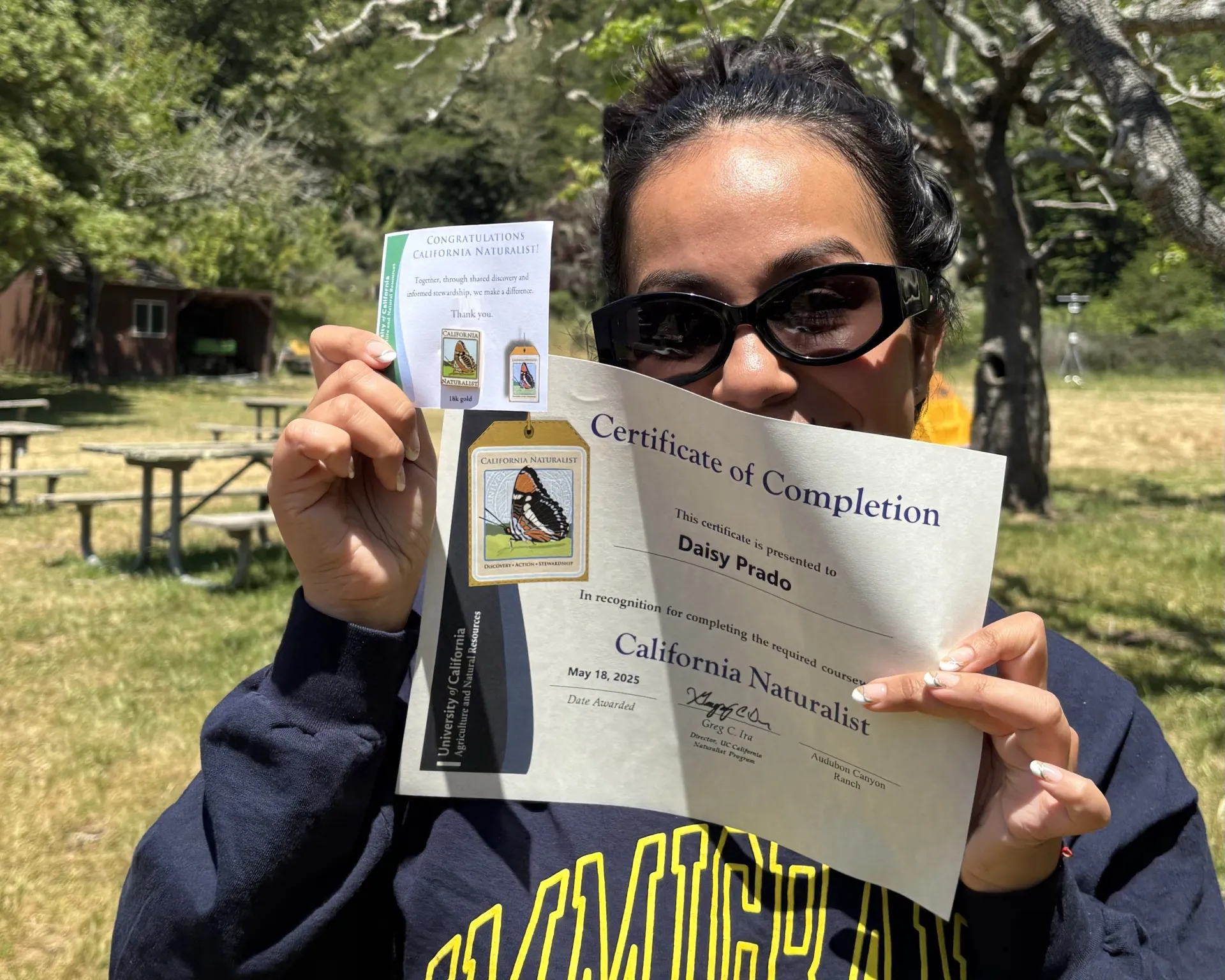
In addition to the opportunity to network with passionate and like-minded people, Prado said the UC California Naturalist course represents a rare chance to expand one’s knowledge and perspective outside of a formal educational setting.
“Education is such a barrier of entry to the outdoor space, and this is a way to do it and not have to go seek a four-year degree and go into hundreds of thousands of dollars in debt,” Prado said. “This is a way to learn in community, in person, out in the field; it was exactly what I was looking for – a non-traditional classroom where I could be more hands-on.”
Whether with All Hands Ecology or any of the over 70 partners across the state who deliver the UC California Naturalist and Climate Stewards programs, Prado urges interested people to learn more and sign up.
“I just encourage folks to do it regardless of what your training is, regardless of what your career is,” she said. “This is something that you can apply to your own life, and it also is something that you can bring to your community.”
California Naturalists like Prado will have a chance to reconnect with their peers at the UC Environmental Stewards conference in October on the campus of UC Santa Barbara. Prado will give a presentation on being a steward of the land, beginning in one’s own backyard – and thus further extend the cycle of sharing, learning and growing.
For more information, visit the conference website.