
Spring cleaning for indoor pest control
For optimal spring cleaning, don’t limit your efforts to dust and grime. Be mindful of the pests that might be hiding in the kitchen, pantry, garage, bedrooms and closets.
Pests can hitchhike into homes on infested food from the grocery store. The insects are so small, consumers might not notice until moths are seen flying around or beetles are crawling in food. During a recent webinar, UC urban integrated pest management advisor Karey Windbiel-Rojas said she once came across chocolate in the back of her pantry.
“I thought, ‘Oh great!’ but when I opened it up, I found webbing,” Windbiel-Rojas said. “I was bummed I didn’t get to eat that chocolate.”
Indoor/outdoor pests can also wreak havoc in other parts of the home, such as the carpet beetle, which as an adult feeds on pollen and may come inside on cut flowers. Their larvae can be found attacking carpet, furs, insect collections and wool, among other natural items. Windbiel-Rojas found an infestation on an art project decorated with beans, yarn and pasta she saved from her child’s preschool days.
“I had to throw it away,” she said. “I should have known better.”
| Pantry pests | |
| 
|
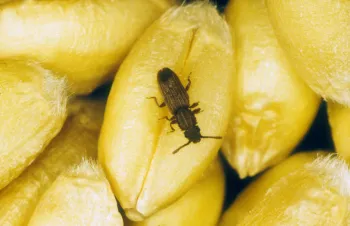
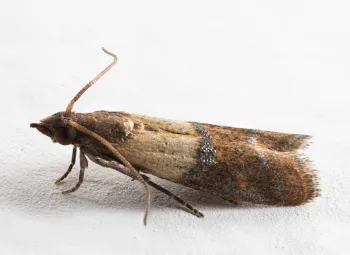
In the pantry, common pests are sawtoothed grain beetles and Indian meal moths. They feed on foods like cereal, candy, grains, beans, herbs and spices and can contaminate foods with their droppings, eggs, webbing and sometimes body parts. In addition, their feeding can introduce microbes that rot food, especially in warm, humid conditions.
These pantry pests may also be living in other parts of the house feeding on potpourri, debris inside shop vacuums, insulation backing in attics, stored birdseed, oatmeal bath products, and rice saved from weddings.
Prevent pantry pest damage by keeping staples in containers with tight fitting lids and regularly cleaning shelves. Learn more here.
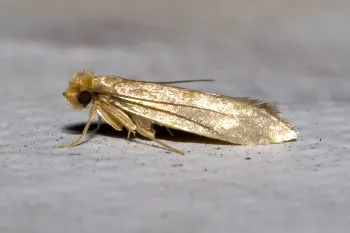
Clothes moths are another common indoor pest. Although they look similar to Indian meal moths, clothes moths are a different species. They look for natural fibers to lay eggs, including wool clothing, yarn, felt pads in pianos, carpets, rugs, upholstered furniture, furs, animal bristles and pet hair on brushes.
Prevent clothes moths’ damage by dry cleaning or laundering susceptible clothing and storing in tight-fitting bins. When infestations happen, freezing, heating and fumigating with dry ice can kill the pests.
Other indoor pests
Cigarette beetles – Beetles that may be found in cigarettes or cigars, and also dried fruit, cocoa, coffee beans, herbs, spices, nuts, dog food.
Drugstore beetles – Similar preferences as cigarette beetles, these pests also may infest some pharmaceuticals.
Psocids, such as booklice – No not true lice, but they like high humidity and feed on fungal and mold spores, starchy materials and glue. The key to control is maintaining humidity below 50 percent.
Silverfish and firebrats – Silverfish hide during the day, so are rarely seen. They live in damp, warm places, such as laundry rooms and bathrooms and feed on cereals, pasta, pet food, paper with glue or paste, wallpaper and cardboard. Firebrats like dry places around ovens, heating units, fireplaces and hot water pipes.
Detailed information on dozens of indoor pests is available on the UC IPM Pests of homes, structures, people and pets webpage.
_____________________
Written by UC Master Gardener Jeannette Warnert