
Cool Caterpillars
Some gardeners may not consider caterpillars to be “cool.” After all, hungry caterpillars eat vegetables and flowers that gardeners are trying to grow! However, I think they ARE cool because beautiful colorful caterpillars become gorgeous butterflies or moths. In addition, they are valuable pollinators and a vital food source for many creatures.
What Are Caterpillars?
Caterpillars are the soft-bodied larval stage of butterflies and moths. Like most insects, they go through metamorphosis, beginning with eggs laid on a plant by an adult female, that hatches into larvae (caterpillars).
Caterpillar larvae are voracious feeders, mostly eating plant leaves while rapidly increasing in size, some by as much as 1000 to 10,000 times! Depending on the species after about 2-3 weeks as a caterpillar they pupate into a cocoon (moth) or a chrysalis (butterfly). After 5-15 days it will emerge as an adult butterfly or moth who will feed on flower nectar.
Caterpillars have strong, tooth-like mandibles for chewing plants. They breathe through small holes in their bodies called spiracles. Although they cannot see well, they can smell and hear with their antennae and taste with their feet. These “cool” caterpillars have ten stumpy, unjointed “prolegs” that have tiny hooks for gripping surfaces. For movement and eating they have an incredible 4,000 muscles (with 248 in their head alone!).
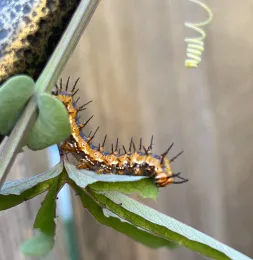
Caterpillars are present world-wide, except in Antarctica. There are an estimated 180,000 species of butterflies and moths. North American has an estimated 14,000 species of moths and butterflies with California having at least 600 identified species.
Why are Caterpillars Important?
As prey, they are consumed by millions of animals, insects and birds. Their bodies are high in proteins, fats and carotenoids, making them highly nutritious.
Caterpillars are the mainstay of most bird diets in North America, particularly during nesting season. Baby birds grow fast, are ravenous, eating up to 30-40 meals per day, which means numerous trips for the parents in search of food. Since caterpillars are relatively large in comparison to other potential insect sources of food, parent birds do not have to make as many trips to feed their fledglings when caterpillars are present. Caterpillars are also soft, making it easy for parents to stuff into the fledglings’ open mouths and for them to digest.
Though less efficient than bees, butterflies and moths are important pollinators. As they land on flowers to feed on nectar, they accidentally pick up pollen on their legs and bodies, transferring it between plants.
Butterflies and moths have developed relationships over hundreds of years with local, native plants. Many lay their eggs only on specific native plant species. The monarch butterfly, for example, lays eggs only on milkweed plants, the only food source their caterpillars can eat.
An important part of the ecosystem, the presence or absence of caterpillars can serve as an indicator of local environmental health. Caterpillars are sensitive to environmental changes such as pollution, habitat loss, fewer available native plants, climate change, and pesticide use, so their numbers are declining.
A Nuisance in Our Gardens?
Yes, caterpillars can be a nuisance in our gardens due to damaging plants by chewing on leaves, flowers, shoots and fruits. But most plants can tolerate a few caterpillars. A healthy plant will grow back from its leaves being stripped since they have evolved to recover from caterpillar infestations. If you don’t want caterpillars, pick them off when you see them, but remember, without caterpillars, we won’t get butterflies, moths, and birds!
Avoid using pesticides, since in addition to harming caterpillars, they can harm beneficial insects and other creatures in your garden, including those that feed on caterpillars.
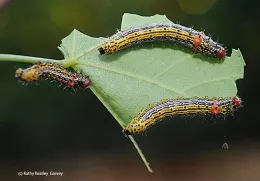
But Caterpillars Also Bring Joy
Planting native plants will attract butterflies and moths, along with other creatures to your garden, particularly birds. Watching caterpillars feed, go into the pupal stage, and ultimately become adult butterflies or moths is fascinating. Having “cool” caterpillars along with the adult butterflies and moths will add color, joy and diversity to your garden.
The resources listed below provide information on identifying caterpillars, butterflies and moths, what native plants attract butterflies and moths, and how to manage caterpillar infestations.
Resources
Art Shapiro’s Butterfly World, https://butterfly.ucdavis.edu/
CalScape, CA Native Plant Society, https://www.calscape.org/
UC Davis Arboretum All-Stars, https://arboretum.ucdavis.edu/arboretum-all-stars
UC IPM website, https://ipm.ucanr.edu/PMG/invertebrates/menu.caterpillars.html
Denise Godbout-Avant has been a UC Master Gardener in Stanislaus County with UC Cooperative Extension since 2020.