
Citrus Rootstock Tolerant of HLB
Growers association Florida Citrus Mutual (FCM) on April 28 called the Environmental Protection Agency’s (EPA) approval of Soilcea’s CarriCea™ T1 citrus rootstock registration “a major milestone.”
According to FCM, CarriCea™ T1 is a first-of-its-kind citrus rootstock designed to tolerate citrus greening disease. It works by precisely editing the rootstock’s own genes, disrupting the bacterium that causes greening from interacting with the plant and, therefore, limiting the tree’s infection.
The rootstock was developed by scientists at Soilcea using findings discovered by the University of Florida.
“The EPA’s approval begins a new era in the citrus industry’s recovery after roughly two decades of decline and significant investment in research for a cure,” FCM stated. “It also allows the new CarriCea™ T1 rootstock to be planted ahead of the 2026–27 citrus season. Fruit produced by the new rootstock is indiscernible from fruit produced by other citrus rootstocks.”
“The newly approved rootstock puts another safe, innovative tool into the hands of citrus growers, reducing pesticide spraying and reliance on imports and bolstering the nation’s citrus production and economic growth,” FCM added.
“Florida’s citrus growers are celebrating the EPA’s approval of Soilcea’s CarriCea T1 rootstock and its promise of disease management to strengthen production and preserve our state’s iconic citrus industry,”said FCM Board President Kevin Koppelman.“This innovative tool for growers is giving our industry renewed confidence in the future as we work to recover and rebuild.”
“Florida’s citrus growers appreciate the EPA and Administrator Zeldin’s leadership in delivering this tool, and our state and federal elected officials for supporting citrus research and innovation,”said Matt Joyner, executive vice president and chief executive officer of FCM.“CarriCea™ T1 is the first look at citrus trees of the future, helping reduce input costs and strengthening the resilience of Florida’s citrus industry. Developed right here in Florida for Florida growers, this innovation has the potential to transform the global citrus industry.”
According to FCM, broad implementation of the rootstock will take time, but its approval marks a turning point — encouraging renewed investment and reinforcing confidence in the future of Florida’s signature crop.
Source: FCM
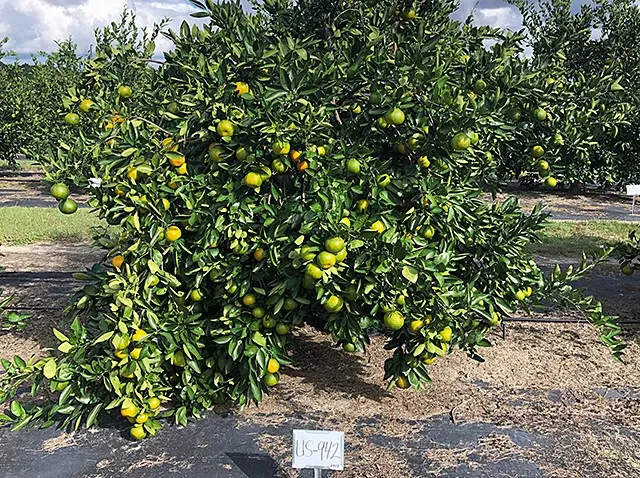
HLB Resistant Rootstock in Florida
AND GREAT NEWS for CITRUS BREEDERS AND GROWERS
U.S. allocates US$2 million annually for California citrus breeding program
California Citrus Mutual (CCM) and Citrus Research Board (CRB) applaud the House Committee on Appropriations for including additional funds in the FY 2027 Agriculture Appropriations bill for the citrus breeding program in Parlier, California. Congress is allocating an additional $500,000 in federal funding, on top of the $1.5 million previously granted, to expand the program into California. If approved, the program will receive $2 million in federal funds annually, in addition to the funding it receives from CRB.
"CRB was instrumental in developing the concept for the California-based program and was also involved in efforts to establish the nationwide program, while CCM advocated to secure funding," said CRB President Marcy Martin. "Our two organizations working together on behalf of the industry have been instrumental in getting this program off the ground."
EXTERNAL IMAGE
"I would like to thank our Appropriators and Committee leadership for their continued support of this vital program," said CCM Director of Governmental Affairs, Jacob Villagomez. "Finding solutions for California-specific growing patterns is an essential tool in fighting HLB for years to come."
The California citrus breeding program will focus on fresh market citrus. Funding will go towards research and development of high-quality, superior citrus selections well suited to California growing regions, changing climatic pressures, consumer taste preferences, and resistance to pests and diseases, such as huanglongbing (HLB).
The California program is an expansion of the existing national USDA Agricultural Research Service (ARS) citrus breeding program located in Fort Pierce, Florida, which is focused primarily on varieties optimized for Florida growing conditions. Work done through the Florida program has resulted in new varieties with higher yields, increased disease resistance, improved color, and a longer shelf life.
The Florida and California breeding programs, along with the continued support from the University of California citrus breeding program at UC Riverside, will work together to deliver results for California-based growers.
The California citrus breeding program is located at the USDA ARS field station in Parlier. Thanks to ongoing appropriations commitment, forward progress continues to be made with the addition of a dedicated scientist, completion of a greenhouse, and future plans for laboratory and office space, and hopefully securing additional ground for further expansion.