
Drinking Water Week 2026 : From Source to System: A Regional Check on Reliability, Risk, and Responsibility
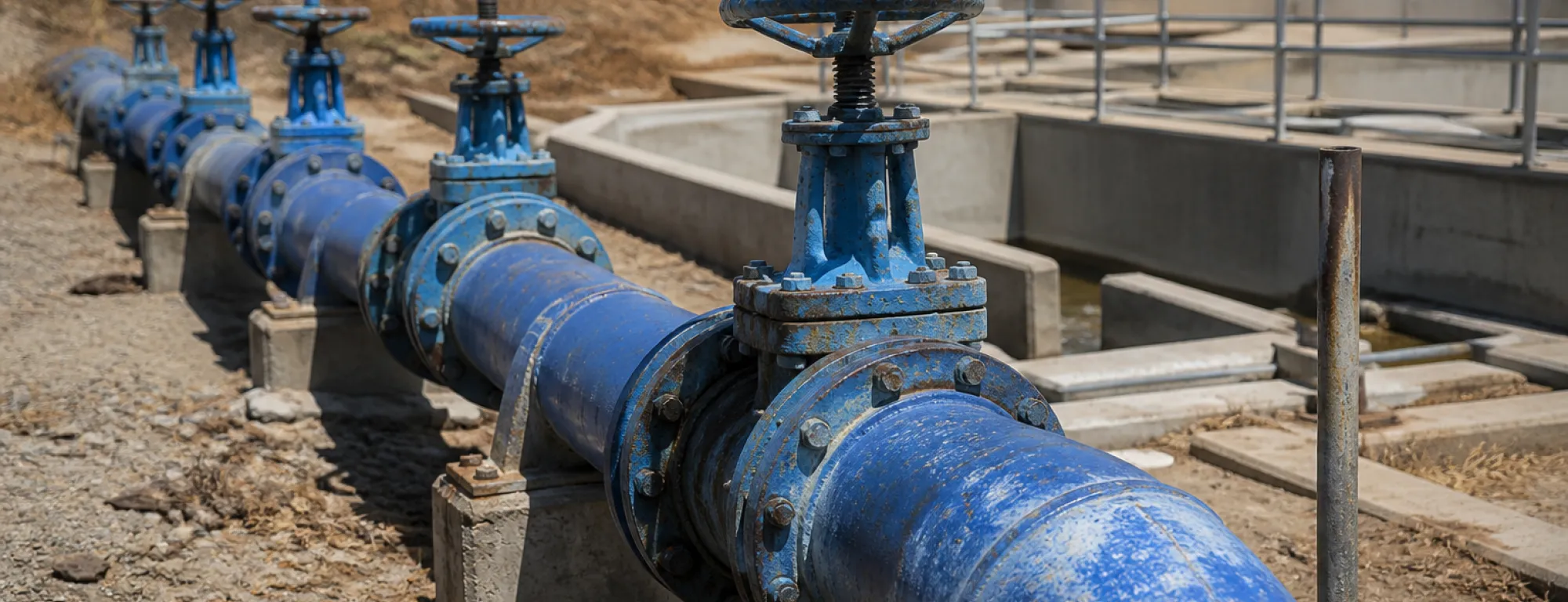
Drinking Water Week 2026
From Source to System: A Regional Check on Reliability, Risk, and Responsibility.
Drinking Water Week, observed May 3 to 9 for this year (2026), is often treated as a public awareness moment.
For agencies, engineers, regulators, and policymakers, it should function as a systems check. A time to assess how well our drinking water systems are holding under pressure, identify critical gaps, and determine what must be strengthened to ensure long-term reliability, resilience, and public trust. It offers a moment to examine the systems, decisions, infrastructure, policies, and partnerships that make safe drinking water possible.
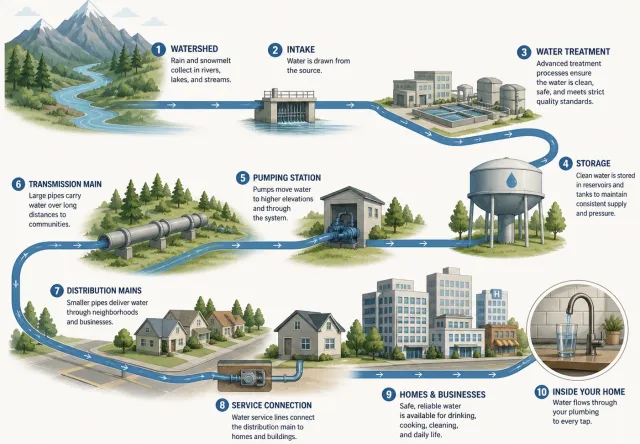
For many residents, drinking water begins at the tap. For water professionals, engineers, agencies, regulators, planners, and policymakers, we know the story begins much earlier.
The system begins in watersheds and extends through imported water systems, groundwater basins, reservoirs, treatment facilities, and distribution networks. It is supported by monitoring programs, regulatory frameworks, financing structures, emergency response planning, and public communication systems.
By the time water reaches a home, school, business, park, hospital, farm, or community facility, it has already passed through a chain of decisions and safeguards.
That chain deserves attention.
Not only because it works, but because it must perform reliably under evolving system demands and constraints.
Drinking Water as a Multi-System Responsibility
Drinking water systems do not operate in isolation. They function at the intersection of public health, infrastructure, environmental management, emergency preparedness, governance, and public trust.
Reliability is not automatic.
It is planned, funded, designed, operated, monitored, regulated, and communicated across multiple institutions and disciplines.
💡 Did you know?
Drinking Water Week was formally recognized in 1988 through a national coalition led by the American Water Works Association, the League of Women Voters, the Association of State Drinking Water Administrators, and the U.S. Environmental Protection Agency. The intent was not only to raise awareness but to elevate drinking water as a national priority tied to public health, infrastructure investment, and policy.
A Region Under an Evolving System Demands
In Southern California, this conversation is especially urgent.
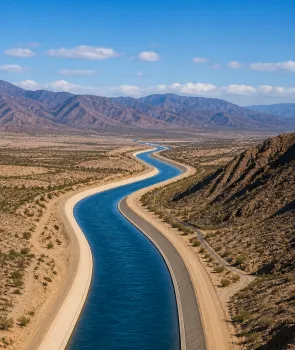
The region depends on a highly interconnected and carefully managed water portfolio that includes imported water, groundwater, surface water, recycled water, conservation, and stormwater capture. These sources are not independent. They are linked through storage, conveyance, treatment, and distribution systems that operate across jurisdictions, agencies, and regulatory frameworks.
This level of interconnection increases both efficiency and vulnerability.
At the same time, the system must perform reliably under a set of evolving and compounding conditions:
- Climate variability and prolonged drought, which affect both supply availability and planning certainty
- Wildfire impacts on source water quality, increasing treatment complexity and operational risk
- Aging infrastructure and deferred maintenance, requiring sustained investment and prioritization
- Regulatory requirements and compliance complexity, which continue to evolve alongside emerging contaminants and public health standards
- Affordability and rate-setting challenges, particularly as infrastructure and operational costs increase
- Public perception, confidence, and trust, which influence how communities respond to water management decisions
These are not isolated pressures. They interact across the system. They influence one another. And they rarely align within a single jurisdiction, agency, or area of expertise.
As a result, effective response requires coordination across engineers, utilities, cities, counties, public health agencies, water boards, researchers, community organizations, educators, and funders. It also requires integrating technical performance with communication, planning, and public engagement in ways that have not always been prioritized historically.
💡 Did you know?
Southern California’s water system relies heavily on imported supplies from the Colorado River and Northern California and is part of one of the most highly engineered and complex water supply networks in the United States. Major infrastructure, such as the State Water Project, one of the largest water conveyance systems in the world, enables water to be transported hundreds of miles across the state, making the region particularly sensitive to climate variability, regulatory conditions, and regional water availability.
Beyond Water Quality: Understanding System Intersections
A drinking water challenge is rarely confined to water quality alone.
It often reflects a combination of underlying conditions related to land use, watershed management, infrastructure condition, financing, governance, and public trust. These factors do not operate independently. They intersect and influence one another, shaping both system performance and how challenges emerge, are perceived, and are addressed.
This has direct implications for how solutions are designed and implemented.
Technical solutions, while essential, are often insufficient when applied in isolation. Effective response requires a more integrated approach that considers both system dynamics and human factors.
This includes:
- Cross-sector coordination that aligns agencies, jurisdictions, and areas of expertise
- Community engagement and education that build understanding and trust
- Clear, transparent, and consistent communication that supports informed decision-making
- Data that reflects both system performance and public perception, enabling more responsive and adaptive strategies
💡 Did you know?
Infrastructure investments and water management decisions are increasingly shaped not only by technical and regulatory considerations, but also by public acceptance, communication effectiveness, and the extent to which communities understand and support those decisions, factors that can directly influence implementation success and long-term system resilience.
Bridging Systems, Data, and Communities
Addressing these challenges requires not only technical capability but also the ability to connect systems, data, and decision-making processes with the communities they serve.
This includes:
- Translating technical water data into accessible and meaningful information
- Identifying gaps in awareness, trust, and behavior
- Strengthening how information is conveyed and interpreted between agencies and communities
- Incorporating community-level insights into planning, policy, and decision-making
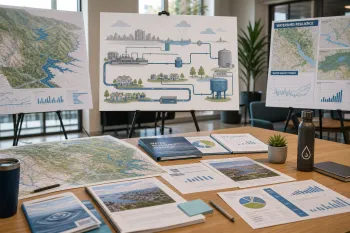
These functions operate at the intersection of infrastructure, public understanding, and governance.
They help ensure that system performance is not evaluated solely through technical metrics, but also through how effectively systems are understood, accepted, and supported by the communities they serve.
💡 Did you know?
Community perception and trust can directly influence the success of water programs, including conservation initiatives, infrastructure investments, and emerging supply strategies such as recycled water.
This type of work is often carried out through university-based research and Extension programs, which operate at the intersection of science, practice, and community engagement, helping translate knowledge into action and bringing community perspectives into system-level decisions.
Implications Across Sectors
The complexity of drinking water systems does not affect a single group in isolation.
It shapes decisions, priorities, and responsibilities across sectors, requiring alignment between technical performance, policy direction, regulatory oversight, and public engagement.
For water agencies and water departments, this reinforces that infrastructure investments are not only technical investments. They are also investments in public confidence, system transparency, and long-term reliability. Decisions around maintenance, upgrades, and operations increasingly require parallel investment in communication and engagement.
For policymakers, it underscores the need for long-term, integrated planning that aligns infrastructure, source water protection, land use, and community engagement. Short-term solutions are often insufficient for systems that must operate under evolving environmental and regulatory conditions.
For regulators and water boards, it highlights the importance of aligning compliance, transparency, and public health outcomes. Meeting regulatory standards is essential, but ensuring that those standards are clearly communicated and understood by the public is equally important.
For engineers and planners, it emphasizes designing systems that account for changing hydrology, demand patterns, and risk conditions, while also recognizing that community expectations and public acceptance increasingly influence system implementation and success.
For funders, it points to the need to support not only capital projects, but also the connective work that enables systems to function effectively. This includes outreach, workforce development, data integration, applied research, and regional collaboration, all of which contribute to long-term system performance and resilience.
💡 Did you know?
Public trust increasingly shapes the feasibility, timing, and public acceptance of water management decisions, making it a critical, though often under-measured, component of overall system performance.
Trust, Behavior, and System Performance
Trust is not a secondary issue.
It is a system variable.
It influences how communities engage with, respond to, and ultimately support the systems designed to serve them.
In practice, trust shapes whether residents:
- Drink tap water
- Follow conservation guidance
- Support infrastructure investments
- Accept new or alternative water supply strategies
These behaviors are not peripheral to system performance.
They directly affect the effectiveness, sustainability, and long-term viability of water management decisions.
This is why Drinking Water Week should not only ask whether water is safe.
It should also ask whether water systems are understood.
Do communities understand where their water comes from?
Do residents know who provides their water?
Do they know how water is tested and regulated?
Do they know where to find and how to interpret their Consumer Confidence Report?
At the same time, these questions extend beyond the public.
Do agencies have the tools to communicate clearly and consistently across diverse audiences?
Do planners and policymakers have access to community-level data that reflects trust, perception, and behavior?
Are systems being designed not only for regulatory compliance, but for public understanding, acceptance, and long-term participation?
💡 Did you know?
Perceptions of water quality are often influenced not only by measured contaminants but also by taste, odor, appearance, and past experiences, reinforcing the need to integrate communication, education, and community engagement into overall system performance.
What Is Happening Across the Sector
Across the country, Drinking Water Week, led by the American Water Works Association, is increasingly being used as a platform for both public engagement and professional reflection.
Utilities, agencies, and organizations are using this moment to connect technical systems with the communities they serve through a range of structured activities, including:
- Releasing and promoting Consumer Confidence Reports (CCRs)
- Hosting treatment plant tours and facility open houses
- Conducting school and youth education programs
- Leading community workshops on water quality and conservation
- Embedding communication and transparency into routine system operations
- Highlighting infrastructure investments, upgrades, and system performance
These activities reflect a broader shift across the water sector.
From simply providing water
to actively engaging communities in understanding, trusting, and participating in the system.
💡 Did you know?
Many utilities now view communication and transparency as core components of system performance, recognizing that delivering safe water is only part of the responsibility. Ensuring that communities understand and trust that water is equally essential to long-term system effectiveness.
Connecting Watershed Resilience and Drinking Water
In Southern California, drinking water resilience cannot be separated from watershed resilience.
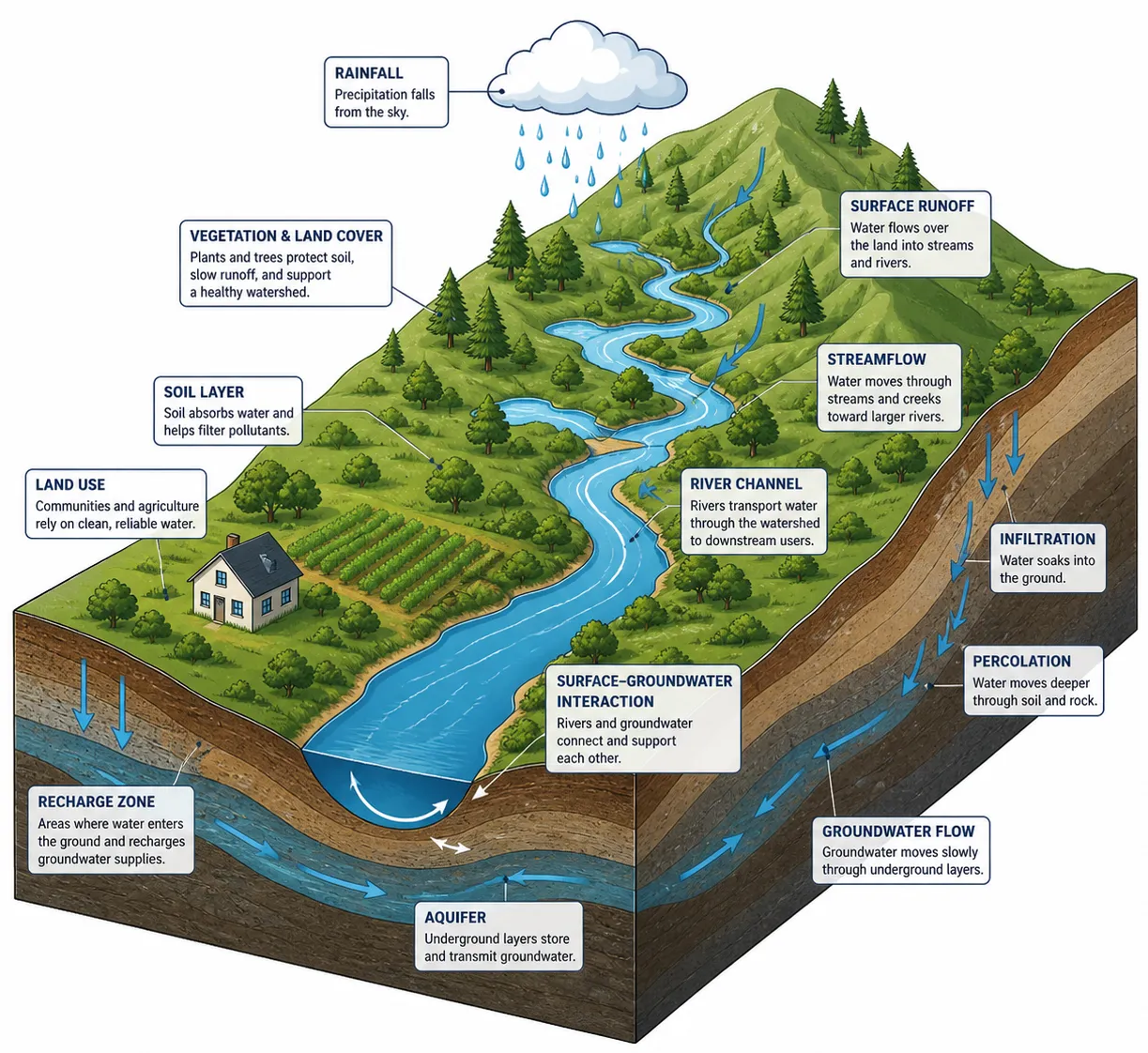
Source water protection, land management, wildfire response, groundwater recharge, stormwater capture, conservation, contamination prevention, infrastructure renewal, and public engagement are interconnected components of the same system.
These elements operate across spatial and institutional boundaries, linking upstream conditions with downstream outcomes.
A resilient system is not defined only by its ability to deliver water under normal conditions.
It is defined by its ability to withstand disruption, adapt to changing conditions, recover from stress, communicate effectively, protect public health, and maintain public confidence over time.
From Assessment to Action
Drinking Water Week is not only a moment to reflect on the system.
It is an opportunity to strengthen it.
It provides a structured pause to move from observation to action, and from awareness to alignment across sectors.
Key questions remain:
Do communities understand their water systems?
Are communication strategies effective, inclusive, and responsive to diverse audiences?
Is trust being measured and meaningfully integrated into planning and decision-making?
Are infrastructure investments aligned with future risk scenarios and long-term system needs?
Are cross-sector partnerships in place to address complex, interconnected challenges?
Addressing these questions requires more than individual action.
It requires coordination, data, and sustained engagement across agencies, disciplines, and communities
A Call for Strategic Investment and Collaboration
Strengthening drinking water systems requires coordinated action across sectors.
To water agencies: continue strengthening transparency, communication, and partnerships that connect technical systems with public understanding.
To policymakers: support sustained investment in infrastructure, source water protection, workforce development, and climate adaptation.
To regulators: align compliance frameworks with communication, equity, and public health outcomes.
To engineers and planners: design systems that account for future hydrologic uncertainty, evolving demand, and changing risk conditions, not only historical baselines.
To funders and partners: invest in the connective work that bridges infrastructure, data, and community, including applied research, outreach, education, and regional collaboration.
To communities: engage, ask questions, learn about your water provider, and participate in shaping the future of local water systems.
Final Reflection
💡 Did you know?
The most effective water systems are not only engineered. They are supported by informed communities, transparent institutions, and sustained collaboration.
Safe drinking water is not delivered by infrastructure alone.
It is sustained through coordinated effort across disciplines, sectors, and communities.
Water does not reach us by accident.
It reaches us because people plan, protect, test, repair, fund, regulate, communicate, and collaborate.
Drinking Water Week is a reminder that maintaining that system requires continuous evaluation, investment, and engagement.
And in Southern California, the work to strengthen that system is ongoing.
✍🏽 About the Author
Dr. Esther Lofton is the Urban Watershed Resilience Advisor with University of California Cooperative Extension (UCCE), where she advances water quality, conservation, and community engagement across Southern California.
Through the Urban Watershed Resilience Program, she works at the intersection of research, Extension, and community partnership to address complex water challenges. Her work focuses on translating science into practical, community-centered solutions that support water supply reliability, improve water quality, and strengthen public understanding and trust.
She collaborates with water agencies, public institutions, educators, and community organizations to connect water systems with the people they serve, with a focus on outreach, applied research, and building long-term resilience across the region.
✨ Explore More
💧 Read the Latest Blog
OC Children’s Water Festival 2026: Water Education in Action
https://ucanr.edu/blog/water-supply-security-wss/article/oc-children-water-festival-2026-water-education
📊 Understanding Your Drinking Water Quality (Consumer Confidence Reports)
English:
https://ucanr.edu/blog/pure-water-matters-your-essential-guide-drinking-water-quality/article/consumer-confidence
Español:
https://ucanr.edu/blog/pure-water-matters-your-essential-guide-drinking-water-quality/article/informe-de-confianza
🚰 Coming Next: Tap Water Day (May 7)
A closer look at tap water, public trust, and what your water quality report really means.
📖 Explore the SoCal Water Blog Series
https://ucanr.edu/site/socal-water-resources/socal-water-blog-series
🌊 SoCal Water Resources (Urban Watershed Resilience Program)
https://ucanr.edu/site/socal-water-resources
🌿 Watersheds Program (Los Angeles & Ventura Counties)
https://ucanr.edu/site/watersheds-los-angeles-and-ventura-counties
📩 Contact / Collaborate
mailto:anrsocalwater@gmail.com
📲 Follow & Stay Connected
Instagram | TikTok | X
(@socal_h2o | @socal_water | @socal_h20)