
3.6. Insects
Vegetable Gardening - Handbook for Beginners
Chapter 3.6.
- Image
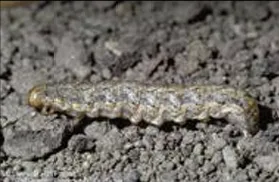
Variegated cutworm larva. Photo by Jack Kelly Clark, UCANR. To discourage snails and slugs: pick and squish, put beer bait in a saucer, collect under a board, use copper collars, surround the area with the spiky fruit pods of the sweet gum tree, use abrasive surfaces such as eggshells, lift vine vegetables up on cans, fence them out with aluminum screening, and use trellises to keep foliage off the ground.
- Cover young cole crops with spun-bonded-type row covers to protect them from cabbage moths.
- Wash both sides of the plants’ leaves, as many pests lay eggs on the undersides.
- Aphids, mealybugs, and scale can be dispensed with a strong blast from the hose (support the branch with one hand), or rubbed off with a gloved hand. Start doing this when plants are young.
- Image
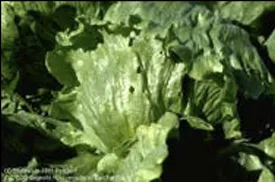
Damage to lettuce leaves caused by insects. Photo by Jack Kelly Clark, UCANR. Red spider mites thrive in hot, dry weather. Hose them off of roses, evergreens, shrubs, and ivy. Be sure to thoroughly rinse the undersides of leaves.
- Hand-pick tomato hornworms. Sprinkling the plants lightly with water will make the hard-to-see ones wiggle. Adult hornworms are the larval form of large, mottled gray or brown sphinx moths that hover near tubular flowers at dusk in late summer. As you work your soil prior to planting, destroy their pupae—the hard, brown, two-inch spindle-shaped cases that are buried 3–4" underground.
Previous ← Chapters → Next or Return to the Table of Contents of this Handbook.