
Helpful Garden Tips for February 2026
February can feel like spring. Early wildflowers appear. Some trees leaf out. But we might have frost, fog, rain, snow, and even hail. I fell behind in my garden tasks last fall and missed pruning some spring-blooming shrubs, and now they are getting ready to bloom again. Oh, well. It's nice to notice how the plants just get on with their lives. Many of the garden chores we do are for us, not the plants. Examples of chores we prioritize are watering when needed, protection from disease through good horticulture practices, protection from predators, and taking care of the soil. Time left over can be spent on the following tasks in February.
PLANTING:
- You can transplant most trees, perennials, spring-blooming bulbs, and summer-flowering annuals this month. Plant so that the center of the plant is an inch above the soil level, and use a two-to-three-inch layer of mulch.
- Clippings, including leaves and small twigs, from your own garden, are the best mulch. Keep mulch away from tree trunks and from the base of roses and other woody shrubs. You can use inorganic mulch like rock or gravel, especially for pathways. Plants that are not well adapted to summer heat will sunburn, wilt, or die with rock mulch, so use organic mulch with its cooling effects for those plants.
- In the vegetable garden, plant asparagus, chives, cilantro, leeks, green onions, parsley, potatoes, English peas, radish, spinach, kale, and strawberries. You can also transplant cauliflower, cabbage, broccoli, Brussels sprouts, and beet seedlings. You still have time to start from seed: onions (for setting out in April), tomato, peppers, basil, eggplant, and tomatillo.
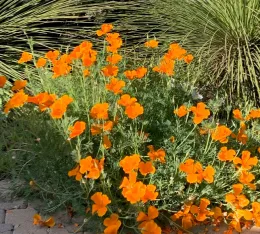
Photo credit: Sharon K., UC Master Gardener of Tulare/Kings County Set out dahlia, gladiolus, lily, and canna.
- Sow California poppy and other wildflower seeds if you can keep the area weed-free and watered for a few months until the seedlings are at least as tall or taller than the weeds. If you don't have a large area, try sprinkling seeds in clay pots and keep them watered in a sunny spot. This can be done with any packet of flower seeds, as well as herbs like parsley and cilantro. Use a weed-free potting mix as your soil; one labeled for container use is perfect.
MAINTAINING:
- Whether February will be rainy or not, this is a great month to check your irrigation system and make needed repairs for both sprinkler and drip systems.
- Upgrade to water-saving lawn sprinklers. Switch to drip irrigation for planting beds and orchard trees.
- Don't forget to check faucets and irrigation valves for leaks.
- Pruning can still be done on berries, grapes, deciduous fruit trees, and roses.
- Do not prune camellias, forsythia, Eastern lilac, California lilac, California native sage, coyote mint, penstemon, quince, and other spring-flowering shrubs or trees until they finish blooming.
- If you have plants that show signs of frost damage, wait until it's warmer to prune the brown stuff off to protect the crown and roots.
- This is also a good month to prune ornamental grasses and ground covers like lantana, CA fuchsia, and verbena, or you can wait until you see new growth and the danger of frost is past.
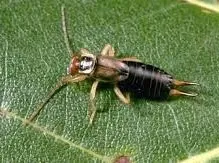
Photo credit: UC IPM - Earwigs and mollusks are active this month. Opaque bottles placed sideways in the garden bed, small tins with oil or stale beer, or rolled newspapers or cardboard tubes can all be traps. Check them each morning and drop insects in a bucket of soapy water. If you use plant-based soap, you can pour it into the compost bin and repeat. It's very effective.
- The IPM "first step" chemical control for slugs and snails is iron phosphate, which is not toxic to mammals, birds, or non-mollusk bugs. Read the package ingredients to ensure that it is what you are purchasing. As always, follow the package instructions.
- Weeds give us an ever-ready garden therapy opportunity and are easier to remove in moist soils. Try to remove weeds before they set seeds. Best practice is to weed, then cover the area with mulch. Protect your soil!
- Pick up fallen camellia blossoms and discard them to prevent flower bud infection, which leaves ugly brown blotches on next year's flowers.
- At the end of the month, fertilize deciduous fruit trees. Do not fertilize citrus or avocados yet.
- As temperatures warm, watch for early signs of fire blight. Trees and shrubs in the rose and apple family are especially susceptible, and this includes native Toyon. It is a bacterial disease most active as daytime temperatures rise to the high 70's Fahrenheit. Very early signs are tan or black sap oozing from dead bark when trees start actively growing. Later, blossom and fruit tips die back and look scorched, thus the name. The best control is to prune out diseased branches. Cut back the dead or dying branches well beyond reddish or brown streaks or patches that appear under the bark in affected wood. Fire blight is hard to eliminate, but most trees can survive minor infections. Avoid overwatering or fertilizing affected trees because rapid vigorous growth often increases the infection. Although the disease can reduce fruit production, it is not harmful to humans, and harvested fruits are safe to eat. Continue to monitor and prune affected branches as signs appear. You can safely fertilize after blossom drop occurs.
CONSERVING:
- Be wary of spraying pesticides/herbicides when bees and native wasps are active. Social defensive wasps have given all wasps a bad reputation, but most wasps are tiny, don't sting humans, and can be terrific allies in the garden. They can help with pollination, but they are carnivorous for part of their lives, so they eat insects that cause harm to our plants.
- If you have a large property, consider adding a brush pile for birds (for fire safety, place well away from structures and not under trees).
- Adding a large native shrub like quailbush (Atriplex) or mulefat (Baccharis salicifolia) can attract and support birds to your garden.
Think of how we can form better partnerships with our wild friends. Even small gardens can be sanctuaries for both wildlife and humans.
Enjoy the garden this month!