
The Value of Trees in the Landscape
All plants in a landscape perform a function. Landscape designers think that designing a landscape is like decorating a room. Rooms have ceilings, walls, and floors. Using that analogy for plant materials, the ceilings would be trees or tall shrubs. The walls would be shrubs and vines, and the floors would be grasses, vines, annuals, groundcovers, and perennials. Each of these plant elements is important, but the trees that give your landscape a "ceiling" are very important for four reasons.
Trees benefit the environment.
Trees anchor the soil with their roots and prevent erosion. They provide habitat for birds and other wildlife. They store carbon dioxide and release oxygen and water vapor into the atmosphere. When planted close to industrialized areas, trees can remove particulate matter from the air. Trees and forests are nature's filtration system. They filter more than half of the water supply in the United States. The leafy canopy of a tree will also reduce noise pollution.
Trees provide food.
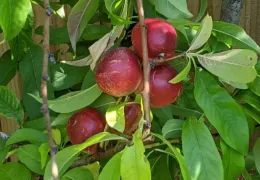
California's Central Valley produces tree nuts, stone fruits, and citrus, among other fruits. These commodities are the backbone of our valley's economy. Because of our Mediterranean climate, many homeowners plant citrus or other fruit trees as a part of their landscape. They are easy to grow here and have the added benefit of providing "free" fruit. The fruits, however, are not technically free because the trees must be properly maintained to ensure their health and to prevent diseases and insect infestations. Some good practices for backyard fruit growing are to: pick and share all your fruit, do not let fruit mummies remain on the tree, and dispose of any fallen fruit. You don't need to invite insects and other pests for a neighborhood potluck.
Trees provide shade.
According to the Nature Conservancy, neighborhoods with lots of pavement absorb heat and can be five to eight degrees hotter than surrounding areas. Planting trees can minimize the heat island effects. In Central California, a leafy canopy provides relief from sweltering temperatures. Have you ever noticed that yards with large trees offer protection to the surrounding landscape plantings? The rest of the yard may be parched and brown, but the shaded area can remain a healthy green. Of course, you do not want the shade of a tree to impair the efficiency of home solar panel systems, but according to The Tree People Organization, strategically placed trees can reduce air conditioning needs by up to fifty percent.
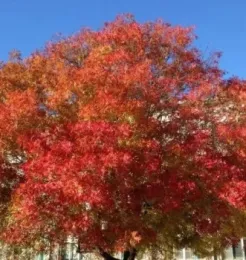
Trees add aesthetic value.
They also contribute to positive mental and physical health. Did you know that trees have healing powers? Studies have shown that spending time around trees can reduce stress, lower blood pressure, and improve mood. Depending on tree size, type, and condition, a tree can also increase curb appeal and a home's value by 3.5 to 15 percent. The University of Nebraska found that trees added more than $31.5 billion to the value of our nation's real estate.
There is such a wide variety of tree sizes, shapes, and uses that are suitable for our valley's climate. Different species of trees add seasonal interest with colorful foliage, fruits, and flowers. Many deciduous and evergreen choices are available.
Do not be deterred by the thought of raking fallen leaves from a deciduous tree. The beauty that colorful autumn leaves add to landscapes is well worth the effort it takes to rake them after they have fallen. Raking is good exercise, and leaves are compostable. Compost piles are a great way to turn your yard and waste scraps into gold: healthy, free soil, full of macro- and micro-nutrients.
Leave the leaves! Another thought about raking leaves comes from the Xerces Society. According to their website, we should "think twice before you rake, mow, and blow…. Invertebrates rely on fallen leaves and other organic debris to cover and insulate them from the elements. The leaves don't need to be left exactly where they fall. You can rake them into garden beds, around tree bases, or into other designated areas. Too many leaves can kill grass, but in soil they can suppress weeds, retain moisture, and boost nutrition."
Fall and early winter are the perfect times for planting a tree. Why not do a little research and pick the ideal tree to grow in your yard's perfect spot? A beautiful, well-maintained tree will give a great return on your home investment, and also add to your sense of well-being.
Happy Gardening!