
Fighting Bermudagrass
Bermudagrass (Cynodon dactylon) is a warm-season grass that is sometimes used for lawns. It tolerates high temperatures, needs full sun, and survives with low water. Unfortunately, it is also one of the most common weeds in our area and is difficult to control.
To identify bermudagrass, look for dense mats with creeping stems that are often rooted at stem joints. Flower heads are spike-like branches that radiate from the tip of a stem. Although bermudagrass normally blooms from June through September, with a warm winter and spring it is blooming much earlier this year.
Bermudagrass is low growing with thin, wiry stems. Both the stolons above ground and the rhizomes below ground can root and start new plants. If you try to pull it out and leave pieces of the plant behind, they can regrow. It also reproduces by seed. It tolerates drought somewhat but will die in bone-dry soil. It will turn brown in the fall with the advent of cool weather.
How to control
Bermudagrass can be managed without chemicals with several methods. Letting the soil dry completely (if it can be done without harming landscape plants) will kill it. Cultivating the dry soil can bring up rhizomes from below the surface. Rake to remove as much of it as you can.
Another good way to control bermudagrass in the open is to cover it with black plastic to prevent sunlight from reaching the plants. In the summer, pull out or cut the grass short, irrigate if the soil has started drying, and lay black polyethylene over the area. Leave it for at least 6 to 8 weeks in the summer. Make sure the plastic stays intact and no sunlight can reach the grass. You do not need to treat the grass with an herbicide for this to work—it’s the black plastic that does the magic by keeping the bermudagrass in the dark.
Soil solarization with clear plastic can also work to kill bermudagrass if used during the hottest part of the summer in full sun. Before you start, mow the area or remove as much of the bermudagrass as you can and then water the area so the soil is moist. Lay clear polyethylene over the area for 4 to 6 weeks. This works best in the warmer parts of Contra Costa County because it allows the soil to heat up enough to kill the plants and seeds.
Bermuda grass can also be controlled with post-emergent herbicides. You can choose from grass-specific ones, or non-specific ones. There are several grass-specific products on the market containing the ingredients sethoxydim or fluazifop. The best time to apply these in in the spring when the growth is less than 6 inches long, then reapply before growth gets to 6 inches again. You need to be consistent and diligent in the treatments to eliminate the grass.
Non-selective herbicides such as glyphosate kill plants by translocating down into the root system, as well as killing top growth. It is best applied during late summer when the plants are storing food in the roots. Earlier in the year the plants are using nutrients stored in the roots so the chemical wouldn't translocate to the roots as easily. You need the plants to be growing vigorously, not drought stressed, and have lots of leaf surface. Deep rhizomes may not be killed by this, so you will most likely need to treat again next year.
For any herbicide, make sure to take all precautions if using. It is best to apply any herbicide on a windless day to avoid any drift of the chemical that can damage other landscape plants in your or your neighbors' yards.
For more information about managing bermudagrass weeds, see this link: https://ipm.ucanr.edu/home-and-landscape/bermudagrass/#gsc.tab=0
For information on safe use of herbicides and other pesticides, see: https://ipm.ucanr.edu/home-and-landscape/pesticides-safe-and-effective-use-in-the-home-and-landscape/#gsc.tab=0
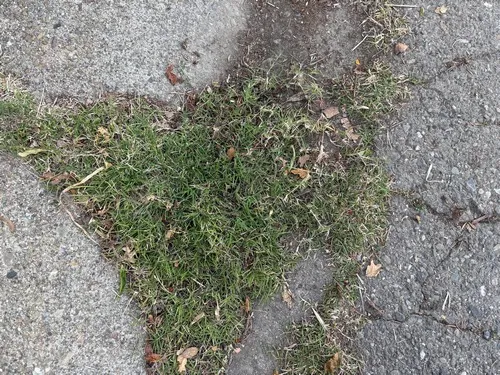
Photos courtesy of Susan Heckly
Help Desk of UC Master Gardeners of Contra Costa County (SEH)