
2026 3rd Report-- May 11
2026 3rd Report—
Although April and May temperatures have generally been on the cool side of normal, the hot March means that thrips generations are still ahead of normal. Generation 2 adults are feeding and laying their eggs, with generation 3 peak egg hatch predicted in a few days.
Generation | Predicted date |
Gen 3 peak egg hatch | 5/14 |
Gen 3 peak adults | 5/27 |
Gen 4 peak adults | 6/21 |
Gen 5 peak adults | 7/13 |
Current generation | Gen 2 adults/Gen 3 egg hatch |
Spray timing
Sprays are considered to be most effective in the 3rd and 4th generations, as earlier generations are less likely to have acquired the virus, and later generations are less likely to cause yield loss on tomatoes. Generation 3 may be more appropriate for fields that are in historic TSWV hotspots or where you are seeing active spread of the disease; generation 4 for lower-risk fields.
Field observations
Thrips populations in the seven tomato and pepper fields we are monitoring around Yolo and Solano counties tended to increase slightly over the past two weeks, but are still at far lower levels than 2025.
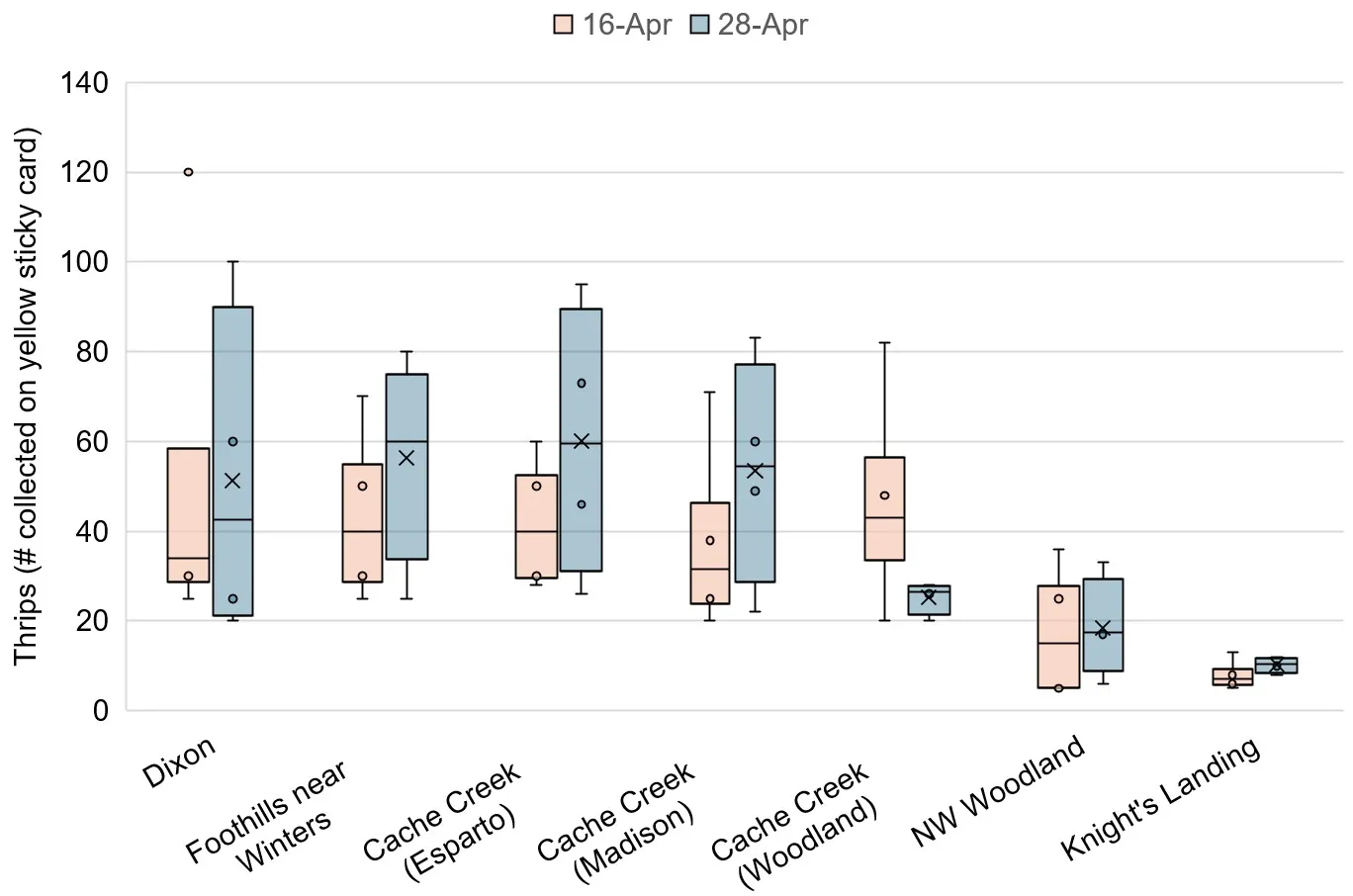
Figure 2. Bi-weekly counts of thrips captured on yellow sticky cards placed outside tomato fields in Yolo and Solano counties, collected on April 16th and April 28th.
TSWV is starting to show up in early-planted tomatoes. In Yolo County, we are still seeing both tomato resistance-breaking strains (C118Y and T120N) . We will also be monitoring for resistance-breaking strains in pepper. If you see TSWV symptoms spreading rapidly in a field, please contact Patricia Lazicki (palazicki@ucanr.edu; cell (530) 219-5198
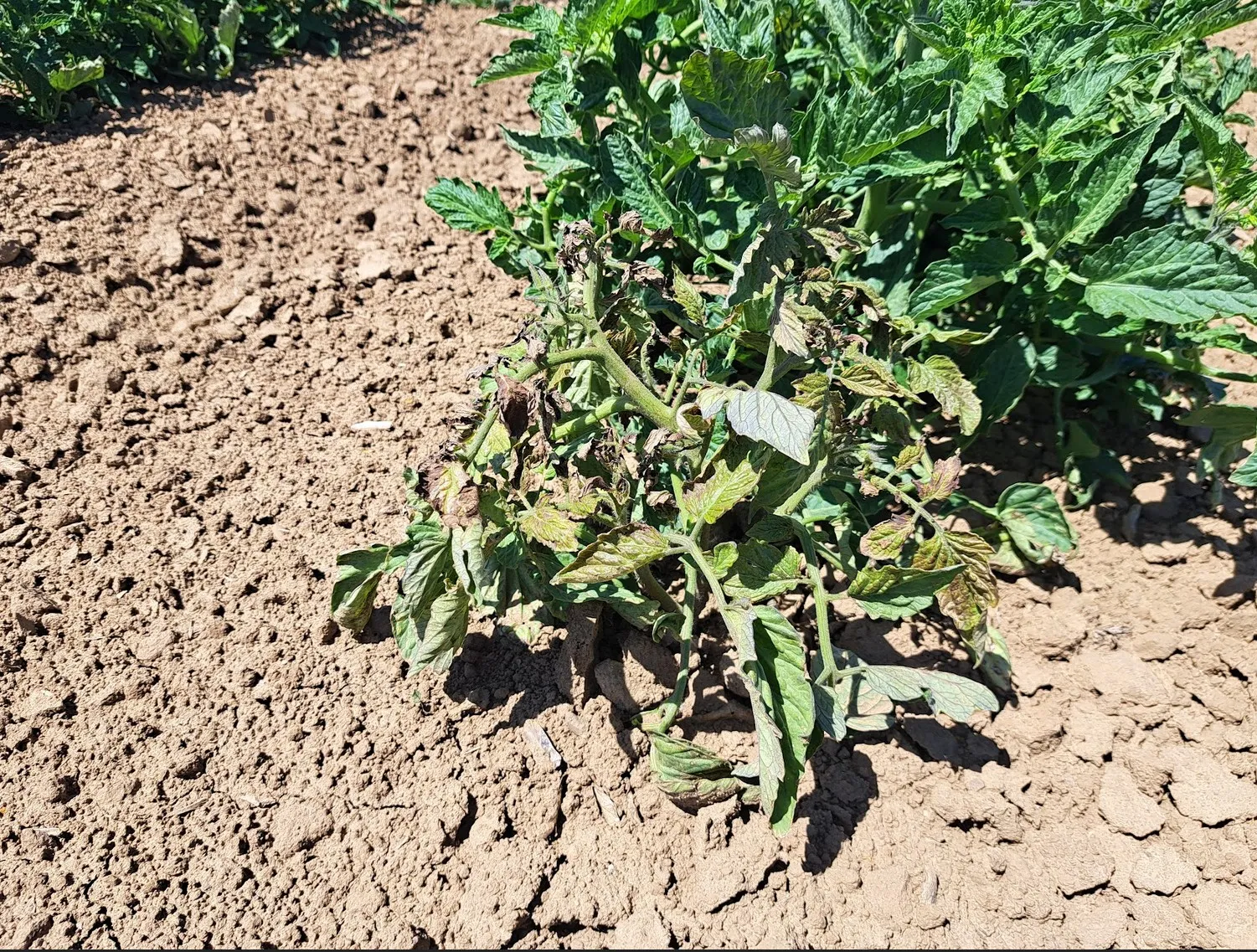
Figure 2. Early TSWV infection on tomato. Plant stunting and distorted, bronzed leaves with extensive necrosis are characteristic.