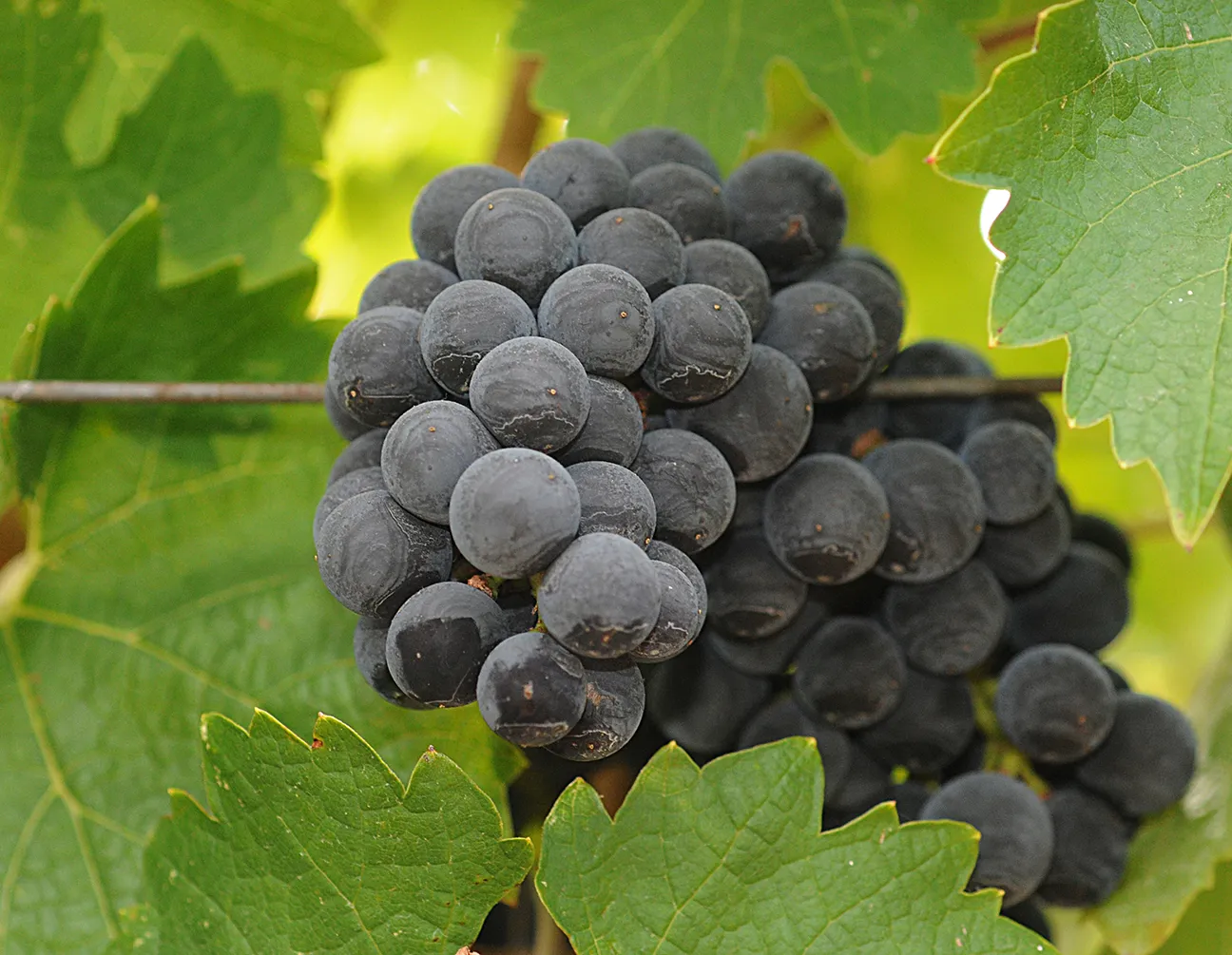
Ag Pests and Climate Warming
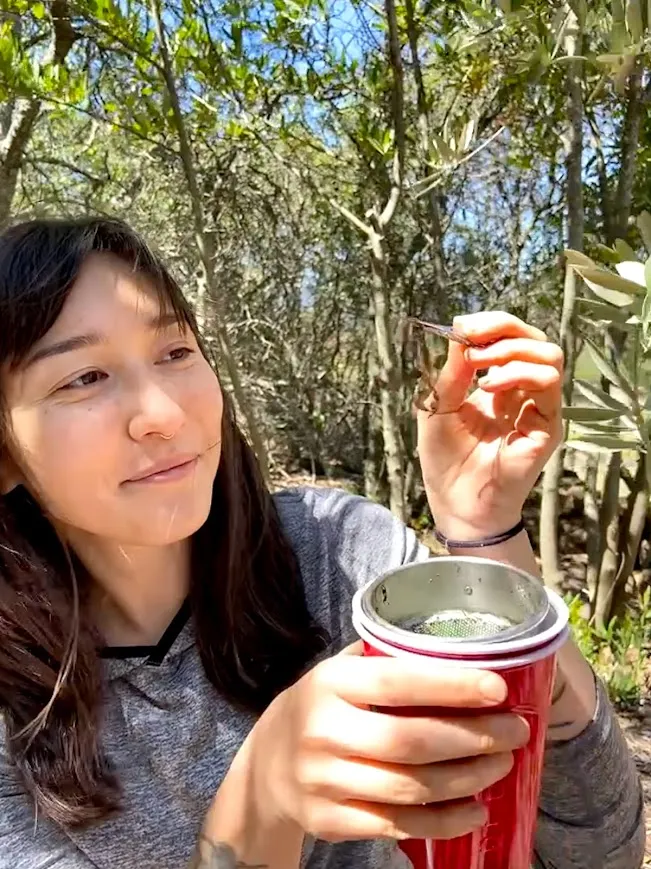
A team of nine researchers led by UC Davis entomologist Mia Lippey published an important paper today on climate warming and the effect on agricultural pests.
The work, “Field Data Challenge Predictions of Universal Crop Pest Proliferation under Warming,” appearing in the Proceedings of the National Academy of Sciences (PNAS), contradicts the “laboratory-based thermal performance experiments that arthropod crop pest densities will consistently escalate under rising temperatures.”
The “pest-proliferation hypothesis"--that climate warming will result in unprecedented agricultural pest populations and lead to monumental food insecurity worldwide--is oversimplified, the team said.
However, their study indicates that pests fare better in warmer temperatures than their natural enemies, “a cause for concern.”
Globally, current crop losses to arthropod pests exceed $470 billion annually, accounting for 20 percent of total crop production.
The team studied 141,562 field-year observations of 43 arthropod populations (30 pest and 13 natural enemy populations representing 28 pest and 11 natural enemy species) across five crops (rice, cotton, grapes, citrus, and olives) in Andalusia, Spain and California, two temperate agricultural regions with uniquely extensive long-term monitoring data.
“Laboratory measured thermal performance and life-history traits failed to explain the variability of responses across taxa,” the authors wrote. “Our findings challenge predictions of universal pest proliferation, highlighting the urgent need for species-specific monitoring approaches in agricultural climate adaptation.”
“We found that both pests and natural enemy insects exhibit highly diverse responses to warming, with about half of the populations increasing in size under warming and half decreasing,” said Lippey, who holds a doctoral degree (2026) from UC Davis and studied with major professors Emily Meineke and Jay Rosenheim, co-authors of the paper. “While natural enemies did show some evidence of heightened vulnerability to warming compared to pests, we need more research to understand what drives these differences and how severe of an impact this difference would have on agriculture.”

Meineke, an urban landscape entomologist, said that “the take-home message is that insect responses to climate are not predictable with the tools we have now, which means that though monitoring insect pests and natural enemies in crop fields is expensive, it is worth government investment as the climate warms. Our study also indicates that pests appear to do slightly better in warmer climates than their natural enemies, which is cause for concern and further emphasizes the importance of monitoring both pests and the insects we rely on to control them.”
In the paper, the authors noted that “Climate change is reshaping ecosystems worldwide, and agriculture faces particular scrutiny: models consistently warn that warming will boost crop pest populations while decimating their natural enemies. These predictions, built largely from controlled laboratory experiments, shape global concern about food security and pesticide use. Yet the real world is far more complex than the laboratory… Some species thrive with warming, others decline or show no response, and the traits scientists use to predict these outcomes fall short. Climate-informed agriculture requires coupling field and laboratory approaches to capture the complexity of real agricultural systems.”
Said Lippey: “We could not explain species’ responses using traits that are currently thought to drive how species respond to temperature. Ultimately, our take-away message is that species, crop, and location all contributed to the diversity of results we found, and traits alone cannot reliably be used to make predictions about how the changing world will shape agricultural arthropods in the coming years.”
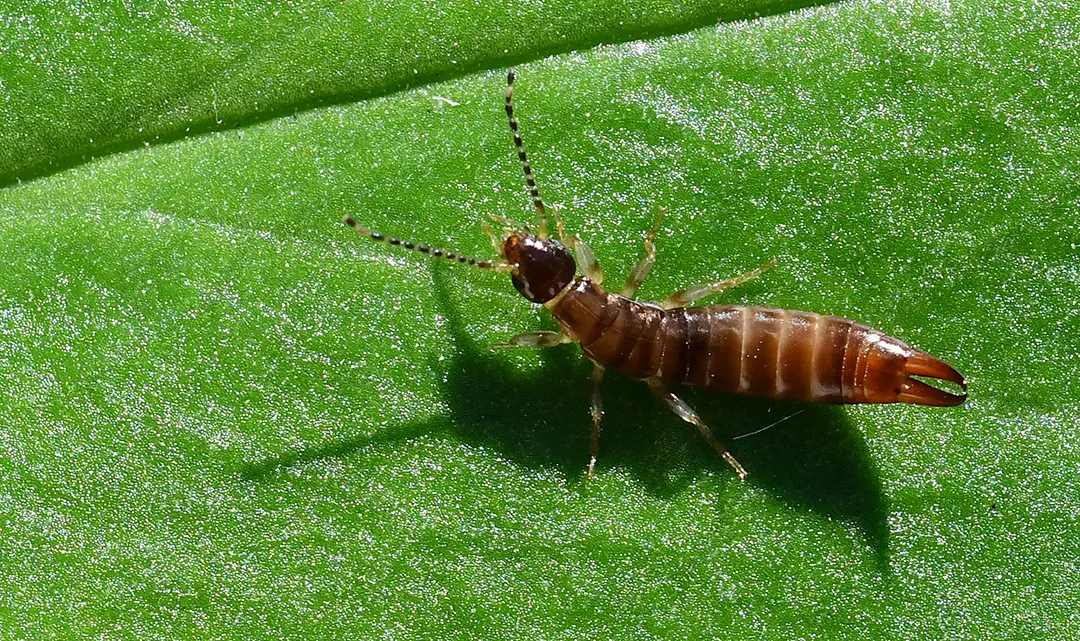
“The project,” Lippey said, “stemmed from several discussions we had when I first began graduate school. I was already interested in studying insects in response to global change, but I was struck by how little consensus there was/is between ecologists and entomologists when it came to predictions about how crop pests (and natural enemies) will fare under warming temperatures. If you were to ask someone how they think crop pests will be affected, they would likely tell you that pests will reach unprecedented population sizes in the near future. If you were to ask someone how they think natural enemieswill be affected, they would likely tell you that populations will dwindle, resulting in reduced biocontrol efficacy. I, along with my co-authors, were curious – do we really expect opposite outcomes? Is there some inherent difference in thermal tolerance between the arthropods that are deemed pests vs. beneficial for agriculture? Do these predictions hold in the field?”
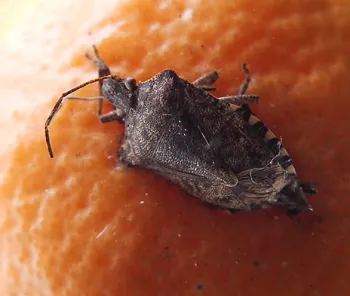
“Luckily, I was in a unique position to examine these questions because of our access to large, high resolution ecoinformatics datasets – a rare and valuable asset in ecology,” she said. Rosenheim, a co-principal investigator and now a UC Davis Distinguished Professor emeritus, brought a dataset together “through careful work and collaboration with growers and pest control advisors across California's San Joaquin Valley.”
Government employed technicians across Andalusia, Spain collected the rest of the data which was accessible through a Spanish collaborator, Daniel Paredes. “Because these datasets are decentralized, they cover larger geographic areas and a longer time scales than most other insect field-collected datasets in existence,” Lippey said.
Said Rosenheim: "Mia did a fabulous job of corralling a massive amount of data to address a pressing question: will our warming climate cause widespread pest insect population increases, threatening food security? The conventional wisdom suggested that the answer was yes. Mia’s work showed that pest populations responded quite variably to warming, with some increasing and others decreasing. As is often the case, real field ecology is more complex than the simple models suggest."
Other co-authors are Daniel Karp, UC Davis Department of Wildlife, Fish, and Conservation Biology; Daniel Paredes and Rebecca Chaplin-Kramer of the University of Extremadura, Spain; Richard Sharp, World Wildlife Fund, Global Science; San Francisco; Sara Emery, Department of Entomology, Cornell AgriTech; and Colleen Miller, Natural Capital Project, University of Minnesota.
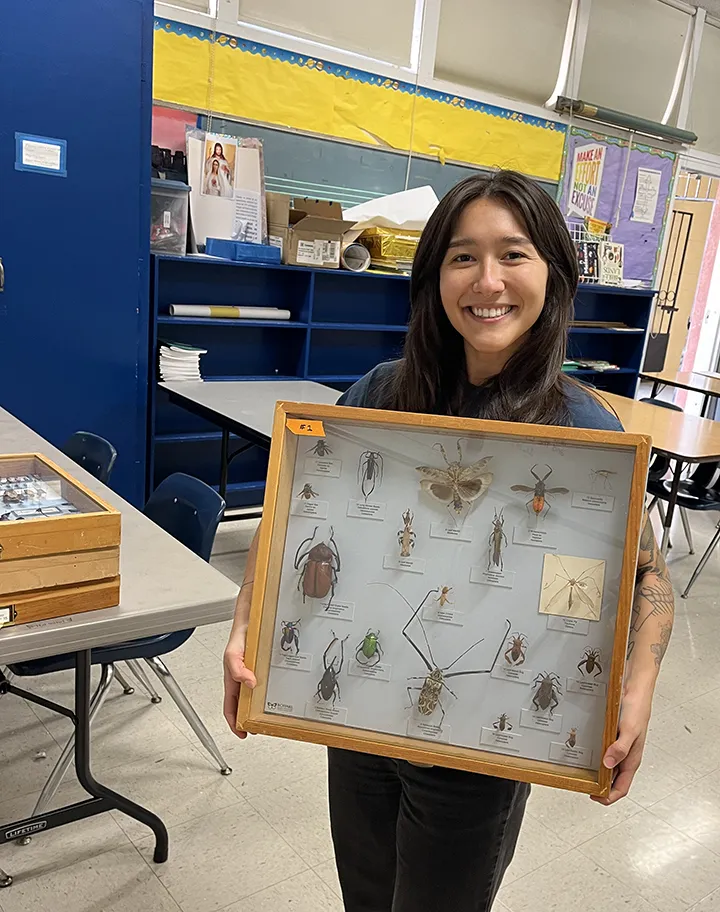
More About Mia Lippey
In her research, Lippey not only explores plant-insect interactions in agricultural and urban environments, and the impact that global change has on these relationships, but she is a highly accomplished leader and scholar. She earned her PhD with a 4.0 GPA. She holds a bachelor's degree in entomology (2019) from UC Davis with high honors. Among her many honors and accomplishments:
- She received the 2025 Student Leadership Award from the Pacific Branch, Entomological Society of America (PBESA), a highly competitive award.
- She won a 2024 USDA AFRI NIFA Predoctoral Fellowship of $120,000. (NIFA is the National Institute of Food and Agriculture and AFRI is the Agriculture and Food Research Initiative.)
- She won a President’s Prize at the 2024 Entomological Society of America meeting for her outstanding research presentation on "A Big Data Approach to Characterizing Impacts of Climate Warming on Agricultural Arthropod Populations."
- She is a past president (2023-24) of the Entomology Graduate Student Association.
- She served as the student representative of the department's Diversity, Equity and Inclusion (DEI) Committee, creating systems to improve communication between students and faculty.
- She led an Ecological and Evolutionary Response to Rapid Environmental Changes Program.
- She co-led a UC Davis STEM Squad outreach program for middle and high school students in the Yolo County area. She encouraged and guided underrepresented students to seek careers in science, technology, engineering and mathematics
- She organized an Ecological Society of America session on effectively communicating climate change and sustainable agriculture to policy makers.
Lippey's work experience includes volunteer at the California Academy of Sciences, where she identified and curated donated collections and built entomological displays for outreach and education. She also worked as a junior specialist and scientific illustrator for the USDA Animal and Plant Health Insect Service (APHIS), and as a User Experience (UX) designer at Dolby Laboratories, where she developed professional audio software and designed icon libraries and high-fidelity graphics.
Her professors and colleagues describe her as:
- "A careful and powerful advocate for other graduate students."
- "An excellent entomologist" and "an excellent communicator"
- "An outstanding scientist whose non-traditional path in academia shape her inquisitiveness in ways that clarify the complex effects of climate change on insects. Her ability to reconceptualize accepted ideas and challenge old theories based on new evidence is inspirational."
- "Highly collaborative"
- "Creative, curious and ambitious entomologist"
Well done!