
Kids in the garden
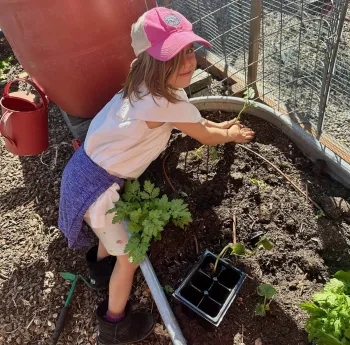
Gardening with children is a total win/win. You get a great way to spend quality time together doing a hands-on activity, and you can make a big difference in fostering their curiosity, patience, love of nature, and an understanding of how and where we get our food and flowers. Gardening with kids not only fosters a green thumb, but also promotes physical, social, and emotional health.
Kids generally love to be outside and playing in the dirt, so it is pretty easy to get them going. You don’t need to be an experienced gardener or have a large garden. Learning garden basics together can be a fun way to explore the process from beginning to a yummy and beautiful result. Successes and failures will happen along the way, providing an important life lesson. Nature is resilient and forgiving and will always give you another chance.
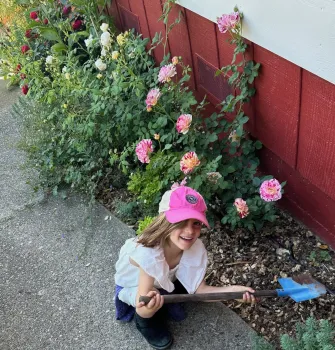
Any space can work. Any size garden can become a place for kids to learn critical thinking, biology, ecology, entomology, ornithology, climatology, planting for wildlife, pollination, and soil and water science. A container is a garden, and, for kids, it is often better to start small to accommodate their interest level. Kids can learn water conservation, learn about the importance of organics and natural fertilizers, and observe how your kitchen scraps can become valuable compost. This is not only the beginning of them learning that they can have an impact on their own space, but also an understanding of how they can make a positive impact on the planet.
Before you all get started, let’s talk safety. Sunscreen and a hat can protect you all from the sun. Gloves are great for kids reluctant to touch soil or anything that they may find in it, and they come in all sizes. Adult tools are too big for small children to use. There are kits of small tools available that are safe for them to use and will give them a sense of responsibility and a chance to teach care of their belongings.
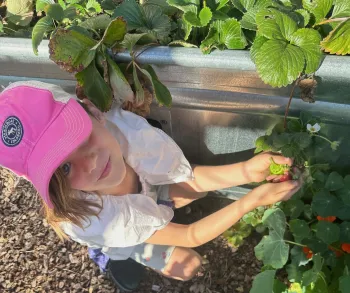
Where you start and what you plant will vary with the age of your children. No matter the age, engage them in every step of the process, from choosing what to plant to watering, weeding, and harvesting. A good place to start is by creating a garden with a salad in mind. Salad greens, carrots, cherry tomatoes, radishes, and cucumbers are easy to grow and can bring pretty quick results, helping to keep the kids engaged. You can start from seed or purchase seedlings from a nursery. Green beans are so fun to watch germinate as they curl their way out of the ground, and they produce heavily. They will see that some veggies are above the ground, some are climbers, and some develop out of sight underground. Strawberries are kid magnets.
Flowers are also a fun grow, and some are super easy. Nasturtiums have big, easy-to-handle seeds that germinate, spread rapidly, and, as a bonus, the organic flowers add color and spice to your salad. Sweet peas also have good-sized seeds, and they fill your home with amazing fragrance. Sunflowers are a kid favorite. They come in so many colors and sizes. The seeds can be left on the plant to feed the birds, or they can be collected and dried for a kid’s snack.
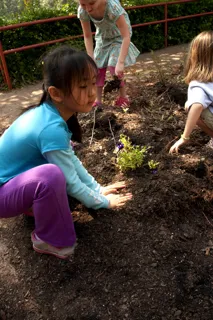
These suggestions are with our spring and summer seasons in mind, but it is fun and easy to make growing your garden a year-round activity, and it is actually healthier for your soil to keep it planted. Here in Marin, fall is the time to plant spinach, snap peas, shelling peas, Swiss chard, broccoli, and cauliflower.
Check your library for books on gardening with your children. They often have activities to enhance your experiences and crafts to explore with your harvest. It is so much fun to see it all through their eyes.
By Dot Zanotti Ingels, May 16, 2026