UCANR

Celebrating World Bee Day!
Image
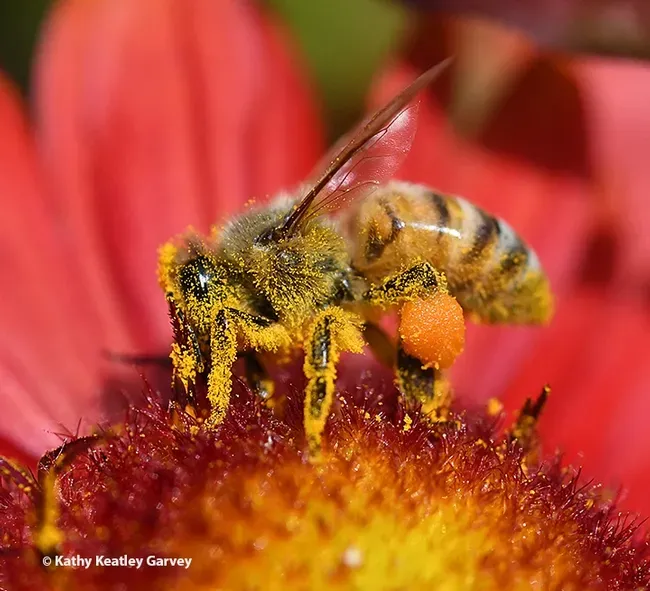
Honey bee covered with pollen. (Photo by Kathy Keatley Garvey)
A honey bee, Apis mellifera, covered with pollen. (Photo by Kathy Keatley Garvey)

Today, May 20, is World Bee Day, and time to "raise awareness on the essential role bees and other pollinators play in keeping people and the planet healthy, and on the many challenges they face today," according to the World Bee Day organizers. "We have been celebrating this day since 2018, thanks to the efforts of the Government of Slovenia with the support of Apimondia, that led the UN General Assembly to declare 20 May as World Bee Day."

"Today bees, pollinators, and many other insects are declining in abundance," they continue. "This day provides an opportunity for all of us-- whether we work for governments, organizations or civil society or are concerned citizens-- to promote actions that will protect and enhance pollinators and their habitats, improve their abundance and diversity, and support the sustainable development of beekeeping. "

When most people think of World Bee Day, they think of honey bees. But globally, there are more than 20,000 species of bees, of which some 4000 call the United States "home," and 1600 of those are native to California.

Bees differ dramatically across species, genetics, and even within the exact same colony. They come in many sizes, shapes and colors.  Here are a few species we've encountered in Solano, Yolo and Sonoma counties. 
Image
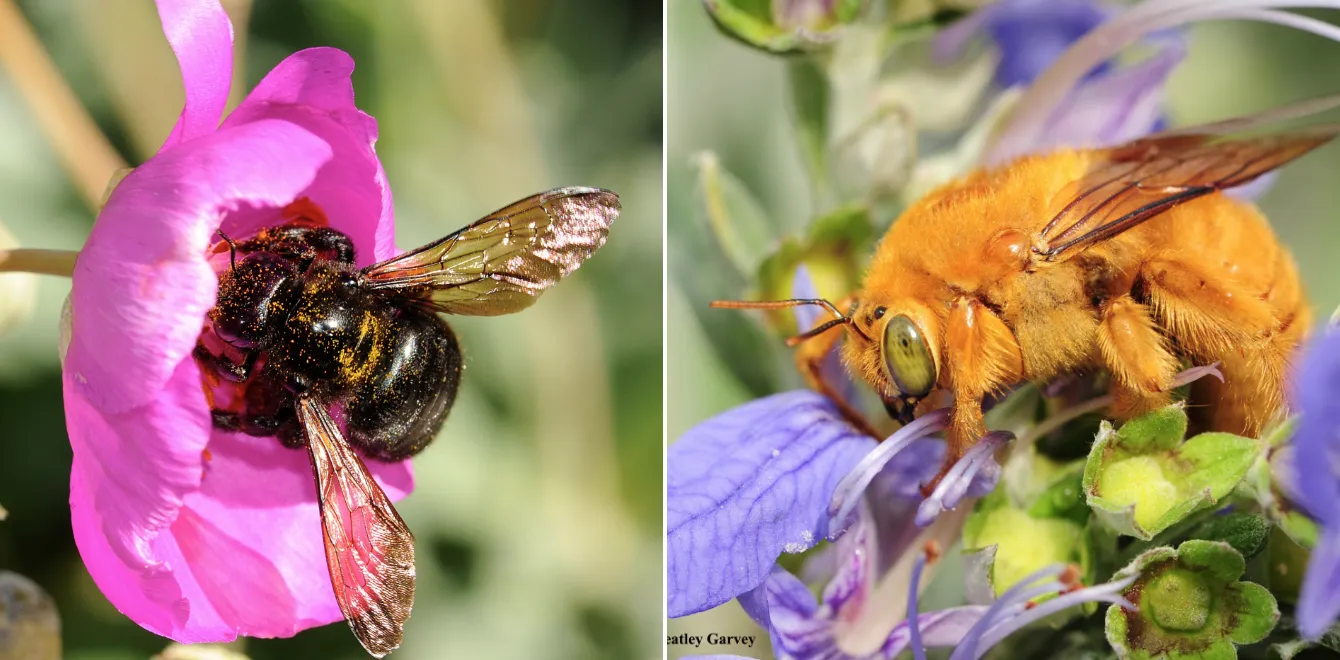
Valley carpenter bees, Xylocopa sonorina, female (left) and male. (Photos by Kathy Keatley Garvey)
Valley carpenter bees, Xylocopa sonorina, female (left) and male. The male is known as "the teddy bear bee."(Photos by Kathy Keatley Garvey)
Image
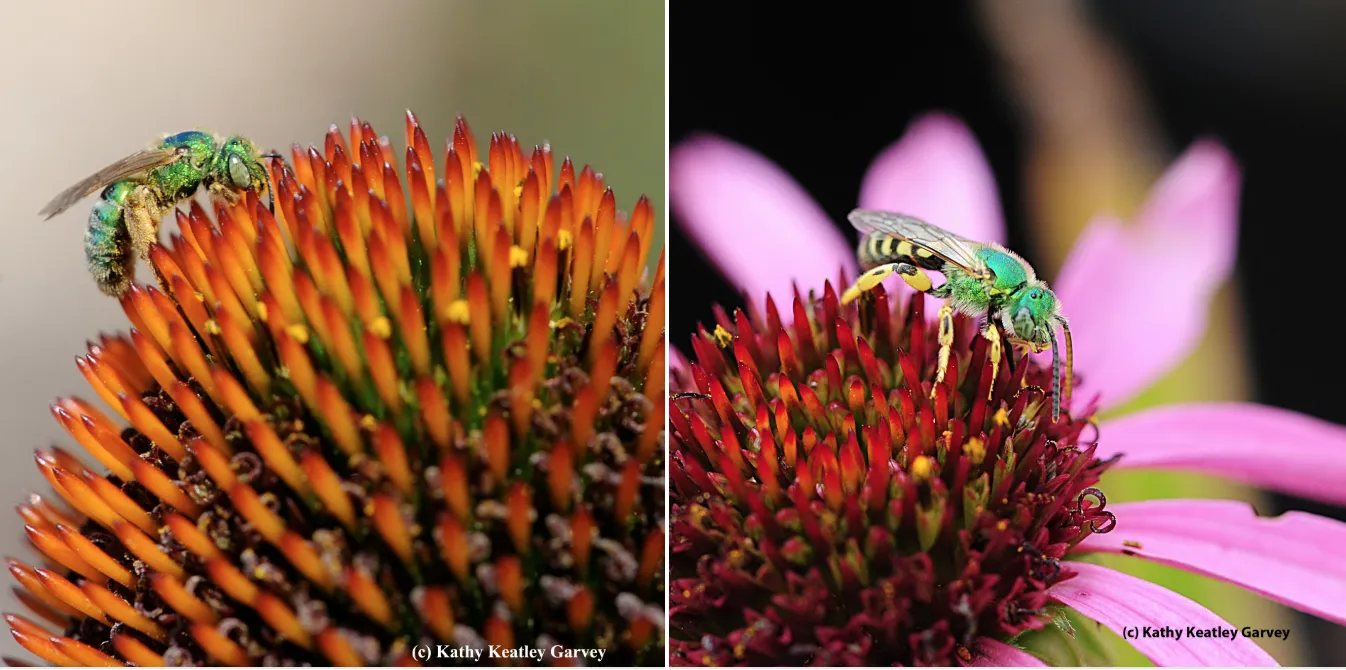
Metallic green sweat bees, Agapostemon texanus (female at left, and male at right).
Metallic green sweat bees, Agapostemon texanus; female at left, and male at right. (Photo by Kathy Keatley Garvey)
Image
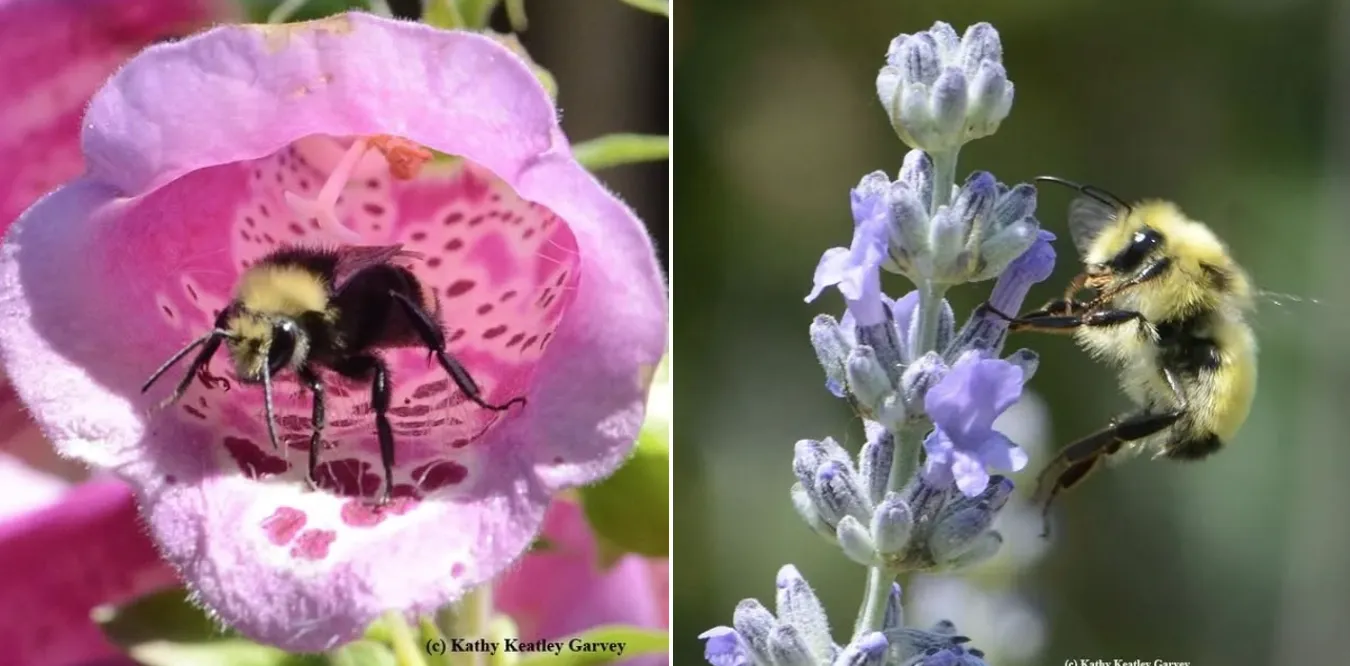
Yellow-face bumble bee, Bombus vosnesenskii (left) and black-tailed bumble bee, Bombus melanopygus
Yellow-faced bumble bee, Bombus vosnesenskii (left) and black-tailed bumble bee, Bombus melanopygus. (Photos by Kathy Keatley Garvey)
Image
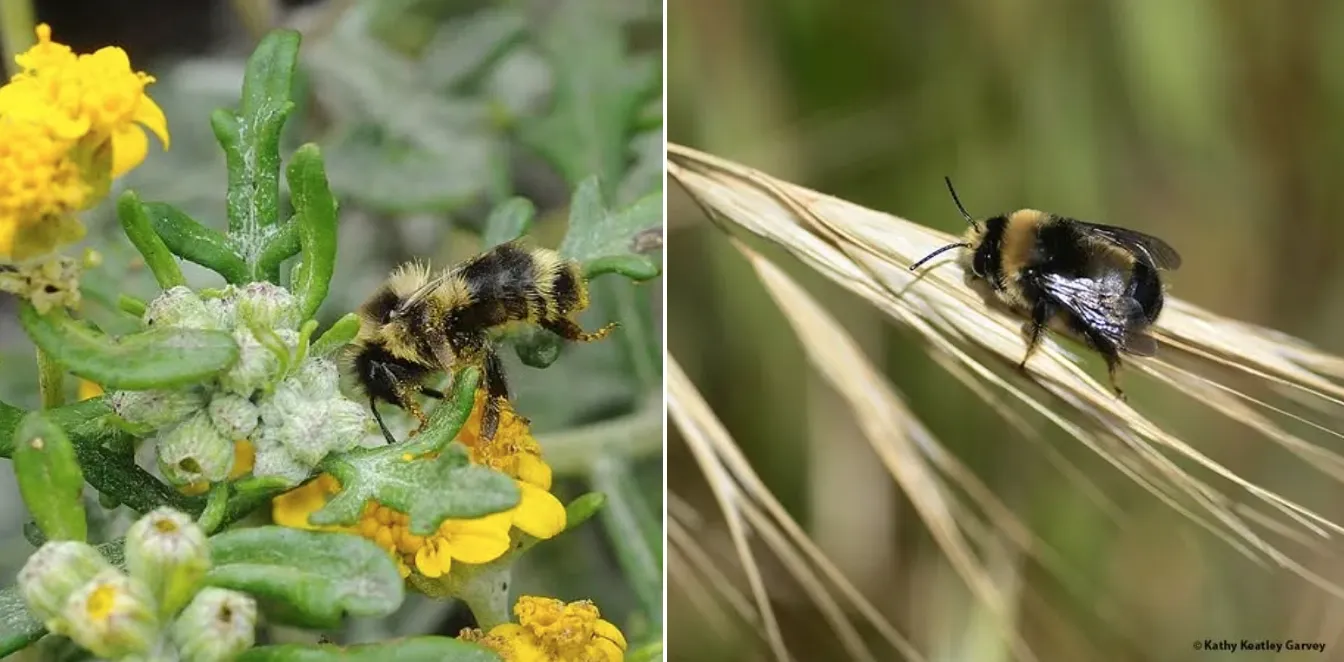
A bumble bee mimic, Anthophora bomboides standordiana (left), and a bumble bee, Bombus bifarius.
The two-form bumble bee,  Bombus bifarius (left), and a bumble bee mimic, Anthophora bomboides standordiana. Both images taken at Bodega Head, Sonoma County. (Photos by Kathy Keatley Garvey)
Image
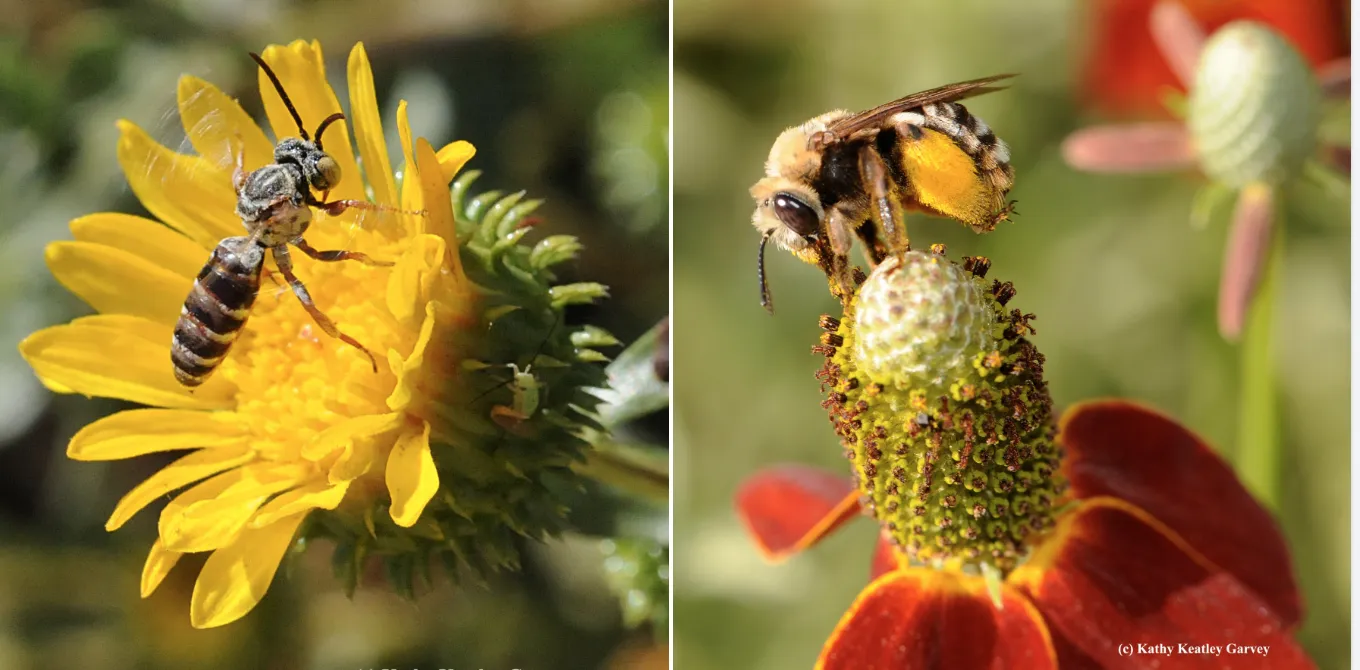
Triepeolus cuckoo bee (left) and Svastra obliqua expurgata.
Triepeolus cuckoo bee (left) and Svastra obliqua expurgata, a species of long-horned bee in the family Apidae. (Photos by Kathy Keatley Garvey)
Image
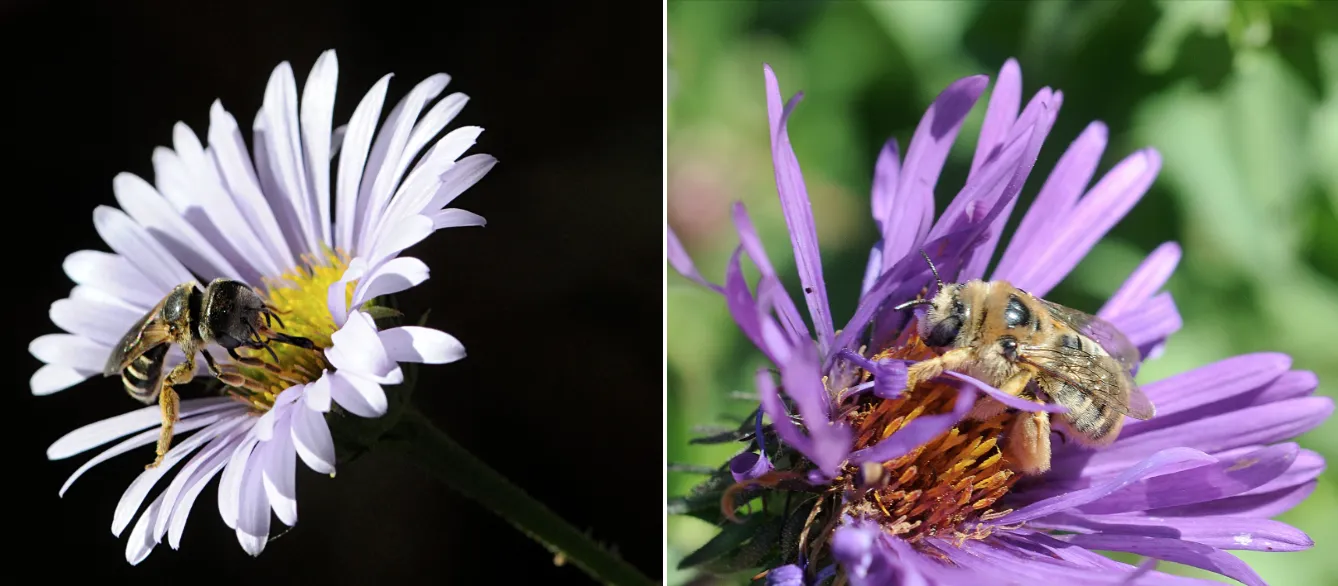
Halictus ligatus (left) and Diadasia enavata
Halictus ligatus (left), a species of sweat bee in the family Halictidae, and Diadasia enavata, a species of chimney bee in the family Apidae. (Photo by Kathy Keatley Garvey)
Image
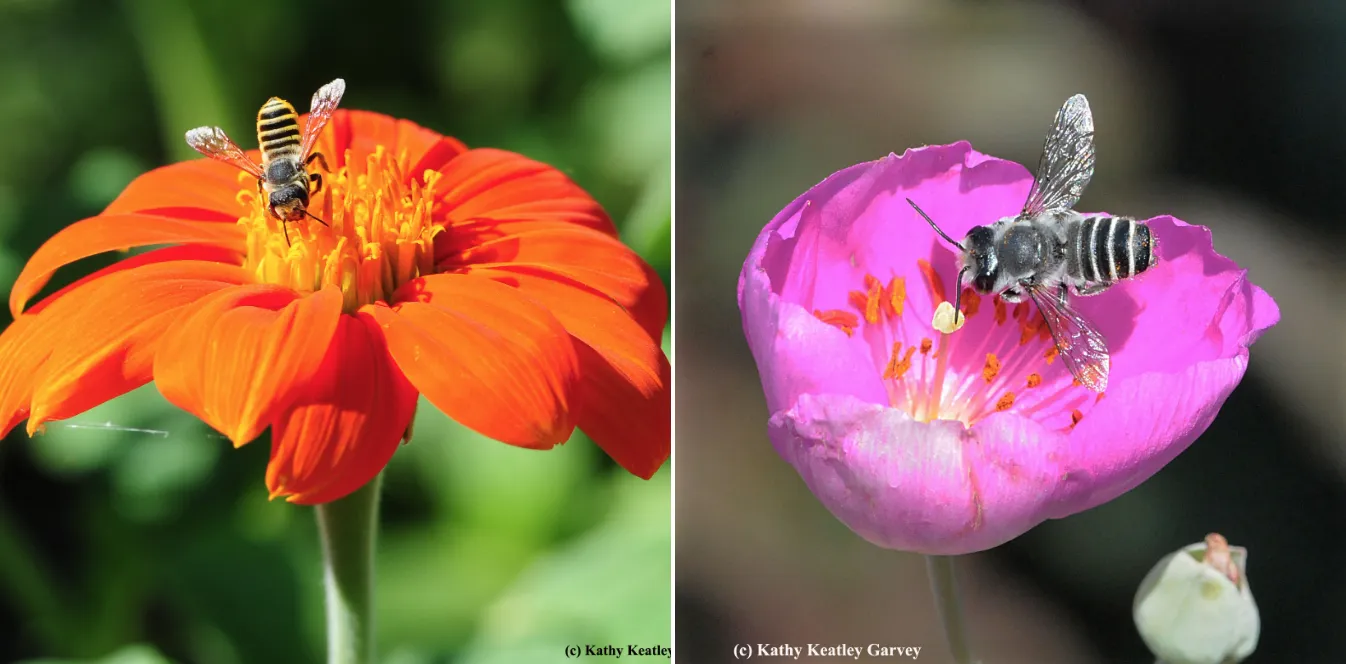
Two Megachile bees, a cosmopolitan group of solitary bees known as leafcutters.
Two Megachile bees. At left is Megachile fidelis, known as "the faithful leafcutting bee," and at right, a leafcutter bee, probably Megachile texana. (Photo by Kathy Keatley Garvey)
Image
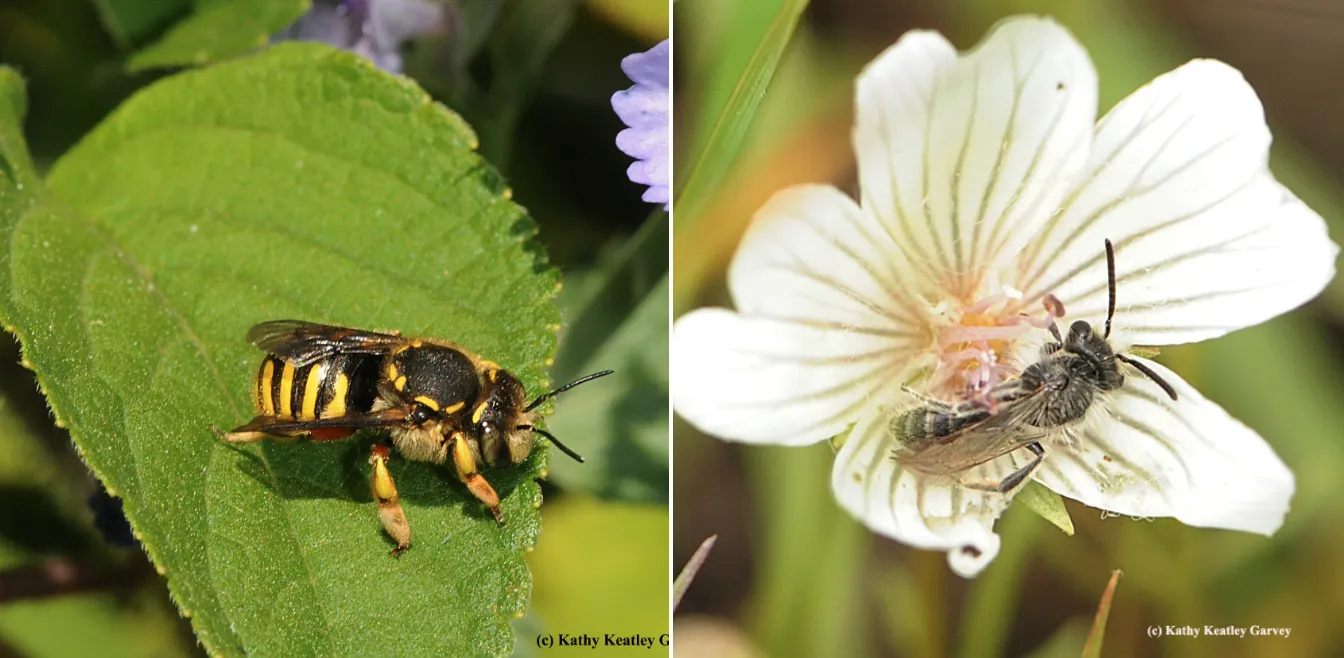
European wool carder bee and Andrena angustitarsata
European wool carder bee, Anthidium manicatum (left), and Andrena angustitarsata, the narrow-legged miner bee. (Photos by Kathy Keatley Garvey)

Cover image: A Western bumble bee, Bombus occidentalis. (Photo by Kathy Keatley Garvey)


Source URL: https://ucanr.edu/blog/bug-squad/article/celebrating-world-bee-day