
What He Discovered After Large-Scale Argentine Ant Removals

The invasive Argentine ant (Linepithema humile), a significant pest in both agricultural and urban settings, is known for its supercolonies that render substantial harm to flora and fauna, including native arthropods, vertebrates and plants.
Enter Professor David Holway of the UC San Diego Department of Ecology, Behavior and Evolution.
Holway, an ecologist and evolutionary biologist, will speak on "Large-Scale Removal of Introduced Ants as a Test of Community Reassembly" at the UC Davis Department of Entomology and Nematology seminar at 12:10 p.m. Wednesday, May 27 in 122 Briggs Hall, UC Davis campus.
His seminar also will be on Zoom. The link: https://ucdavis.zoom.us/j/95882849672.
"Species introductions are a costly and pervasive form of environmental change that cause impacts including degraded ecosystem services, agricultural disruptions, and species extinctions," Holway says in his abstract. "Surprisingly little information exists, however, regarding the capacity of ecosystems to recover after introduced species removal. The experimental removal of introduced species can also provide unparalleled opportunities to examine community reassembly. Here we use 16-years of data to examine the reassembly of native ant assemblages following the landscape-scale removal of the Argentine ant from Santa Cruz Island, California. This species displaces other ant species, and its removal makes it possible to examine how native ants recover genetic diversity, species diversity, community structure, and ecological function."
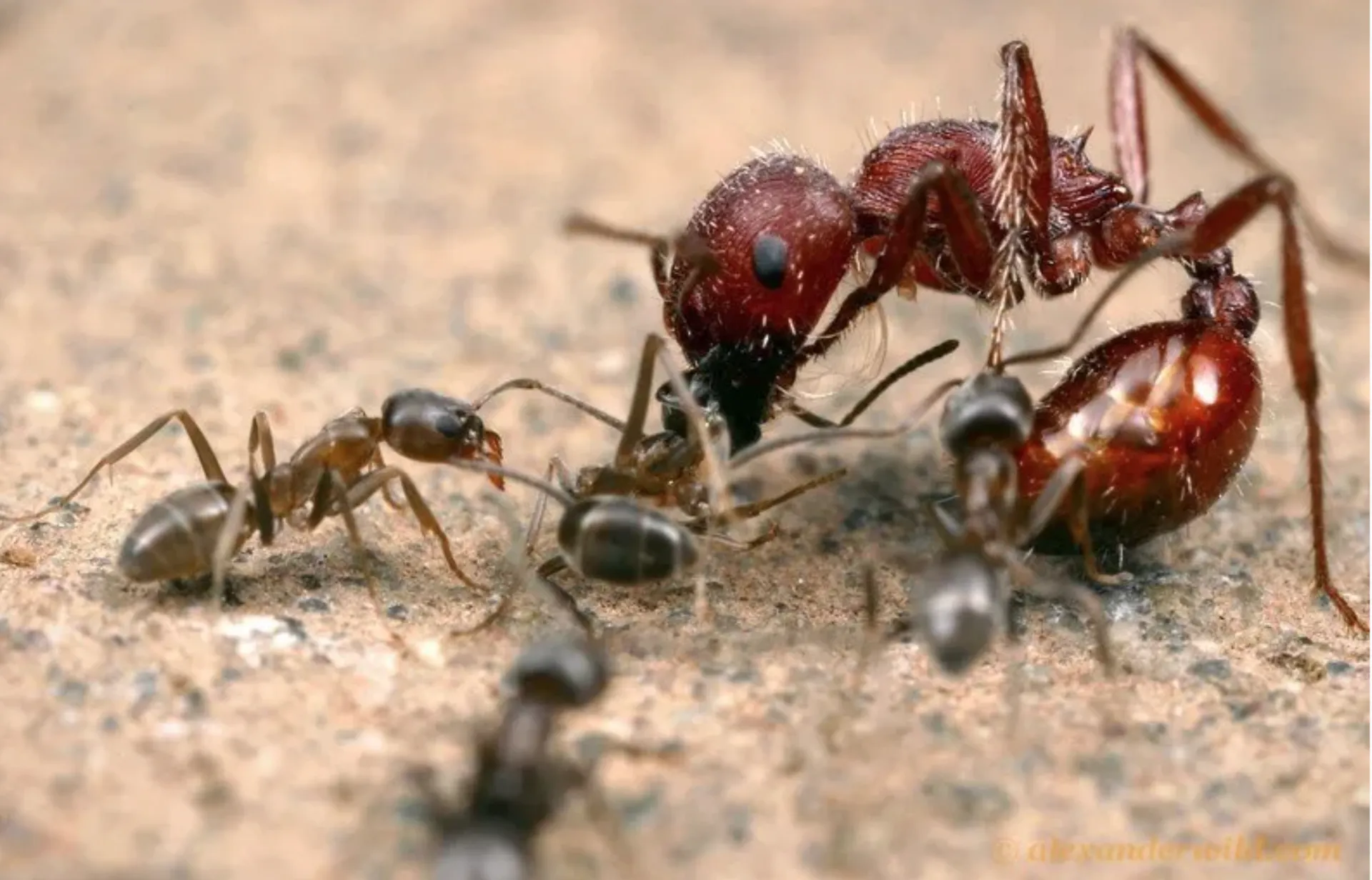
"Following Argentine ant removal, we observed both structural (genetic diversity, abundance, species diversity and composition, abundance) and functional (assemblage-level predation and scavenging) recovery of native ant assemblages (relative to uninvaded control sites) within a decade-long time frame," Holway noted. "Multifaceted approaches, such as those employed in this long-term study, can clarify the rate and extent to which ecosystems recover from different drivers of environmental change. Given the widespread ecological disruptions caused by ant invasions, our study illustrates how eradication efforts can be used to achieve ecosystem restoration."
Holway researches biological invasions as well as pollination services. "The introduction of species into new environments has increasingly become an economically costly and environmentally disruptive phenomenon," he writes on his website. "Our research on invasions focuses on social insects (ants, bees and wasps) and primarily encompasses the following questions.
- What factors control susceptibility to invasion?
- What accounts for how invasion impacts change in magnitude over time?
- Why do native species assemblages differ in their ability to recover following experimental invader removal?"
As the name implies, Argentine ants (Linepithema humile) originated in Argentina.
"Researchers believe that Argentine ants arrived in New Orleans on a ship from Buenos Aires or Rosario around 1890," according to a UC San Diego profile article spotlighting Holway. "Like many so-called 'invasive' species, the Argentine ants outcompeted many native species. By 1920, they had spread through the American South, becoming notorious for the damage they wreaked on sugar cane. Today, Argentine ants are considered 'a global mega-colony' with enormous, genetically linked populations in America, Europe and Japan."
The San Diego Tribune featured his work in its May 17, 2013 edition.
Holway, who joined the UC San Diego faculty in 2001, received his bachelor's degree in zoology from UC Berkeley, and his doctorate in biology from the University of Utah. He has served as campus director of the UC Natural Reserve System and also chaired the section of Ecology, Behavior and Evolution.
For any technical issues regarding zoom, contact seminar coordinator Marshall McMunn, assistant professor, at msmcmunn@ucdavis.edu.
Cover image: An argentine ant on a honey-covered spoon. (Photo by Kathy Keatley Garvey)