
Helpful Garden Tips June 2026
Are we ready for summer? We've had roller coaster spring weather, which is typical for this part of California. Also typical is a dry, hot summer with very little or no precipitation. We may still get rain this month, especially over the mountains, but in June, we generally start limiting our outdoor work hours to mornings. Some of our plants might also be showing a willingness to slow down towards the second half of the month. This is especially true of plant species adapted to dry summers with little water. It makes sense that they would not want to expend resources in summer. It's good to remember this when evaluating the health and appearance of some of our woody Mediterranean-climate and California-native species.
PLANTING
Your ornamental planting should be mostly finished by the middle of the month. If you must plant ornamentals in summer,
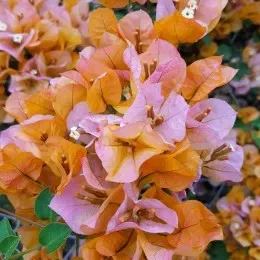
choose water-tolerant plants. In low-water-use gardens, this can be the many sage (Salvia), among them California native sage, most ornamental grasses, California fuscia (Epilobium), sage hybrids and cultivars like 'Hot Lips,' and 'Flame,' plus Yarrow (Achillea), Butterfly Bush (Buddlea), Crape Myrtle (Lagerstroemia), Bougainvillea, rosemary, Hesperaloe, and high desert plants like Apricot Mallow (Sphaeralcea) and the popular bladderpod (Peritoma arborea.) Avoid planting Ceanothus, manzanita, silver bush lupin (Lupinus albifrons), or coffeeberry (Frangula or Rhamnus sp.) in summer.
In the edible garden, plant melon, winter squash and pumpkin, basil, corn, and okra. Edible gardening is a high-maintenance project and is not low-water. But as long as we don't waste or overuse water and we maximize our harvest by controlling pests and diseases, a vegetable garden and orchard are a good use of space and water. Growing your own food, even a few herbs, is so satisfying that I encourage everyone to try at least a small garden, in the ground or in containers. The key is to choose an edible garden size you can easily manage. Who needs another excuse to stress out about unfinished tasks? It's fine to hire help to manage routine chores like weeding and water management, but try to spend a little time each week in your own garden for maximum benefits to you and the plants. Ideally, you should visit your edible garden at least once every day. You can take care of issues before they become real problems and harvest food at its prime. It's also good for your well-being to spend time in a garden.
MAINTAINING
Lawns, like the rest of the landscape, should be watered deeply and as infrequently as possible. Keep your grass at least three inches tall to help the crowns stay cool and not dry out between watering. A summer job can be to remove some part (or all) of your lawn in preparation for fall planting. It might be as simple as turning off the lawn sprinklers or preparing to solarize the area. Or, while temperatures are still relatively cool, digging it all out.
Monitor your garden, both edible and ornamental, for pest insects like scale, aphid, whitefly, stink bug, spider mite, and earwigs. Edible gardens with flowers and hedgerows can be a great habitat for garden allies like lacewing, ladybug, birds, spiders, native wasps, butterflies, and moths. Monitor populations of pest insects and see if the beneficials, including birds, can keep the numbers manageable. If some help is needed, follow the "least toxic first" method of Integrated Pest Management (IPM) practice before you reach for the kills-everything insecticide.
Other tasks this month are:
Deep-water ground covers, shrubs, and trees, including fruit trees.
Divide bearded iris once they finish blooming. First, carefully dig up plants and discard old rhizomes and any diseased or rotted sections. Replant the healthy rhizomes, making sure to plant shallowly. Just barely cover the rhizome with soil before watering.
Prune azalea, camellia, and hydrangea after bloom.
After harvest, clean up berry vines. Cut this year's fruiting canes to the ground and tie up the new green canes in their place. Spread compost or fertilizer in the bed, then deep water.
Prune apricot trees in the summer. You can also do a light summer pruning of other stone fruit trees. Beware of pruning too much, since bark that has previously been in the shade can be extra-sensitive to sunburn.
Pinch asters, chrysanthemums, and sedum 'Autumn Joy' to encourage branching and more blooms in the fall. My chrysanthemums often start blooming in the summer, so I usually wait until this first flush, pinch back old flowers, and get another bloom in the fall.
Lightly cut back any perennials that are becoming too leggy.
Snip spent flowers from summer-blooming annuals and perennials.
Wisteria can be pruned aggressively now. Cut back to two nodes on the new branches, as this will keep the plant from unrestrained growth, while giving it time to put on a spectacular display of blooms next year.
Manage mosquitoes by limiting standing water and using dunks containing Bacillus thuringiensis israelensis (BTI). Plant trays and pet water dishes are a good breeding ground for the daytime biting Aedes aegypti mosquito, commonly called the "ankle biter," or Zika mosquito. No mosquito-carrying virus has been transmitted in California, but the mosquitoes are still a nuisance because they bite multiple times.
WEED CONTROL
Crabgrass thrives in an overwatered, over-mowed lawn. Change the lawn care and reduce this weed. IF you use an herbicide, be sure to follow the directions carefully; don't just throw it on by handful.
Nutsedge also loves overwatered lawns and planting beds. It's tough to get rid of. Be diligent with hand pulling, hoeing, and spraying to remove it before it takes control of your garden or lawn.
Spurge is often a sign that you also have an Argentine ant problem and, in lawns, that you are mowing too short. This flat creeping weed with a red spot on the leaves must be hand-pulled or hoed before plants set seeds. Also, control the ants with baits, changing the active ingredient every few months.
CONSERVING
Follow good practices by avoiding overwatering. If you do only one thing, repair leaks in your irrigation system and water faucets. Try to tolerate benign insects in the garden. If you don't know what it is, identify it first before killing it. Keep in mind, insects feed bats, birds, lizards, and toads. I could tell you about ground squirrels at my place eating Jerusalem crickets, but I'll save that for another time. Have a safe, healthy, full-of-garden-wonder month!